Category: media

  • Warcraft Housing Needs Adjustments

    Warcraft Housing Needs Adjustments

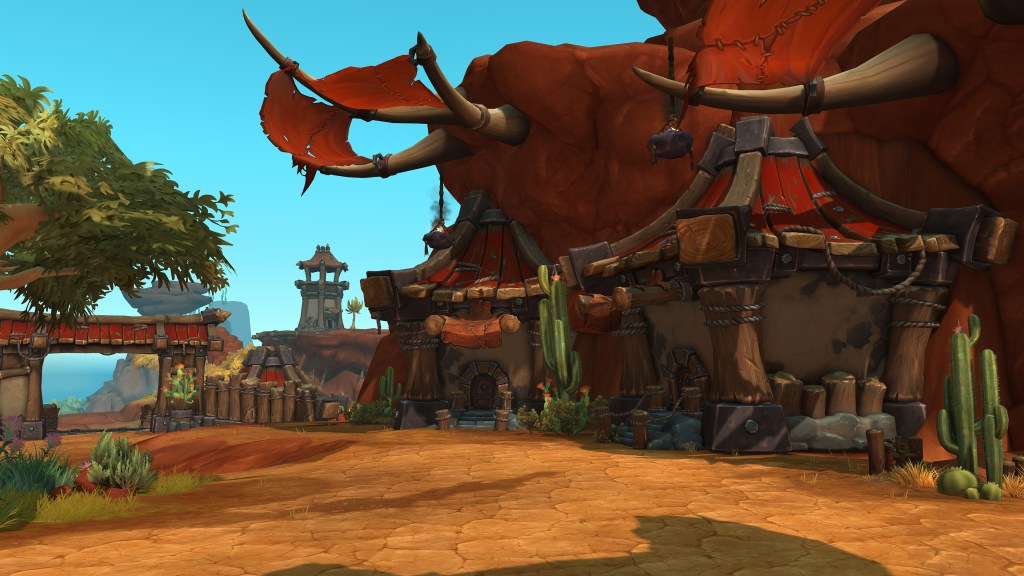
    At the beginning of this month, Blizzard released their anticipated Player Housing system into the World of Warcraft as an early-access/pre-order bonus for their upcoming expansion, Midnight. For years, for over a decade, people have been clamoring for this kind of customization and expression to come to Warcraft. Hell, it’s practically the only big MMO on the market that didn’t have something like this. It’s basically industry standard.

    On the whole, the system’s quite good. Buying a house could scarcely be easier, having a neighborhood of my guildmates rules, and furnishing my house has been a fun distraction: whether that be collecting decor items or placing them in my house and settling on a layout of rooms.

    Unfortunately, there’s some design decisions that really need a second pass. There’s trouble in paradise (or, at least, in Razorwind Shores). (And whatever the name of the Alliance’s neighborhood is.)


    Limited-Use Decor

    The first issue one is likely to encounter when furnishing their digital home is this: for every door, every chair, every candle one wants to place, you have to have collected that many copies thereof. If I want a dining room with two tables and six chairs each? I’ll need to buy both tables and a dozen individual chairs to make it happen.

    The price of these items aren’t all terribly exorbitant, but it doesn’t sit right with me that this plain old stool requires multiple purchases to fill out every edge of a table, with another for a desk, and more for a reading nook or study. And I did say they aren’t all pricey; some of them do have a meaningful cost making multiple copies a large investment of time or money, because with the existence of the WOW Token, every piece of gold has some equivalent real-world value.

    Obviously this is meant to function as a gold sink, but I think its execution is all wrong. Better in my view for some items to be limited per use – the Maelstrom Altar I earned from all the activities I did in Legion on my shaman? I don’t take umbrage with that being limited. However, such items should be the exception, not the rule. As for the gold sink, maybe these “common” decor items with unlimited uses could cost a small amount more to unlock, and the majority of the drain on the economy could be spent on expanding the size of the house, our interior decor budget, alternative facades, or interior utility items like teleporters and profession hotspots; things that are permanent, account-wide bonuses. Something of the like, at least.

    Especially since some decor items will eventually be bought with real money from the in-game store. We don’t know much about how this will look yet, but I think it’s fair to assume they’ll likely be selling these items in bundles. If we want five of a special shop-only chair, but they’re only sold in multiples of four? Pony up twice or find an alternative, sorry pal.

    And this all gets worse when we consider the overall collection limit.


    Be Careful What You Collect?

    In a mad dash to fill their decor collection with a few copies of every item they’d unlocked, a few users discovered there is an overall cap on the number of decor items we can have at our disposal at any given time. This is entirely at odds with the game’s myriad other collection systems. We’ve never reached a hard cap on the number of mounts, pets, or armor appearances we can collect; each season simply adds a new swathe of things to add to our mountainous hoards.

    I certainly understand that there’s a real-world cost to storing data, especially on the scale that an MMO requires, but a limitation on this spiraling out of the requirement that I own several individual copies of all the light fixtures I want to mount on my walls? It just feels … misaligned. As Warcraft has evolved in recent years, it’s become more-and-more collection-focused. In Midnight, we’ll earn the alternate colors of our class tier sets from the lower difficulties whenever we complete a set. I just can’t help but imagine that the variables they’ve included forced them to install this limitation, and they’d only hoped it wouldn’t be discovered so soon.


    A New Source of Loot Drama

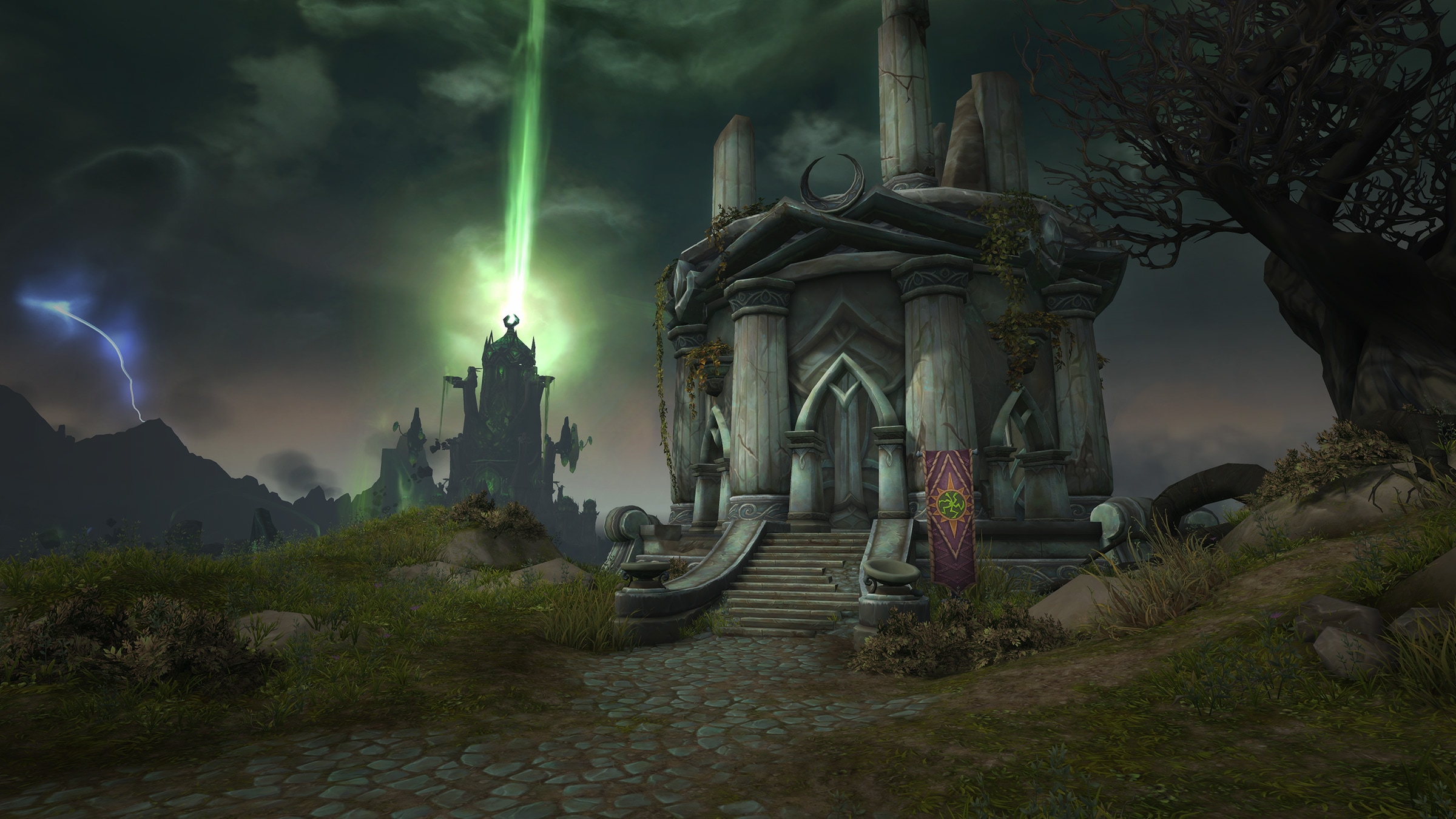
    The night after housing was released, after I’d played with the system a bit, I logged back over to Legion Remix to work on the last few thousand Bronze I needed to complete my goal of buying everything from the event vendors. As each night before, I pinged my guild and got the usual suspects together. Things proceeded much as we all expected, until we ran the Nighthold. There, after beating Spellblade Alluriel, we discovered a new item had been added to her loot table: a Nightborne-themed fountain.

    But, only one dropped, and we had to roll to win it from one another.

    Naturally, we all have many max level characters. If anyone was desperate to have this fountain, they could get it pretty easily. But … it’s weird it’s a roll-off to begin with, right?

    Like, come Midnight, we’re going to be doing raids and dungeons we can’t just solo on our own. Maybe that rug from this boos is really going to tie the whole room together, but for me to have it, everyone else that was involved in whatever activity has to wait until next time? Why aren’t these just awarded to everyone?

    Not to mention that presently some of these items aren’t popping up a window prompt to roll for them, but are instead just looted by whoever clicks the boss fastest.


    The bottom line is this: Blizzard’s player housing is good. Hell, I don’t play a lot of other MMOs, it might be the best on the market. (I certainly like it more than ESO’s.) But, with the above issues, I don’t think the system will ever be the best that it could be. Falling short of that peak just seems so … unnecessary.

    As always, thank you for reading. Now, if you’ll excuse me, I’ve got to reconfigure my house’s whole layout. Again.

  • Legion Remix and the Mage Tower

    Legion Remix and the Mage Tower

    Last week, Blizzard announced in a blue post that during the upcoming Legion Remix event, the unique weapon appearances from the Mage Tower will not be made available again. This was a rather contentious announcement – there are many who want the weapon appearances to return, and there are perhaps just as many that want them to remain gone to elevate the weapon appearances; to grant them a level of prestige from their exclusivity.

    As someone who’s been playing Warcraft way too long, I’ve got my own opinion.


    A Brief on FOMO

    I’ve written on my blog before that I find weaponizing FOMO (the Fear of Missing Out) to be a blight upon game design. Usually, they’re used to pressure players into spending money on microtransactions, to incentivize daily engagement, or prolong retention. Frankly, I think if a game isn’t simply fun enough for its players to want to log in every day, or week, or month, then maybe the game has other issues it should address?

    Presently, there’s a few events going on in World of Warcraft. Right now, there’s Turbulent Timeways, which grants a unique mount for playing a handful of Timewalking Dungeons for a number of weeks during the event’s duration. There’s Collector’s Bounty, which has boosted the drop rates of many rare mounts and items from old raid and dungeon bosses. There’s Greedy Emissaries, treasure goblins from Diablo invading our capital cities and the patch zone that give you currency when killed that you can use to buy recolors of an HD updated version of one of the classic and iconic class sets from the game’s earliest years.

    To some degree, these all engage in some level of FOMO, to varying degrees of vexation. First, the special recolor armor sets from the Greedy Emissary event, we have no information on if they’ll ever be available again. Get them now, or maybe lose the chance to earn them forever. Second, the Collector’s Bounty event offers a greater amount of efficiency to earning old, rare mounts and items, but those items will remain in the game after the event ends; you’ll only lose the increased efficiency. Lastly, for engaging in Turbulent Timeways, the unique mount you can earn will likely become available for Timewarped Badges (a currency earned from Timewalking events) the next time the event runs, like the two mounts from the previous time this event has been available have.

    Naturally, I think the Greedy Emissary event is the most egregious with FOMO – but even it is something you can earn every reward from in one week if you’re willing and able to put in enough time. For Collector’s Bounty, missing out on the efficiency will be tough, but all the items will still exist. For Turbulent Timeways, I myself realized I started engaging in the event a week too late, and until I discovered the mount would likely be made available again in the future, I was really kicking myself for missing one week too many.

    Luckily, between Remix events and the game’s monthly Trading Post, the items from the Greedy Emissary event will likely come around again in the future – but right now, we don’t know if they ever will.

    But enough about that. Let’s discuss the Legion Remix.


    The Mage Tower

    During the Legion expansion, in patch 7.2, our brave heroes returned to the Broken Shore to establish a foothold and stage an assault on the Tomb of Sargaeras raid when it launched a few months later. As part of this patch, there were several buildings the players could cooperate to construct, and the most compelling to many players was the Mage Tower.

    The Mage Tower provided everyone with a single-player boss scenario focused on mechanics to overcome, and when successful, you’d unlock a special appearance for your artifact weapon and an achievement for doing so. These are some of the most unique and special weapon appearances that exist in the game, and at the end of Legion, they were removed when the Mage Tower became inaccessible.

    Now, after nearly nine years, we likely have players who’ve come to the game who, if they’re the same age I was when I started playing, would have been in preschool during Legion. These players could be some of the best in the world – they may become world-first class raiders. But they can never earn these weapon appearances because they weren’t playing the game at the right time?

    To me, that sounds like bullshit.

    And, before anyone wants to say that I just want to earn these weapons myself – I told you I’ve been playing this game too damn long. The 7.2 patch launched on 03/28/2017. This is my former main, who has the achievement for A Challenging Look from the first time the Mage Tower was built, earned on 04/05/2017. Throughout the expansion, as players earned more gear and more power from their artifact weapons, these challenges became easier. I completed them on classes I had no business playing by the end of the expansion, they became so simple. Completing the Mage Tower challenges now, with the scaling tech involved, is harder than they were at the end of Legion.

    But I don’t feel like my achievement is any less valuable for other people having earned it themselves. I have a sense of prestige not because I own this appearance, but because I overcame the challenge. And if these weapon appearances will give people an incentive to challenge themselves, then I say they should come back. Give us a reason to enjoy remix. Lock our scaling in the Mage Tower to retain the challenge? Whatever. Just let people earn them again.

    A recolor is the least Blizzard should do, but I think they should just come back in full.


    As always, thank you for reading. Now, if you’ll excuse me, I’ve got some more Stonecore runs to do to see if I can loot this dragon.

  • The Lasso Way

    The Lasso Way

    On the whole, I don’t subscribe to many streaming services. I’ll have something for a month or two when something I really want to watch is airing, but I need that push, that hook, to cave and check something out. When the Murderbot adaption started airing in May, I ended up using the AppleTV service for the first time.

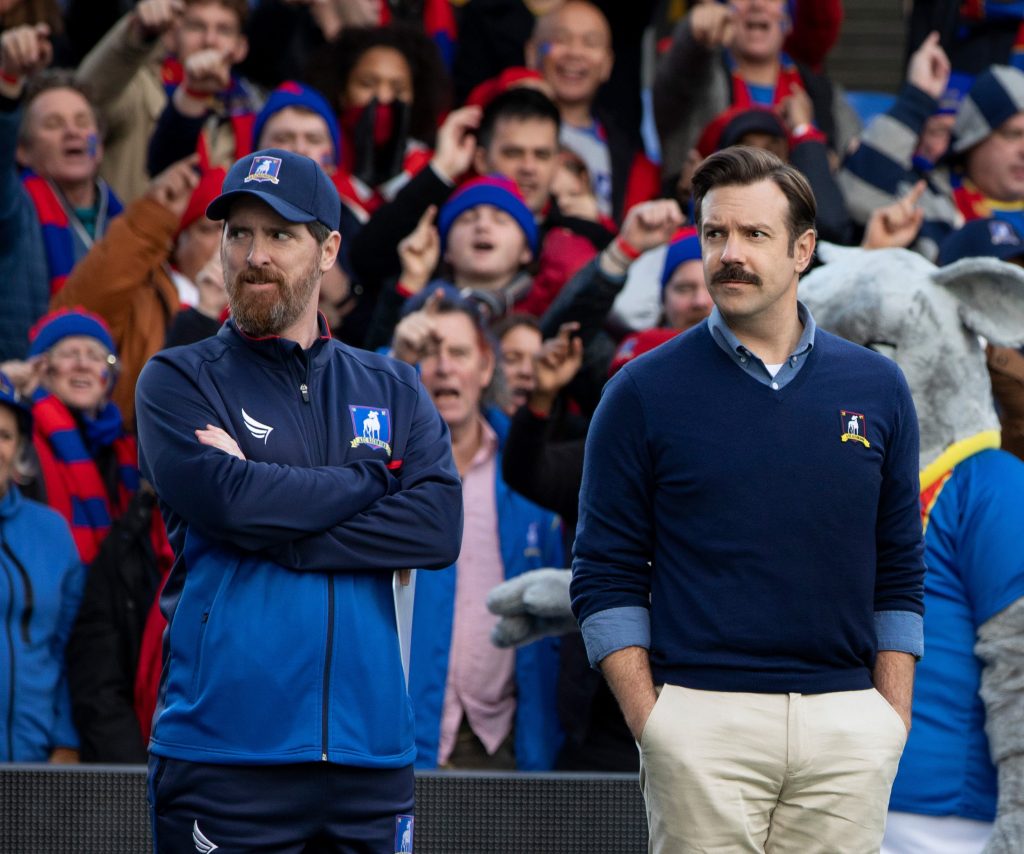
    Now, between writing, painting, and gaming, I wasn’t sure I’d get around to watching a lot of what the platform has on offer. I’ve been keeping up with Murderbot, of course. I’d heard no end of praise for Severance, so I watched that. Then, I had a friend and my brother both recommend Ted Lasso, and somehow this one about an old commercial character snuck in between all the rest and grabbed me.

    I’ve never had much interested in sports (much less English Football), but this show firmly establishes that as its backdrop for the interactions of these characters and their arcs early on. They’ll show snippets of games, but how these people come to interact with football, their teammates, and the other people in their lives is what the show is really about.

    And, it’s a damn good show. I wanted to hit on a couple of reasons as to why I think that is. Spoilers ahead.


    Impeccable Characterization

    If there’s a spectrum, this show sits more on the sitcom end than the drama end, but it’s still not entirely the former. Each episode progresses the overall story of this football club, and our characters don’t regress between the credits and theme song. They evolve (sometimes for the better, sometimes the worse) and retain that evolution unless they work to undo it.

    None exemplify this more than our lad Jamie Tartt. In a show full of standout characters, I don’t think there’s anyone else who grows as much as this guy.

    At the start, he’s a self-absorbed ass. He’s incredible at football and he knows it. During that first season, we see Ted slowly chip away at this exterior shell he’s built up, but just before we break all the way through, Tartt is transferred to another team. The reason behind this is unknown to our characters at first, and Jamie takes it personally. He thinks it was Ted’s choice to do this; that he’d been rejected, in the end.

    Still, Lasso’s impact on Tartt shines through. If it weren’t for a last minute pass – something he’d never do before Lasso’s training, his new team wouldn’t score a goal that ends their game in a win against Lasso’s team, Richmond. (The kind of game that’s about to be called a 1-1 victory for Richmond.)

    And that’s just his arc in the first season.

    But, when it comes to this shows incredible characters, the stand out for me is the man himself.


    Ted Lasso Is Superman

    Now, I don’t mean that literally, of course. He’s not secretly extraterrestrial and flying around or anything like that. However, this character behaves the way Superman does in his best stories.

    Ted Lasso has a nearly endless well of optimism and friendliness we seldom see break. He gives it is his all to inspire these footballers to be better versions of themselves, and he forgives them for their worst moments easier than they’ll forgive themselves. It starts slow, but we have no trouble believing how he manages to win all these people over – it’s the Lasso Way, after all.

    There’s been a thread or two on reddit with viewers seeing the same thing about this character – and that’s not hard to believe. We have a handful of little things that make this sound more intentional than not: Lasso’s from Kansas, the team’s primary colors are blue and red, and a major supporting character’s surname is Kent. They even reference the Daily Planet within the first two episodes.

    At a time when it’s easy to be cynical, it’s wonderful to have a little light shone. These stakes might not be high in the grand scheme of things, but that doesn’t make them any less meaningful for our characters.


    Not All Sunshine and Rainbows

    Naturally, the show isn’t just hopeful beat after hopeful beat. It’s got its share of drama and emotionality. Sometimes it’ll try to wring tears from your eyes just by showing you how far a character’s come since we’ve met them; others, it’s showing you how our characters got to where they were when they started, and asking implicitly how you think you’d behave under those circumstances.

    Now, it can be a little overwrought at times. The show is rarely subtle and even more rarely restrained. On the whole, I think it earns most of its indulgent moments, but that might not be to everyone’s taste. I’d still recommend the show, but I wouldn’t fault anyone for washing out.

    Luckily, the show’s primarily concerned with making its audience laugh and smile, so I never found it hard to watch.


    So, that’s Ted Lasso. Consider this a secret Ben Recommends. As always, thank you for reading. Now to figure out what the hell “offsides” means …

  • 2024: Year in Review

    2024: Year in Review

    For me, it feels like the theme of this year was that I wish I’d done more. I read fewer books than I’d planned to, I didn’t play very many new games, I scarcely watched movies or tv shows. And I certainly didn’t write as much as I’d wanted to. It’s like I stalled out after the first third of the year, but we talked about that plenty in the Irregular Update a couple weeks ago, didn’t we? Despite a relatively austere year, I had the privilege of experiencing some media that really stuck with me, grabbed me, or inspired me.

    Let’s get into it.


    Books

    I had a much easier time burning through books back when I wasn’t working from home, to be honest. Taking them in to read during my lunch break really worked out, and often left me on some interesting cliffhanger that made it easier to read some more once I got home. With my current schedule, I only have a 30 minute break for lunch, and often don’t read during that window. (Exceptions were made for Wind and Truth this month.)

    Over time, I was excited to play different video games and hopped right into them when I was done with my shift. I played a lot of Warcraft following the War Within’s launch, and other games kept drawing me back like a magnet over the year. So it goes.

    I think, when I brought a book in to the office and didn’t have something else I could be doing, it made it easier to stick with things that weren’t grabbing me in a vise-like grip. I could muddle through something I had a middling opinion of just to fill the time. Couple books this year I grit my teeth and plowed through, and it might’ve proved detrimental to my desire to keep reading through the rest of the year.

    (I just need to throw my smartphone in a box and take a book into another room to get around this.)

    Anyway.

    Gideon the Ninth by Tamsyn Muir

    This was a book I read early on in the year and it ruled. I loved the intrigue, I loved Gideon and Harrow’s fraught relationship, I loved reading about space necromancers. I’m looking forward to reading more of the series in 2025, and I can’t recommend this book enough.

    The Sunlit Man by Brandon Sanderson

    I got around to the other two Secret Projects back at the start of the year. In the afterword of the Sunlit Man, Sanderson called the project a book he wrote for his fans – where Yumi and Tress had been more as gifts for his wife. I have to say, as a fan, Sunlit Man absolutely rules. It left so many questions in my head, waiting for Wind and Truth. It had a breakneck pace and excellent action. It is, without a doubt, the most cinematic cosmere novel so far. A movie could be made from this book practically one-to-one and it would rock.

    I also greatly enjoyed Yumi and the Nightmare Painter and Wind and Truth this year from Sanderson, but I wanted to specifically celebrate Sunlit Man for the ways it’s different from many cosmere novels here.

    The Blacktongue Thief by Christopher Buehlman

    This book is a lot easier to recommend than Between Two Fires. It’s a fun classic quest from the perspective of our eponymous thief as he’s taken on a march across the continent with a host of interesting characters and fun action. It was fun to read despite some grim details in the setting, and books that are just fun to read will be a balm to many in the coming years.


    Movies

    I think I went to a movie theater once this year. Whatever time I might’ve spent watching movies, I think I watched longform video essays instead – like F. D. Signifier’s many drops throughout the year, Lindsey Ellis’s nebula-exclusives, Matt Colville’s video about the Elusive Shift, and videos about movies from Patrick H. Willems. And I thoroughly enjoyed them all!

    Point is, I saw like three movies this year total, and we all know which ones I’m going to be talking about here.

    Dune: Part Two

    A cinematic achievement. An excellent adaptation. Incredible effects, an excellent story translated near-perfectly to screen. I love Dune, and I loved these movies. The way they’ve infected culture, with people jokingly calling their friends Lisan al-Gaib or Maud’dib or permutations thereof is endlessly entertaining. What more is there to say, really?

    Furiosa: A Mad Max Story

    Fury Road is one of my favorite aesthetics in modern fiction. I love the wasteland, I love the motorized bikes and buggies, and I had a blast with this film. While many bemoaned it as an unnecessary addition to the canon, when every minute of this movie is as awesome as this was, it needs no further justification.


    TV Shows

    I didn’t watch much TV either, to be honest. I had Netflix for exactly two months this year; I watched a lot of Peaky Blinders when I was running Blades in the Dark near the start of the year for inspiration, and I returned for one month specifically for the first show below (but ended up watching the second show on this list too, on the recommendation of a friend). I never got around to temporarily using Hulu to watch Shogun despite meaning to, and as much as I love Invincible, I do think it was hurt a little by splitting up the season. House of the Dragon? Woof. I hope there were some external circumstances behind that season’s ending, because that was a fine episode in a vacuum, but not as a season finale.

    Anyway, onto the good.

    Arcane Season 2

    Arcane’s final season aired a little over a month ago, and I’m still thinking about it – mostly the small moments, like those which filled the seventh episode. I remember the end of the first batch, with Ambessa’s plan revealed as the music swelled with the punctuation of the crowd beating their chests – what a moment that was. This show is so far beyond the gold-standard for animation it isn’t fair. It’s so premium in its presentation, I loved every minute.

    Delicious in Dungeon

    So, I don’t really watch anime.

    Look, it’s a personal thing, okay? It’s nothing to do with animation – three of the shows I’m mentioning here are animated. It’s … more to do with the common themes that exist in anime not being those I’m particularly interested in. Delicious in Dungeon (or Dungeon Meshi) doesn’t avoid these things, but I liked everything else about the show enough to get over them. The aesthetic of a classic D&D party delving into a megadungeon rules. The show’s got some problems with an inconsistent tone – it doesn’t want you to take it too seriously, but things keep happening that feels like they should be taken seriously. Without spoiling anything beyond the show’s very first scene – our hero Laios is fighting a huge dragon with his party when he realizes he’s so hungry he can’t fight. And it’s pretty funny – except, people are getting mauled in the background and someone gets full-on eaten.

    If any of that’s a dealbreaker, probably safe to skip this one. Otherwise, you might have a fun, zany little show to enjoy.

    The Legend of Vox Machina Season 3

    Critical Role continues to make inspired adjustments to their live streamed D&D game to make for a compelling TV show. There were some fans disappointed by the changes made to this specific leg of the campaign – from people disliking the stakes becoming more personal for our heroes, to a couple of beloved moments from the campaign not occurring as the fans expected.

    I, however, think there’s something to be gleaned from these adjustments. If you don’t want any spoilers, skip to the next section.

    So, one major criticism was the change to Grog’s delivery of “Fix him!” in the show. In the livestreamed game, Travis yells the words, shouting for Scanlan to be resurrected following his death at the hands of Raishan. In the animated series, Scanlan is unconscious after escaping certain death at Thordak’s claws, and the delivery of the line is much more subdued. There is certainly a lot of power and pathos in the original delivery – but perhaps it always felt out of place? Immediately after that shouted line, Travis speaks his next few lines in a more mundane register. Perhaps, with how much closer he and Pike have remained (with her not being absent for so much of these adventures) has developed Grog into someone who’s much more reluctant to scream at her – especially when she’s trying her best.

    The next major problem many fans had stems from the Bard’s Lament moment being skipped – at least, that’s the way it appears. There’s still certainly enough in the show to bring the moment back in season 4, but given the show’s uncertain future, they decided not to leave the team on such a bitter, tragic note. If this had been the final season, Scanlan blowing up at his friends and entirely withdrawing from the team would’ve been a rather sour note, and all of the ingredients for the moment are still there. Perhaps Scanlan will be hesitant to return to the party come season 4 – let’s give the team some grace, eh?

    Fallout

    Ella Purnell makes the list twice! This show was a good, fun romp through our favorite wasteland, and I’m looking forward to seeing more. The moment toward the end of the first or second episode where our heroine’s chipper attitude holds despite her needing to decapitate someone just really sells the whole vibe of the show.


    Video Games

    Much of my year was spent enthralled to my old staples – Warcraft and Deep Rock Galactic. I played a few new games; things I saw on the odd stream, a few anticipated titles. And I got around to getting a Nintendo Switch, more on that later.

    Balatro

    Last year, I had this long paragraph about how much gameplay matters in a roguelike game – about how if the game isn’t fun, it won’t work? Balatro has the sauce. This indie game from a solo dev blew everyone’s minds this year for good reason. Hell, it had an honest chance to win Game of the Year at the VGAs, and while I haven’t had the chance to play Astro Bot myself, I’ve heard a wealth of good things about it. Whatever LocalThunk makes next is sure to be on everyone’s radar.

    Windblown

    From the developers behind Dead Cells comes this little isometric co-op roguelite I’ve been enjoying with a friend. It’s been a blast to play, and every time I launch the game I can’t bear to skip it’s little anime intro! It’s still in early access right now, but I’m willing to stake my flag and say this will be one worth checking out.

    My Game of the Year: Tears of the Kingdom

    See, this is the benefit of being behind on some games. I get to celebrate Baldur’s Gate 3 last year, and the Legend of Zelda this year! I get to have the cake and eat it after all.

    Jokes aside, yeah. Nothing this year grabbed me half as well as Tears of the Kingdom. It was an excellent evolution of everything Breath of the Wild did, and the new tools were so fun to play around with. With some truly stellar cinematic fights and small ways the game broke the expectations it gave you, I loved every minute. Never would I have guessed how powerful a handshake could be. (If you know, you know.)

    So. That’s the year as remembered by me. Here’s hoping for some good media in 2025!

  • Starfield

    Starfield

    Last summer, I bought a new PC just before the release of Baldur’s Gate 3. I can’t imagine how poorly my old rig would’ve handled that game, but it ran very well on my new machine and I couldn’t have been happier with it. A side benefit of this purchase was I received a code to gain a free month of Xbox Game Pass, and I thought, “Oh, neat. I can use this in September to try out Starfield!”

    Starfield’s early release window rolled around, and news began to break. It was divisive. People were tearing the game apart, people were cheering it on. This article boosted a sentiment from its fans saying the game really picked up 12 hours in. I avoided reading too much into any of this, content to wait and form my own opinion once I could play the game myself.

    Due to my usual weekly schedule, I didn’t check it out until the Thursday after it’s full release. I launched the game after work, I threw together my character, and I played for three hours before I decided it wasn’t working for me and I uninstalled the game.

    I chatted with a few friends, trying to parse out my exact feelings. I didn’t expect to bounce off of this game so hard, so completely. Oblivion and Skyrim are two of my favorite games ever; both utterly consumed my teenage years and early adulthood. While I never had the same fondness for Fallout 3 or 4, I still played and enjoyed them, though not nearly to the same extent as the Elder Scrolls games.

    I’ve thought about that experience a few times since. Frankly, I’m not sure if I can really make peace with it without writing about it, and, well, if I write about it, I might as well post it, eh? So, here’s what I’ve settled on as my reasons for bouncing off of the game: my own conclusions and some video essays for additional viewing.


    A Poorly Paced Introduction

    (Spoilers for the openings of several Bethesda games.)

    Bethesda’s gotten worse at opening their games as time has gone on.

    Now, I’ve only played from Oblivion forward, and it might just be that trajectory of experience that’s led me to that conclusion. Still, I think Oblivion’s got the best introduction of the five I’ve played. It does the least to muddle whatever thoughts you might want to bring to your character and gives you a great dungeon to explore within moments of its launch, which really shows off a major pillar of the game. Once it’s done, you have a quest, but it doesn’t feel like you need to sort that out and you can just go wherever you want. (I was one of the weirdos who enjoyed going through Oblivion gates, so I usually got to the point in the quest where they’d start opening up and then did whatever I was feeling like.)

    I think Skyrim takes second place despite there being another game between the two Elder Scrolls entries. Its major weakness is how long you’re waiting before you get to define anything about your character, watching the wagons trundle on down toward Helgen. Once you’ve got the character editor open, I think it’s super solid, but launching a fresh playthrough can feel like a slog if you don’t have a holdover save from the end of the wagon ride.

    Fallout 3 and 4 are some of the worst that Bethesda’s done. FO3 really drags with you playing through your character’s childhood in spurts, and it’s on firm rails. You can’t do anything about people coming at you with guns for the crime of being the child of your father at its end. Hbomberguy did an incredible takedown of the intro’s faults in this long essay from 8:30 to 15:50. (The whole video’s excellent.) And FO4 is that little bit punchier, but the game decides a lot about your character before you ever have a say – you’re married, you’ve got a kid, you’re from before the bombs dropped.

    To some degree, that’s a bit unavoidable. Bethesda wants to make games that let you feel like you can go anywhere, do anything, be anyone, but there’s inherent limitations with video games. Bethesda can’t let you start anywhere unless they drop a menu on you (and they’ve got more than enough of those already), and there’s no feasible way to make a hundred or a thousand different starting scenarios match up in their fidelity and playability and excitement. They’ve got to build this reverse-funnel, this narrow entry point that then opens up to the enormous berth of their games. (And on the point of menus to choose a starting point, there are literally mods for their games to create that functionality, because the people who play these games the most would rather have that option.)

    Starfield doesn’t fail in the same ways as its predecessors, but I’d call it the worst. You have these options in character creation that you can pick to really build an exciting history for your character. I think I’d chosen to be a bounty hunter, thinking it’d be a good all-round skill set for adventuring and exploring the galaxy and some traits I thought sounded interesting for that kind of hero. And the game starts with me … working in a mine? Like, I’m a good space pilot and a bounty hunter, but I’ve got to fire this laser on some iron for a bit while two NPCs chatter on and sound nothing like people as they do?

    It’s simultaneously long-in-the-tooth and too quick. You’re walking behind these slow NPCs until you touch the dumb rock and it drags on forever. It’s aggressively unexciting (outside of the dogfight–I liked the dogfight) and incoherent. You touched the rock those guys wanted and it knocked you our, now the stranger who flew a spaceship here is going to stay and … mine? Kill pirates if they keep showing up? Your boss is like, “I guess this is happening now. Bye.” Last paycheck in the mail? And then you’re in a (fun, though I died the first try) dogfight and it’s a menu button to fly to the moon that is right there like you can see it on the screen but you have to go into the menus–


    A Whole Lot of Loading

    I thought I’d get to fly in space.

    I know – technically, you do! When you’re in a dogfight. And I know, space is vast and mostly empty, but I’m not asking for a 1:1 scenario here. Let me zoom through the stars and discover derelict wrecks to explore; let me go from planet to planet; at least let me fly within a single star system. You feel more like you’re flying through space playing Mass Effect than Starfield, and in the former you’re just moving a tiny ship across ringed maps of different star systems. Hell, there are times where you have to hit a handful of loading screens to move from one region of a planet to another.

    Bethesda’s had fast travel in their games at least as long as I’ve been playing them. But before, you had to walk somewhere before you could teleport there. Now, it’s just teleporting, and that really, really took me out of the experience.


    Divergent Innovation

    I think it’s incorrect to say that Bethesda hasn’t iterated on their formula since Oblivion. There’s a lot of new features in their games that they’ve been building and improving with their other titles. Building settlements and outposts is a whole subsystem in these games, refine out, and with a mechanical benefit for engaging with them.

    Unfortunately, that’s the last thing I’m interested in when I play a Bethesda title. I’m not here to build a town, I want to go delve into caves; I want to have that awe-inspiring moment of finding Blackreach beneath Skyrim. Hell, maybe I would’ve been more invested in the system if it’d shown up in an Elder Scrolls game (that setting is just more my speed than Fallout), but I couldn’t say for sure. I certainly didn’t play Starfield long enough to engage with it there.

    For me, playing Starfield didn’t feel better than playing an earlier title from Bethesda. I think the combat’s more fluid and enjoyable in Skyrim than their newest release; their gunplay just doesn’t hold up to what I expect from the industry anymore. I’m not excited to shoot the guns in Starfield when I can launch RoboQuest or Deep Rock Galactic or the original Halo game and feel like I’m having a better FPS experience.

    Bethesda Shouldn’t Get a Free Pass

    People loved Bethesda games; I loved Bethesda games. They were once one of the best developers, pushing the cutting edge of the tech, making the biggest worlds we’d ever seen. All that nostalgia bought them a lot of leeway these last few years. Fallout 76 hoodwinked thousands of players, both underdelivering with a buggy, misfired mess of a game, and also shipping out a bag with the collector’s deluxe edition that was not even nearly what they’d advertised. People were on the edge of their seats, waiting for Starfield to be the next must play game from the studio that defined their childhoods.

    But we didn’t get it. We got another janky mess that didn’t deliver on the hype the studio kept promising.

    That’s just not good enough anymore. Bethesda used to make the best games we’d ever played. Now, they make games I wouldn’t want to play for free.


    And Thanks for all the Fish

    So that’s where it all landed for me. If you’d like to see more, here’s a video from NakeyJakey and another from Girlfriend Reviews about their experiences with the game. Here’s hoping that Bethesda can right the ship, but I wouldn’t hold my breath.

    As always, thank you for reading. Good luck out there, space cowboy.

  • Ben Recommends: JetLag the Game

    Ben Recommends: JetLag the Game

    So much of the media I enjoyed last year got saved up for my Year in Review post in December. I haven’t actually had a standalone Ben Recommends post since the first, when I talked about the then-finishing Dimension 20 series. That’s in part because there’s some properties I think work better in that retrospective post rather than on their own. I think these standalone posts are more fit for long-form content or stocked libraries – stuff like series, specific creator channels, podcasts, etc. Which, brings us to today.

    Late last year, I got introduced to Jet Lag: The Game through a livestream. I found the crew compelling and got hooked, catching up on many of their earlier “seasons” while watching their weekly uploads on the season they were airing then, their second race across Europe. And now, with the wrap up to a race from the United States’ northernmost point to its furthest point south, I wanted to give them a shout out and maybe find them some more fans.


    What is it?

    Jet Lag: The Game is a game show/travel vlog show where three or four players compete, with various harebrained challenges to earn methods of travel or other victory conditions. In their races across Europe, they needed to complete their challenges to earn currency that could be used to buy rides on trains, planes, or automobiles (paid for in minutes spent traveling based on the method’s speed). In a game of Capture the Flag in Japan, they had to do challenges both to use the country’s public transportation and acquire powerful defensive options to delay their opponents.


    What do I like about it?

    There’s a ton to like about the show; you get to see fantastic vistas and learn about the countries they visit; the crew and their guests are fantastic hosts and storytellers. There’s so many gags and gaffes that will bring the laughs, and it’s easy to get invested in a team or player’s progress through their season.


    How does it compare to similar shows?

    I’ve never seen The Amazing Race myself, but I imagine they’re pretty similar with Jet Lag having a continuity in its players that can be either better or worse depending on one’s taste. They still mix things up with a guest when the games call for equal teams, but if you don’t like the boys there’s no getting around it.

    So that’s Jet Lag: The Game. It’s been a blast to watch the show and I’m looking forward to the next season! They upload episodes one week early on Nebula, but it’s available free on YouTube. If you end up checking it out, I’d love to know!

    As always, thank you for reading.

  • 2023: Year In Review

    2023: Year In Review

    In 2022, it wasn’t until September that I’d decided to make a retrospective post about the media I’d enjoyed that year. This time, I had it in mind from the start, and I jotted down little notes throughout about what I wanted to include. I’ve had some of the below on the list as far back as February (and my friends and family will recognize them, since I’ve talked them up all year long). As before, I’ll avoid spoilers as much as I can. Let’s get to it!


    Books

    As last year, I didn’t read as much as I’d hoped. I’ve played maybe a few too many hours of video games, watched a few too many episodes of TV shows or movies. I’m still figuring out how I want to sketch out my daily routine with my new job, but I’ll get there. Regardless, there were still several books the absolutely ensnared me and that I want to maybe draw more eyes toward.

    The Fires of Vengeance by Evan Winter

    I don’t really have a whole lot to say here; I liked this book just as much as I did the first and I’m excited to see more from Evan Winter. I think this could be one of those series that becomes mainstream as it gets more and more entries. With how much I’ve enjoyed this series so far, I’d hate to be wrong.

    Tress of the Emerald Sea by Brandon Sanderson

    It’s been an amazing year for Sanderson, there’s no doubt about that. Perhaps the only people coming out ahead of him are his fans, receiving five books of his this year – myself included. I was unemployed when the kickstarter for his Four Secret Projects launched and I still made an incredibly silly financial decision and backed him. I’ve only read the first two of those releases thus far, and between them and The Lost Metal, Tress is my certain favorite.

    I think something that really worked here was the perspective of the book – most Sanderson stories I’ve read are in third person, bouncing perspectives on chapter changes or on scene breaks when things are kicking off, and I think the consistent voice really enhanced this book.

    Between my love for this and Scott Lynch’s Red Seas Under Red Skies, maybe I’m just a big fan of fantasy pirate books.

    Between Two Fires by Christopher Buehlman

    This is probably the best book I read all year, but it’s one I hesitate to recommend. It is a hard read. Horrible things happen to these characters, but then, of course they do – it’s a dark fantasy story set in France during the Black Plague, and Buehlman really makes it easy to feel the suffering of our tiny band of characters. He does not shy away from the horror of our history, and it is made much worse by the supernatural.

    Children of Time & Ruin by Adrian Tchaikovsky

    I wonder if I’m going to end up having an “off-the-wall weird” sci-fi rec each year. In this book, a scientist, Avrana Kern, wants to make a garden world for humanity to eventually settle. A utopia with genetically-engineered servitors and an impeccable biosphere, an Eden amidst the stars. Unfortunately, a saboteur tries to utterly upend her goal, killing the monkeys she intended to see the planet with, but rather than admit defeat, she launches her nanovirus anyway and it infects a surprising host … we witness some of their development over the course of hundreds of years, then a wave of humans eventually comes to settle the garden world, discovering things are so much different than they expected.

    And – wouldn’t you know it, this duology won a best series Hugo award this year! I was ahead of the game this time.


    Movies

    I saw as many new movies at home as I did in theaters this year – which is to say, I didn’t see that many movies. It isn’t that I don’t like movies, I love film, but going to the theater has become unbearably expensive and when I’m home, I usually gravitate toward games or shorter-form media instead. Despite all that, I saw a few movies that really mattered to me this year.

    Dungeons and Dragons: Honor Among Thieves

    I had a lot of fun seeing this movie and I’d love to see this gang of adventurers again someday – another heist, a dungeon crawl, whatever. We’ll see if anything comes of that. Hasbro continues to prove itself a poor parent company with layoffs right before Christmas this year despite D&D having a banner year all around (more on that later).

    Oppenheimer

    This is the first biopic I’ve ever seen. I wanted to give it a shot because I’ve been enjoyed every Christopher Nolan film I’ve seen and I was interested in the subject. I loved it. I don’t know when on earth I’ll find time to watch it again, but I know that I want to. The use of color and black-and-white presentation really blew me away when I discovered the reason for it.

    Puss in Boots: the Last Wish

    This movie released last December and I kept hearing praise for it all over the place. On a whim, once it showed up on Amazon, I rented it and it still blew me away with how fantastic it was. It’s an animated movie that treats its audience, kids and adults both, with respect. It’s incredibly stylish with crisp and beautiful animation. It was the first thing to be thrown onto my list for this blog post this year – hell, I saw it about a week before I started really getting back into writing, so maybe it was just straight-up inspirational for me.


    Music

    I didn’t include music on my list last year because I am perpetually behind on music and my tastes haven’t changed much from my teenage years. Luckily, they didn’t need to.

    This is Why from Paramore dominated my listening for several weeks when it dropped back in February. I had the album on endless repeat, especially Running Out of Time and You First. I’ve also been obsessed with The Adults Are Talking from the Strokes’ The New Abnormal since I heard it this summer. (Which, yes, is from 2020. As I said, perpetually behind.)


    Video Games

    It’s probably because they dominate most of my time as my primary hobby, but this feels like the real meat-and-potatoes of the post to me. Maybe I just trust my opinions about video games more than I do anything else since I’ve been playing them as long as I can remember. Regardless, here’s some of the highlights of my year and anyone who knows me will already know what my game of the year is.

    Core Keeper

    Survival games are hit-or-miss for me. If it finds me in the right mood, or it’s got a good story or good RPG elements, I can get hooked. But it can also have both of those things and just still fail to grab me. Core Keeper was a hit, right on target. It’s got a full release planned for next year, and I played the hell out of it for a few weeks this summer. My friends and I enjoyed it immensely, getting all the way to the hard edge of the progression curve right before their big biome update a few months ago. I’m glad to know there’s new stuff waiting for me whenever I get back into it. (And I will!)

    God of War: Valhalla

    It feels like Santa Monica Studio made an excellent little bonus game mode they could’ve sold for like $20 and they handed it out for free. It’s an excellent epilogue for Ragnarok, and it is what I’m going to get back to playing the moment I finish drafting this post (hopefully I’ll be done with its story when this goes up).

    Roboquest

    Roguelites put their gameplay front-and-center – if that doesn’t work, the whole game fails. They must be fun to play. And Roboquest is a freakin’ blast. The gunplay here is so immaculate and satisfying (I really love the comic-book style sound effects that pop up right next to your guns) that it’s a blast to play through. And it’s got 2-player co-op! Grab your best brobot and run-and-gun to your mechanical heart’s content! You will not regret it.

    My Game of the Year: Baldur’s Gate 3

    If I still had the time on my hands like I did when I was a teenager slamming through Dragon Age: Origins runs, I’d probably have six completed playthroughs by now. I’ve yet to make good on my goal to get all of the achievements (a few of them are contingent on a co-op run I have in Act 3 that my friend and I haven’t gotten back to yet), but it’s still my plan to do it. Even that new one for an Honor Mode completion. I can’t wait to see what Larian does next (and I really appreciate the post-release support. That reunion party was exactly what I wanted when I finished the game the first time).


    Well, there we have it. Farewell, 2023. As always, thank you for reading. Here’s to many new stories and adventures in 2024. Happy New Year, everyone.

  • Revisiting Mass Effect

    Revisiting Mass Effect

    Some of the most artistically influential and significant games I’ve played in my life were developed by BioWare. I latched onto the series for much of my teenage years; I couldn’t tell you how many times I played Dragon Age: Origins throughout high school: seeing each origin, building my perfect world state to import into the sequel, finding obscure conditional options. I loved the game so much I decided to check out BioWare’s other series and got myself a copy of Mass Effect. (Spoilers follow.)

    Amazingly, I latched onto it just as hard as I had Dragon Age. Harder, perhaps. I tore through Mass Effect, playing every night to explore the galaxy BioWare made. On my first run of the game I hadn’t completed Wrex’s personal quest before Virmire and failed to have the points to successfully persuade him to calm down, but I was so attached to his character that I loaded an earlier save before I’d spent my most recent level up and managed the check. It legitimately infuriated me when Ashley shot him in the back the first time. I immediately launched into New Game+ once I’d finished the campaign and went out of my way to do everything on the next run.

    By the time that was all done, I learned Mass Effect 2 had been out for well over a month already and managed to pick a copy up when my birthday came around. I’d fallen in love with the first game because of its setting and narrative; Mass Effect 2 brought the game into modernity with vastly improved gameplay and ensnared me even further. I survived the so-called Suicide Mission without a single casualty on my first run. I played Overlord when it released. I blew up the Batarian Alpha Relay in Arrival and waited very impatiently for the trilogy’s end to arrive.

    I took two days off of work for its release and binged through the game. I played hours of the multiplayer, beyond what was required for my Galactic Readiness to be maxed out, I felt mist in my eyes as Mordin rode the elevator on Tuchanka. I froze, wondering if I’d be able to broker a peace between the Geth and the Quarians at the end of Rannoch. The game was incredible, and I was riding high on the wave of that experience as I charged toward the beam that would let me access the citadel and use our superweapon to exterminate the Reapers and save the galaxy.

    And I, like many others, felt like the ending slapped me in the face. I felt burned for being so invested in everything that had happened up to that point. Everything I’d done came down to a trinary choice that did not feel adequate in the least. I could either pursue what the villain of the first game wanted (violating every galactic citizen’s bodily autonomy in the process), pursue the Illusive Man’s goal (with an undercurrent of “this might not work forever”), or commit a genocide not just of my enemy, but also one of my allied species and sideswipe slay a member of my own damn crew. I stood there in disbelief for a handful of moments, then grimaced as I did what I’d been sent there to do: Destroy the Reapers.

    I found I was not alone in my upset. I scrolled through dozens of threads on Reddit in the following days. Criticism was not hard to find. Theories decrying the ending as a hallucination felt more acceptable than what had been served. I returned to replay the final moments when BioWare released their Extended Cut of the ending, and still left dissatisfied. So badly had I felt burned by the ending that I did not buy any DLC for Mass Effect 3 or play the campaign again. (That multiplayer rocked though, I played it a few more times.)

    This year, I purchased the Legendary Edition during the steam sale for $15, which combines the trilogy into a single platform with updated graphics (and gameplay for the original). I hadn’t played these games in over a decade (I’d originally owned them on an Xbox 360 and hadn’t repurchased them on PC at any point, so I hadn’t even had the ability for perhaps six years).

    For a few weeks during the summer, I was consumed by them once again. Every evening when I got off work, I launched into Mass Effect. These games were just as incredible now as they were before, but all the while, I wondered if the other shoe would land as harshly as it had before. I reached the third game and reveled in how unbelievably well they managed to make it, dreading the moment I would reach the end and wondering if I would be angry about it all over again.

    It was near the end of the game that I played Mass Effect 3’s DLCs for the first time. I retook Omega just before Priority: Thessia, I discovered the truth of the Leviathan just before exposing Sanctuary and Cerberus’s activities there, and completed the Citadel just before launching the assault on the Illusive Man’s base. After these missions, when I finally reached the end of the game, I discovered that my anger about the ending had materially changed.

    In 2012, when I spoke to the Catalyst and was given my three decisions for how to irrevocably change the galaxy, I hated its existence as a writing device. It felt like the voice of the author had come down to tell me how it ended, and I couldn’t have been more frustrated. Now, in 2023, after Leviathan and the Citadel, I only disliked the personified Catalyst as a character. I thought it to be fallible now, and not a voice of omnipotent knowledge. I knew now that it had been created by the race that it turned into the Reapers and it had a flawed understanding of the galaxy. It thought war between organic and synthetic life was an irrefutable fact, when I had already brokered peace between the Geth and Quarians and they were working together to resettle Rannoch. I had seen an AI and a human man fall in love with one another. I knew it was just a dumb machine rather than an authority, and I blew the Reapers to hell once again.

    The Catalyst didn’t know the galaxy half as well as it thought it did. For it, the status quo of galactic extinction every 50,000 years was an acceptable outcome. Whatever it thinks isn’t worth a damn. It’s probably wrong about the Geth and EDI being destroyed anyway, or it’s lying because it wants to save its toys.

    These games were some of the most influential and significant games of my life. It’s incredible to have found a way to enjoy and love them again, whether my interpretation of the ending is supported by canon or not. As always, thank you for reading. I should go.

  • Baldur’s Gate 3

    Baldur’s Gate 3

    All throughout my life, I’ve been prone to being captured by good RPGs. When a new one comes along, everything else in my life finds the back seat as I engage with these games for hours. I’ve missed meals, I’ve lost sleep from being too excited to return to the game to return to rest.

    When I picked up Divinity: Original Sin 2, it ensnared me for two weeks’ worth of my free time. I can’t begin to count the number of times I played Dragon Age: Origins or The Elder Scrolls: Oblivion or Skyrim. These games just perfectly capture my brain and cinch closed like a steel trap.

    Baldur’s Gate 3 is the latest case. In the three and a half weeks since its release, I’ve played it every day. I’ve completed the game twice, I have a co-op run with a friend in late Act 2, and I’m launching another pair of games to go for 100% achievements, just to have an excuse to keep playing.

    There’s a lot to love about this game. It’s got its imperfections, some bugs, some unfortunately cut content, but Larian Studios has proven they don’t consider a game’s launch the end of their work. With Divinity, they released a Definitive Edition one year later as a free upgrade, and I and many others think we’ll see something similar with Baldur’s Gate given enough time. Even without that, it’s easily a contender for one of my favorite games of all time.

    But I’ve lavished praise enough. I wanted to write this pose to draw attention to some adjustments Larian made to 5th Edition D&D that I think would translate well into the tabletop. Certainly, were I running a 5e game right now, I’d be making many of these changes.


    Day Long Durations

    Several effects in Baldur’s Gate 3 last until you take your next long rest – Speak with Animals, Speak with Dead, Hunter’s Mark, Enhance Ability, the game’s elixirs. It seems these are changes made for the sake of gameplay – and I’d advocate that they’d all improve the tabletop experience as well.

    Spending a limited resource (and potentially your very valuable concentration slot) to activate these effects is already a noticeable cost. It also gives the party a reason to try and delay their long rests so they don’t lose powerful effects, especially in the case of the game’s elixirs. I’d even suggest broadening the slate of spells that can last for a full day, adding effects like Comprehend Languages, or Detect Magic. (And Mage Armor, but most people probably ignore it has an 8-hour duration already).


    Increased Effectiveness

    There’s also several spells and abilities that are stronger in Baldur’s Gate 3 than they are in the tabletop. The level 3 spell Daylight triggers Sunlight Sensitivity for a lot of monsters, such as Shadows, Wraiths, and Vampires, while much of my tenure in the tabletop space drew a line in the sand between “Daylight” and “Sunlight.”

    Warlock pact boons have powerful bonuses. Tome gives you immediate utility cantrips then adds Call Lightning, Haste, and Animate Dead to your repertoire as once-per-day casts. Blade freely grants you extra attach at level 5 and always scales your weapon with charisma.

    The Haste spell grants someone an additional full action, making it even better to throw onto the martials. You can make massive plays without the restrictions on casting multiple leveled spells in a turn, like using Misty Step to arrive in front of a large horde of monsters near a ledge and using Thunderwave to throw them all to their doom. Switching between ranged and melee weapons is completely free, and casting with a hand occupied is negligible. The number of times martial characters can shove has been reduced down to a bonus action, but with Larian’s area design it feels even more powerful than before, especially with the distance being derived from your character’s strength, rather than a flat 5 feet.

    I think all of these effects and boons would provide an improved experience for the tabletop.


    Ease of Resurrection

    For the sake of gameplay, it’s pretty easy to Revivify someone in Baldur’s Gate 3. There’s numerous scrolls on sale, the component cost of the spell and its time limit is gone, naturally, and there’s a camp NPC that can bring your pals back for a pittance of gold. I think many tables would benefit from making a few of these changes. I think the component cost is a good thing to holdover into the tabletop, but maybe allowing the PCs to have access to purchasable scrolls, or even letting them each begin with one for the first handful of games where they’re learning their characters could be a boon to them. The starting scrolls could even have an expiration of some sort, so the value of them diminishes the further they get into their adventure.

    This comes down to the table’s preferences. My players and I generally enjoy the possibility of PC death being there, but a table of people more attached to their specific characters for the adventure at hand might like a more relaxed ruling.


    Well, that does it for today. My apologies for the delay between posts – it might happen again with Starfield, but we’ll see. I might get a few drafted and scheduled before it consumes me (if it does). As always, thank you very much for reading. Good luck out there, heroes.

    (These boots have seen everything.)

  • Diablo 4: What’s With Microtransaction Counter Criticism?

    Diablo 4: What’s With Microtransaction Counter Criticism?

    Outside of Tears of the Kingdom (which I don’t have a Switch to play), Diablo 4 is likely my most anticipated game release this year. A friend gifted the deluxe edition of the game to me as a birthday present, so I’ve been playing it for about a week, and I’ve had a blast. I’ve got some problems with the game’s story (maybe I’ll write a post about it), but playing the game itself has been fun; I love blindly exploring a game, and Diablo certainly delivers there.

    Now, I’ve made no secret of my thoughts on microtransactions in the past, and I’ve got some gripes with the existence of a cosmetic shop in Diablo 4. The prices are pretty out of whack, the store rotates to inspire a FOMO response, and given Overwatch 2, I’m unable to take Blizzard at their word that no power or in-game advantages will never be sold on the shop or included in a battlepass.

    Browsing the subreddits for the game, the thing that has shocked me the most is seeing people defending the shop’s inclusion, with threads full of people being snide or dismissive of people with a negative view of the premium store. I’m left wondering how this massive corporation cultivated these knights to defend their ability to rake in cash hand-over-fist.

    I haven’t put in the time to really answer that question, but I can find flaws in their arguments. I thought we could at least start there.


    A Necessary Evil?

    Before we dive all the way in, I do think it’s important to state that for this post, I’ll be addressing the points I’ve seen made in defense of Diablo 4’s microtransactions, and what about Diablo and Activision Blizzard makes me think that they’re poor arguments.

    I’ve seen a lot of people say that a game with constant updates and seasonal content needs a revenue stream to keep the service alive, and often it’s presented as a necessary compromise to allow a game with dedicated service to exist at all. Only, it isn’t necessary for Diablo 4. The game has a box price, and its launch week is not the last time people are going to buy the game. Blizzard will continue to make money on sales for months.

    They’ve sold millions of copies already at $70-100 a piece. They’ve gotten millions of hours of nearly-free advertising on twitch.tv. Games are expensive, certainly, both to make and maintain, but we must dispense with the idea that this is some small studio scraping by to develop this experience at cost.

    Activision Blizzard is a corporation, and it exists in pursuit of profit; profit pays the shareholders and executives. It is not funneled directly back into the game. It might serve as an incentive for the further investment in that product, but even then it is not for the sake of the product, but for further profit.

    These shop items and battlepasses will not even pay for future large content updates – the game will have paid DLC expansions. If you think the shop is allowing the game to be run without a subscription service, you’re not realizing that a planned pay-for-expansion update is a subscription cost, just served in bulk at specific release dates.


    Cosmetics Only: The Lesser Evil?

    A cosmetic-only shop certainly harms a game less than the ability to buy power or in-game currency. The former cheapens every difficult accomplishment in the game, while the latter creates a real world price point for every in-game item or service. (A 300,000 gold mount in Warcraft just costs about $25, depending on token values.) But, I again think it’s wrong to pretend it does negligible damage to the game. I want my character to look cool. There’s certainly ways to accomplish that in Diablo without spending cash, but unlocking new appearances has an expiration date until the next content update. If you settle into an outfit you like for months and begin to tire of it, you might want new options to craft your next look around, and you might not have any left to obtain in the game.

    Then, there’s often an element a clashing aesthetic to premium cosmetics. There’s a long list of games that sell absurd helmets and effects for money that are purposefully eye-catching and distinct. People want to stand out – they’ll buy hot pink armor and a rainbow trail given the chance; I don’t mean to question or belittle what these people enjoy, but I’m fond of Diablo’s existing tone and aesthetic and wouldn’t want to see it sacrificed upon the altar of shareholder profits.

    And, it’s certainly not a big deal for these things to exist, and they likely won’t be the reason I stop logging in one day. They just contribute to a lessened experience for me.

    But, well, I don’t want to spend money on the shop, so maybe I’m just not the target audience anyway.

    I don’t necessarily see this all eroding my interest in the game anytime soon. Even if it gets bad with the cosmetics, that might not push me away. I’d love to pretend I’m principled, but I’m getting the first battlepass as a perk for the edition of the game I received, and I’m not unlikely to grab the second one if I’m still playing when it rolls around. This genie is well and truly out of its bottle, and gamers never boycotted anything successfully. I’ll keep taking my individual stand when I can, but I really just want to kill some demons sometimes.

    As always, thank you for reading. Now, I think there’s a Helltide coming up here soon …