Category: review

  • Reworking Tyranny of Dragons 6: The Ruin of Altand

    Reworking Tyranny of Dragons 6: The Ruin of Altand

    Over the course of the last five posts in this series, I’ve talked about the ways I adjusted this module as I ran it for the second time. So far, most have been pretty minor overall. I preserved some characters, I threw in additional dungeons or changed the encounters therein, and I was more thoughtful with how to express the tension of the On the Road chapters. Yet, structurally, the module’s mostly run along the tracks it gives you, hasn’t it?

    This is where that changed.

    The council’s first meeting was not spurred on by the distant sounding of the Draakhorn (or Draakenhorn as it came to be known in my campaign). Instead, when my party had first moved through Waterdeep, they’d briefly met Remallia then, and she alluded to the eventual formation of the council. With Brok there to vouch for them, she asked that the party specifically discover the ultimate destination of the stolen gold and what the cult intended to do with it. Having now returned with both pieces of information and a Mask of the Dragon, Remallia wanted them to join her at the meeting. More specifically, she wanted them to become the Council’s Executors: their clandestine agents in opposing the cult and preventing their success.

    As the day approached, she laid the groundwork for that charge, and the party prepared to sell themselves in the meeting. In addition to the criteria on the scorecard in the module, I added several other items to affect each faction’s affinity: whether my party dressed as warriors or politicians; whether they ceded the Mask of the Dragon they found to the Platinum Vault beneath Bahamut’s temple in the city; their reaction to the council implying they might pick other adventurers instead of them. These all had different reactions from each faction, but they aren’t particularly necessary for the adjustments made to the module or the existing scorecard structure. (I just wanted to have additional reactions to the party’s decisions.)

    The party proved successful and accepted their first task from the council. Rather than sending them to Oyaviggaton to handle the Draakenhorn (since we’re saving that for later; more on why in a future post), we instead had the choice between which Wyrmspeaker to pursue first: Neronvain or Varram.

    As in the module, the man most wronged by Neronvain is resistant to the party’s involvement. However, to spur them into more immediate action, the delegate of the Emerald Enclave revealed that Neronvain and his dragon Chuth had razed the village of Altand a mere two days before the council meeting. Alternatively, an agent of the Zhentarim had managed to steal Varram’s mask, but she had to flee into a dungeon to avoid being captured by the Wyrmspeaker. Without the party’s intervention, she might not last much longer.

    Deciding they couldn’t let Neronvain and Chuth roam free and continue their massacre of the elves, they ventured first into the Misty Forest.


    The Ruin of Altand

    Altand doesn’t get razed in the module – at least, not to the extent that I razed it in this campaign. With Altand, I had a problem to solve. See, I mostly run my games with experience points rather than milestone. That’s usually never a problem, but here, since I’d brought Neronvain’s chapter forward in the module and it was the first the party chose to pursue, I decided to add a dungeon here. Rather than run a series of social encounters with a particularly obstinate elf (at least that was how he’d come across the last time I’d run this module), we had a ruined village to explore. Within the village were several special encounters; an ettin collecting spoils with his hounds (dire wolves); a large group of kobold looters; the mad specters of the slain villagers; and a grovewarden blighted by the dragon’s poisonous breath. Once defeated, the ettin disclosed that there were two more of his kin in the dragon’s lair; the party spared and captured one kobold and paid him to lead them to stronghold; and the party got their first taste of how dangerous the dragon’s breath would be from the blighted grovewarden, as I simply added a 30-foot radius exhalation attack to a treant’s statblock with damage equal to that of an adult green dragon.

    This proved to be a fun dungeon that showed the party firsthand the devastation left by Neronvain’s raids. It helped cement that choosing to contest him first to prevent more attacks like this was a great decision. It also made them question their promise to King Melandrach. As in the module, I disclosed that Neronvain was Melandrach’s son, and he asked them to return Neronvain to him alive.

    After dealing with all four encounters, my party secured a campground and took a long rest. In the morning, their kobold ally led them deeper into the Misty Forest, and eventually to Neronvain’s hidden stronghold. On the path, they were spied upon by critters corrupted by the dragon’s lair – for flavor, I described a squirrel’s eyes flashing and turning into a draconic green as it observed the party over their second night in the woods. Once at the waterfall that obscured the entrance to the lair, the party released their kobold prisoner/guide and paid him for his time. In return, he promised to use an additional wealth of gold given to him to try and keep the other kobolds of his warren from rushing to the stronghold if called.


    Neronvain’s Stronghold

    As in the module, Chuth awaited my party in ambush in the first room of the dungeon. Now, despite being a little underleved for a CR 15 dragon, my party’s damage output gave them a good chance to kill Chuth before he could retreat to the final room of the dungeon; and, due to a looted Crossbow of Warning, they were not under the imposition of the Surprised condition when Chuth ambushed them. So, we made a few light adjustments to this battle: first, the water was laced with a poison such that any wounded character would suffer 1d8 poison damage at the start of their turn if they were in the water. The major benefit here was Chuth had both a superior swim speed and immunity to this effect, disincentivizing pursuing him into the lair proper. Next, the water was murky enough to greatly obscure Chuth when submerged, allowing him the opportunity to hide from my potent ranged attackers. Lastly, as Chuth began to flee, a group of cultists rushed into the room from its other exit and began attacking the party with crossbows and spells. This diverted enough of their attention that Chuth was able to retreat, and he was on the verge of death when he did so.

    The last cultist alive surrendered to the party, and from him they were able to learn about the layout of the dungeon. I made some small changes to it, reducing it down to six total rooms. I basically cut rooms 3 and 4 from the layout in the module. I moved the Ettins to room 5 and made it the storeroom, and made room 7 a prison where the few survivors of Altand were detained. This room provided a social encounter, where my party needed to negotiate with a cultist warden holding the prisoners hostage to bargain for her life, one at knifepoint.

    In our run of the dungeon, my players used the robes of the cultists they defeated to sneak by the barracks (with the aid of Pass Without Trace). In the storeroom, they convinced the two ettin to allow them passage in exchange for their pick of the spoils in the storeroom. Lastly, the heroes successfully de-escalated the hostage situation, allowing the one cultist to flee and saving all the hostages. I’d run this cultist as someone choosing to abandon the cult after Altand, and not someone that would stab our party in the back by rallying the others after this encounter. I preferred this outcome for two reasons: one, my party was trying to get through the dungeon to pursue the dragon before either could rest and recover, and two, I didn’t want to run every member of the cult as a lost cause. The party had already spared and were on the road to redeeming other NPCs that began with the cult; I didn’t want that to only apply to named characters.

    From there, they ascended to Neronvain’s chambers. As in the module, there was a secret passage connecting this room to Chuth’s lair, and shortly after the fight began, Neronvain fled to battle beside his dragon. His two bodyguards remained and the party split themselves between these two encounters, half in pursuit, the others serving as their rearguard. This nearly made their rematch with Chuth deadly.

    Chuth, near his hoard, had recovered a great deal after their first battle, but he was not a full health. Unfortunately, neither were our heroes. The battle was condensed around the entryway into this room, and in the conflict our sorcerer fell unconscious into the poison water. His allies were able to slay the dragon immediately afterward, though, and they pulled him from the water before he died in it. The party proceeded to successfully capture Neronvain, and handed him over to King Melandrach.


    Thus concluded the first half of our adjusted Death to the Wyrmspeakers Chapter. Originally, I had both this and the following dungeon in the same post, but it ended up being much longer than I thought. Instead, the post about the Tomb of Diderius and Varram will wait until early January.

    As to the reasons behind this major restructure of the module’s path, I’ll go into further detail in a future post in this series. For now, suffice it to say that I wanted to party to get their hands on all the Masks of the Dragon they’d have the opportunity to loot (easily) before the second meeting of the council.

    As always, thank you for reading! Good luck out there, heroes.
  • Warcraft Housing Needs Adjustments

    Warcraft Housing Needs Adjustments

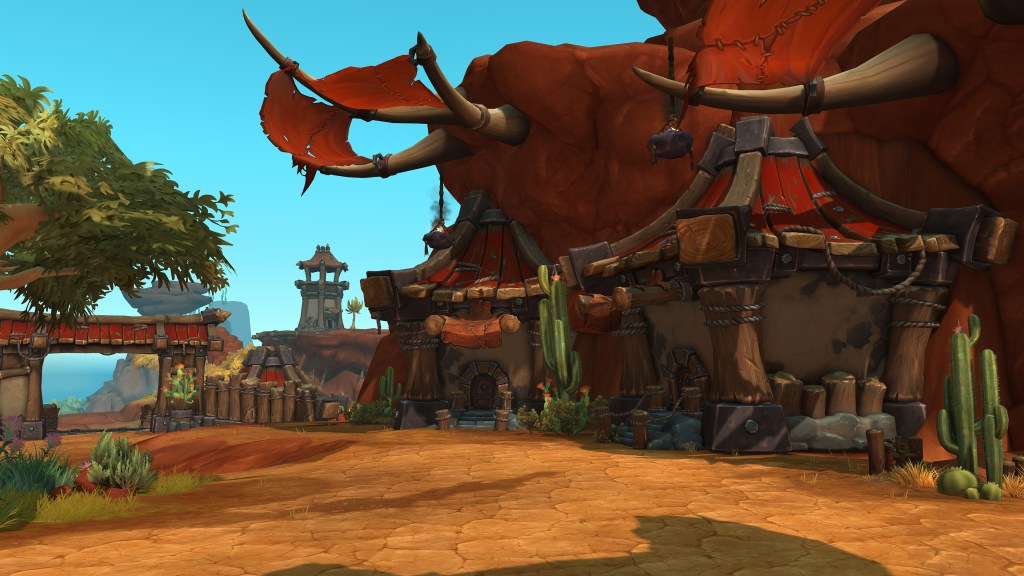
    At the beginning of this month, Blizzard released their anticipated Player Housing system into the World of Warcraft as an early-access/pre-order bonus for their upcoming expansion, Midnight. For years, for over a decade, people have been clamoring for this kind of customization and expression to come to Warcraft. Hell, it’s practically the only big MMO on the market that didn’t have something like this. It’s basically industry standard.

    On the whole, the system’s quite good. Buying a house could scarcely be easier, having a neighborhood of my guildmates rules, and furnishing my house has been a fun distraction: whether that be collecting decor items or placing them in my house and settling on a layout of rooms.

    Unfortunately, there’s some design decisions that really need a second pass. There’s trouble in paradise (or, at least, in Razorwind Shores). (And whatever the name of the Alliance’s neighborhood is.)


    Limited-Use Decor

    The first issue one is likely to encounter when furnishing their digital home is this: for every door, every chair, every candle one wants to place, you have to have collected that many copies thereof. If I want a dining room with two tables and six chairs each? I’ll need to buy both tables and a dozen individual chairs to make it happen.

    The price of these items aren’t all terribly exorbitant, but it doesn’t sit right with me that this plain old stool requires multiple purchases to fill out every edge of a table, with another for a desk, and more for a reading nook or study. And I did say they aren’t all pricey; some of them do have a meaningful cost making multiple copies a large investment of time or money, because with the existence of the WOW Token, every piece of gold has some equivalent real-world value.

    Obviously this is meant to function as a gold sink, but I think its execution is all wrong. Better in my view for some items to be limited per use – the Maelstrom Altar I earned from all the activities I did in Legion on my shaman? I don’t take umbrage with that being limited. However, such items should be the exception, not the rule. As for the gold sink, maybe these “common” decor items with unlimited uses could cost a small amount more to unlock, and the majority of the drain on the economy could be spent on expanding the size of the house, our interior decor budget, alternative facades, or interior utility items like teleporters and profession hotspots; things that are permanent, account-wide bonuses. Something of the like, at least.

    Especially since some decor items will eventually be bought with real money from the in-game store. We don’t know much about how this will look yet, but I think it’s fair to assume they’ll likely be selling these items in bundles. If we want five of a special shop-only chair, but they’re only sold in multiples of four? Pony up twice or find an alternative, sorry pal.

    And this all gets worse when we consider the overall collection limit.


    Be Careful What You Collect?

    In a mad dash to fill their decor collection with a few copies of every item they’d unlocked, a few users discovered there is an overall cap on the number of decor items we can have at our disposal at any given time. This is entirely at odds with the game’s myriad other collection systems. We’ve never reached a hard cap on the number of mounts, pets, or armor appearances we can collect; each season simply adds a new swathe of things to add to our mountainous hoards.

    I certainly understand that there’s a real-world cost to storing data, especially on the scale that an MMO requires, but a limitation on this spiraling out of the requirement that I own several individual copies of all the light fixtures I want to mount on my walls? It just feels … misaligned. As Warcraft has evolved in recent years, it’s become more-and-more collection-focused. In Midnight, we’ll earn the alternate colors of our class tier sets from the lower difficulties whenever we complete a set. I just can’t help but imagine that the variables they’ve included forced them to install this limitation, and they’d only hoped it wouldn’t be discovered so soon.


    A New Source of Loot Drama

    The night after housing was released, after I’d played with the system a bit, I logged back over to Legion Remix to work on the last few thousand Bronze I needed to complete my goal of buying everything from the event vendors. As each night before, I pinged my guild and got the usual suspects together. Things proceeded much as we all expected, until we ran the Nighthold. There, after beating Spellblade Alluriel, we discovered a new item had been added to her loot table: a Nightborne-themed fountain.

    But, only one dropped, and we had to roll to win it from one another.

    Naturally, we all have many max level characters. If anyone was desperate to have this fountain, they could get it pretty easily. But … it’s weird it’s a roll-off to begin with, right?

    Like, come Midnight, we’re going to be doing raids and dungeons we can’t just solo on our own. Maybe that rug from this boos is really going to tie the whole room together, but for me to have it, everyone else that was involved in whatever activity has to wait until next time? Why aren’t these just awarded to everyone?

    Not to mention that presently some of these items aren’t popping up a window prompt to roll for them, but are instead just looted by whoever clicks the boss fastest.


    The bottom line is this: Blizzard’s player housing is good. Hell, I don’t play a lot of other MMOs, it might be the best on the market. (I certainly like it more than ESO’s.) But, with the above issues, I don’t think the system will ever be the best that it could be. Falling short of that peak just seems so … unnecessary.

    As always, thank you for reading. Now, if you’ll excuse me, I’ve got to reconfigure my house’s whole layout. Again.

  • The Lasso Way

    The Lasso Way

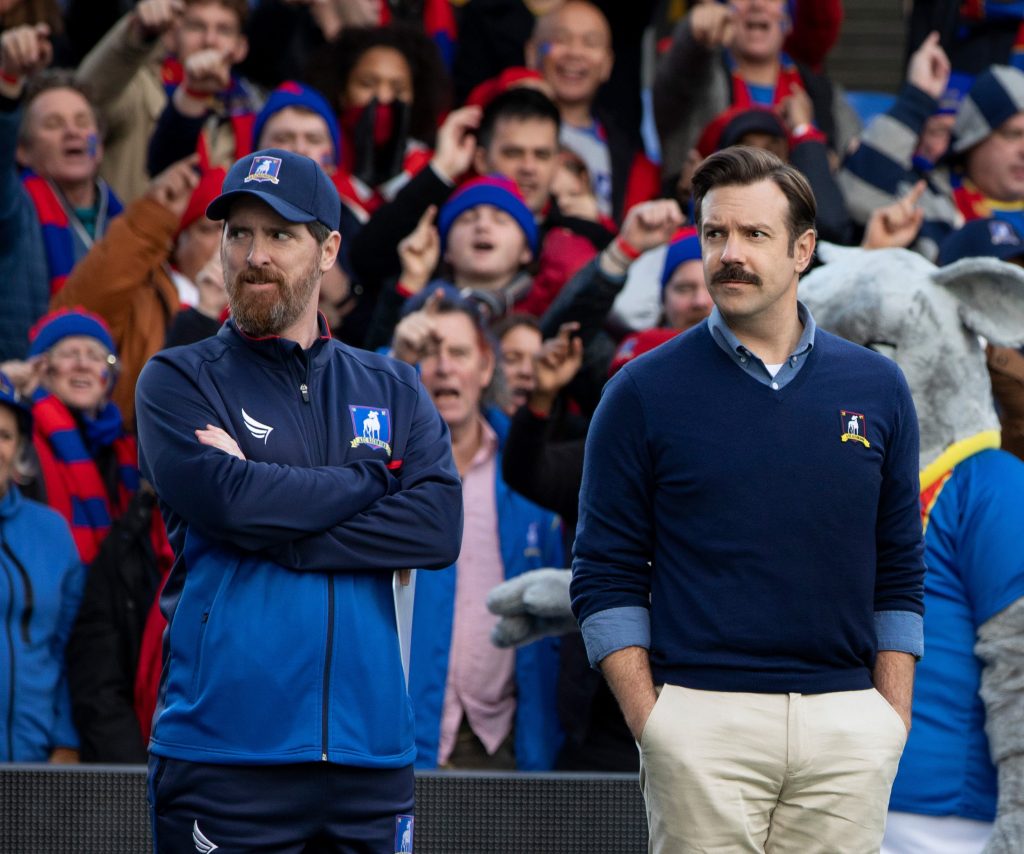
    On the whole, I don’t subscribe to many streaming services. I’ll have something for a month or two when something I really want to watch is airing, but I need that push, that hook, to cave and check something out. When the Murderbot adaption started airing in May, I ended up using the AppleTV service for the first time.

    Now, between writing, painting, and gaming, I wasn’t sure I’d get around to watching a lot of what the platform has on offer. I’ve been keeping up with Murderbot, of course. I’d heard no end of praise for Severance, so I watched that. Then, I had a friend and my brother both recommend Ted Lasso, and somehow this one about an old commercial character snuck in between all the rest and grabbed me.

    I’ve never had much interested in sports (much less English Football), but this show firmly establishes that as its backdrop for the interactions of these characters and their arcs early on. They’ll show snippets of games, but how these people come to interact with football, their teammates, and the other people in their lives is what the show is really about.

    And, it’s a damn good show. I wanted to hit on a couple of reasons as to why I think that is. Spoilers ahead.


    Impeccable Characterization

    If there’s a spectrum, this show sits more on the sitcom end than the drama end, but it’s still not entirely the former. Each episode progresses the overall story of this football club, and our characters don’t regress between the credits and theme song. They evolve (sometimes for the better, sometimes the worse) and retain that evolution unless they work to undo it.

    None exemplify this more than our lad Jamie Tartt. In a show full of standout characters, I don’t think there’s anyone else who grows as much as this guy.

    At the start, he’s a self-absorbed ass. He’s incredible at football and he knows it. During that first season, we see Ted slowly chip away at this exterior shell he’s built up, but just before we break all the way through, Tartt is transferred to another team. The reason behind this is unknown to our characters at first, and Jamie takes it personally. He thinks it was Ted’s choice to do this; that he’d been rejected, in the end.

    Still, Lasso’s impact on Tartt shines through. If it weren’t for a last minute pass – something he’d never do before Lasso’s training, his new team wouldn’t score a goal that ends their game in a win against Lasso’s team, Richmond. (The kind of game that’s about to be called a 1-1 victory for Richmond.)

    And that’s just his arc in the first season.

    But, when it comes to this shows incredible characters, the stand out for me is the man himself.


    Ted Lasso Is Superman

    Now, I don’t mean that literally, of course. He’s not secretly extraterrestrial and flying around or anything like that. However, this character behaves the way Superman does in his best stories.

    Ted Lasso has a nearly endless well of optimism and friendliness we seldom see break. He gives it is his all to inspire these footballers to be better versions of themselves, and he forgives them for their worst moments easier than they’ll forgive themselves. It starts slow, but we have no trouble believing how he manages to win all these people over – it’s the Lasso Way, after all.

    There’s been a thread or two on reddit with viewers seeing the same thing about this character – and that’s not hard to believe. We have a handful of little things that make this sound more intentional than not: Lasso’s from Kansas, the team’s primary colors are blue and red, and a major supporting character’s surname is Kent. They even reference the Daily Planet within the first two episodes.

    At a time when it’s easy to be cynical, it’s wonderful to have a little light shone. These stakes might not be high in the grand scheme of things, but that doesn’t make them any less meaningful for our characters.


    Not All Sunshine and Rainbows

    Naturally, the show isn’t just hopeful beat after hopeful beat. It’s got its share of drama and emotionality. Sometimes it’ll try to wring tears from your eyes just by showing you how far a character’s come since we’ve met them; others, it’s showing you how our characters got to where they were when they started, and asking implicitly how you think you’d behave under those circumstances.

    Now, it can be a little overwrought at times. The show is rarely subtle and even more rarely restrained. On the whole, I think it earns most of its indulgent moments, but that might not be to everyone’s taste. I’d still recommend the show, but I wouldn’t fault anyone for washing out.

    Luckily, the show’s primarily concerned with making its audience laugh and smile, so I never found it hard to watch.


    So, that’s Ted Lasso. Consider this a secret Ben Recommends. As always, thank you for reading. Now to figure out what the hell “offsides” means …

  • Reworking Tyranny of Dragons 1: Greenest

    Reworking Tyranny of Dragons 1: Greenest

    I mentioned last year that I’ve been running Tyranny of Dragons for my table. I used the module once before – back when it and 5e were in their infancy, and I was a much younger DM. I held onto a lot of lessons from running that game, and now, revisiting the module, I’ve made many changes to improve on what WOTC published.

    Because, frankly, the module is written as a pretty sloppy railroad.

    That doesn’t mean there’s not the potential for a good game in it, though.


    Improving Greenest

    As the module is written, the game opens with the party arriving while Greenest is under attack. From the road, they can see the smoke from the fires rising skyward and the blue blur of the cult’s dragon ally swooping overhead. There’s powerful imagery there, absolutely, but it also leaves a little too much to chance, doesn’t it? It wouldn’t be unreasonable for a party of level 1 adventurers to see the ongoing raid and think, This is too much for us. We’re nobodies. To assume that to intervene will end only in their own deaths – and the module is printed to begin at first level.

    I imagine WOTC hoped that this immediate, dynamic set of encounters would help onboard players into the campaign, but unless you run a really good session zero that impresses upon your players that they’ll be expected to play incredibly heroic to meet the module where it is, it leaves a lot open.

    I did two things to improve this.


    Starting on the Road

    I started with a much lower stakes first session, having our party all be part of a caravan journeying to Greenest from an undisclosed elsewhere. I left it up to each of them to decide why their characters were part of this caravan – perhaps Greenest wasn’t their final destination, perhaps they’d been following the trail of destruction left by the Cult of the Dragon as they raided Greenfields. (As part of our session zero, I encouraged the players to build PCs that would oppose the Cult of the Dragon’s activity and let them know they’d fight a fair amount of dragons throughout the campaign, inviting them to build characters with that style of encounter in mind.)

    We had a new player join the table for this campaign, so this slower start also helped them ease into character and the style of table we have. As part of this session, we had a small roadside ambush encounter and an investigation to discover that one of the travelers was a member of the Cult of the Dragon who’d drawn the guard and ambush drakes to attack the caravan. The death of an NPC guardsman ally with family in town gave them a reason to care about at least one group of potential survivors in the upcoming raid on Greenest, and delivering his belongings served enough of a quest to keep them together. (This was all emergent from the play of the first session – if I were to run this module again, I’d consider trying to lean on this further. Maybe I’d make this NPC the captain of the caravan and have them speak to the PCs individually, especially if they were not yet a group, just as mine weren’t.)

    (Also, I’d made some tweaks to the ambush drake statblock, but more on that in a later post.)

    The other major change – they leveled up from this encounter and investigation. Now at level two, they’d feel at least slightly more powerful for the incoming “dungeon.”


    Arriving at Greenest

    Map of Greenest from the module.

    Time is the most potent tool in the GM toolkit. See, I’d planned to kick off the assault on Greenest at night and I wanted the party to start in the center of town, inside the inn. However, the party was a group of particularly active characters, so I needed to ensure they stayed in Greenest overnight. Thus, After a long day of travel, just as twilight strikes the skies, you finally arrive at Greenest, exhausted and road-weary.

    I still had them propose leaving town after delivering the guardsman’s sword to his family to camp, to get that one hour of travel they could still swing based on the time of day. So, even this wasn’t perfect – but it did work.

    They ran a few errands in town, bought some supplies, and settled in at the tavern for some character RP. After a few minutes, I, despite having the information available surreptitiously, asked them outright for their passive perception scores. As they handed them in, I paused, then told the PC with the highest total that they began to hear something unusual – a slow thwump… thwump… thwump, muffled not only by the walls, but by distance. However, they were growing steadily louder: Thwump, Thwump, Thwump.

    And then, an unconscious stillness shattered against the dragon’s roar.


    The Raid on Greenest

    I opened with the blue dragon blasting a line of lightning through the town that struck the walls of the inn. Everyone in the party failed a Constitution save and were stunned as the inn trembled and lost one of its walls. They recovered after a few moments – had it been minutes, seconds? And heard the sounds of violence outside!

    In the town square, the cultists had swarmed into the market and were swiping goods from abandoned stalls and menacing townspeople. Our heroes erupted into action!

    I left many of the scenarios of the raid unchanged, though I adjusted the encounters in some areas. With all the people they rescued from the town square (including their guardsman ally’s family), they delivered them into the keep through the secret passage, then they held off against the cultists trying to breach into the fort, used the ballista to scare off the blue dragon (which required some doing! It had been in disrepair and the fighter literally braced the arms of the ballista on her back to allow the ranger to fire it), then ventured out into the town to reach the chapel of Chauntea to rescue the townspeople trapped within. (Here, I borrowed a little from Ebonskar. While the town burned, the chapel hadn’t caught fire despite the cultists’ attempts to set it ablaze.)

    And, finally, as they worked their way back to the keep with these townspeople in tow, they encountered the cult’s lieutenants: Langderosa Cyanwrath and Frida Maleer. (Yes, I changed their names from the module, I didn’t like them much.) As we’ll discuss in the next post in the series, I’d made some MAJOR changes to these characters, including ones I thought would make Cyanwrath more likely to allow the heroes to rescue the people within the chapel – though he still demanded a duel. Our melee-focused sorcerer accepted, got torn apart, and Cyanwrath held to his word (despite Frida’s jeering) and allowed them to escort the townspeople to the keep.

    However, there were many other townsfolk who did not benefit from the party’s intervention, and they were carried off to …


    The Cultist Camp

    I preserved the encounter with some lazier members of the raid lagging behind from the rest, and our party elected to steal their robes to infiltrate the camp. Within, the party was able to see the cult preparing for a mass sacrifice later in the evening – the reason they’d captured the townsfolk to begin with. There were more prisoners than just those taken from Greenest; the cult had taken some hostages from the other towns they’d raided, and it was going to take some serious finesse to rescue them all before the pyre burned.

    Luckily, they had an ally within. I made major changes to the module’s character or Leosin Erlanthar – namely, I changed him into an orc monk named Brok Stonebrow. He’s still a member of the Harpers, but one of the members of the party was his protégé, and had come to Greenest with Brok to try and infiltrate the cult.

    Surreptitiously, they met in the small caves that wind through the walls of the gulch, and they were able to work with him to devise a plan to rescue the townsfolk. This was almost entirely player-directed – I gave them the scenario, they worked it out from there. They knew they needed to handle the cultists in the watchtowers, and lead the townsfolk around the edges of the gulch to avoid the eyes of the celebrating cultists and mercenaries.

    I recognize this amount of freedom might not work with every table, but that’s the benefit of Brok / Leosin not getting himself captured. If your party needs more direction, he can give them more straightforward ideas; at a minimum, he can point their thoughts to the problems they need to solve, to save them from getting stuck on a tangent or lost in the weeds.

    The players ultimately succeeded, and this gave me another opportunity to display the cult’s ruthlessness. Rather than cut their losses, when the party later returned to investigate the Hatchery (some more on that in the next post), they discovered the cultists substituted their sacrifice of the villagers with the mercenaries who’d aided them in their assaults. Such savagery would only hint at the things to come …


    Wow! That was a long one. Before you go, I wanted to direct anyone looking for further reading right now to the subreddit dedicated to discussing this module. It certainly gave me many ideas that I’ve been using in my game.

    As always, thank you for reading! I hope this series of posts will be of use to someone – maybe even just as an example of how we might improve upon the ideas we find within the pages of a module. But, that’s certainly enough out of me; see you in the next one. Good luck out there, heroes.