Category: RPGs

  • Reworking Tyranny of Dragons 2: Preserving Characters

    Reworking Tyranny of Dragons 2: Preserving Characters

    One of the ways I think Tyranny of Dragons is most inconsiderate of its own resources is the way the module uses its own characters. Particularly the villains of Hoard of the Dragon Queen (the first half of the module, formerly sold as a separate book). By the time the party hits Rise of Tiamat, they’ll be interacting with the Council of Waterdeep and meeting familiar faces when they do. Before then, who do they have? Leosin? Maybe Rath Modar’s apprentice, if they interact with him during the On the Road chapter?

    Cyanwrath and Mondath are meant to be discovered in the Dragon Hatchery and likely killed on what is at most their third interaction with the party (but more realistically, it’s the second). Rezmir travels incognito, so they won’t interact with her much before facing her in Skyreach Castle. Within Skyreach, they’re meant to encounter Rath Modar who escapes, but the first time I ran this module, he failed to do so. (Sentinel and one spell cast per turn really messed him up.) The party has no way to learn about Dralmorer Borngray before facing him in Naerytar. These characters all have custom stat blocks! Official artwork! Yet none of them get used more than once?

    It’s wasteful.

    So, we changed a lot here – at least for some of them. Let me explain.


    Langderosa Cyanwrath

    Named Langdedrosa in the module, Cyanwrath is presented as a champion fighter of the Cult of the Dragon who loves a good one-on-one duel and is willing to exchange captured hostages to the party’s custody to get one. He’s even got a savage streak, striking them once more when they’re down or killing the NPC that will duel him (if the players refuse) after he’s already beaten.

    I changed him entirely.

    Back in session zero, I told my players that there would be opportunities throughout the campaign to pull people out of the Cult of the Dragon – that very few of them were so far gone as to be absent all reason. I had two specific characters in mind when I said this: Azbara Jos (more on him later) and Cyanwrath.
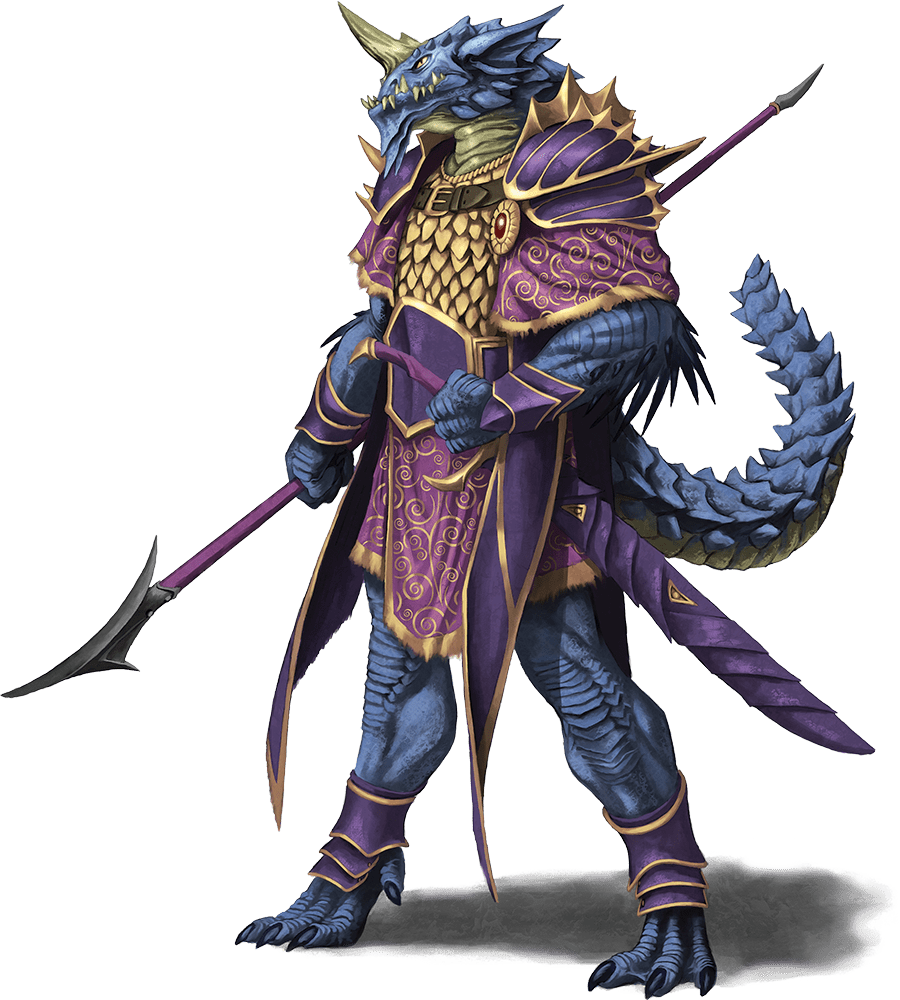
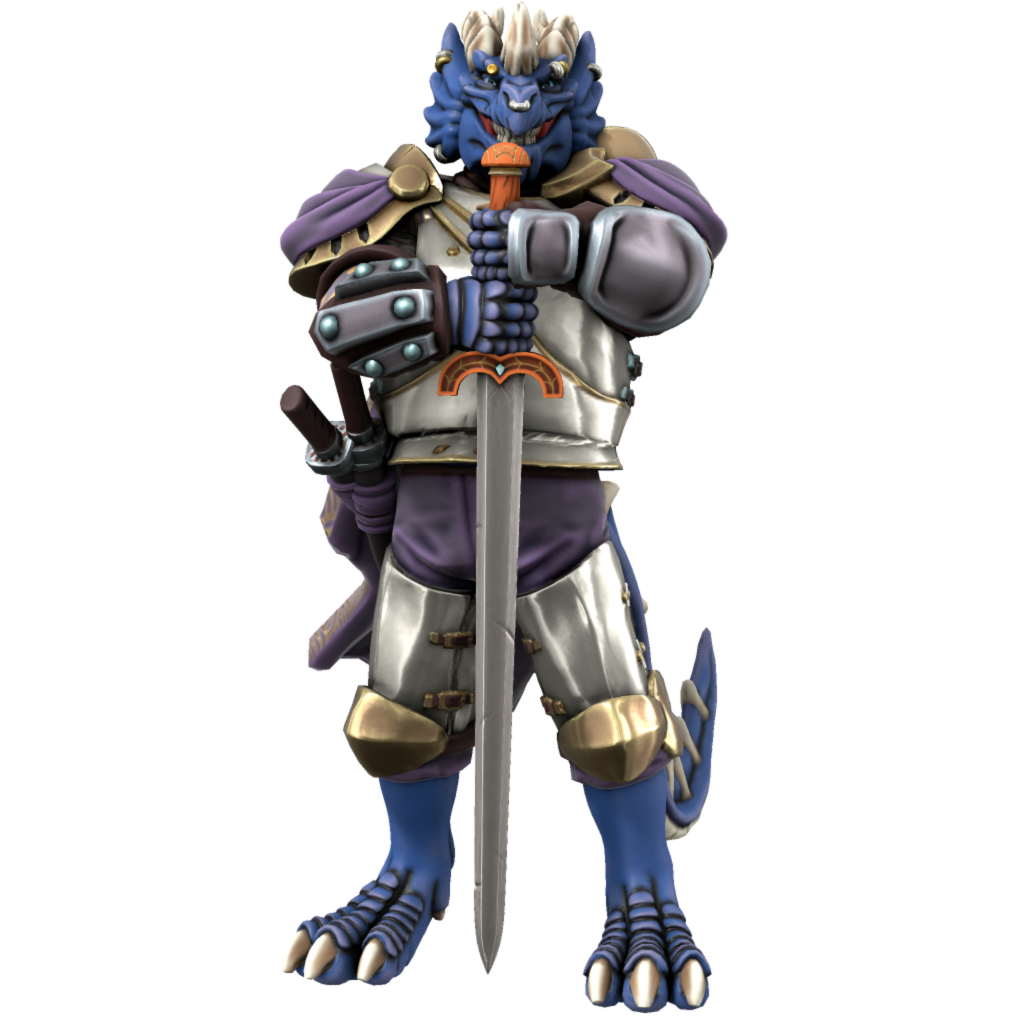
    Cyanwrath from the Hoard of the Dragon Queen Module
    Re-imagined Cyanwrath made with HeroForge

    Rather than the brash and devoted warrior, I reimagined Cyanwrath as someone who’d never been given any agency in his life. His father, Lennithon, the blue dragon that aids the assault on Greenest, had allied with the Cult of the Dragon before his birth, and he was raised in that cruel and careless environment. I envisioned him as possessing a strong sense of honor and compassion – one he had to actively work to suppress while with the Cult of the Dragon to the extent that he would overreact to any doubts or aspersions with vehemence. But nevertheless, it peeked through.

    His mercy at Greenest was the first of these cracks the party witnessed. With that flimsy justification of a duel, he was able to allow the heroes to escort the villagers away and still hold that shred of believability. Later, when our party rescued the villagers from the cultist camp, they saw Cyanwrath at the edge of the entrance, in position to try and chase them down and perhaps catch them, slowed as they were by their charges. Instead, he returned to the camp.

    Over the course of the long trip from Baldur’s Gate to Waterdeep, the party kept working at this knot, and eventually Cyanwrath sought them out himself, trying to make sense of his inclinations and his upbringing. He even joined the party as an ally as they delved into a homebrew dungeon I added in the middle of the On the Road chapter to break up the days and days of travel, aiding them in rescuing a pregnant mother from the clutches of a hag (more on that in a future post).

    However, despite how he tried to hide his decision to aid the party, Frida and Rezmir knew, and tortured him for failing to cut them down.

    And on his behalf, the party intervened. They broke Cyanwrath free and sent him onward to Daggerford.

    And Frida came down upon them immediately.


    Frida Maleer

    In the module as Frulam Mondath, this was a character the players had no chance to turn away from the cult. However, instead of leaving her to die in the Hatchery, I retained her as the cult’s primary face during the long journey north. She served as Rezmir’s voice on the road, and when the party sprung Cyanwrath, she insisted they be ejected from the caravan. The captain of the caravan tried to mediate the situation, but it was simply one party’s word against the other’s. With Frida as the only cleric in the caravan, no impartial party could provide a Zone of Truth.

    The captain managed to have them agree to allow the priests at the Temple of Waukeen to adjudicate once they reached Daggerford that afternoon. The trial ultimately fell the party’s way, but despite her arrest, I’d intended to keep using Frida – perhaps have the party encounter her once more in Castle Naerytar or Skyreach, but thanks to a few high perception rolls and Sending spells, the party intercepted Frida and the cultists who’d gone to break her out of prison and defeated them all.

    Despite my plans getting upended, I certainly feel like I got a lot more out of Frida than I would’ve gotten from Frulam Mondath. Even in death, thanks to a Detect Thoughts spell, she gave the party a lot of information about their upcoming adventures.
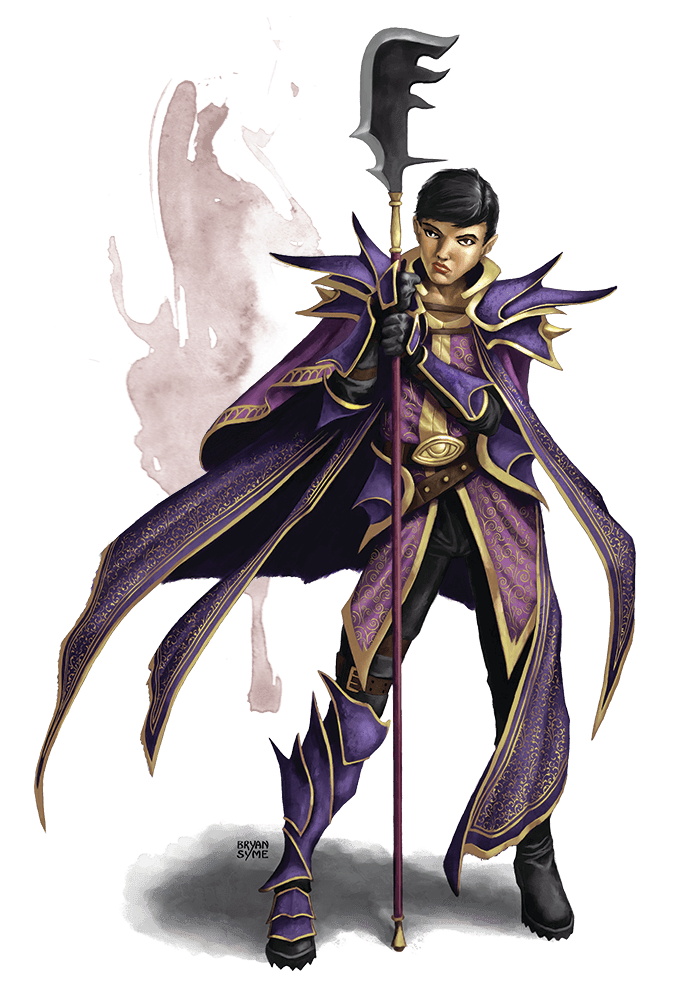
    Frulam Mondath artwork from the Hoard of the Dragon Queen Module.

    Azbara Jos

    Despite some major edits to his character, I didn’t actually change this name much. I settled on “Azbara Jhos,” so for clarity, we’ll use Azbara when I mean the version of the character from the module, and Jhos when I mean my version of the wizard.

    Now, first things first, I think there’s too little race-variety in this module (it’s one of the reasons I made Leosin into the orc Brok) (I also just like orc heroes). One of my players picked genasi for her race, and I made Jhos one, too. I imagined him as a young wizard – a true apprentice, one who fled Thay and had no option but to accede to his master’s plans. At only 19 years old, this was another character the party could’ve pulled out of the cult.
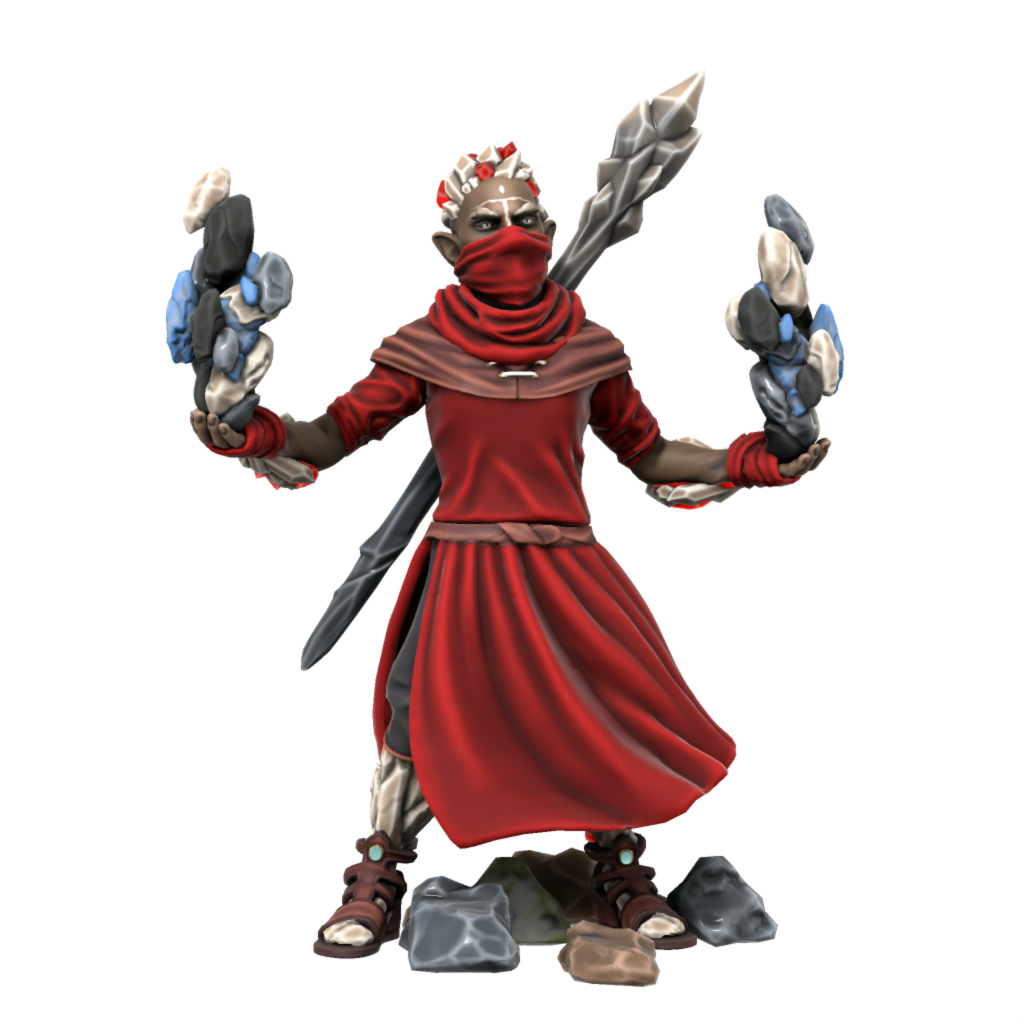


    Azbara Jhos re-imagined with HeroForge
    Azbara Jos from the Hoard of the Dragon Queen Module

    (That “could” is giving a lot away, isn’t it?)

    As in the module, Jhos joined the caravan and didn’t socialize much. What few times he might’ve been seen, he’d have been talking to Frida, until trolls ambushed the caravan. There, he got a proper introduction: flinging fireballs at the trolls when the party was only just cresting level 4. Even despite benefiting from the caravan’s ability to travel safely and without delay, it’s hard for me to imagine Azbara doing the same. Jhos got hailed as a hero, and then the party started poking at that scab throughout their journey.

    They were only a few carefully chosen words from rescuing this guy, but, unfortunately, it didn’t materialize. He met his end when the party battled him and Rath Modar in Skyreach Castle. When they arrived, they overhead him just about to spill the beans on them all to Rath Modar after the two had discussed the cult’s swelling need for mages. Taking that last tidbit to heart, our party’s fighter felt they couldn’t risk leaving Jhos alive, and struck him down.

    Rath, however … Heh. Let’s just say I only ever need to learn a lesson once.

    Rather than being present in the flesh, I imagined that Rath might need to be in many places at once to prove his value to the cult. Thus, the Rath Modar present at Skyreach Castle was merely a simulacrum that crumbled into a rapidly melting mound of snow upon his defeat. The party still got to learn a lot about the wizard – his capabilities, some of his spells, but he was never in danger of being lost so early.

    And, there’s one final character I wanted to discuss here.


    Talis

    Shortly after session zero, I asked my player who chose to play a Draconic Sorcerer if he’d be up for a connection to a character in the module in his backstory. I pitched that he and Talis were childhood friends, meeting while both under the tutelage of a wizard. (I also did make her a wizard, rather than a cleric.)

    While on the road, the party used Sending to contact Talis and discovered that she’d become a hostage to the Cult of the Dragon, just as the sorcerer feared. She was unable to tell them much about where she was, but the party encountered her exactly where they would in the module: the Hunting Lodge they teleported to following their adventure in Castle Naerytar.

    There, she told them a troll kept her within the grounds, and that an abishai would often return to the lodge and might have some field around the area that would alert him if she left. Reunited with his childhood friend, the sorcerer urged his allies that they rescue her, and they battled the troll, then later the abishai as they flew up to Skyreach Castle.

    Once there, Talis revealed that she had developed some level of kinship with the white dragon within the castle – that he’d given her scales to make into armor (and here she dispelled an illusion that revealed the scale mail she’d been wearing all along). She urged that they visit the dragon, that perhaps she could turn him to their cause!

    And she absolutely betrayed them.

    It was glorious.

    Talis the White from the Hoard of the Dragon Queen Module.

    I think this wouldn’t have worked if the party hadn’t been successful with turning Cyanwrath. Even then – the party’s ranger/rogue multiclass was about the scrap the whole plan, feeling off about the whole thing. (Expertise in Deception never served me so well.)

    With Glazhael fighting them, Talis managed to effect an escape after a delightful villain monologue, and at time of writing, she has yet to turn back up in our game. Considering that the last time I ran this module, she died within an hour of the party arriving at the Hunting Lodge? I’d say we’re doing pretty well here.


    So! That’s how I’ve adjusted some of the characters from the first half of the Tyranny of Dragons module to give them some more longevity, some … recurrence. Even those we’ve lost along the way have still impacted the campaign in a much fuller way than their counterparts in the module. Now, I wouldn’t just outright say this is better as a matter-of-fact; it’s only different.

    And more to my liking, I guess.

    Anyways, thank you for reading! Good luck out there, heroes.

  • OneD&D, One Year In

    OneD&D, One Year In

    Almost a year ago now, Wizards of the Coast launched their slate of updated Core Rulebooks for D&D – then branded “OneD&D,” but mostly referred to as D&D 2024 or 5.5e by the community at large. After running the game using these books since December, I thought it’d be a good time to sit down with this edition’s update and consider what it’s done for this hobby and game during its tenure, and perhaps speculate on what it might mean for its future.


    A Refresher on My Credentials

    I’ve been running D&D or another system for more than half my life at this point with few breaks or stoppages. Since late 2020, I’ve run a weekly game through discord and talespire. With my table, we’ve run a homebrew game from level one to twenty, tried pathfinder 2e, ran a “season” of Blades in the Dark, and we’ve been working our way through Tyranny of Dragons for over a year now with a few roster changes along the way.

    I’ve also been playing as a fighter in a game run by another friend once a month for a year now with a rather large party, made of mutual friends from our guild on World of Warcraft.

    Lastly, I’ve also been running a biweekly/once-a-month game with my brothers and my mom (who practically never played D&D before) since January.

    I play D&D a lot.


    The New Player Experience

    Much like 5e before it, I think 5.5 still serves as an excellent entry point into this hobby. While the rules hide a secret complexity beneath the hood, they rarely layer on themselves so precariously that it becomes hard to understand. Since the launch of 5.5, I’ve seen a total of about 9 people play D&D for the first time, and each of them is becoming more and more proficient with the rules each session.

    This system has always had the benefit of its ability to just get out of the way when it needs to. It’s got a looseness to its rules that leave it feeling more malleable than something more nailed down, like Pathfinder 2e. Even leaning into something that isn’t intended by the rules for the sake of the fun of your players rarely backfires too terribly; as DMs, we have a wide arsenal of knobs and dials we can twist to keep the game balanced and fun for the whole table.

    As an example, in the game with my warcraft guildmates, we’re running the rules on the monk’s ability to grapple and how effective it is in a way that’s a bit more powerful than it would be with the exact language of the rules. But, it’s been a blast for the monk and everyone else, and the DM will always have the opportunity to run monsters that can break grapples more efficiently – or perhaps incorporeal foes that can’t be grappled to begin with, should he need that to be relaxed for an encounter.

    And, for returning players, the game feels near-frictionless to those of us who spent any amount of time playing 5e. It is, after all, almost the same system.


    Character Options and Power Scaling

    Out of the whole system, I think this is where the bulk of the adjustments lie, and they run in both directions. Outliers in balance from the original 5e launch have been reined in; many classes and abilities that were falling behind have been brought forward. This hasn’t been perfect, obviously. Some changes still fall way off the mark, such as the Ranger’s level 19 capstone buffing Hunter’s Mark’s damage dice, but I think most have been good.

    Smite, for example, took a nerf, requiring a bonus action to cast. This reduced the ability of a paladin PC to “nova” – to spend their resources at an extremely liberal rate to burst through the enemies faced in an encounter. Sharpshooter and Great Weapon Master both lost their ability to take a reduction on your roll-to-hit in exchange for damage, but when something provides that much additional throughput, it stops being optional. Taking that direct power away from those feats brought them more level with other options, and both still provide valuable bonuses to appropriate characters.

    Healing spells have taken a large swath of buffs; Cure Wounds and Healing Word both roll twice as many dice when cast. Aura of Vitality no longer requires your bonus action each turn to activate its healing. Where these spells often felt like a misused action in 5e, in 5.5, they can truly make the difference in whether or not a PC falls in combat before reaching 0 hit points.

    Weapon Masteries on the other hand, have an odd level of impact. Some, like Vex and Nick, adjust one’s playstyle with enough impact that they’re easy to remember and use each turn. Others, like Slow, rarely feel like they’re meaningful with how sticky combat in 5.5e continues to be. (The fighter I’ve been playing has been using a longbow almost exclusively, and I’ve never remembered to call out Slow.) Then, options like Push and Topple are very potent when compared to the other mastery options. The table’s got some wobble, is all I mean to say – not that it isn’t good for martials to have these abilities.


    Nerfed Spells

    As part of the redesign, a couple of spells took a hit. Some are a bit odd – changing Inflict Wounds to a Constitution saving throw instead of a hit roll to eliminate its ability to critically strike while also reducing its damage by 1d10 seems heavy handed to me. This was a staple spell for our cleric in the game I ran to level 20, and it never felt like the spell that made him too potent in any battle. If any spell claimed that title, it’d have been Spirit Guardians, which itself took a mixed adjustment. It now can effect enemies whenever they enter the area, meaning you can use it like we might in Baldur’s Gate 3 and run over enemies like a lawnmower on our own turns; however, it also only affects enemies that remain in the effect at the end of their turn rather than the start, where before it might eliminate an affected target before it could act.

    Counterspell also had a major adjustment that changed the texture of the whole spell, but I think it’s for the better. We’re up to level 9 in my Tyranny of Dragons campaign, and at a similar level in the homebrew game prior, Counterspell got a lot more use. Now, it’s much less automatic; both as an option, and also in effect. Now that this spell always involves a die roll, I feel it’s better on both sides of the screen. Neither your players nor your monsters will have their entire turn upended by a single reaction; instead, it’s always down to the dice.


    Monster Adjustments

    I remember in the run-up to 5.5, back when we were on the edge of the horizon getting Mordenkainen’s Monsters of the Multiverse, people were worried that many monsters were going to be doing Force damage with their physical attacks; that many spells had been replaced by “spell-like abilities” that would not be valid Counterspell or Dispel Magic targets. So far, I haven’t used anything in my games or faced anything in my friend’s game that did Force damage when we expected Bludgeoning, Piercing, or Slashing.

    I have, however, used some of the new spell caster stat blocks, and their multiattack spell blasts are pretty wild. I appreciate the goal here – just writing a list of spells the DM needs to familiarize themselves with isn’t a particularly elegant way to write a stat block; however, these not-spells often have a very high damage output, surpassing even that of Fireball when that spell is intentionally over-tuned. The only drawback there is that you’re only hitting one creature at a time, but then, if you’re playing with experienced Dungeons and Dragons PCs, they’re already spreading out to dodge the fireball they’re expecting from an enemy wizard.

    And, the “Arcane Burst” or similar abilities allow the wizards to use their bonus actions for Misty Step and get around the one-spell-per-turn-rule while also avoiding attacks of opportunity. (Of course, Arcane Burst can also just be used as a melee attack, so they don’t really even need to move when they use it.)

    On the whole, I think monsters have changed for the better. Player Characters got a bump in power; monsters received the same. That allows the choices made in encounters to be more interesting and dynamic, and that’s always a good trend for the design of D&D.


    The Opportunity Cost

    Despite being an overall positive adjustment to the game, I can’t help but feel a sense of … uncertainty when it comes to 5.5. Over its ten years on the market, 5e swelled D&D’s popularity to never-before-imagined heights from a confluence of events no one could’ve predicted. An easy to run and play ruleset met the rise of actual-play podcasts and unscripted shows using TTRPGs as their engine. Critical Role, Dimension 20, NADDPOD, The Adventure Zone and so many more broadened the appeal of D&D to a whole new audience; one that continues to expand.

    With all that in mind, it’s easy to see why Wizards would choose to stick close to 5e and only make tweaks to their rules, rather than scrap it all in favor of something new. They truly captured lightning in a bottle in 2014, but now, in 2025, I’m not one to bet on them managing that again.

    That game is the same, ultimately, and it feels like it’s losing steam. Right now, we have Daggerheart as the new kid on the block, and it’s getting a lot of buzz – including Crawford and Perkins joining Darrington Press just a few weeks ago. Couple that with WOTC’s seeming inability to make good decisions, and it’s easy to see why people are happy to look for something new. Hell, I’ve been running this game forever and I’m extremely comfortable with it. I’ve got stat blocks lodged into my brain; I don’t even use notes at all for some of the sessions I run for my family. And yet, despite that familiarity, of the three or four campaign ideas I have rattling around in my head to run after Tyranny of Dragons, only one feels like it would fit best with D&D. Everything else might be better served by another system.

    Personally, I believe launching a fresh 6th edition would’ve been the better choice, and an almost surefire win for WOTC. If it’d been good, it’d have recaptured the audience and held them in. If it wasn’t, people would’ve kept playing 5e, just like they did when they didn’t like 4th edition as much as 3.5, and we’d be in more-or-less the same spot as we are now. Instead, WOTC doubled down on 5e after it has already been showing its age, and I’d hesitate to say they’ll have the same level of buy-in for their next edition. If they even get one.

    And it’d be sad to see it go – I’ve loved D&D since the first moment I played it. But, as I said when we hit the OGL drama in 2023, this hobby is bigger than D&D. It’s grown beyond it, despite how much it still dominates as the most popular game within it.


    As always, thank you for reading. Good luck out there, heroes.

  • Reworking Tyranny of Dragons 1: Greenest

    Reworking Tyranny of Dragons 1: Greenest

    I mentioned last year that I’ve been running Tyranny of Dragons for my table. I used the module once before – back when it and 5e were in their infancy, and I was a much younger DM. I held onto a lot of lessons from running that game, and now, revisiting the module, I’ve made many changes to improve on what WOTC published.

    Because, frankly, the module is written as a pretty sloppy railroad.

    That doesn’t mean there’s not the potential for a good game in it, though.


    Improving Greenest

    As the module is written, the game opens with the party arriving while Greenest is under attack. From the road, they can see the smoke from the fires rising skyward and the blue blur of the cult’s dragon ally swooping overhead. There’s powerful imagery there, absolutely, but it also leaves a little too much to chance, doesn’t it? It wouldn’t be unreasonable for a party of level 1 adventurers to see the ongoing raid and think, This is too much for us. We’re nobodies. To assume that to intervene will end only in their own deaths – and the module is printed to begin at first level.

    I imagine WOTC hoped that this immediate, dynamic set of encounters would help onboard players into the campaign, but unless you run a really good session zero that impresses upon your players that they’ll be expected to play incredibly heroic to meet the module where it is, it leaves a lot open.

    I did two things to improve this.


    Starting on the Road

    I started with a much lower stakes first session, having our party all be part of a caravan journeying to Greenest from an undisclosed elsewhere. I left it up to each of them to decide why their characters were part of this caravan – perhaps Greenest wasn’t their final destination, perhaps they’d been following the trail of destruction left by the Cult of the Dragon as they raided Greenfields. (As part of our session zero, I encouraged the players to build PCs that would oppose the Cult of the Dragon’s activity and let them know they’d fight a fair amount of dragons throughout the campaign, inviting them to build characters with that style of encounter in mind.)

    We had a new player join the table for this campaign, so this slower start also helped them ease into character and the style of table we have. As part of this session, we had a small roadside ambush encounter and an investigation to discover that one of the travelers was a member of the Cult of the Dragon who’d drawn the guard and ambush drakes to attack the caravan. The death of an NPC guardsman ally with family in town gave them a reason to care about at least one group of potential survivors in the upcoming raid on Greenest, and delivering his belongings served enough of a quest to keep them together. (This was all emergent from the play of the first session – if I were to run this module again, I’d consider trying to lean on this further. Maybe I’d make this NPC the captain of the caravan and have them speak to the PCs individually, especially if they were not yet a group, just as mine weren’t.)

    (Also, I’d made some tweaks to the ambush drake statblock, but more on that in a later post.)

    The other major change – they leveled up from this encounter and investigation. Now at level two, they’d feel at least slightly more powerful for the incoming “dungeon.”


    Arriving at Greenest

    Map of Greenest from the module.

    Time is the most potent tool in the GM toolkit. See, I’d planned to kick off the assault on Greenest at night and I wanted the party to start in the center of town, inside the inn. However, the party was a group of particularly active characters, so I needed to ensure they stayed in Greenest overnight. Thus, After a long day of travel, just as twilight strikes the skies, you finally arrive at Greenest, exhausted and road-weary.

    I still had them propose leaving town after delivering the guardsman’s sword to his family to camp, to get that one hour of travel they could still swing based on the time of day. So, even this wasn’t perfect – but it did work.

    They ran a few errands in town, bought some supplies, and settled in at the tavern for some character RP. After a few minutes, I, despite having the information available surreptitiously, asked them outright for their passive perception scores. As they handed them in, I paused, then told the PC with the highest total that they began to hear something unusual – a slow thwump… thwump… thwump, muffled not only by the walls, but by distance. However, they were growing steadily louder: Thwump, Thwump, Thwump.

    And then, an unconscious stillness shattered against the dragon’s roar.


    The Raid on Greenest

    I opened with the blue dragon blasting a line of lightning through the town that struck the walls of the inn. Everyone in the party failed a Constitution save and were stunned as the inn trembled and lost one of its walls. They recovered after a few moments – had it been minutes, seconds? And heard the sounds of violence outside!

    In the town square, the cultists had swarmed into the market and were swiping goods from abandoned stalls and menacing townspeople. Our heroes erupted into action!

    I left many of the scenarios of the raid unchanged, though I adjusted the encounters in some areas. With all the people they rescued from the town square (including their guardsman ally’s family), they delivered them into the keep through the secret passage, then they held off against the cultists trying to breach into the fort, used the ballista to scare off the blue dragon (which required some doing! It had been in disrepair and the fighter literally braced the arms of the ballista on her back to allow the ranger to fire it), then ventured out into the town to reach the chapel of Chauntea to rescue the townspeople trapped within. (Here, I borrowed a little from Ebonskar. While the town burned, the chapel hadn’t caught fire despite the cultists’ attempts to set it ablaze.)

    And, finally, as they worked their way back to the keep with these townspeople in tow, they encountered the cult’s lieutenants: Langderosa Cyanwrath and Frida Maleer. (Yes, I changed their names from the module, I didn’t like them much.) As we’ll discuss in the next post in the series, I’d made some MAJOR changes to these characters, including ones I thought would make Cyanwrath more likely to allow the heroes to rescue the people within the chapel – though he still demanded a duel. Our melee-focused sorcerer accepted, got torn apart, and Cyanwrath held to his word (despite Frida’s jeering) and allowed them to escort the townspeople to the keep.

    However, there were many other townsfolk who did not benefit from the party’s intervention, and they were carried off to …


    The Cultist Camp

    I preserved the encounter with some lazier members of the raid lagging behind from the rest, and our party elected to steal their robes to infiltrate the camp. Within, the party was able to see the cult preparing for a mass sacrifice later in the evening – the reason they’d captured the townsfolk to begin with. There were more prisoners than just those taken from Greenest; the cult had taken some hostages from the other towns they’d raided, and it was going to take some serious finesse to rescue them all before the pyre burned.

    Luckily, they had an ally within. I made major changes to the module’s character or Leosin Erlanthar – namely, I changed him into an orc monk named Brok Stonebrow. He’s still a member of the Harpers, but one of the members of the party was his protégé, and had come to Greenest with Brok to try and infiltrate the cult.

    Surreptitiously, they met in the small caves that wind through the walls of the gulch, and they were able to work with him to devise a plan to rescue the townsfolk. This was almost entirely player-directed – I gave them the scenario, they worked it out from there. They knew they needed to handle the cultists in the watchtowers, and lead the townsfolk around the edges of the gulch to avoid the eyes of the celebrating cultists and mercenaries.

    I recognize this amount of freedom might not work with every table, but that’s the benefit of Brok / Leosin not getting himself captured. If your party needs more direction, he can give them more straightforward ideas; at a minimum, he can point their thoughts to the problems they need to solve, to save them from getting stuck on a tangent or lost in the weeds.

    The players ultimately succeeded, and this gave me another opportunity to display the cult’s ruthlessness. Rather than cut their losses, when the party later returned to investigate the Hatchery (some more on that in the next post), they discovered the cultists substituted their sacrifice of the villagers with the mercenaries who’d aided them in their assaults. Such savagery would only hint at the things to come …


    Wow! That was a long one. Before you go, I wanted to direct anyone looking for further reading right now to the subreddit dedicated to discussing this module. It certainly gave me many ideas that I’ve been using in my game.

    As always, thank you for reading! I hope this series of posts will be of use to someone – maybe even just as an example of how we might improve upon the ideas we find within the pages of a module. But, that’s certainly enough out of me; see you in the next one. Good luck out there, heroes.

  • My Experience Running Pathfinder 2e

    My Experience Running Pathfinder 2e

    Spinning out of the OGL fiasco earlier this year, I decided with my table to give Pathfinder 2nd Edition a try when we began our new campaign. It’s been just about 5 months now, and after 14 sessions, I’ve come to the conclusion that the system is a very poor fit for me. Each time we got deeper into the game, as we came to understand more of its rules and functions, I found more and more to dislike about it.

    A lot of it comes down entirely to personal preference. What I’ve been upset with in the system might be the selfsame things its foremost fans love. As an example, I think the system sacrifices a lot of things that are mysterious, exciting, or interesting in the name of balance. There’s a well-defined table listing the number of gold pieces and magic items your party should find at each level. Weapon runes are baked directly into the game’s scaling arithmetic, so missing out on one feels way worse than not finding a magic weapon in D&D. The magic items themselves are narrow, incremental bonuses – never providing that oomph that powerful items grant in D&D.

    And, again, the DMs and players who like for that to be codified in that way will be glad for it – for me, it felt like it took the magic away. (More on that later.)

    So, that’s the topic of today’s post – my experience running Pathfinder 2e. What I liked, what I didn’t, my major gripes with the system, and why I decided to switch back to 5e D&D for my campaign.


    Pathfinder’s Strengths

    Even despite all the things that I dislike out of preference, I can still appreciate a lot of stuff that Pathfinder does. I really like the way they set-up their dragons as opposed to 5e: after the dragon uses its breath weapon, you roll 1d4 to see how many rounds it needs to recharge, instead of rolling a 33% chance at the start of the dragon’s turns. And, any time they score a critical hit, their breath immediately recharges, which they can theoretically fish for before locking them out of using it that turn. I liked that so much, I decided to rip that out and carry it back to D&D.

    Then, any time you roll 10 over the difficulty threshold of an action (be it a saving throw, skill check, or attack roll), your result becomes a critical success. This changed the texture of Armor Class a bit, as the higher value your AC was, the more it mitigated damage by preventing critical blows. (This, additionally, is something I’m adapting a bit for D&D – if someone exceeds a creature’s AC by 5, they get 5 additional points of damage.)

    Pathfinder’s 3-Action system also provided a lot of opportunities to think tactically through your turn, potentially sacrificing some things that are baseline parts of your round in 5e. You might not need to move, so you can drop that spare action point into striking out against someone an additional time, or attempting to knock them down, or inflicting one of the game’s numerous conditions onto your foes to the benefit of your allies.

    For many players, the modularity Pathfinder offers when building out a player character will feel unrivaled by many contemporary systems on the market. There are (on paper) no empty levels. Each time you rack up 1000 xp, you are getting something new – a class feat, an ancestry feat, a skill feat. There are dozens of options to choose from, and anyone feeling underserved by the options presented by 5e will find so many more feature to add on to their character sheet. However …


    Complexity is not Value

    These features are not created equal. A very narrow selection of skill feats provide new options in combat, giving them more value than their contemporaries (since, just like D&D, the system is primarily designed for running combat). A few skill feats enable mechanics that many DMs would assume are a baseline ability for a character to have. The long list of class feats for fighters presents options for specific fighting styles, drastically cutting the number of options down once you’ve picked your weapon set-up. So, there’s a long list, but a lot of it is bloat. Bon Mot, Intimidating Glare, Risky Surgery – these are certainly going to be taken by one or more members of your party. They just slot into what the game is designed for better than the other options.

    And that delta between options exists in the action economy too. Each character builds out to have a named move in their arsenal that is their optimal choice for throughput which makes other options inherently less valuable to use. Despite the long, long list of actions available, I very rarely saw my players change up their slate of actions. It didn’t help that casters were generally locked out of two actions (minimum) to cast any of their spells, but even the Fighter and Swashbuckler often had the same rotation of abilities – like they were hitting their buttons to perform DPS in a dungeon on Warcraft.

    And it isn’t that D&D doesn’t suffer from players doing the same thing turn-to-turn. However, it is so much simpler to get to that same problem in D&D than Pathfinder with a greatly reduced load on me to keep track of a handful of conditions and the way that they interact with a creature’s AC, save DCs, to-hit bonus, and damage rolls. Even with my players staying on top of keeping track of those conditions to help me.

    And the list of conditions is so long and vast, accounting for a lot of minute differences that don’t necessarily need to be accounted for. I found this blog post that really dug into this, and rather than regurgitating a lot of their points I’ll just share the link.

    And I think it’s a misfire from Paizo to have built this way, unless their intent is to capitalize on a more niche market of disaffected 5e players. Pathfinder’s 1st edition outsold 4th edition D&D for a simple reason – it was the simpler alternative on the market. For all of D&D brand-name recognition and staying power, a new kid on the block showed up and captured the community’s attention by just being D&D 3.5 with a few patch notes to streamline the game.


    A System of Disengagement

    This, however, was the biggest problem for me. And, like many of the issues I’ve brought up already, there are going to be many, many people who are glad for the system to function this way. For me, it very much did not work.

    Running Pathfinder, I often felt like the game would have preferred a machine over a human person behind the DM screen. It’s tighter in design, and it’s gone to great lengths to try and provide an answer for every question, a rule for every experience. There’s not a hole that needs an off-the-cuff ruling – just crack open that book (or visit Nethys) and find the answer, despite how much that slows the game down. And that’s the better option, because trying an off-the-cuff ruling can be overly punitive (such as when I imposed the Sickened condition on my barbarian player for biting a mimic and failing to roll well on an improvised Fortitude save to overcome an adhesive goop filling their mouth and throat).

    And I hit a DM-side problem with the 3-Action system – the monsters rarely had a unique or cool ability to use. We fought a handful of Xulgath early into the campaign, and outside of the Fortitude save to overcome their stink, they just strode and struck until the party defeated them. Even the Bilebearer didn’t have some cool full-round move to splash nasty gunk on everyone around it (and I improvised one on the spot because it felt boring for it to just keep doing the same thing). For all the talk from Pathfinder’s community about tactical combat, it seems there’s rarely anything the monsters have at their disposal to actually make you consider how to engage them – they just have a high damage output because of the game’s scaling damage die and critical hit rules. In time, maybe I’d have learned to have the same comfort I do for building monsters in D&D, but I felt like it was much easier to do in 5e than in Pathfinder, even from the start.

    And, last, the system felt like taking a step backward.


    Regression

    It’s clear in a lot of ways that Pathfinder is a child of the old branch of D&D. Pathfinder’s 2nd Edition is Paizo’s evolution of 3.5 into 4e, and it held onto a lot more from that system than 5e did. Things like Vancian casting – prepping each spell into each individual spell slot, needing to relearn them at higher levels to cast them in those more potent slots. It does a lot to differentiate the feel of different casters, certainly. For me, it absolutely filtered them out between the casters I’d play (spontaneous) and those I wouldn’t (Vancian).

    It also stings to be unable to split up your movement. If you burn one of your three actions to stride, why do you need to lose whatever left over movement you had so you can attack? If you walk fifteen feet to get to an enemy on its own, then use your following two actions to defeat them, you don’t get the last ten feet of your movement that you already spent an action to buy – it’s just gone. Is there value in that?

    After I played 5th Edition D&D, I never once thought I’d want to go back to 3.5 one day. I loved the elegance of advantage and disadvantage to handle the floating numbers. I appreciated the new formula for spell attack rolls rather than needing to track a creature’s Touch AC. Playing Pathfinder felt like opting in to several regressive mechanics to complicate the game in a way I did not enjoy. One I don’t think I’ll revisit in the future.


    So, that’s my account of my time playing Pathfinder. The system has a lot of fans – and I personally appreciate a lot of things about Paizo – that all their rules are available for free on the Internet is a huge benefit to the game’s accessibility, one that D&D could seriously learn from (were it not for Hasbro’s greed). If you or a DM you know would love to feel like the game has all the answers, then Pathfinder would be a great fit for them, urge them to give it a try. For me, it felt constraining and limiting; it revealed to me how much I enjoyed fiddling with D&D to customize monsters and items and really curate the experience for my players, which was something I didn’t feel like I could do in Pathfinder.

    There’s often a lot said for the ways these two games function similarly. They’re in the same genre, after all – they’re both dungeon crawlers at heart that take a group of characters from near-nobodies into basically superheroes. The way they achieve that fantasy, however, doesn’t feel like it could be more different.

    As always, thank you for reading. Good luck out there heroes.

  • Baldur’s Gate 3

    Baldur’s Gate 3

    All throughout my life, I’ve been prone to being captured by good RPGs. When a new one comes along, everything else in my life finds the back seat as I engage with these games for hours. I’ve missed meals, I’ve lost sleep from being too excited to return to the game to return to rest.

    When I picked up Divinity: Original Sin 2, it ensnared me for two weeks’ worth of my free time. I can’t begin to count the number of times I played Dragon Age: Origins or The Elder Scrolls: Oblivion or Skyrim. These games just perfectly capture my brain and cinch closed like a steel trap.

    Baldur’s Gate 3 is the latest case. In the three and a half weeks since its release, I’ve played it every day. I’ve completed the game twice, I have a co-op run with a friend in late Act 2, and I’m launching another pair of games to go for 100% achievements, just to have an excuse to keep playing.

    There’s a lot to love about this game. It’s got its imperfections, some bugs, some unfortunately cut content, but Larian Studios has proven they don’t consider a game’s launch the end of their work. With Divinity, they released a Definitive Edition one year later as a free upgrade, and I and many others think we’ll see something similar with Baldur’s Gate given enough time. Even without that, it’s easily a contender for one of my favorite games of all time.

    But I’ve lavished praise enough. I wanted to write this pose to draw attention to some adjustments Larian made to 5th Edition D&D that I think would translate well into the tabletop. Certainly, were I running a 5e game right now, I’d be making many of these changes.


    Day Long Durations

    Several effects in Baldur’s Gate 3 last until you take your next long rest – Speak with Animals, Speak with Dead, Hunter’s Mark, Enhance Ability, the game’s elixirs. It seems these are changes made for the sake of gameplay – and I’d advocate that they’d all improve the tabletop experience as well.

    Spending a limited resource (and potentially your very valuable concentration slot) to activate these effects is already a noticeable cost. It also gives the party a reason to try and delay their long rests so they don’t lose powerful effects, especially in the case of the game’s elixirs. I’d even suggest broadening the slate of spells that can last for a full day, adding effects like Comprehend Languages, or Detect Magic. (And Mage Armor, but most people probably ignore it has an 8-hour duration already).


    Increased Effectiveness

    There’s also several spells and abilities that are stronger in Baldur’s Gate 3 than they are in the tabletop. The level 3 spell Daylight triggers Sunlight Sensitivity for a lot of monsters, such as Shadows, Wraiths, and Vampires, while much of my tenure in the tabletop space drew a line in the sand between “Daylight” and “Sunlight.”

    Warlock pact boons have powerful bonuses. Tome gives you immediate utility cantrips then adds Call Lightning, Haste, and Animate Dead to your repertoire as once-per-day casts. Blade freely grants you extra attach at level 5 and always scales your weapon with charisma.

    The Haste spell grants someone an additional full action, making it even better to throw onto the martials. You can make massive plays without the restrictions on casting multiple leveled spells in a turn, like using Misty Step to arrive in front of a large horde of monsters near a ledge and using Thunderwave to throw them all to their doom. Switching between ranged and melee weapons is completely free, and casting with a hand occupied is negligible. The number of times martial characters can shove has been reduced down to a bonus action, but with Larian’s area design it feels even more powerful than before, especially with the distance being derived from your character’s strength, rather than a flat 5 feet.

    I think all of these effects and boons would provide an improved experience for the tabletop.


    Ease of Resurrection

    For the sake of gameplay, it’s pretty easy to Revivify someone in Baldur’s Gate 3. There’s numerous scrolls on sale, the component cost of the spell and its time limit is gone, naturally, and there’s a camp NPC that can bring your pals back for a pittance of gold. I think many tables would benefit from making a few of these changes. I think the component cost is a good thing to holdover into the tabletop, but maybe allowing the PCs to have access to purchasable scrolls, or even letting them each begin with one for the first handful of games where they’re learning their characters could be a boon to them. The starting scrolls could even have an expiration of some sort, so the value of them diminishes the further they get into their adventure.

    This comes down to the table’s preferences. My players and I generally enjoy the possibility of PC death being there, but a table of people more attached to their specific characters for the adventure at hand might like a more relaxed ruling.


    Well, that does it for today. My apologies for the delay between posts – it might happen again with Starfield, but we’ll see. I might get a few drafted and scheduled before it consumes me (if it does). As always, thank you very much for reading. Good luck out there, heroes.

    (These boots have seen everything.)

  • RPGs: Metagaming

    RPGs: Metagaming

    There’s a strong negative sentiment in the TTRPG space around “metagaming.” It’s almost like a dirty word – a curse so potent that players will go to incredible lengths to avoid even the potential for an accusation of such a sin.

    And I think this is mistaken; at least to the degree to which it exists. In general, it’s great for the players to be invested in your game, to plan out combo moves between their characters, or share the information they gained when separated. The adventures in these games occur over the space of months and years, it’s impossible to roleplay every moment of that time, and it’s okay for things to be discussed off screen.

    Yet, there are other instances were metagaming can spoil the experience of the game. So, today, we’re talking about acceptable and unacceptable metagaming, and some instances where peeling back the curtain can even further enhance the game.


    Negative Metagaming

    Obviously, the most egregious instances of metagaming are why the stigma exists at all. Choosing to read ahead in a published adventure to discover optimal solutions, researching a monster’s stat block to understand its strengths and weaknesses, or even going so far as to read the GM’s notes when they are out of the room are all ways to quickly spoil the game for everyone present.

    Additionally, there’s acting on information your character wouldn’t yet know. If your party is split, and two characters learn information revealing that an NPC that is journeying with the party intends to betray them. A character in the other half of the split party might have no reason at all to suspect such an occurrence, even though the player does. I’m lucky enough to have players at my table that will revel in that level of dramatic irony, but leaning on this scenario too often can harm the player’s ability to trust that the GM doesn’t simply mean to screw them over.

    Another harmful way to metagame is to override or interrupt another player’s turn in combat to present an optimal turn without request. It’s not bad to be helpful when asked, but everyone should have the chance to make their own decisions. Hell, a suboptimal turn in combat is often intentional for the character.


    Acceptable Metagaming

    Ultimately, I think a lot of acceptable metagaming boils down to the things that we quietly understand about the game’s mechanics and other knowledge inherent to the experience. Knowing your damage averages, knowing how your ally’s staple spells work, understanding DC tiers – these are common mechanics that being aware of doesn’t break the immersion of the game. As an adventurer, you’d know about how hard you can hit with your weapon, you’d know how your comrades fight in battle, and you’d know about how hard something might be at a glance.

    There’s also the implications I discussed in my Presentation and Assumption post. How an enemy appears can give your characters immediate implications about how they might fight, and understanding the expression of that mechanically I feel is in effect metagaming, but a strength of the readability of the game.


    Acknowledging the Game

    Now, every table is different in this regard; some players will desire to be as immersed as possible, and acknowledging the rules of the game for a moment could damage their experience. However, in some cases, taking a few minutes out to expressly clarify difficult mechanics can help prevent the players from needing to clarify them further and maintain immersion better in the long run.

    As an example, giving the dimensions of an area-of-effect spell or aura outright when playing without a battle map. Theater-of-the-mind combat can get messy and confusing fast, and it’s not doing anyone any favors to be coy about the size of these effects.

    For my table specifically, I’ve given them exact AC, HP, and saving throw values in many battles. I’ll let them know how much health a creature has, so they understand the gamble they’re making if they choose to attack rather than defend themselves. I usually hold on to giving the specific number when the circumstances are dire, but otherwise I give them clues liberally to describe an opponent’s state; when a monster is down to half of its hit point maximum, I’ll narrate how it is visibly weakening; when the players land a blow that leaves an enemy with less hit points remaining than the damage they just suffered, I say, “They cannot take another hit like that.”

    Descriptive combat narration is the best way to lead into these reveals. A creature with a high wisdom saving throw might appear utterly unfazed by a spell targeting that value, while a low-score enemy who just gets lucky on his resistance roll might reel for a moment before overcoming the effect with a miraculous force-of-will.

    When I first started playing D&D, the rule-of-thumb was to always keep enemy statistics secret, but I think that’s more valuable to newer GMs who are still learning how to build encounters than a veteran like myself. I’m confident in my knowledge (especially of 5e D&D) that I don’t need that ability to adjust my encounters on-the-fly. The last times I ran games in person, I didn’t even use a screen, rolling every dice in the open. As we’re currently playing online, I’ve replaced that inclination by borrowing from Dimension 20’s flair for the Box of Doom by rolling momentous rolls in our VTT Talespire.

    So, there’s a dissection on the nuance of metagaming in RPGs. As always, thank you for reading. Good luck out there heroes.

  • RPGs: Session Zero

    RPGs: Session Zero

    For the majority of the games I’ve run in my tenure as a GM, we had a perfunctory session zero, if we had one at all. In the early years, I was seeing my players throughout the week, and we’d have piecemeal discussions at random to talk about the upcoming game. Lately, however, I’ve taken to setting up a robust session zero with everyone present, and I’ve found it invaluable.

    But, I noticed one snag in the process when I was making that switch. There’s plenty of discussion about the value of session zero on the internet, but I didn’t find a good blueprint anywhere. That’s why we’re here today: we’re looking in depth at session zero. What is it, why should you do it, and when should it be.


    What is Session Zero?

    Alright, say a gaming group is starting a new campaign. They just finished a published adventure and are deciding which one they might want to run next, or they’ve reached the end of a homebrew game and everyone is ready for new characters, or maybe it’s just been several months since they played last and they need something new to get back into it.

    In all these scenarios, there’s a lot of different paths they could take. Maybe the group that runs published adventures just dealt with Strahd and they want a change of pace – something more laid back or comedic. Maybe the homebrew table wants to try another system. Perhaps the group that fell into a hiatus has been able to identify what wasn’t working in that last campaign and everyone wants to get on the same page.

    For all these reasons and many more, hosting a session zero is the best way to discuss these topics. It needs the same respect as a normal gaming session: full focus, phone set aside, snacks at the ready, ideas prepared. Then you’re ready to begin.


    What should we discuss for session zero?

    Foremost, you should discuss your ideas for the campaign. Things like tone, themes, setting. If you have several discrete ideas that you’re equally interested in running, this is the time to talk about them and see what your players latch onto.

    As an example, last August one of my players was going to be away for several weeks, and a friend-of-a-friend was interested in joining our campaign. Rather than go on hiatus, I ran a small scale campaign to introduce that friend to D&D. Our main campaign had reached the higher levels by this point, and my players and I were looking for a brief change of pace. So, session zero, we set the tone: this was a game for goofs and jokes. We decided the PCs knew each other – tangentially, at least – and that they’d been on a bender and lost their employer’s magic item. As part of session zero, I asked them each to tell me in secret one reason they might have stolen the magic item. They each remembered their own problem, and they used those hooks they generated to try and track the item down.

    For players at session zero, I recommend arriving with a few ideas about the kind of characters you’d like to play. You’d hate to show up to a party dressed in the same thing – even in a mono-class kind of game, you’d still want your PCs to have specific strengths and weaknesses. Pick a couple classes, develop a concept that works with multiple classes, or come with a few different ideas and build a party that can work well together.

    And, as implied above, discuss the campaign at large: what’s the trajectory? Are we heroic or villainous or just trying to get by? Is there a level range we should expect to conclude around? Decide what system you’ll use, discuss house rules; if there’s a mechanic you mean to make the backbone of your character, clarify that you and the GM interpret it the same way.

    Perhaps most importantly, decide what’s off-limits. I have a hard rule against any portrayal of sexual assault. I had a player with arachnophobia who asked for limited spider encounters (and less descriptive narration for spiders). Do the players want to deal with racism or homophobia from the NPCs? – Are you as a GM comfortable portraying those kinds of people?

    Session zero is the time to set everyone’s expectations in the right place, so everyone can engage with and enjoy the game.


    When should you have session zero?

    I think the best time to host it is one or two weeks before beginning the game itself, during your planned session window. Naturally, if your group meets less often, than just that first meet-up should be session zero, with the game beginning the following meet.


    Any other tips?

    My main goal in hosting session zero is to understand the PCs as much as possible. With that mini campaign and my upcoming game, I really wanted the direction of the game (at least at the early levels) to be player-driven. I want them to tell me their goals and desires so I can put them on pathways toward those items.

    So. That’s my advice on session zero. I hope it helps make your games better. As always, thank you for reading! Good luck out there, heroes.

  • Homebrew Mechanic: Heroic Vignettes

    Homebrew Mechanic: Heroic Vignettes

    In my tenure as a GM, I’ve never been fond of encounters with a clear outcome. Spending upwards of half-an-hour running turn-by-turn combat where the characters are only in danger if they play extremely foolishly just doesn’t entice me. A battle needs stakes to be interesting at all, a chance for the party to fail, a consequence looming overhead, or it feels rote and my narration of events suffers from my disinterest.

    At lower levels, every fight can carry a threat of permanent character death from poor decisions or poorer luck, but as my party reached the higher tiers of character power in my campaign, I needed a new solution. They had many enemies that had their own wealth of resources to bring to bear, but running every battle against an array of grunts or mooks was just going to waste time we could spend on more interesting battles.

    So, I devised Heroic Vignettes. I mentioned this idea in passing in my Defining Dungeons post, but I’ve since had another chance to use this mechanic and I think it’s got real teeth. So, what better place to share it out than here?


    The Basics

    The idea began with me wanting to give my players a chance to use their hit die to recover from a battle when there absolutely wouldn’t be enough time for a short rest in our 5e D&D game. However, they had all of their hit die available to them, and I didn’t want them to be able to just spend all their hit die to reach full health without a worry. So, I created small instances – scenarios where a hero’s intervention would ensure a heroic result. As an example, my first use was during an attack on a city, and some townspeople were trying to evacuate some children, but the invaders were charging to slay them. These attackers were not going to be threatening to my party of 16th level adventurers, but they would annihilate the children and their shepherds.

    So, electing to intervene, I asked the table to expend four of their hit die. Any of the four players could choose to expend the cost and in any variation: one player could spend four, intervening alone; they could have two characters split, each spending two; or all four of them could spend one. Whatever their decision, they spent the required hit die and rolled it, suffering whatever they rolled as incidental damage from the skirmish.

    There were several more instances where they could spend their hit die and intervene, then, at the end of the gauntlet as they approached the next battle that would be run in initiative, I allowed them to spend whatever hit die they had left to heal as if from a short rest.

    I also told them that would be the intention from the start. As we launched into the heroic vignettes, they all understood that any hit die they spent intervening they would not be able to use later to recover. But, they were quite high level adventurers with many hit die at their disposal, and they elected to intervene in each scenario I’d built and still recovered well for the further fights.


    Open-Ended Vignettes

    Just last week, I used this mechanic for the second time. My party is now four 20th level adventurers, making their way toward what might be the final boss encounter of the campaign. They’ve come to a land to slay a primordial elemental that was never meant to be on the prime material plane, but there are two forces they have to contend with: the Tempest Faithful, a cult devoted to this living storm, and He Who Has Laid Claim to the Skies, a storm giant who has gained the allegiance of a goliath clan to attempt to shackle the Primordial Tempest to their will and reclaim the ancient glory of their people.

    This tribe of goliaths had attacked a flying city home to a clan of dwarves, Ava Dannad. The goliath tribe is massive, swollen with conquered tribes from elsewhere on the continent, but they are pretty run-of-the-mill combatants. Without attacking in ludicrous numbers, they shouldn’t serve as much of a threat to a party of four 20th level heroes – these are some of the mightiest people that may ever exist, after all.

    My players wanted to strike into Ava Dannad using Transport via Plants and make a ruckus to draw out the storm giant and the tribe’s leader to battle them before they reached the Tempest. Rather than run several rote encounters with minimal danger, we launched into freeform heroic vignettes. I asked them to tell me how they would like to draw out or incense the goliaths and then we worked out how many hit die they might spend for each battle, and rolled to tally a score that once attained would successfully draw the giant from his perch. They also had a deadline as the giant was having the flying city crash into a mountainside.

    They had several great ideas, using skills or the environment, using details about goliath culture they knew to incense them, casting Daylight on themselves to make a beacon visible through the storm raging all around to draw their enemies in. For each hit die they spent, we rolled 1d10 (with a few other bonus die thrown in for particularly good ideas) to rack up to a score of 200 that they needed to get the giant to come fight them. It still came down to the wire, with the battle against this storm giant and the champion of the goliath tribe meeting them when the city was a mere 5 rounds (we rolled 2d4) from crashing into the mountainside. And, as before, they were allowed to spend their remaining hit die to recover before that encounter and it still was a tough fight.


    So that’s Heroic Vignettes. It accomplishes a lot in maintaining scope and world consistency without dragging extra hours of easy encounters into the field. I’m interested to see how I might be able to adapt this mechanic for Pathfinder in the future when we start using that system. For now, I think it’s a wonderful tool for 5e D&D games, and every tool we can put into our toolbox as GMs enriches our games all that much more. As always, thank you for reading! Good luck out there, heroes.
  • RPGs: Dungeon Traps as Encounters

    RPGs: Dungeon Traps as Encounters

    During my table’s test run of Pathfinder, I came across a new way of thinking of traps in RPGs that I feel like a fool for not having considered sooner. In Pathfinder, traps have legitimate statblocks, like a goblin or bear or other monster your party would encounter in battle. A “complex hazard” will usually have a reaction to some way the players can interact with the environment nearby, and then they will roll initiative. The players can then attempt to hack away at the mechanism until it breaks, or find the device and disable it before it continues to affect them. A series of traps can become a full blown encounter this way, and I’d never thought to use them as such!

    So, while we’re still playing D&D to finish out my current campaign, I decided to give this idea a go. My party is currently exploring an ancient wizard’s laboratory, and the first room of this delve I devoted entirely to a “trap encounter.” I found this map, the Mad Lich’s Crypt, on talestavern and stocked it for my purposes, so thank you to user JustcallmeWendy!

    Now, onto the encounter.


    The Room

    So, the party began their exploration into this ancient and buried laboratory. A warning in an ancient dialect on the statues near the door gave them little pause, and the entered the first room. There, our fighter noticed a little barred grate near the floor that allowed them to see the blue brazier beyond. Just as he mentioned it, however, the party moved into the room itself, a hidden gate slammed down between them and the entrance, and I asked them to roll initiative.

    These red, glowering grates in the floor I made the origin for a 3rd-level Fireball. A rune would explode twice a round, once at its initiative rolled, then again ten steps down in the order, always exploding where it would hit the most people. This encounter also involved a bit of a puzzle, with these levers needing to be thrown within the same round to lift a wall to allow them to even get near the blue brazier that kept the traps active. Because of the order of events, our cleric player cast a True Seeing spell before the first fireball exploded (worried an invisible enemy may be in the room), and noticed that the floor before the lever closest to them was merely an illusion, just in time to warn the fighter not to cross it!

    Once a lever was flipped, it lit a torch beside the wall that would rise. However, after 1 round, the lever would reset unless held down by someone. Holding a lever down also caused a burst of cold damage (4d8) to whoever decided to do so, and thus the party was split, three members in the tunnel, and two left by the levers.

    Also, while the wall was raised, a lightning ballista became active, firing a 10-foot-wide 3rd-level Lightning Bolt down this corridor. But, the party managed to access the blue brazier and extinguish its flame, turning all the traps off before anyone get too damaged (they are 19th level, after all). With the fire extinguished, they found the gate to the entryway reset, the wall raised, and the gate blocking their path forward opened.

    I enjoyed this style of dungeon trap immensely more than the basic binary “I check for traps” rolls would usually fall into. I don’t enjoy overly punitive design, and hitting my players with a load of damage for failing to essentially bookkeep their progress through a dungeon never sat right with me. I still have a few things I want to improve on for this style of trap encounter more – a handful of which are explicitly in Pathfinder’s rules. I have further instances of traps being involved with and being full encounters in this dungeon, so I’m excited to keep honing the system further.


    That’s it for this post. Thanks for reading! Good luck out there, heroes.
  • The Open Gaming License

    The Open Gaming License

    I’d been planning on letting D&D as a topic cool off for the month of January after my “D&D December,” but some things shouldn’t go unaddressed. Originally published during the game’s 3rd edition in 2000, the Open Game License (OGL) allowed third-party publishers to create compatible game material for Dungeons and Dragons. This was an out-and-out win for both the community and Wizards of the Coast. Player-facing books will always be the better selling product, but if there is no support for the game master, games will be harder to run, harder to find. While that investment-to-profit ratio on GM-facing products might be unappealing to a large corporation, a smaller creator might squeeze into that slim margin for a passion project and come out ahead.

    The document, by its own language, is “irrevocable.” From Wizards in 2004, “… if Wizards made a change you disagreed with, you could continue to use an earlier, acceptable version at your option. In other words, there’s no reason for Wizards to ever make a change that the community of people using the Open Gaming License would object to, because the community would just ignore the change anyway.”

    Late last year, rumors began circling about Wizards / Hasbro wanting to make changes to the OGL. On January 5th, Linda Codega received a draft of the new document and reported on the changes therein. The OGL 1.1 wanted to deauthorize the original version, included new clauses about ownership and royalty fees to be paid to WOTC, and a requirement for all would-be creators to register with WOTC. This was saddled with an effective date of January 13th, giving creators a mere handful of days to comply.

    And the community was set ablaze.


    Aftermath

    In the wake of all this news, the tabletop community acted fast. Videos from CritCrab, DnD Shorts, LegalEagle and even larger creators were being dropped on the daily. DnD Shorts was sent an email from an employee within WOTC revealing that the executive sentiment saw the players of D&D as “an obstacle to their money.” Subscriptions on dndbeyond were the metric they were observing to see the financial impact of the news. Hundreds, thousands, perhaps tens of thousands of subscriptions were cancelled (mine included). And, finally, WOTC made a response.

    The OGL 1.1 was going to be “delayed.” WOTC assured us that they’d always intended to gather feedback from the community before going forward with any changes. They wanted us to know that the community won – but so did WOTC. And in internal dialogue, WOTC’s management believes that the fans are “overreacting” to the leaked draft, and that in a few months, nobody will remember the uproar.

    Here’s a few things: if WOTC always intended to gather community feedback, why did the draft have an effective date within a few days of it being sent out? Why did WOTC contact Kickstarter regarding crowdfunded projects?

    Before Wizards made their response, the third-party publishers were first to speak. Kobold Press announced project Black Flag to release a new, subscription free ruleset – a new splinter like Paizo before them. And Paizo announced their plans to have a system neutral Open RPG Creative License (ORC) drafted and handled by Azora Law to provide safe harbor against any company involved being bought, sold, or changing management.

    It’s really hard to see exactly why Wizards thinks they won anything here.


    What It Means for Me

    There’s a lot spinning out of this for me. Foremost, I’m planning on switching to a new system for my next campaign. Realistically, I could continue playing 5th edition for the rest of my life without giving WOTC another cent, but I’d rather continue to contribute to the hobby’s growth by learning other systems. I’ve had the urge on-and-off to write a module of the campaign opening I used for my last two games, and ultimately it doesn’t look like that would be something I want to do with D&D’s system anymore. This week, my players and I are taking out first stab at Pathfinder’s 2nd edition during a break in our normal campaign.

    Additionally, my blog category is now going to be generalized to “TTRPGs.” Some old posts have had their titles adjusted – ones where I believe the topic is applicable to TTRPGs as a whole and not just D&D. Many of those posts were about system specifics or fandom divides, however, and those will retain their titles.

    Lastly, it’s likely I will stop covering the changes for OneD&D on my blog. Unless WOTC completely reneges on their attempts to change the OGL and signs on to Paizo’s ORC, I see little reason to contine to do so. TTRPGs are bigger than D&D, and even D&D is bigger than WOTC and Hasbro. To this day, people still play older, unsupported editions of the game with no need to advance to the newest thing.

    When you remember that, it’s laughable that Wizards ever thought that these changes would slide.


    As always, thank you for reading. Good luck out there, heroes.