Category: video-games

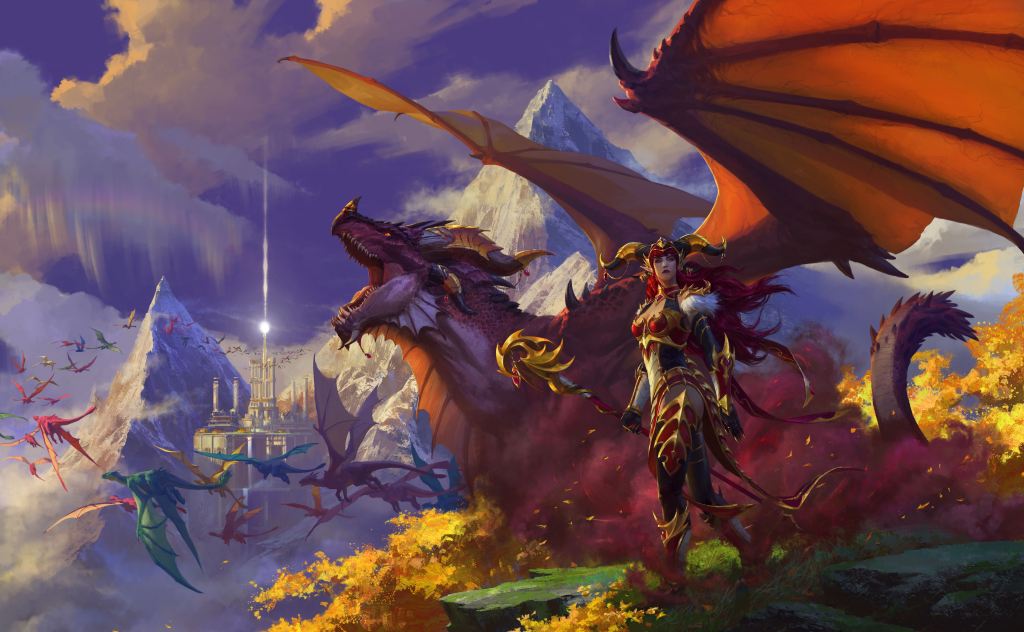
  • Warcraft Housing Needs Adjustments

    Warcraft Housing Needs Adjustments

    At the beginning of this month, Blizzard released their anticipated Player Housing system into the World of Warcraft as an early-access/pre-order bonus for their upcoming expansion, Midnight. For years, for over a decade, people have been clamoring for this kind of customization and expression to come to Warcraft. Hell, it’s practically the only big MMO on the market that didn’t have something like this. It’s basically industry standard.

    On the whole, the system’s quite good. Buying a house could scarcely be easier, having a neighborhood of my guildmates rules, and furnishing my house has been a fun distraction: whether that be collecting decor items or placing them in my house and settling on a layout of rooms.

    Unfortunately, there’s some design decisions that really need a second pass. There’s trouble in paradise (or, at least, in Razorwind Shores). (And whatever the name of the Alliance’s neighborhood is.)


    Limited-Use Decor

    The first issue one is likely to encounter when furnishing their digital home is this: for every door, every chair, every candle one wants to place, you have to have collected that many copies thereof. If I want a dining room with two tables and six chairs each? I’ll need to buy both tables and a dozen individual chairs to make it happen.

    The price of these items aren’t all terribly exorbitant, but it doesn’t sit right with me that this plain old stool requires multiple purchases to fill out every edge of a table, with another for a desk, and more for a reading nook or study. And I did say they aren’t all pricey; some of them do have a meaningful cost making multiple copies a large investment of time or money, because with the existence of the WOW Token, every piece of gold has some equivalent real-world value.

    Obviously this is meant to function as a gold sink, but I think its execution is all wrong. Better in my view for some items to be limited per use – the Maelstrom Altar I earned from all the activities I did in Legion on my shaman? I don’t take umbrage with that being limited. However, such items should be the exception, not the rule. As for the gold sink, maybe these “common” decor items with unlimited uses could cost a small amount more to unlock, and the majority of the drain on the economy could be spent on expanding the size of the house, our interior decor budget, alternative facades, or interior utility items like teleporters and profession hotspots; things that are permanent, account-wide bonuses. Something of the like, at least.

    Especially since some decor items will eventually be bought with real money from the in-game store. We don’t know much about how this will look yet, but I think it’s fair to assume they’ll likely be selling these items in bundles. If we want five of a special shop-only chair, but they’re only sold in multiples of four? Pony up twice or find an alternative, sorry pal.

    And this all gets worse when we consider the overall collection limit.


    Be Careful What You Collect?

    In a mad dash to fill their decor collection with a few copies of every item they’d unlocked, a few users discovered there is an overall cap on the number of decor items we can have at our disposal at any given time. This is entirely at odds with the game’s myriad other collection systems. We’ve never reached a hard cap on the number of mounts, pets, or armor appearances we can collect; each season simply adds a new swathe of things to add to our mountainous hoards.

    I certainly understand that there’s a real-world cost to storing data, especially on the scale that an MMO requires, but a limitation on this spiraling out of the requirement that I own several individual copies of all the light fixtures I want to mount on my walls? It just feels … misaligned. As Warcraft has evolved in recent years, it’s become more-and-more collection-focused. In Midnight, we’ll earn the alternate colors of our class tier sets from the lower difficulties whenever we complete a set. I just can’t help but imagine that the variables they’ve included forced them to install this limitation, and they’d only hoped it wouldn’t be discovered so soon.


    A New Source of Loot Drama

    The night after housing was released, after I’d played with the system a bit, I logged back over to Legion Remix to work on the last few thousand Bronze I needed to complete my goal of buying everything from the event vendors. As each night before, I pinged my guild and got the usual suspects together. Things proceeded much as we all expected, until we ran the Nighthold. There, after beating Spellblade Alluriel, we discovered a new item had been added to her loot table: a Nightborne-themed fountain.

    But, only one dropped, and we had to roll to win it from one another.

    Naturally, we all have many max level characters. If anyone was desperate to have this fountain, they could get it pretty easily. But … it’s weird it’s a roll-off to begin with, right?

    Like, come Midnight, we’re going to be doing raids and dungeons we can’t just solo on our own. Maybe that rug from this boos is really going to tie the whole room together, but for me to have it, everyone else that was involved in whatever activity has to wait until next time? Why aren’t these just awarded to everyone?

    Not to mention that presently some of these items aren’t popping up a window prompt to roll for them, but are instead just looted by whoever clicks the boss fastest.


    The bottom line is this: Blizzard’s player housing is good. Hell, I don’t play a lot of other MMOs, it might be the best on the market. (I certainly like it more than ESO’s.) But, with the above issues, I don’t think the system will ever be the best that it could be. Falling short of that peak just seems so … unnecessary.

    As always, thank you for reading. Now, if you’ll excuse me, I’ve got to reconfigure my house’s whole layout. Again.

  • Legion Remix and the Mage Tower

    Legion Remix and the Mage Tower

    Last week, Blizzard announced in a blue post that during the upcoming Legion Remix event, the unique weapon appearances from the Mage Tower will not be made available again. This was a rather contentious announcement – there are many who want the weapon appearances to return, and there are perhaps just as many that want them to remain gone to elevate the weapon appearances; to grant them a level of prestige from their exclusivity.

    As someone who’s been playing Warcraft way too long, I’ve got my own opinion.


    A Brief on FOMO

    I’ve written on my blog before that I find weaponizing FOMO (the Fear of Missing Out) to be a blight upon game design. Usually, they’re used to pressure players into spending money on microtransactions, to incentivize daily engagement, or prolong retention. Frankly, I think if a game isn’t simply fun enough for its players to want to log in every day, or week, or month, then maybe the game has other issues it should address?

    Presently, there’s a few events going on in World of Warcraft. Right now, there’s Turbulent Timeways, which grants a unique mount for playing a handful of Timewalking Dungeons for a number of weeks during the event’s duration. There’s Collector’s Bounty, which has boosted the drop rates of many rare mounts and items from old raid and dungeon bosses. There’s Greedy Emissaries, treasure goblins from Diablo invading our capital cities and the patch zone that give you currency when killed that you can use to buy recolors of an HD updated version of one of the classic and iconic class sets from the game’s earliest years.

    To some degree, these all engage in some level of FOMO, to varying degrees of vexation. First, the special recolor armor sets from the Greedy Emissary event, we have no information on if they’ll ever be available again. Get them now, or maybe lose the chance to earn them forever. Second, the Collector’s Bounty event offers a greater amount of efficiency to earning old, rare mounts and items, but those items will remain in the game after the event ends; you’ll only lose the increased efficiency. Lastly, for engaging in Turbulent Timeways, the unique mount you can earn will likely become available for Timewarped Badges (a currency earned from Timewalking events) the next time the event runs, like the two mounts from the previous time this event has been available have.

    Naturally, I think the Greedy Emissary event is the most egregious with FOMO – but even it is something you can earn every reward from in one week if you’re willing and able to put in enough time. For Collector’s Bounty, missing out on the efficiency will be tough, but all the items will still exist. For Turbulent Timeways, I myself realized I started engaging in the event a week too late, and until I discovered the mount would likely be made available again in the future, I was really kicking myself for missing one week too many.

    Luckily, between Remix events and the game’s monthly Trading Post, the items from the Greedy Emissary event will likely come around again in the future – but right now, we don’t know if they ever will.

    But enough about that. Let’s discuss the Legion Remix.


    The Mage Tower

    During the Legion expansion, in patch 7.2, our brave heroes returned to the Broken Shore to establish a foothold and stage an assault on the Tomb of Sargaeras raid when it launched a few months later. As part of this patch, there were several buildings the players could cooperate to construct, and the most compelling to many players was the Mage Tower.

    The Mage Tower provided everyone with a single-player boss scenario focused on mechanics to overcome, and when successful, you’d unlock a special appearance for your artifact weapon and an achievement for doing so. These are some of the most unique and special weapon appearances that exist in the game, and at the end of Legion, they were removed when the Mage Tower became inaccessible.

    Now, after nearly nine years, we likely have players who’ve come to the game who, if they’re the same age I was when I started playing, would have been in preschool during Legion. These players could be some of the best in the world – they may become world-first class raiders. But they can never earn these weapon appearances because they weren’t playing the game at the right time?

    To me, that sounds like bullshit.

    And, before anyone wants to say that I just want to earn these weapons myself – I told you I’ve been playing this game too damn long. The 7.2 patch launched on 03/28/2017. This is my former main, who has the achievement for A Challenging Look from the first time the Mage Tower was built, earned on 04/05/2017. Throughout the expansion, as players earned more gear and more power from their artifact weapons, these challenges became easier. I completed them on classes I had no business playing by the end of the expansion, they became so simple. Completing the Mage Tower challenges now, with the scaling tech involved, is harder than they were at the end of Legion.

    But I don’t feel like my achievement is any less valuable for other people having earned it themselves. I have a sense of prestige not because I own this appearance, but because I overcame the challenge. And if these weapon appearances will give people an incentive to challenge themselves, then I say they should come back. Give us a reason to enjoy remix. Lock our scaling in the Mage Tower to retain the challenge? Whatever. Just let people earn them again.

    A recolor is the least Blizzard should do, but I think they should just come back in full.


    As always, thank you for reading. Now, if you’ll excuse me, I’ve got some more Stonecore runs to do to see if I can loot this dragon.

  • Revisiting Mass Effect

    Revisiting Mass Effect

    Some of the most artistically influential and significant games I’ve played in my life were developed by BioWare. I latched onto the series for much of my teenage years; I couldn’t tell you how many times I played Dragon Age: Origins throughout high school: seeing each origin, building my perfect world state to import into the sequel, finding obscure conditional options. I loved the game so much I decided to check out BioWare’s other series and got myself a copy of Mass Effect. (Spoilers follow.)

    Amazingly, I latched onto it just as hard as I had Dragon Age. Harder, perhaps. I tore through Mass Effect, playing every night to explore the galaxy BioWare made. On my first run of the game I hadn’t completed Wrex’s personal quest before Virmire and failed to have the points to successfully persuade him to calm down, but I was so attached to his character that I loaded an earlier save before I’d spent my most recent level up and managed the check. It legitimately infuriated me when Ashley shot him in the back the first time. I immediately launched into New Game+ once I’d finished the campaign and went out of my way to do everything on the next run.

    By the time that was all done, I learned Mass Effect 2 had been out for well over a month already and managed to pick a copy up when my birthday came around. I’d fallen in love with the first game because of its setting and narrative; Mass Effect 2 brought the game into modernity with vastly improved gameplay and ensnared me even further. I survived the so-called Suicide Mission without a single casualty on my first run. I played Overlord when it released. I blew up the Batarian Alpha Relay in Arrival and waited very impatiently for the trilogy’s end to arrive.

    I took two days off of work for its release and binged through the game. I played hours of the multiplayer, beyond what was required for my Galactic Readiness to be maxed out, I felt mist in my eyes as Mordin rode the elevator on Tuchanka. I froze, wondering if I’d be able to broker a peace between the Geth and the Quarians at the end of Rannoch. The game was incredible, and I was riding high on the wave of that experience as I charged toward the beam that would let me access the citadel and use our superweapon to exterminate the Reapers and save the galaxy.

    And I, like many others, felt like the ending slapped me in the face. I felt burned for being so invested in everything that had happened up to that point. Everything I’d done came down to a trinary choice that did not feel adequate in the least. I could either pursue what the villain of the first game wanted (violating every galactic citizen’s bodily autonomy in the process), pursue the Illusive Man’s goal (with an undercurrent of “this might not work forever”), or commit a genocide not just of my enemy, but also one of my allied species and sideswipe slay a member of my own damn crew. I stood there in disbelief for a handful of moments, then grimaced as I did what I’d been sent there to do: Destroy the Reapers.

    I found I was not alone in my upset. I scrolled through dozens of threads on Reddit in the following days. Criticism was not hard to find. Theories decrying the ending as a hallucination felt more acceptable than what had been served. I returned to replay the final moments when BioWare released their Extended Cut of the ending, and still left dissatisfied. So badly had I felt burned by the ending that I did not buy any DLC for Mass Effect 3 or play the campaign again. (That multiplayer rocked though, I played it a few more times.)

    This year, I purchased the Legendary Edition during the steam sale for $15, which combines the trilogy into a single platform with updated graphics (and gameplay for the original). I hadn’t played these games in over a decade (I’d originally owned them on an Xbox 360 and hadn’t repurchased them on PC at any point, so I hadn’t even had the ability for perhaps six years).

    For a few weeks during the summer, I was consumed by them once again. Every evening when I got off work, I launched into Mass Effect. These games were just as incredible now as they were before, but all the while, I wondered if the other shoe would land as harshly as it had before. I reached the third game and reveled in how unbelievably well they managed to make it, dreading the moment I would reach the end and wondering if I would be angry about it all over again.

    It was near the end of the game that I played Mass Effect 3’s DLCs for the first time. I retook Omega just before Priority: Thessia, I discovered the truth of the Leviathan just before exposing Sanctuary and Cerberus’s activities there, and completed the Citadel just before launching the assault on the Illusive Man’s base. After these missions, when I finally reached the end of the game, I discovered that my anger about the ending had materially changed.

    In 2012, when I spoke to the Catalyst and was given my three decisions for how to irrevocably change the galaxy, I hated its existence as a writing device. It felt like the voice of the author had come down to tell me how it ended, and I couldn’t have been more frustrated. Now, in 2023, after Leviathan and the Citadel, I only disliked the personified Catalyst as a character. I thought it to be fallible now, and not a voice of omnipotent knowledge. I knew now that it had been created by the race that it turned into the Reapers and it had a flawed understanding of the galaxy. It thought war between organic and synthetic life was an irrefutable fact, when I had already brokered peace between the Geth and Quarians and they were working together to resettle Rannoch. I had seen an AI and a human man fall in love with one another. I knew it was just a dumb machine rather than an authority, and I blew the Reapers to hell once again.

    The Catalyst didn’t know the galaxy half as well as it thought it did. For it, the status quo of galactic extinction every 50,000 years was an acceptable outcome. Whatever it thinks isn’t worth a damn. It’s probably wrong about the Geth and EDI being destroyed anyway, or it’s lying because it wants to save its toys.

    These games were some of the most influential and significant games of my life. It’s incredible to have found a way to enjoy and love them again, whether my interpretation of the ending is supported by canon or not. As always, thank you for reading. I should go.

  • Baldur’s Gate 3

    Baldur’s Gate 3

    All throughout my life, I’ve been prone to being captured by good RPGs. When a new one comes along, everything else in my life finds the back seat as I engage with these games for hours. I’ve missed meals, I’ve lost sleep from being too excited to return to the game to return to rest.

    When I picked up Divinity: Original Sin 2, it ensnared me for two weeks’ worth of my free time. I can’t begin to count the number of times I played Dragon Age: Origins or The Elder Scrolls: Oblivion or Skyrim. These games just perfectly capture my brain and cinch closed like a steel trap.

    Baldur’s Gate 3 is the latest case. In the three and a half weeks since its release, I’ve played it every day. I’ve completed the game twice, I have a co-op run with a friend in late Act 2, and I’m launching another pair of games to go for 100% achievements, just to have an excuse to keep playing.

    There’s a lot to love about this game. It’s got its imperfections, some bugs, some unfortunately cut content, but Larian Studios has proven they don’t consider a game’s launch the end of their work. With Divinity, they released a Definitive Edition one year later as a free upgrade, and I and many others think we’ll see something similar with Baldur’s Gate given enough time. Even without that, it’s easily a contender for one of my favorite games of all time.

    But I’ve lavished praise enough. I wanted to write this pose to draw attention to some adjustments Larian made to 5th Edition D&D that I think would translate well into the tabletop. Certainly, were I running a 5e game right now, I’d be making many of these changes.


    Day Long Durations

    Several effects in Baldur’s Gate 3 last until you take your next long rest – Speak with Animals, Speak with Dead, Hunter’s Mark, Enhance Ability, the game’s elixirs. It seems these are changes made for the sake of gameplay – and I’d advocate that they’d all improve the tabletop experience as well.

    Spending a limited resource (and potentially your very valuable concentration slot) to activate these effects is already a noticeable cost. It also gives the party a reason to try and delay their long rests so they don’t lose powerful effects, especially in the case of the game’s elixirs. I’d even suggest broadening the slate of spells that can last for a full day, adding effects like Comprehend Languages, or Detect Magic. (And Mage Armor, but most people probably ignore it has an 8-hour duration already).


    Increased Effectiveness

    There’s also several spells and abilities that are stronger in Baldur’s Gate 3 than they are in the tabletop. The level 3 spell Daylight triggers Sunlight Sensitivity for a lot of monsters, such as Shadows, Wraiths, and Vampires, while much of my tenure in the tabletop space drew a line in the sand between “Daylight” and “Sunlight.”

    Warlock pact boons have powerful bonuses. Tome gives you immediate utility cantrips then adds Call Lightning, Haste, and Animate Dead to your repertoire as once-per-day casts. Blade freely grants you extra attach at level 5 and always scales your weapon with charisma.

    The Haste spell grants someone an additional full action, making it even better to throw onto the martials. You can make massive plays without the restrictions on casting multiple leveled spells in a turn, like using Misty Step to arrive in front of a large horde of monsters near a ledge and using Thunderwave to throw them all to their doom. Switching between ranged and melee weapons is completely free, and casting with a hand occupied is negligible. The number of times martial characters can shove has been reduced down to a bonus action, but with Larian’s area design it feels even more powerful than before, especially with the distance being derived from your character’s strength, rather than a flat 5 feet.

    I think all of these effects and boons would provide an improved experience for the tabletop.


    Ease of Resurrection

    For the sake of gameplay, it’s pretty easy to Revivify someone in Baldur’s Gate 3. There’s numerous scrolls on sale, the component cost of the spell and its time limit is gone, naturally, and there’s a camp NPC that can bring your pals back for a pittance of gold. I think many tables would benefit from making a few of these changes. I think the component cost is a good thing to holdover into the tabletop, but maybe allowing the PCs to have access to purchasable scrolls, or even letting them each begin with one for the first handful of games where they’re learning their characters could be a boon to them. The starting scrolls could even have an expiration of some sort, so the value of them diminishes the further they get into their adventure.

    This comes down to the table’s preferences. My players and I generally enjoy the possibility of PC death being there, but a table of people more attached to their specific characters for the adventure at hand might like a more relaxed ruling.


    Well, that does it for today. My apologies for the delay between posts – it might happen again with Starfield, but we’ll see. I might get a few drafted and scheduled before it consumes me (if it does). As always, thank you very much for reading. Good luck out there, heroes.

    (These boots have seen everything.)

  • Diablo 4: What’s With Microtransaction Counter Criticism?

    Diablo 4: What’s With Microtransaction Counter Criticism?

    Outside of Tears of the Kingdom (which I don’t have a Switch to play), Diablo 4 is likely my most anticipated game release this year. A friend gifted the deluxe edition of the game to me as a birthday present, so I’ve been playing it for about a week, and I’ve had a blast. I’ve got some problems with the game’s story (maybe I’ll write a post about it), but playing the game itself has been fun; I love blindly exploring a game, and Diablo certainly delivers there.

    Now, I’ve made no secret of my thoughts on microtransactions in the past, and I’ve got some gripes with the existence of a cosmetic shop in Diablo 4. The prices are pretty out of whack, the store rotates to inspire a FOMO response, and given Overwatch 2, I’m unable to take Blizzard at their word that no power or in-game advantages will never be sold on the shop or included in a battlepass.

    Browsing the subreddits for the game, the thing that has shocked me the most is seeing people defending the shop’s inclusion, with threads full of people being snide or dismissive of people with a negative view of the premium store. I’m left wondering how this massive corporation cultivated these knights to defend their ability to rake in cash hand-over-fist.

    I haven’t put in the time to really answer that question, but I can find flaws in their arguments. I thought we could at least start there.


    A Necessary Evil?

    Before we dive all the way in, I do think it’s important to state that for this post, I’ll be addressing the points I’ve seen made in defense of Diablo 4’s microtransactions, and what about Diablo and Activision Blizzard makes me think that they’re poor arguments.

    I’ve seen a lot of people say that a game with constant updates and seasonal content needs a revenue stream to keep the service alive, and often it’s presented as a necessary compromise to allow a game with dedicated service to exist at all. Only, it isn’t necessary for Diablo 4. The game has a box price, and its launch week is not the last time people are going to buy the game. Blizzard will continue to make money on sales for months.

    They’ve sold millions of copies already at $70-100 a piece. They’ve gotten millions of hours of nearly-free advertising on twitch.tv. Games are expensive, certainly, both to make and maintain, but we must dispense with the idea that this is some small studio scraping by to develop this experience at cost.

    Activision Blizzard is a corporation, and it exists in pursuit of profit; profit pays the shareholders and executives. It is not funneled directly back into the game. It might serve as an incentive for the further investment in that product, but even then it is not for the sake of the product, but for further profit.

    These shop items and battlepasses will not even pay for future large content updates – the game will have paid DLC expansions. If you think the shop is allowing the game to be run without a subscription service, you’re not realizing that a planned pay-for-expansion update is a subscription cost, just served in bulk at specific release dates.


    Cosmetics Only: The Lesser Evil?

    A cosmetic-only shop certainly harms a game less than the ability to buy power or in-game currency. The former cheapens every difficult accomplishment in the game, while the latter creates a real world price point for every in-game item or service. (A 300,000 gold mount in Warcraft just costs about $25, depending on token values.) But, I again think it’s wrong to pretend it does negligible damage to the game. I want my character to look cool. There’s certainly ways to accomplish that in Diablo without spending cash, but unlocking new appearances has an expiration date until the next content update. If you settle into an outfit you like for months and begin to tire of it, you might want new options to craft your next look around, and you might not have any left to obtain in the game.

    Then, there’s often an element a clashing aesthetic to premium cosmetics. There’s a long list of games that sell absurd helmets and effects for money that are purposefully eye-catching and distinct. People want to stand out – they’ll buy hot pink armor and a rainbow trail given the chance; I don’t mean to question or belittle what these people enjoy, but I’m fond of Diablo’s existing tone and aesthetic and wouldn’t want to see it sacrificed upon the altar of shareholder profits.

    And, it’s certainly not a big deal for these things to exist, and they likely won’t be the reason I stop logging in one day. They just contribute to a lessened experience for me.

    But, well, I don’t want to spend money on the shop, so maybe I’m just not the target audience anyway.

    I don’t necessarily see this all eroding my interest in the game anytime soon. Even if it gets bad with the cosmetics, that might not push me away. I’d love to pretend I’m principled, but I’m getting the first battlepass as a perk for the edition of the game I received, and I’m not unlikely to grab the second one if I’m still playing when it rolls around. This genie is well and truly out of its bottle, and gamers never boycotted anything successfully. I’ll keep taking my individual stand when I can, but I really just want to kill some demons sometimes.

    As always, thank you for reading. Now, I think there’s a Helltide coming up here soon …

  • Warcraft: Mythic+ Affixes Are Overbearing

    Warcraft: Mythic+ Affixes Are Overbearing

    Since its addition in Legion, Warcraft’s Mythic+ dungeons have become an insanely popular endgame activity. I’ve participated in most seasons, missing only seasons 3 and 4 of Shadowlands while I was unsubscribed. Overall, it’s been a huge boon to the game. Mythic+ serves as a PVE activity that doesn’t require the level of investment and set-up that raiding needs.

    The system has survived some large changes since its inception. Fortified and Tyrannical were originally envisioned as a hurdle for keys beyond level 10, but are now present on all keystones. We’ve seen several affixes nerfed, rotating seasonal affixes, and some that have been introduced and removed entirely.

    Presently, Blizzard is testing a new slate of affixes on the Public Test Realm, and much of the player base has had few kind things to say for them. Many players find the affixes to be unduly impactful, to the extent that players have to focus more on avoiding the negative consequences of failing the affixes over battling the mechanics designed specifically for the dungeon.

    Others claim this criticism is the whining of a player that lacks the skill to engage with the affixes as they are. However, many of the top-rated Mythic+ players share these opinions, as I do. And, while I’m certainly not in the realm of the very best players, I’ve never lacked the ability to attain the goals I chase in the game.

    But, as a pre-emptive counter to anyone who would discredit this post on the merit of skill or accomplishment, here is my raider.io profile. I have two characters beyond the rating threshold for Keystone Hero and several Keystone Master achievements.

    Now, let’s talk affixes: new, old, and philosophically.

    Playing the Affix

    The most criticized affixes are the ones that become so intrusive to the standard gameplay that they overshadow the usual dungeon experience, such as Explosive and Sanguine.

    With Explosive, we are constantly battling our UI to kill these priority target bombs before they explode for heavy group-wide damage. For many players, the task of killing these bombs falls on the healer’s shoulders – at the lower levels of play, players are unlikely to swap targets and kill them, while at the top-end of play, the group loses the least amount of damage throughput if the healer defeats them all. Since these spawns scale with the number of enemies engaged, many orbs might be active at once, rolling throughout the duration of a fight. On the PTR over the weekend, there was an adjustment in testing to make these orbs several more times durable, but with a reduced spawn frequency.

    Now, conceptually, I don’t think this was a bad direction. However, the pool of hit points tested over the weekend was bloated such that players were simply ignoring them outright with their spawn cadence. I’d prefer to see the spawn rate reduced further, but I think another nerf to both values would be an even an even better adjustment. UPDATE: Blizzard has since proposed a huge change to the functionality of Explosive orbs, having them instead shield enemies based on the health remaining instead of damaging the party. I think this would be better for the experience of the affix, but I don’t think it addresses much the feeling of playing against the affix over the dungeon. We’ll see how it works when that begins testing.

    Then, Sanguine requires a dedication to movement and area control beyond what is usually asked by the affixes or base dungeon mechanics. Even the tools players bring to aid the tank in repositioning monsters are suspect in many scenarios, with enemies that are immune to knockback and grip effects, or uninterruptible casts, which adds an element of target prioritization on top of this affix’s asks. I think it’s wrong to say that all affixes shouldn’t affect tanks because of the role they play in the group, but I think Sanguine is a bit heavy handed in that it requires the tank’s engagement the most with minimal impact from the other players.

    There’s even a couple more affixes that have been adjusted since their introduction, but would’ve fit here before: Bursting and Bolstering.

    Bursting changes the way every pull in a dungeon should be played, with the enemies afflicting the players with a stacking damage-over-time effect for each enemy they kill. This extends the danger of a pull beyond the point where the monsters are dead, and asks for halting damage to prevent refreshing the damage effect’s duration. It’s since had a change to make it dispellable, allowing a class-utility counter to make it much more bearable with a priest’s Mass Dispel, but I haven’t chosen to run a dungeon with this affix without a priest all season, and not all groups have that luxury.

    Bolstering once called for adjusting target priority on many pulls in a dungeon, but the new duration limit on the buff has significantly reduced the impact of pulls with one monster of higher health than the smaller creatures around it that die from passive cleave.

    And there’s many more affixes that contribute negatively to the experience of running dungeons without overtaking the gameplay loop to the degree of those above outliers. Quaking hits casters harder than tanks and melee players by interrupting their casts and has required multiple specific exceptions to be installed to avoid catastrophic overlaps; Raging can create unavoidable one-shot damage instances with the only counter being large defensive cooldowns or limited soothe effects; Overflowing affected some healers much more negatively than others; Necrotic and Skittish put more responsibility on the tank in an unfun way; Inspiring created painful monster groups by restricting the use of the class tools we had to overcome dangerous enemies; Infested and Beguiling were infuriating to deal with throughout their respective seasons.

    And I think it’s bad for dungeon affixes to exist solely in this space – to add only annoyance to a dungeon. These were originally created to add variance to the dungeons week-to-week, because, for most people, running the same encounters ad infinitum would get stale fast.

    But Blizzard doesn’t seem to agree. Let’s look at those new test affixes.

    Our New Afflictions

    So, available for testing over the weekend, we had Incorporeal, Afflicted, and Entangling. Despite the callout, Afflicted looked to be the least offensive of these three. It functions a lot like explosive, but in reverse. A ghost spawns with low health and dispellable afflictions. Removing any of these effects or healing the ghost to full health removes the ghost. Should the ghost be left alone, it afflicts the party with a Haste reduction (which we don’t want). Unlike Explosive, the affix is presented more directly healer-facing. They can address it with their usual game play, and hybrid classes can ease the burden at low-cost, and I think both have factored into its reception thus far.

    Then, there’s Incorporeal, which has been adjusted a bit for the better since the weekend’s testing, but I still think could use a redesign. These creatures require direct crowd control effects or kicks to prevent them from massively hampering your group, but you generally would like to invest those abilities into the dungeon’s monsters instead. However, since it’s intended that they be immune to damage, and things like Blind, Polymorph, Hex, or Hibernate would deal with them completely, I think they’re not in as worse a place as they were when those effects were breaking.

    And, last, we have Entangling. Like Quaking before it, this affix is just going to be at its worst creating painful overlaps with the dungeon’s mechanics. I know it’s going away next season, but imagine this effect occurring during Odyn’s runes in Halls of Valor. That extra delay of movement could spell catastrophe for an otherwise successful key. In Blizzard’s post, they do talk about increasing the visual clarity of the effect, which was a pain point for testers over the weekend.

    Even as unintrusive as Afflicted looks, these affixes are all still annoyances to be layered onto the game. But I think it’s wrong to behave like that’s the best or only avenue to add challenge to the game.

    Examining the Philosophy

    In the past, I had discussions about my grips with the Mythic+ system and often talked about Hades, an isometric roguelite with fantastic game play. After you’ve had a successful clear or two, the game opens up a “Heat” system, where you can elect to add on additional modifier to make the run more challenge, and more rewarding.

    There’s options here that would be an annoyance if they were prescribed: enemies need to be hit a number of times before they begin taking damage; monsters can deal up to 100% more damage and have up to 30% more life or both; you have to sacrifice a boon to climb between the underworld regions; you put yourself on a timer. Yet, these never felt intrusive because of two reasons: one, they affected the “Heat” of the run at different values, so harder affixes increased the rewards more; and two, you picked every single effect you were going to deal with on a run. So, why the hell doesn’t Warcraft do it that way?

    Well, as far as picking your poison goes, I don’t think it would work as well in Warcraft. Hades is played solo, while Mythic+ is a 5-man group activity with the active player base of an MMO. Everyone having the same affixes on their key every week is good for people forming and joining groups. It just wouldn’t work as well to go from Volcanic in one key to realizing you have Spiteful ghosts chasing you down on the next.

    As for the former, there is a built-in rating system for Mythic+, and Tyrannical and Fortified already provide semi-separate score values, but I don’t think increasing the requisite investment to have all players engage with every affix would be health for the game. Currently, you can get a real decent rating on one month’s subscription, but if every affix had its own point contribution, it’d take several weeks to clear your scorecard of any zeroes.

    So, fundamentally, I think affixes-as-annoyances is a bad design space for Warcraft. It is good for the process of grouping to have keys prescribed for the week, and detrimental that we cannot opt-in to the annoyances.

    So, I’d propose–

    Affixes-as-Boons

    I think affixes should exist. Tyrannical and Fortified don’t need to go anywhere; they do a lot of the legwork in modifying the week-to-week experience in these dungeons.

    But positive-effect affixes – even built as a reward for engaging with something like Afflicted – would be better than what we have. I don’t propose this as a way to make dungeons easier; I’d want to see it paired with an adjustment to the overall scaling, so that obtaining the benefits from the affixes would affect the dungeon’s success.

    I wouldn’t even begrudge the existence of an annoyance affix paired with a boon affix. Just by virtue of design, the affixes will always be less interesting than the dungeon mechanics, because the affixes must be designed to be applied to all the dungeons, whereas a boss or monster pack have a lot more freedom in their design space.

    What affixes do to add variety to dungeons in the long-term is valuable, but instead of each week ending with the sentiment, “That goodness I don’t have to deal with that anymore,” dungeon affixes could instead foster excitement for the gameplay opportunities they provide. At the very least, I’d be interested to try.

    As always, thank you for reading. I’m looking forward to starting the climb all over again in season two, even with all my complaints. I just wonder if things can be better. Now, to get after these last few portals for my paladin …

  • Revisiting the Last of Us Part II

    Revisiting the Last of Us Part II

    In June of 2020, a sequel many never thought would come released on the Playstation 4. When the news of a new entry in the Last of Us world was first announced, I was tentative. The first game ended so well, and I wasn’t sure how a direct sequel would affect the ambiguous and emotional ending between Joel and Ellie. But, one day, I watched Grounded: The Making of the Last of Us; I saw the care and thought and effort that was poured into the game, and I felt assured that the team behind the game wouldn’t rush headlong into anything without that same level of love.

    I ended up with an unfortunately uncommon experience with the game. As anticipated as its release came, in the last few weeks before its debut, there was a massive leak. Major story elements were laid bare as walls of text on the internet. Many people had their experience with this game poisoned by these leaks. I, oblivious to their existence entirely, avoided these spoilers and managed to meet the story where it asked to be met.

    The Last of Us Part II was every bit the sequel the first game deserved. For three consecutive days, I was enthralled by the game. I barely did anything else at all. When I was in the last section of the game, my then-roommate-who-was-actually-just-moving-out came by to gather some of his things, and found me there in the living room. He asked how I was liking the game, and when I said it was fantastic, I knew he’d expected me to have the opinion that was circulating on the internet already.

    I never managed to find any clarity about why people were mad about this game when it released. There were some comments that were unmasked homo- and transphobia, but the criticism was so mainstream it didn’t seem like that could be the cornerstone to the wider reaction. There were people that dismissed the story as basic and overbearing, but those comments were rarely insightful about what the story was saying or the details of the plot. There were people who criticized the story structure, and I will admit it is unusual in its shape, but that is not at all without purpose.

    Revisiting the game, examining where the discourse online has shifted in the nearly three years since its release – that brought all these criticisms back to mind. And, I didn’t have a blog back then, so I’m going to talk about it now. This is my space after all, I get to do whatever the hell I want with it.

    Spoilers ahead – and since this game is getting adapted, I sincerely recommend disengaging with this post if you haven’t experienced the story before. Maybe come back in a couple years, or give the game a go: but just as this story was damaged by the leaks before its release, this story is best experienced as the authors intended. Do not let me ruin it for you.

    Here we go.


    A Quick Rundown of Events

    As mentioned, there’s been a lot said about the narrative structure of this game. And, well, it is unusual. Everything carries on at a pretty normal clip, then you reach the moment you’ve been anticipating for a dozen hours. Abby and Ellie finally meet again, there’s a gun at-the-ready and–hard stop. Flashback.

    You’re Abby now. She’s plagued by nightmares about her father’s death. It’s three days ago. You’ve got practically the same amount of game ahead of you as behind you, just to get back to where you just were, to see what happens next.

    Also, you hate Abby. Maybe you don’t want to play as her, but it’s the only way forward. So, you keep going. You see Abby’s struggles, see the horror she puts up with. We see that vengeance didn’t bring her peace, but opening herself up and helping a pair of strangers – that does. Like Joel in the game before, a relationship with a child brings Abby back in touch with her humanity, and many of us are able to look beyond the worst things she’s ever done and forgive her.

    Then we get slammed with the discovery of the carnage Ellie left in her wake. And we know why Abby would want to get revenge again. There you are, back at the theater.

    You fight Ellie as Abby, and the fight only ends one way: Abby victorious, but sparing Ellie and Dina because of Lev, because of wanting to be better for Lev.

    Some time passes, and we see Ellie and Dina on a farm. On the surface, it looks like it’s over. Like Ellie is past it all and has found some peace. But, she hasn’t. She’s plagued with nightmares about her father’s death. She’s barely human – not eating, not sleeping. To her, it doesn’t seem like anything other than the vengeance denied to her will bring her peace. And she abandons her happy ending because this character is just too human for it all to end perfectly.

    She hunts Abby down across-country, one last time. She fights through a stronghold of some of the worst scum that humanity has become since the infection: the Rattlers. People who use the infected to torture slaves for their own amusement. It’s hell fighting through them and Ellie is horribly wounded the whole time, and you finally find Abby crucified in their camp with Lev for trying to escape. She’s a shell of her former self, withered and weak, but she’s alive. You cut her down and she immediately goes to Lev and gets him down, carrying him down to some boats nearby. Ellie follows, and she seems so disconnected. Part of her knows how pointless it all would be. They’re at these two boats, Ellie has a flash of memory, and by threatening Lev she forces Abby to fight her.

    And she wins.

    But she doesn’t kill Abby, and people were furious.


    Empathy on Hardmode

    This game did not make it easy for itself. So many critics of the game think it would be better for the experience if you know who Abby is and why she wants to kill Joel before she does. But this team knew what they were doing. They put it out in front: this is Abby. For whatever reason, she wants to kill your favorite character, and she does. Also, we’re going to make you play as her.

    They bury this lead to set the player so firmly against Abby, to help the player feel as Ellie feels for the adventure, then drop you into her shoes halfway through the game. They show you who Abby is: compassionate, caring, tough as all hell, and willing to lose everything she has to rescue one kid.

    The Last of Us challenges its player to forgive Abby after you watch her do the worst thing she’s ever done. By the end of the game, the literal last thing I wanted to see was for Ellie to kill Abby. I don’t imagine it’s an uncommon experience for people to stop interacting with the button prompt in that last fight and die at least once, just to be certain that the game won’t let you stop and choose. They set everything against themselves, and still they pulled it off. At least, they did for me.


    The Purpose of the Rattlers

    Another specific criticism I wanted to pick at here – the Rattlers and Santa Barbara. There’s been some people that say the last level of the game feels “tacked on.” It’s in a different state with so many people we’ve never seen or cared about before, just to show the lengths that Ellie’s gone to pursuing Abby? No, that’s too dismissive, I think. This team does everything they do with deliberation.

    So, the Rattlers. Slavers that have infected tied up, allowing their prisoners to be bitten and turned for their amusement. The worst of the worst that humanity has to offer in this world. These people are so disconnected from their humanity, that it’s maybe the first-and-only time in the game that you can engage in the gunplay without any remorse. That’s got value for sure, this game’s run-and-gun hide-and-seek is a blast, but even that’s not quite there.

    I think the Rattlers are here as a warning. They weaponize the infected, like Ellie does throughout the game. If Ellie killed Abby, it wouldn’t have brought her peace. She might’ve lost her ability for empathy living with that pain. I don’t think she’d ever have been as bad as they were, but I don’t think she would have recovered, not into the girl we knew.


    Where Things Are Now

    I spent time scrolling through threads on the Last of Us subreddit. There’s posts of people who’ve come to the game recently and were blown away by it, comments from people saying the game’s finally getting the recognition it deserves, counter-criticism to some of the most popular “proposed changes” essays.

    Reception has changed, because this game is truly incredible. It’s so affecting and challenging, so moving. A common sentiment I’ve seen reads, “It’s the best game I’ve played that I can never play again.” And, I guess if you value replayability in games, that’s sad to hear. But the journey experienced even once was worthwhile and one of the best games I’ve ever played.

    The reception of the game at launch was unforgiving. People wanted to hate this game because it wasn’t giving them what they thought they wanted. Years on, however, people see the value in the game as it is. People nowadays are willing to meet the game where it’s asking to be met, and that’s all you really need to do.

    As always, thank you for reading. See you again soon.

  • Harry Potter and the Author Who Damaged Its Legacy

    Harry Potter and the Author Who Damaged Its Legacy

    I have this vivid memory from when I was a child. I don’t remember where we were or why we were there, but my brother and I were in a hotel room with my mom and an ad for Harry Potter and the Sorcerer’s Stone came on the TV. My brother and I were enraptured, and for weeks we quoted the “… or worse, expelled.” exchange. It’s the first time I remember hearing about the franchise.

    I couldn’t tell you how many days or weeks there were between then and when my mom took us to see the movie, but we loved it. And I was just a kid, not keeping up with movie releases or anything at the time, so when we went next year to see a sequel I was blown away even further.

    I went with my mom to nearly every Harry Potter release in theaters. I got the books as they were released (though I only ended up reading Order of the Phoenix, Half-Blood Prince and Deathly Hallows before seeing their movies). I think the ending of Goblet of Fire just made me need to know what was going to happen next – more than the earlier movies had, anyway.

    Between the Wizarding World and Lord of the Rings, I was certainly not starved for fantasy stories growing up. Then, we got an Xbox 360 in 2006 with The Elder Scrolls IV: Oblivion, eventually got Dragon Age: Origins, and I’d begun playing Runescape and World of Warcraft and my fate was sealed. This was my bag, sword fights and wizards and dragons: that shit was my jam.

    Harry Potter was incredibly important to me growing up. I’d watch and rewatch these movies with my mom or on my own. So much so, that when Rowling first starting getting a bit of pushback for “adding context” to her books via twitter, I didn’t see what the fuss was. I mean, it was stupid to insist that the wizards were just shitting themselves, but I guess I didn’t really consider it true, you know? I supposed I’d already gotten into the “Death of the Author” camp, and didn’t care for her “intent” beyond the written words.

    The problem, then, is that weird tweets isn’t at all where it stopped.

    J.K. Rowling isn’t just desperately grasping onto her work as a means to remain relevant long after its release, she’s using the platform her success catapulted her into to advocate against human rights. Rowling is a card-carrying Trans-Exclusionary Radical Feminist, using all the money and fame she’s accumulated to make life harder for an incredibly small and marginalized population of people just trying to live their lives. People that might’ve found solace in her work in their youth.

    And, for me, that was enough for me to decide that insofar as my money goes, it wouldn’t be going toward Rowling. I disengaged with her other work and the fandom. And I was able to set it down. I can accept that these books were influential and formative for my youth, but I also choose to leave them there.

    I also recognize that others don’t have any imperative to do the same. I don’t presume that the standards I hold myself to should apply to everyone else. I would, perhaps, merely advocate for others to endeavor to be aware of where their money is going and consider that when making nonessential purchases, but I know, for the most part, people who bought this game or still enjoy these movies are just trying to relax after working to live their own lives. And for that, I wouldn’t condemn them. The energy and time expended by many on attacking others for not joining them in their boycott could be better used elsewhere.

    There’s been a lot of instances lately, it seems, where people use social media to attack their allies for failing to be perfect allies. That left-wing spaces have a tendency to eat their own, and the fact of the matter is that they kind of do. Because our true opponents do not care about our disappointment in them, many of them revel in it. There are people who respond to learning about Hogwarts: Legacy’s transphobic originator and antisemitic narrative and choose to reply “Well now I am buying two copies.” We are unable to shame these people into reasonable action, so we instead attack those who do worry that they may do harm with their actions. And that is not activism – more often than not, it is little more than cruelty. Do good in your communities, help real people, donate, discuss these issues and educate those we can – whatever you can manage.

    But I’m also a cis white man, so what the hell does my opinion count for anyway?

    As always, thank you for reading. Good luck out there, everyone. Remember that you are loved.

  • Returning to Warcraft

    Returning to Warcraft

    In July of 2021, news broke about a lawsuit against Blizzard Entertainment. The suit alleged that, as a company, Blizzard had systemically mistreated their female employees. There was a “frat boy culture” complete with “cube crawls” in which workers would drink at one another’s cubicles during the workday and grope their female coworkers. Employees who reported these behaviors faced retaliation. A female employee committed suicide during a business trip with a male supervisor who had brought sex toys with him on the trip. Their courtesy rooms for recently pregnant employees who needed to pump were poorly furnished and lacked security with someone reporting their breast milk stolen from the fridge. In the midst of all this news, two people were promoted to fill J. Allen Brack’s position once he left the company, Mike Ybarra and Jen O’neal, and they did not pay Jen as much as they paid Ybarra despite both of them advocating for it.

    I ended an eleven-year concurrent subscription to World of Warcraft the same day that this news broke. I was horrified and disgusted that this company that had been a part of my life for so long was like this. Unfortunately, it was more akin to the last straw than a strictly moral stance. Shadowlands was the least fun I’d ever had playing Warcraft, but I was more-or-less in charge of the guild I’d been playing with for over a decade, so I felt some sort of duty to stick around.

    When this news broke, I told the guild that when my time expired, I was done. I didn’t think I’d ever be coming back. My game time lasted until November, and on the last possible night we managed to finish the raid on heroic after several weeks of attempts on the final boss. I did not open Battle.net for an entire year after that moment.

    I kept up with some news. I watched the Dragonflight announcement and felt underwhelmed. I didn’t really think Blizzard would change – not in philosophy, and not in culture.

    But, maybe they did.


    New Direction

    I’ve been a fan of Preach Gaming for a long time. I think I first found his channel in 2012 during Mists of Pandaria, but I probably became a subscriber and fan in the time of Legion (2016). Like much of the player base, Preach had been heartbroken with the news and resolved to risk his entire livelihood and stop his daily coverage of Warcraft as his primary work for his videos. Like many of us, he had been passionate about this game for a long time despite it feeling worse and worse over time.

    Late last year, Preach spent his own money to take a trip to California and visit the Blizzard campus, interviewing the developers to talk about the new direction of the game and the fallout of the lawsuit. And, honestly, it began to look like the lawsuit had helped remove the problematic people who had been with Blizzard all those years. Things looked like they’d gotten better.

    The game was headed to a healthier place: one designed for the player’s enjoyment and not just their retention. Gone were the nonoptional activities that advanced your character’s power outside of the endgame pillars. Gone were the restrictive systems and grinds that made players feel the need to engage with content they’d long since grown tired of to continue gaining artifact and anima power. Playing multiple characters became something encouraged by the game, instead of a burden as players saw a laundry list of dozens of things they’d need to complete again to get their characters ready for the fun stuff they wanted to do.

    Even hearing this from friends, I was skeptical. Many of them hadn’t quit in Shadowlands, maybe it was just survivorship bias. Ultimately, I knew I couldn’t take anyone’s word but my own, so I decided to drop some of the gold I’d had in game for a token and give it a shot.

    It’s been about a month since then. I’ve leveled four of my characters to 70, when I only ever got one to 60 in Shadowlands. I’ve just achieved Keystone Master with my friends, despite us now needing to find people to fill our groups instead of having an active guild to run with. I’ve been making gold with my professions, in the hopes of continuing to pay for the game with that virtual currency. I haven’t been into the raid yet, but I’ve been completely satisfied with the dungeon endgame.

    That game is just fun again.

    But I’m not ready to give Blizzard a full pass.


    There’s Still Room to Improve

    Ultimately, the monetization of Blizzard’s games is still disgusting. Diablo: Immortal is not even a year old. Diablo 4 is set to release this year with a battle pass system for cosmetics and so far, they’ve been quiet on what, if anything, they’re doing with this system to address FOMO. And, at any point, they could fall into their old ways and start designing poor systems that restrict the players again.

    But, unlike before, I’m not going to stick around if the game stops being fun. There’s really not much else to it.


    As always, thank you for reading. Now let’s drop that ready check and get this run going.

  • The Pokémon Problem

    The Pokémon Problem

    Back in 2019, Nintendo and Gamefreak made a highly anticipated announcement for the next mainline Pokémon games, Sword and Shield. With one controversial decision made during development, this became one of the most divisive reveals ever made by the company. For the first time, a mainline entry in the Pokémon series would not launch with support for all of the previous Pokémon. Sword and Shield would release with a significantly reduced roster.

    This announcement ignited a backlash still burning to this day. People called for boycotts. Internet petitions were signed. We desperately wanted Gamefreak to reconsider this choice, but the fandom’s arguments fell on deaf ears. Sword and Shield were the first Pokémon games I did not buy.

    Now, new releases are yet again on the horizon: Scarlett and Violet, and again, they will launch bereft of hundreds of Pokémon. This post is going to dive in on this controversy – to examine why it mattered then and why it matters now. To clarify why Gamefreak’s excuses don’t satisfy many former fans.

    Every Pokémon is Someone’s Favorite Pokémon

    I remember reading through threads upon threads on Reddit when the announcement came through. So many people were upset with Gamefreak’s decision and they were listing their favorites and despondent at the possibility that they might be absent from a future title. It was astounding how varied each comment read. Pokémon I had no care for whatsoever were hailed as a poster’s favorite, or their sibling’s, or their child’s. Pokémon widely considered ugly or poorly designed (people harped on the ice-cream-cone Pokémon for years) were beloved by someone. Some artist painstakingly designed these creatures. And it never sat right with me that they would just toss them aside like that.

    One of Gamefreak’s chief reasons for their choice came down to the ever growing roster of Pokémon in their games. Right now, prior to the launch of their new games, there are 905 Pokémon in the Pokédex. Yeah. It’s a lot. But it has always been a strength of their design that you can nearly always tell what type of Pokémon you’re up against immediately. Each environment carries an implicit rule for the encounters you can expect. You never have to walk into a gym or Elite Four match blind. The design of their trainer sprites clued players in on the type of Pokémon those trainers would field. Ultimately, I don’t find the claim of a bloated roster compelling in the least – I believe it to be undermined by the excellent clarity existent already in each game.

    At the time of the announcement, a counter-argument sprung up to call for the fanbase’s understanding of Gamefreak’s decision. Commentors asked, “How many people will this really affect?” How many players of the Pokémon games will really be disenfranchised by these limitations? What’s the percentage of Gamefreak’s player base that use every Pokémon or have collected them each? And, clearly, collecting a “Living Dex*” or constantly switching between dozens and dozens of Pokémon is something a low number of players would do in these games. I myself collected a near-complete Living Dex (missing only a percentage of the event-only Pokémon) back in Pokémon Y (and though Pokémon Sun ended up being my last venture into the franchise to present, I did not at the time invest the time to fill out that game’s Pokédex). But, I think that’s ultimately incorrect.

    The truth is, this decision affected every player. Maybe their favorite Pokémon had the fortune to remain in the roster, but their second, third, seventy-eighth favorite–maybe they weren’t. Perhaps they just had an enormously abridged list of potential enemies. The games lost the true extent of their variability, and I don’t think that was the right decision to make.

    Regional Forms: A Flawed Compromise

    In Pokémon Sun and Moon, Gamefreak added a new variable to the mix: classic Pokémon with new appearances based on the environments in the latest games. Looking back, I think this was an attempt at future-proofing the games by reducing the volume of new Pokémon added each game. I think it’s possible Gamefreak by the time of Sun and Moon knew they would need to change their strategy when it comes to the addition of new Pokémon, and with regional forms they might’ve been trying to walk the middle road. They could add new, exciting Pokémon appearances and fill out the availability of Pokémon types, while having a version of older Pokémon that wouldn’t carry the expectation of being carried forward. Alolan Vulpix is from Alola, after all. Do we need to worry about its availability in the next region?

    But therein lies the problem, right? What if Alolan Vulpix or Ninetails becomes you favorite Pokémon in the space of Sun and Moon? With a DLC package, many Alolan Pokémon became available in Sword and Shield, is that going to be standard going forward? Is it acceptable to put these Pokémon behind an additional paywall beyond the game itself?

    New Pokémon are always the most exciting part of each new generation. My friends that have interest in Scarlet and Violet love Fidough and Lechonk. They had their starting Pokémon selected months ago. Just rebranding an old design doesn’t carry the same splash. Wooper’s got a new type and a palette swap! Ok? It just doesn’t land in the same way this adorably chubby pig.

    Regional forms fell short of both of their goals I assume they were intended to reach. They aren’t as exciting to obtain as truly new Pokémon, and they didn’t aid in the reduction of new Pokémon in a way that kept them from needing to limit the roster. And it is a shame, because Pokémon reacting to different environments to become discernibly different is a good idea: I just think it came much too late. That role had already been taken by a wide array of new Pokémon being available in every region.

    There isn’t a Hoenn region Pidgey, they have Taillow. They have Plusle and Minun, Pikachu was in the exotic safari zone.

    Conclusion

    This post isn’t meant at all to call for a boycott or dissuade a Pokémon fan from buying the next game in one of their favorite series. Scarlet and Violet will at a minimum be the standard Pokémon fare, and they’ve been the name in monster-pet-battling games for decades. It’s likely to be another fun romp in a beloved series I spent a lot of time on as a child and teen and young adult. But I won’t be there until all of the Pokémon are in again – and not as DLC, but from the jump.

    As always, thank you for reading. Now, I need to go run uselessly after a trio of criminals while an electric rat rescues himself with a blast of lightning.