Tag: dd

  • D&D: Decisions and Choices in Character Creation

    D&D: Decisions and Choices in Character Creation

    At the beginning of this month, I began a new campaign with my weekly table. We’re back to a homebrew setting and adventure after our run of Tyranny of Dragons; one I’ll be delighted to write a bit about in a future post. Today, however, I’ve got some thoughts about the ways character creation and customization changed in the 2024 Player’s Handbook I wanted to puzzle out.

    Namely, there’s a new tension in the choices presented. One that’s easy to miss on first glance or even on a first build with this version of the rules. To understand it, though, you need to know what exactly has changed.

    Back in 2014, when 5th edition first began, it retained a lot of traditional holdovers that have only become more unpopular in the last decade. Twelve years ago, when you were creating your D&D character, your chosen race had certain attribute bonuses assigned to it. You know, elves have a bonus to their dexterity, orcs have one to strength; things that have become so misaligned with the game’s current culture it’s shocking they were ever there to begin with.

    This changed in 2020 with the release of Tasha’s Cauldron of Everything. In that supplement, we were given the option to reassign these bonuses however we’d like. This proved a popular change, one that my own tables never dispensed with for our all campaigns and one-shot adventures prior to 2024. That’s not to say that there weren’t plenty of grumpy old fats on the internet upset about the elimination of that … “texture.” The best of them, I think, were upset to lose the tension of a choice in character creation (and the worst of them we won’t waste any time on). As in, in the 2014 rules, if one made a half-orc wizard, you were specifically accepting a disadvantage to pursue your character fantasy.

    And that is the tension that’s come back around in the 2024 PHB – not due to any preassigned heritage based bonuses, but with bonuses to our attributes provided by our selected backgrounds.

    Now, December wasn’t my first brush with these adjustments. When the updated PHB dropped, I let my players rebuild their PCs at their discretion in between sessions. The DM of my monthly game with my Warcraft guildmates did the same, and my sporadically meeting table I host for my family has only been using the new PHB’s rules.

    Thing is, in those situations, we didn’t really experience the tension. Not immediately, anyway. For both of my tables, I let my players just select whatever combination of feat and attribute bumps they wanted, effectively using the Custom Background rules that we now have from the new Dungeon Master’s Guide. My own character in my guild’s game is defined so entirely by his history as a soldier that I settled on it pretty early; it provided the attribute bumps I wanted, but, to be honest, I practically never use its origin feat and would’ve preferred something like the Guard background’s Alert. I settled with that trade-off, however.

    All this is to say: I wasn’t ignorant of this tension. I’d merely delayed the need to interrogate my own thoughts on the matter until now. As we neared our Session Zero, one of my players was considering two character concepts. One was a monk who he imagined as having something like the old Folk Hero background. That one didn’t survive the transition between 2014 and 2024, though; the closest one to it would be the Farmer background in the PHB. My player’s issue was that he definitely wanted to boost his Dexterity and Wisdom for that monk, not his Strength.

    That is where I think there’s a line here. A lot of the time when we’re building our D&D PCs, we’re making decisions. We’re deciding we want to play a certain class, a certain species, have a certain personality, etc. Then, we come upon the new backgrounds and the game is asking us instead to make a choice. That if we want a specific origin feat, we’d better be happy with one of the attribute sets assigned to the same background(s) it’s attached to (to say nothing of the given proficiencies). (Alternatively, hopefully we’re happy picking the human species for an additional origin feat.)

    I don’t know if Backgrounds is the right place to ask people to make a choice over a decision, though. Maybe WOTC doesn’t either, since they codified a work-around themselves.

    Any alternatives that come to mind seem like poor replacements, too. Like, if they’d instead made these 1st level bonuses provided from your class, that limits the many avenues in the game that let us play with an alternate primary stat, like the Dexterity focused paladin subclass from Heroes of Faerun, or playing a Rogue or Cleric PC that primarily attacks with a weapon through True Strike and thus doesn’t need a good Dexterity or Strength score.

    These bonuses are meant to help prop up a character to perform their primary focus. They’re bad-luck protection when rolling stats, or it’s the bonuses that allow your primary attributes to truly excel over the other ones when using Point Buy or Standard Array. It’s just inelegant.

    But, hey, who says it needs to be?


    It’s healthy for the game to have both choices and decisions. Choices can help us flesh out characters we’ve already made several decisions about, and the decisions we make inform the choices that are meaningful to us. I see a lot of value in both ends of that spectrum. Perhaps in a future edition of the game, we’ll have some other way these attribute boosts are created, or the starting budget for point buy will change, or the standard array numbers will shift around, or maybe we’ll move away from 4d6k3 as the default for rolled stats. Who knows.

    As always, thank you for reading. Good luck out there, heroes.

  • Reworking Tyranny of Dragons 7: The Tomb of Diderius

    Reworking Tyranny of Dragons 7: The Tomb of Diderius

    It’s a common experience in D&D that we DMs make magic items we don’t fully understand the ramifications of. In this run of the module, nothing surprised me more than an Amulet of Shared Sight my players looted off of the Rath Modar simulacrum they defeated in Skyreach Castle. When I made it, I thought, “This will be a fun way to let the party understand that Rath Modar watched them kill his simulacrum.” Then they used the damn thing all the time to let their allies scry upon them.

    Such was the case after they defeated Neronvain. My party used this amulet to inform King Melandrach, and with a king’s resources at his disposal, a court wizard arrived swiftly to bring them to the king’s palace. The stayed overnight in the palace, resupplied, and asked that the wizard take them as close as he could to the Tomb of Diderius so they could try and rescue the Zhentarim agent before her fall.

    A side-effect of how I presented this quest made my party feel the pressure of a ticking clock to a degree I didn’t fully intend. Don’t mistake me, I’m glad my players were invested enough in the campaign that they pursued their quests with haste; I just hadn’t considered the extent to which I accelerated their actions with the situation I presented. Either way, after a quick teleport, my party arrived in the ancient debris of a long-crumbled town outside the Tomb of Diderius.


    Scrapping Ss’tck’al

    I didn’t care for the Yuan-ti dungeon the first time I ran this module. Besides being a bit out of leftfield, it also contains what would end up being some repetitive encounters for this run of the module, given how I changed Castle Naerytar.

    The Tomb itself also contains some design choices I find are more aligned with an adversarial DM’s style. As an example, the last time I ran this module, my players were worn out by the time they reached the room filled with Bearded Devils. These fiends have express orders to attack anything that leaves from a chamber to the side, so they don’t attack the party when they first arrive here. My table at the time decided to try to take a short rest in this room, with the exception of their barbarian. He, uninjured, decided to explore the room the Bearded Devils were watching, and discovered the Wraiths and Specters within. His party tried to aid him, but unfortunately, the specters killed him before they could intervene, and the Wraith turned him into another specter. This was one of the only permanent deaths I’ve had at a table in all my years running D&D, and afterward, the Bearded Devils followed their command and attacked the wounded party as they tried to flee with the corpse of their fallen ally.

    That, of course, all happened over ten years ago. Were I to encounter a similar situation again, I’d definitely do a lot differently; I’d call for an explicit Insight check to understand the devil’s motivations; I’d give more clues that something nefarious was behind that door the barbarian entered alone; I’d have had a disclosure during session 0 about character death and ensured we were all on the same page about such things. Live and learn, right?

    This isn’t to mention that I’ve completely changed the scenario here. There’s no question that the White Dragon Mask has been taken inside the tomb; there’s no need for divination pool, no need for gathering information at Boareskyr Bridge, and with my party’s teleport, no need for roadside travel or random encounters. Ultimately, I needed an entirely new dungeon.


    The (New) Tomb of Diderius

    After absconding with Varram’s mask, the Zhentarim agent fled into this old and ancient tomb home to a terrible curse of my own making: Lich’s Breath. I reimagined Diderius as a wizard of a long-forgotten age who defeated a powerful lich. However, in that creature’s death throes, it laid a curse upon Diderius and all his allies, one that would see them eternally undead, and that their touch would spread the curse to others. To save his homeland, Diderius led his warriors away, where they settled and built the tomb that would house them all. With the aid of a Hallow spell, the undead were trapped inside forevermore.

    Lich’s Breath was a simple enough curse. Any time my players began their turn within 5 feet of any of the cursed undead, they needed to make a saving throw against the curse. It wasn’t a terribly high DC, but a few still fell prey to its effect, though they wouldn’t know it immediately. Instead, they only felt an unwelcome chill settle upon them, and after time, they’d see a slight green glow upon their eyes in their reflection. Luckily, we also had a cure on hand: Holy Water. Imbibing Holy Water forced a character to make a Constitution saving throw (one which they could elect to fail), and on a failure, they suffered 1d6+1 radiant damage and felt the curse leave them.

    This revealed that our Zhentarim agent only fled within because she must have had no other options. Over the centuries, the undead had been lulled into inaction; something close to peaceful rest, stirring only when their tomb was plundered. Thus, our rogue agent was able to proceed through the dungeon with relative ease, whereas her first and second pursuers faced greater and greater danger, and our heroes faced the worst of the lot (more on those two pursuers in a moment).

    When my party entered the dungeon, they discovered the entryway mostly empty. Therein, there were two defeated undead and tablets that revealed the story of Diderius and his people. They realized the defeated undead within were slowly reconstituting and decided to smash one’s skull and consecrate the remains with Holy Water to try and prevent it. I improvised a small encounter with an Allip in response – to try and stave off my party thinking their goal here might be to permanently eliminate the undead.

    Mostly because their first (planned) encounter within the tomb wasn’t meant to be a battle, but a mad dash through a horde of undead to reach a safe space on the other side: a shrine to a forgotten goddess that had its own hallowed ground and an ever-filling bowl of holy water. With a truly absurd number of undead on the board and a hallway stretching just over four-hundred feet, the party needed to engineer some creative solutions to get through the horde. This is a type of encounter I’ve been experimenting with for a while; this version of it worked pretty well, but if I were to run the module again in the future, I think I’d decide to do something else instead. Perhaps a wave-based encounter and multiple rooms in sequence, rather than one long hallway. (Talespire did a lot for making this encounter function at all, too.)

    In the hallowed shrine, my party managed a moment’s rest. Then, they discovered the sarcophagi of Diderius’s Honor Guard. There were eight sarcophagi within the room, but three of the undead had already risen and been defeated by those who’d entered the tomb before our heroes. So, our party battled five of the undead warriors made from a retooled Knight statblock, edited to be undead, have more hit points, deal bonus necrotic damage instead of radiant, gained a recharge 6 Life Drain attack equivalent to a Wraith, and a Zombie’s Undead Fortitude. This gave us a good encounter, and the threat of having to battle an additional three of them if the party decided to rest again urged them further into the dungeon, rather than back into the hallowed shrine behind them.


    Back-to-Back Boss Battles

    In the following room, they met Varram. Our White Wyrmspeaker found himself utterly stuck by a door proposing a riddle – a riddle he figured out quickly, but one that required more than just the answer. My party didn’t approach quietly, so Varram turned and faced them down with a mighty enchanted axe and his Orb of Dragonkind (White). I intend to have future post in the series devoted to the ways I tweaked statblocks for this run of the module, so I’ll save  the specifics for later. Ultimately, my party succeeded, and they too answered the riddle quickly.

    The door read, “I am a shadow which rests upon thy shoulders like a heavy, dragging cloak. By thy own agency am I donned. In thy ear I whisper of the words unsaid and the roads untraveled. Haunted by me, perhaps evermore, I may still grant thee perspective or absolution, if thou might quiet the darkest of my musings. Speak aloud my name, and this door will open.” After a few guesses, my party landed on “Regret,” and I confirmed the answer by saying they hadn’t heard it clearly before, but when they’d entered, Varram had been saying the word over and over.

    The trick was that one needed to consider a regret as they spoke the word, and rather than open, the door simply became immaterial to the speaker. Over the years, I’ve enjoyed employing a puzzle with a simple solution, but one that requires a bit of roleplay from the players to fully solve. One by one, my players spoke of one of their character’s regrets, and they were able to enter the true Tomb of Diderius.

    Within we battled a Mummy Lord, a creature of a CR well beyond what my party could theoretically handle at their level, but one they conquered all the same, given the lack of additional enemies in the room and well rolled saves against the Command casts from his Legendary Actions. An upcasted Chromatic Orb dealing fire damage absolutely rocked him, too.

    With his defeat, my party proceeded to the final room of the tomb, a private space Diderius had here as he waited for the end of his life. Within, they found a final inscription from Diderius, musing over his terror of mortality having given way to his fear of this tomb one day being plundered and leading to the spread of Lich’s Breath. He implored any who entered to look into a mirror and check for the signs of the curse before leaving, and this was his final gambit. It was a Mirror of Life Trapping, which successfully snagged one of the members of my party. When they left, they ended up taking the mirror with them, having discovered in their work to free their ally that several other would-be graverobbers had been ensnared within the mirror, and many of them (if not all of them) were cursed.

    Ultimately, my party arrived too late for the Zhentarim agent. Having hurried into the tomb before Varram’s arrival was another rival of both his and my players: Talis. With the mask stolen, she pursued the thief and reclaimed it to become the White Wyrmspeaker herself, leaving a note to taunt Varram. That allowed our sorcerer to recognize the handwriting, and know who’d gotten the best of them here.

    This had always been the way I intended to end this dungeon; hell, in the module the mask is already back at the Well of Dragons by the time Varram uses the Divination Pool in the tomb. However, had my players elected to act with pragmatism, I think I’d have given them the chance to oppose Talis here in this small room to try and take the mask for themselves. I think she’d have had the upper hand with the spells at her disposal, and preferably she’d still teleport away before she could be slain; that still would give the party information on the new White Wyrmspeaker, who they’d be certain to encounter again in the future. And, hey, if they somehow pulled it off, well. The next post in this series will reveal my contingency. Stay tuned.


    As always, thank you for reading. Good luck out there, heroes.

  • Reworking Tyranny of Dragons 6: The Ruin of Altand

    Reworking Tyranny of Dragons 6: The Ruin of Altand

    Over the course of the last five posts in this series, I’ve talked about the ways I adjusted this module as I ran it for the second time. So far, most have been pretty minor overall. I preserved some characters, I threw in additional dungeons or changed the encounters therein, and I was more thoughtful with how to express the tension of the On the Road chapters. Yet, structurally, the module’s mostly run along the tracks it gives you, hasn’t it?

    This is where that changed.

    The council’s first meeting was not spurred on by the distant sounding of the Draakhorn (or Draakenhorn as it came to be known in my campaign). Instead, when my party had first moved through Waterdeep, they’d briefly met Remallia then, and she alluded to the eventual formation of the council. With Brok there to vouch for them, she asked that the party specifically discover the ultimate destination of the stolen gold and what the cult intended to do with it. Having now returned with both pieces of information and a Mask of the Dragon, Remallia wanted them to join her at the meeting. More specifically, she wanted them to become the Council’s Executors: their clandestine agents in opposing the cult and preventing their success.

    As the day approached, she laid the groundwork for that charge, and the party prepared to sell themselves in the meeting. In addition to the criteria on the scorecard in the module, I added several other items to affect each faction’s affinity: whether my party dressed as warriors or politicians; whether they ceded the Mask of the Dragon they found to the Platinum Vault beneath Bahamut’s temple in the city; their reaction to the council implying they might pick other adventurers instead of them. These all had different reactions from each faction, but they aren’t particularly necessary for the adjustments made to the module or the existing scorecard structure. (I just wanted to have additional reactions to the party’s decisions.)

    The party proved successful and accepted their first task from the council. Rather than sending them to Oyaviggaton to handle the Draakenhorn (since we’re saving that for later; more on why in a future post), we instead had the choice between which Wyrmspeaker to pursue first: Neronvain or Varram.

    As in the module, the man most wronged by Neronvain is resistant to the party’s involvement. However, to spur them into more immediate action, the delegate of the Emerald Enclave revealed that Neronvain and his dragon Chuth had razed the village of Altand a mere two days before the council meeting. Alternatively, an agent of the Zhentarim had managed to steal Varram’s mask, but she had to flee into a dungeon to avoid being captured by the Wyrmspeaker. Without the party’s intervention, she might not last much longer.

    Deciding they couldn’t let Neronvain and Chuth roam free and continue their massacre of the elves, they ventured first into the Misty Forest.


    The Ruin of Altand

    Altand doesn’t get razed in the module – at least, not to the extent that I razed it in this campaign. With Altand, I had a problem to solve. See, I mostly run my games with experience points rather than milestone. That’s usually never a problem, but here, since I’d brought Neronvain’s chapter forward in the module and it was the first the party chose to pursue, I decided to add a dungeon here. Rather than run a series of social encounters with a particularly obstinate elf (at least that was how he’d come across the last time I’d run this module), we had a ruined village to explore. Within the village were several special encounters; an ettin collecting spoils with his hounds (dire wolves); a large group of kobold looters; the mad specters of the slain villagers; and a grovewarden blighted by the dragon’s poisonous breath. Once defeated, the ettin disclosed that there were two more of his kin in the dragon’s lair; the party spared and captured one kobold and paid him to lead them to stronghold; and the party got their first taste of how dangerous the dragon’s breath would be from the blighted grovewarden, as I simply added a 30-foot radius exhalation attack to a treant’s statblock with damage equal to that of an adult green dragon.

    This proved to be a fun dungeon that showed the party firsthand the devastation left by Neronvain’s raids. It helped cement that choosing to contest him first to prevent more attacks like this was a great decision. It also made them question their promise to King Melandrach. As in the module, I disclosed that Neronvain was Melandrach’s son, and he asked them to return Neronvain to him alive.

    After dealing with all four encounters, my party secured a campground and took a long rest. In the morning, their kobold ally led them deeper into the Misty Forest, and eventually to Neronvain’s hidden stronghold. On the path, they were spied upon by critters corrupted by the dragon’s lair – for flavor, I described a squirrel’s eyes flashing and turning into a draconic green as it observed the party over their second night in the woods. Once at the waterfall that obscured the entrance to the lair, the party released their kobold prisoner/guide and paid him for his time. In return, he promised to use an additional wealth of gold given to him to try and keep the other kobolds of his warren from rushing to the stronghold if called.


    Neronvain’s Stronghold

    As in the module, Chuth awaited my party in ambush in the first room of the dungeon. Now, despite being a little underleved for a CR 15 dragon, my party’s damage output gave them a good chance to kill Chuth before he could retreat to the final room of the dungeon; and, due to a looted Crossbow of Warning, they were not under the imposition of the Surprised condition when Chuth ambushed them. So, we made a few light adjustments to this battle: first, the water was laced with a poison such that any wounded character would suffer 1d8 poison damage at the start of their turn if they were in the water. The major benefit here was Chuth had both a superior swim speed and immunity to this effect, disincentivizing pursuing him into the lair proper. Next, the water was murky enough to greatly obscure Chuth when submerged, allowing him the opportunity to hide from my potent ranged attackers. Lastly, as Chuth began to flee, a group of cultists rushed into the room from its other exit and began attacking the party with crossbows and spells. This diverted enough of their attention that Chuth was able to retreat, and he was on the verge of death when he did so.

    The last cultist alive surrendered to the party, and from him they were able to learn about the layout of the dungeon. I made some small changes to it, reducing it down to six total rooms. I basically cut rooms 3 and 4 from the layout in the module. I moved the Ettins to room 5 and made it the storeroom, and made room 7 a prison where the few survivors of Altand were detained. This room provided a social encounter, where my party needed to negotiate with a cultist warden holding the prisoners hostage to bargain for her life, one at knifepoint.

    In our run of the dungeon, my players used the robes of the cultists they defeated to sneak by the barracks (with the aid of Pass Without Trace). In the storeroom, they convinced the two ettin to allow them passage in exchange for their pick of the spoils in the storeroom. Lastly, the heroes successfully de-escalated the hostage situation, allowing the one cultist to flee and saving all the hostages. I’d run this cultist as someone choosing to abandon the cult after Altand, and not someone that would stab our party in the back by rallying the others after this encounter. I preferred this outcome for two reasons: one, my party was trying to get through the dungeon to pursue the dragon before either could rest and recover, and two, I didn’t want to run every member of the cult as a lost cause. The party had already spared and were on the road to redeeming other NPCs that began with the cult; I didn’t want that to only apply to named characters.

    From there, they ascended to Neronvain’s chambers. As in the module, there was a secret passage connecting this room to Chuth’s lair, and shortly after the fight began, Neronvain fled to battle beside his dragon. His two bodyguards remained and the party split themselves between these two encounters, half in pursuit, the others serving as their rearguard. This nearly made their rematch with Chuth deadly.

    Chuth, near his hoard, had recovered a great deal after their first battle, but he was not a full health. Unfortunately, neither were our heroes. The battle was condensed around the entryway into this room, and in the conflict our sorcerer fell unconscious into the poison water. His allies were able to slay the dragon immediately afterward, though, and they pulled him from the water before he died in it. The party proceeded to successfully capture Neronvain, and handed him over to King Melandrach.


    Thus concluded the first half of our adjusted Death to the Wyrmspeakers Chapter. Originally, I had both this and the following dungeon in the same post, but it ended up being much longer than I thought. Instead, the post about the Tomb of Diderius and Varram will wait until early January.

    As to the reasons behind this major restructure of the module’s path, I’ll go into further detail in a future post in this series. For now, suffice it to say that I wanted to party to get their hands on all the Masks of the Dragon they’d have the opportunity to loot (easily) before the second meeting of the council.

    As always, thank you for reading! Good luck out there, heroes.

  • Reworking Tyranny of Dragons 5: Masks of the Dragon

    Reworking Tyranny of Dragons 5: Masks of the Dragon

    Both when I ran this module at the beginning of 5th edition and as I was preparing to run it again now, I always had this distaste for the way the module advises us to withhold the Masks of the Dragon. The few times they’re within the party’s reach, it wants you to use a magic chest to teleport it away, to reveal it to be a fake, or otherwise deny the party their victory.

    I think that sucks. I think if my players have overcome these Wyrmspeakers, they should get that tangible reward for doing so. When I ran the module back in 2014/2015, my party looted the Black mask from Rezmir, and in my current campaign, they did so again.

    However, these masks are stated by the book to be a necessary component to the ritual to summon Tiamat. I’ve seen it interpreted that this just means that at least one mask must remain in the cult’s possession, but I frankly prefer it to mean that they need all five. This competes with my desire to allow the party to obtain them; if they’ve got them safe in their bags, how can I ensure the cult obtains them to summon their god? After all, as much as the characters want to prevent Tiamat from being summoned, my players absolutely want to throw down with the Dragon Queen of Avernus. She’s on the cover! We’ve got to fight her!

    So, how do we square this circle?


    How’s About a Curse?

    That seemed the most straightforward to me. When my current table vanquished Rezmir and claimed her mask, they were able to Identify it and learn its properties. I didn’t hide the curse from them at all, I gave them the full text of the item as I’d written it.

    Mask of the Dragon (Black)

    Wondrous Item, Requires Attunement by an evil creature.

    While attuned to a Mask of the Dragon, its bearer gains potent bonuses based upon the color of the mask. These items are necessary for the ritual to bring Tiamat into the world from Avernus, but they also corrupt any who possess them.

    This horned mask of glossy ebony has a skull-like mien. While in possession of this mask, any time you complete a rest, you must make a DC 12 Charisma saving throw. On a failed save, you must attune this item. If you are already attuned to three items, you select one that you immediately lose attunement to, replacing it with this item. If your alignment is not evil, it changes to become so (your alignment returns to normal once you are no longer attuned to this item). While attuned to the mask and wearing it, you gain the following benefits:

    • Damage Absorption. You gain resistance Acid damage. If you already have Acid resistance, you instead gain immunity to Acid damage. If you already have immunity to Acid damage, you retain it and additionally heal for half of the Acid damage you would take whenever you would suffer acid damage.
    • Dragon Sight. You gain darkvision out to 60 feet, or to an additional 60 feet if you already have that sense. Once per day, you can gain blindsight out to 30 feet for 5 minutes.
    • Dragon’s Tongue. You gain the ability to speak and understand Draconic. You additionally gain advantage on any Charisma check you make against Black Dragons.
    • Water Breathing. You can breathe underwater.
    • Legendary Resistance (1/Day). If you fail a saving throw, you can choose to succeed instead.

    This item is Cursed. To remove your attunement to this item, you must first be the target of a Remove Curse spell, cast at 5th level or higher. While you are cursed by this item, you are jealous and protective of it. You do not want to let it leave your sight. Members of the Cult of the Dragon are unaffected by this curse.

    The curse may be removed from this item if it is targeted by a Remove Curse or Wish spell cast at 9th level. However, once it has been in the possession of a chromatic dragon for 7 days, it regains its curse. Some creatures are immune to the Charisma saving throw this items requires – any clerics or paladins sworn to Bahamut and metallic dragons may possess this mask without worry of succumbing to its will.

    The benefits of the item are exactly those conferred by the mask(s) in the module. The information on the curse, the item’s importance to the ritual, and the final paragraphs are the only additions I made.

    Now, this is close to perfect. It lets my party secure the item and make meaningful, tangible progress toward preventing the cult’s goals. But, even this minor curse, makes it nearly unusable. My party had no paladin or cleric (and none of them are secretly metallic dragons), so they’d be making this save each time they rested. It’s not a hard save, but the ranger who held onto the mask for their first long rest after collecting it failed the save. It influencing your character’s actions is pretty detrimental, but I think the real trouble comes from it forcing its way into a character’s attunement slots, despite the item’s clear power. They’ve likely got the items they want attuned on, right?

    Well, I solved that part of the problem, but I made a whole new one, didn’t I? Now, the party wasn’t gaining a cool magic item they could use for conquering these tough bosses. I didn’t want the byproduct of future-proofing this item (more on that in a future post) to be denying them a cool reward for beating their foes.


    So, How’s About a Second Item?

    Following the advice of a poster on /r/TyrannyOfDragons, I added an additional relic to the ritual inspired by an existing item, the Orbs of Dragonkind. These I envisioned as an optional component for the ritual; something the cult wants to retain, but not something they cannot afford to lose. (And Tiamat will be gaining a buff corresponding to the orbs the Cult of the Dragon still has, but we’re a few weeks out from that climactic battle and many of my players read this blog, so we’ll unfortunately be saving what that is for the final post in this series.)

    The orbs themselves are quite powerful. Honestly, probably a bit too powerful. However, the ones my players have gained were all used by the Wyrmspeakers in battle beforehand, so they felt the bite before they earned the boon. Here’s an example of what they do:

    Orb of Dragonkind (Black)

    Wondrous Item

    This unbreakable glass orb contains a swirling dark mist sparkling with specs of glittering dust. When staring into its ever-churning depths, on might see the flit of a dragon’s silhouette darting through the storm. While in possession of the orb, you may use a bonus action to invoke its magic, gaining the following bonuses for one minute:

    • +1 AC as black scales sheath your arms and shoulders
    • +1d8 acid damage to your weapon attacks
    • +1 to your spell save DC
    • Resistance to Acid damage

    Additionally, you gain the following action until the magic fades:

    Acid Breath (Recharge 6). Exhale a 20-foot line of acid. Each creature in the area must make a DC 15 Dexterity saving throw, taking 33 (6d10) acid damage on a failed save, or half as much damage on a successful one.

    When activated by a Wyrmspeaker of the Cult of the Dragon, this bonus action additionally heals the bearer for 70 hit points. Once the orb has conferred these bonuses, it dims and cannot confer these bonuses again until the following day at dawn.

    I think if I were to run this module again, I’d change the activation to provide the damage resistance, and then one of the other effects at the player’s discretion. As is, it’s rare someone benefits from the damage on their weapon attacks and their spell save DC anyway. Perhaps I’d let the AC bonus gain the breath weapon, too, since it might be the least selected option if they were competing. (Maybe wrap the weapon damage and spell DC together as Draconic Fury, and the remaining two as Draconic Majesty … hm.)

    Regardless, at the time of writing my party’s collected three of these from their adventures; even the one time they were too slow to claim a Mask of the Dragon (more on that in a future post), they still got an orb during their quest.


    So, there we have it. No bait-and-switch on the Masks; when the players earn them, they get them. Keeping them, however, remains a tough prospect, since I’ve got my thumb on the scale with that curse to get them to hand it off to someone who won’t be corrupted by it. To make up for that denial, we’ve got a nice secondary item that still will affect the final battle for their successes in retrieving them.

    (Look, I know it’s a bit of a run-around to get back to almost exactly where we’d be if the party either never looted a mask or if they weren’t mandatory for the ritual, but I’ve got something up my sleeve, alright? Stay tuned for the next posts in the series!)

    As always, thank you for reading! Good luck out there, heroes.

  • Reworking Tyranny of Dragons 2: Preserving Characters

    Reworking Tyranny of Dragons 2: Preserving Characters

    One of the ways I think Tyranny of Dragons is most inconsiderate of its own resources is the way the module uses its own characters. Particularly the villains of Hoard of the Dragon Queen (the first half of the module, formerly sold as a separate book). By the time the party hits Rise of Tiamat, they’ll be interacting with the Council of Waterdeep and meeting familiar faces when they do. Before then, who do they have? Leosin? Maybe Rath Modar’s apprentice, if they interact with him during the On the Road chapter?

    Cyanwrath and Mondath are meant to be discovered in the Dragon Hatchery and likely killed on what is at most their third interaction with the party (but more realistically, it’s the second). Rezmir travels incognito, so they won’t interact with her much before facing her in Skyreach Castle. Within Skyreach, they’re meant to encounter Rath Modar who escapes, but the first time I ran this module, he failed to do so. (Sentinel and one spell cast per turn really messed him up.) The party has no way to learn about Dralmorer Borngray before facing him in Naerytar. These characters all have custom stat blocks! Official artwork! Yet none of them get used more than once?

    It’s wasteful.

    So, we changed a lot here – at least for some of them. Let me explain.


    Langderosa Cyanwrath

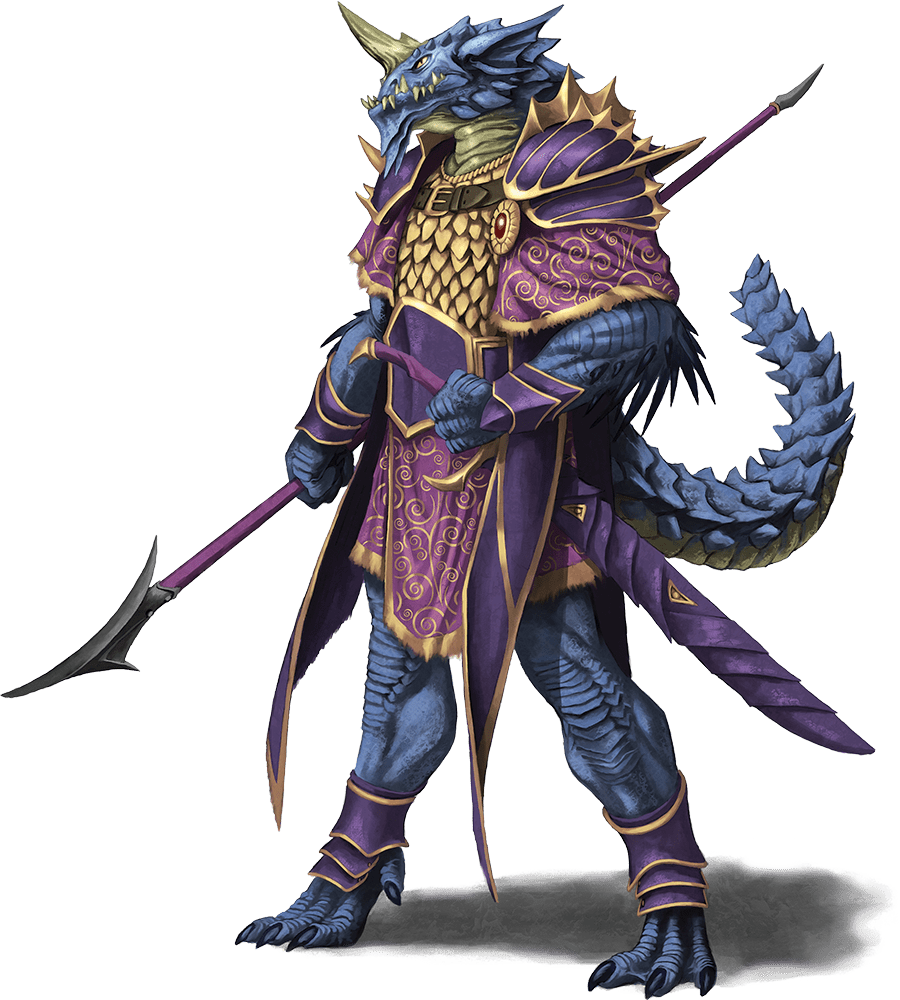
    Named Langdedrosa in the module, Cyanwrath is presented as a champion fighter of the Cult of the Dragon who loves a good one-on-one duel and is willing to exchange captured hostages to the party’s custody to get one. He’s even got a savage streak, striking them once more when they’re down or killing the NPC that will duel him (if the players refuse) after he’s already beaten.

    I changed him entirely.

    Back in session zero, I told my players that there would be opportunities throughout the campaign to pull people out of the Cult of the Dragon – that very few of them were so far gone as to be absent all reason. I had two specific characters in mind when I said this: Azbara Jos (more on him later) and Cyanwrath.

    Cyanwrath from the Hoard of the Dragon Queen Module
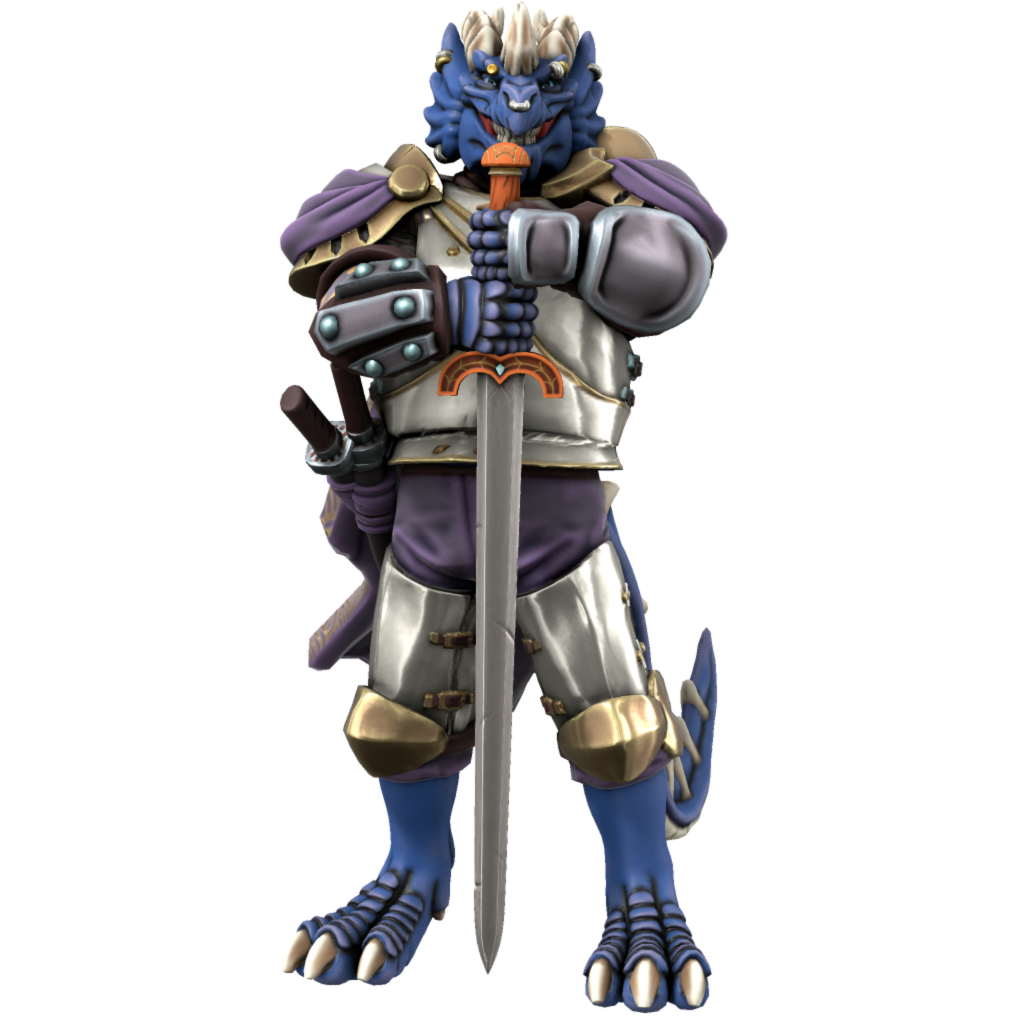
    Re-imagined Cyanwrath made with HeroForge

    Rather than the brash and devoted warrior, I reimagined Cyanwrath as someone who’d never been given any agency in his life. His father, Lennithon, the blue dragon that aids the assault on Greenest, had allied with the Cult of the Dragon before his birth, and he was raised in that cruel and careless environment. I envisioned him as possessing a strong sense of honor and compassion – one he had to actively work to suppress while with the Cult of the Dragon to the extent that he would overreact to any doubts or aspersions with vehemence. But nevertheless, it peeked through.

    His mercy at Greenest was the first of these cracks the party witnessed. With that flimsy justification of a duel, he was able to allow the heroes to escort the villagers away and still hold that shred of believability. Later, when our party rescued the villagers from the cultist camp, they saw Cyanwrath at the edge of the entrance, in position to try and chase them down and perhaps catch them, slowed as they were by their charges. Instead, he returned to the camp.

    Over the course of the long trip from Baldur’s Gate to Waterdeep, the party kept working at this knot, and eventually Cyanwrath sought them out himself, trying to make sense of his inclinations and his upbringing. He even joined the party as an ally as they delved into a homebrew dungeon I added in the middle of the On the Road chapter to break up the days and days of travel, aiding them in rescuing a pregnant mother from the clutches of a hag (more on that in a future post).

    However, despite how he tried to hide his decision to aid the party, Frida and Rezmir knew, and tortured him for failing to cut them down.

    And on his behalf, the party intervened. They broke Cyanwrath free and sent him onward to Daggerford.

    And Frida came down upon them immediately.


    Frida Maleer

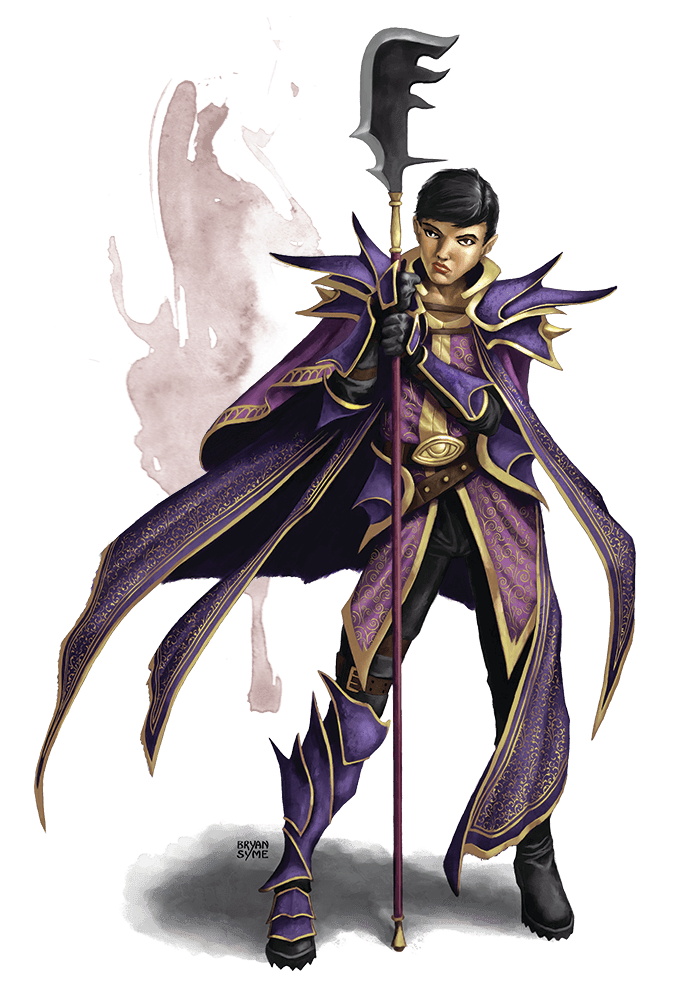
    In the module as Frulam Mondath, this was a character the players had no chance to turn away from the cult. However, instead of leaving her to die in the Hatchery, I retained her as the cult’s primary face during the long journey north. She served as Rezmir’s voice on the road, and when the party sprung Cyanwrath, she insisted they be ejected from the caravan. The captain of the caravan tried to mediate the situation, but it was simply one party’s word against the other’s. With Frida as the only cleric in the caravan, no impartial party could provide a Zone of Truth.

    The captain managed to have them agree to allow the priests at the Temple of Waukeen to adjudicate once they reached Daggerford that afternoon. The trial ultimately fell the party’s way, but despite her arrest, I’d intended to keep using Frida – perhaps have the party encounter her once more in Castle Naerytar or Skyreach, but thanks to a few high perception rolls and Sending spells, the party intercepted Frida and the cultists who’d gone to break her out of prison and defeated them all.

    Despite my plans getting upended, I certainly feel like I got a lot more out of Frida than I would’ve gotten from Frulam Mondath. Even in death, thanks to a Detect Thoughts spell, she gave the party a lot of information about their upcoming adventures.

    Frulam Mondath artwork from the Hoard of the Dragon Queen Module.

    Azbara Jos

    Despite some major edits to his character, I didn’t actually change this name much. I settled on “Azbara Jhos,” so for clarity, we’ll use Azbara when I mean the version of the character from the module, and Jhos when I mean my version of the wizard.

    Now, first things first, I think there’s too little race-variety in this module (it’s one of the reasons I made Leosin into the orc Brok) (I also just like orc heroes). One of my players picked genasi for her race, and I made Jhos one, too. I imagined him as a young wizard – a true apprentice, one who fled Thay and had no option but to accede to his master’s plans. At only 19 years old, this was another character the party could’ve pulled out of the cult.


    Azbara Jhos re-imagined with HeroForge
    Azbara Jos from the Hoard of the Dragon Queen Module

    (That “could” is giving a lot away, isn’t it?)

    As in the module, Jhos joined the caravan and didn’t socialize much. What few times he might’ve been seen, he’d have been talking to Frida, until trolls ambushed the caravan. There, he got a proper introduction: flinging fireballs at the trolls when the party was only just cresting level 4. Even despite benefiting from the caravan’s ability to travel safely and without delay, it’s hard for me to imagine Azbara doing the same. Jhos got hailed as a hero, and then the party started poking at that scab throughout their journey.

    They were only a few carefully chosen words from rescuing this guy, but, unfortunately, it didn’t materialize. He met his end when the party battled him and Rath Modar in Skyreach Castle. When they arrived, they overhead him just about to spill the beans on them all to Rath Modar after the two had discussed the cult’s swelling need for mages. Taking that last tidbit to heart, our party’s fighter felt they couldn’t risk leaving Jhos alive, and struck him down.

    Rath, however … Heh. Let’s just say I only ever need to learn a lesson once.

    Rather than being present in the flesh, I imagined that Rath might need to be in many places at once to prove his value to the cult. Thus, the Rath Modar present at Skyreach Castle was merely a simulacrum that crumbled into a rapidly melting mound of snow upon his defeat. The party still got to learn a lot about the wizard – his capabilities, some of his spells, but he was never in danger of being lost so early.

    And, there’s one final character I wanted to discuss here.


    Talis

    Shortly after session zero, I asked my player who chose to play a Draconic Sorcerer if he’d be up for a connection to a character in the module in his backstory. I pitched that he and Talis were childhood friends, meeting while both under the tutelage of a wizard. (I also did make her a wizard, rather than a cleric.)

    While on the road, the party used Sending to contact Talis and discovered that she’d become a hostage to the Cult of the Dragon, just as the sorcerer feared. She was unable to tell them much about where she was, but the party encountered her exactly where they would in the module: the Hunting Lodge they teleported to following their adventure in Castle Naerytar.

    There, she told them a troll kept her within the grounds, and that an abishai would often return to the lodge and might have some field around the area that would alert him if she left. Reunited with his childhood friend, the sorcerer urged his allies that they rescue her, and they battled the troll, then later the abishai as they flew up to Skyreach Castle.

    Once there, Talis revealed that she had developed some level of kinship with the white dragon within the castle – that he’d given her scales to make into armor (and here she dispelled an illusion that revealed the scale mail she’d been wearing all along). She urged that they visit the dragon, that perhaps she could turn him to their cause!

    And she absolutely betrayed them.

    It was glorious.

    Talis the White from the Hoard of the Dragon Queen Module.

    I think this wouldn’t have worked if the party hadn’t been successful with turning Cyanwrath. Even then – the party’s ranger/rogue multiclass was about the scrap the whole plan, feeling off about the whole thing. (Expertise in Deception never served me so well.)

    With Glazhael fighting them, Talis managed to effect an escape after a delightful villain monologue, and at time of writing, she has yet to turn back up in our game. Considering that the last time I ran this module, she died within an hour of the party arriving at the Hunting Lodge? I’d say we’re doing pretty well here.


    So! That’s how I’ve adjusted some of the characters from the first half of the Tyranny of Dragons module to give them some more longevity, some … recurrence. Even those we’ve lost along the way have still impacted the campaign in a much fuller way than their counterparts in the module. Now, I wouldn’t just outright say this is better as a matter-of-fact; it’s only different.

    And more to my liking, I guess.

    Anyways, thank you for reading! Good luck out there, heroes.

  • December 2024 Irregular Update

    December 2024 Irregular Update

    Hi.

    Yes. I know. It’s been much, much longer than I intended since the last one of these. Since the last blog post in general. I … did not mean for it to go this way. Hell, I think the only thing that’s putting a fire beneath my ass to do this now is that I have my 2024 Year in Review post ready to go and it feels like I should probably address some stuff before I do that.

    So. What the hell happened, huh? Maybe we can both figure it out after prattling on for a while.


    Where were the blog posts?

    Well, at the top of the year, I had some turmoil with D&D. Well, more correctly, holdover turmoil from our experiment with Pathfinder. The homebrew game I was running petered out. We had one player who wasn’t all that jazzed about going back to D&D and another who was losing availability for a couple of months. So, we wrapped up the dungeon we were in and called the game.

    Not something I’m unfamiliar with – I’ve been running D&D for nearly fifteen damn years at this point. I’ve had more games get canned than reach their intended conclusion. Still, this one stung. This game was practically full-on sandbox and I wanted to more or less run the game as a gift for the table, let them explore and self-direct to the extreme. I was happy to put in the extraordinary time I might need to week-to-week to set the track down right in front of the train, but it still didn’t work out. And perhaps the complete lack of direction wasn’t the right fit for the table or the characters they made, maybe it was entirely down to the external obstacles, but it stung to lose that campaign.

    After that, I ran Blades in the Dark for about three months or so with the two players who stuck around. That system was some good fun, and we enjoyed it well. It’s built incredibly well for allowing the players to have the initiative in their choices and actions – it’s the exact inverse of D&D. In the latter, the DM has a situation they present to the players and the players respond; in Blades, the players lay out a heist (called Scores) and the GM reacts to their actions. Perhaps a bit of an oversimplification, but it runs well and we had some good fun!

    Once we got to the end of our “first season” of that game, we got one of our players back and were joined by two others and we went back to D&D. I’ve been running Tyranny of Dragons since June and it’s been going well. It’s my second time using the module and I’ve made some major edits to its structure – ones I’d love to share here on the blog, but half of my table has a habit of reading this blog, so that’ll have to wait – at least until we’ve passed the moments that have been adjusted.

    (I know, I know. How can someone have a habit of reading this blog when it’s been silent basically all year. Hush.)

    Another major source for much of my RPG related-posts was playing in a friend’s game who was running the game for the first time. I had the boon of seeing someone with no experience running the game and it reminded me of many of the lessons I’ve learned over the years – and he managed to do some inspired things despite his inexperience that I wanted to praise. Unfortunately, that table also dissolved due to out-of-game circumstances (luckily after the module’s completion).

    I’ve since had the privilege of joining another game that’s run once a month run by another friend, but I had this block, this wall up, that held me off from drafting anything.

    I had some other topic ideas at the start of the year, which made me feel fired up enough back in the January Irregular update, but … well. I lost confidence in claiming that I had any worthwhile experience to actually write those posts.

    These ideas were about the steps I took for independent publishing. Problem is, it’d be delusional to say I’ve done this successfully – at least, to the degree that I feel like my experience would be valuable to someone desperately googling for advice. Regardless of the validity of that worry – it held me off from drafting those posts. So. There it is.


    And … Red Watch?

    In January, I was feeling good about my decision to rewrite the first two books, and I still think pulling them down was the right decision for me. By February, I had completed the draft of A Violent Peace, and sent it out to several folks, people who’ve previously read for me. To my knowledge, none of them ever got around to it, or got very far into it. And I do not begrudge or blame or have any negative feelings toward them; beta reading is a lot of work for no compensation – any time it’s done, it’s a favor, and I’m thankful for them all offering to begin with.

    The point is, the complete lack of engagement was disheartening. The book probably still has many problems. I think there’s some stuff within it that works well, but there’s likely far more that just isn’t working.

    I spent the next two months diving headfirst into the rewrite of A Tide of Bones. I made some excellent headway and I was really liking some of the changes I made. … But there were many more things that were proving exceptionally difficult. I had adjusted the characters a little to provide a new central tension in the first quest of the book, but those changes were … I don’t know if they were right. And I just kept struggling with more and more things; with proper POV division, with some repetitive motivations following the events in Souhal. There’s obviously too many characters, too, but I don’t know what to do about that.

    I mean, clearly the solution would be to cut characters. But to do that would be to surrender the goal I had of not completely changing the canon of the stories so returning readers could pick up A Violent Peace. And would require major rewrites to A Violent Peace, given that it was written with the previous canon to begin with.

    So … do I scupper the whole thing? This project is like a hydra – every problem I address spawns more. How much more do I want to wrestle with it? How much does it get mangled before it’s unrecognizable? Am I going to tie myself to this anchor and just keep on with it? Or do I cut it loose?

    I think … it’s probably the latter, isn’t it? It’s been eight months since I’ve written a word that wasn’t for D&D because of this weight around my neck. I even flubbed the journaling.

    “Sometimes, taking a leap forward means leaving a few things behind.”

    Maybe it’s time to do just that, Ekko.


    So … what’s next?

    If I’ve learned anything, it’s that making promises or exclamations in a random blog post aren’t worth a damn from me. Lately, I’ve been failing to find things to do – to find distractions that will keep me busy and off-track. For a long time this year, I was playing too much Warcraft, too much Baldur’s Gate and Deep Rock Galactic, over-prepping for D&D, all sorts of stuff. But, the sheen’s wearing off.

    When I’m not doing anything else, I end up writing.

    So. Let’s see what we end up working on, then.

  • My Experience Running Pathfinder 2e

    My Experience Running Pathfinder 2e

    Spinning out of the OGL fiasco earlier this year, I decided with my table to give Pathfinder 2nd Edition a try when we began our new campaign. It’s been just about 5 months now, and after 14 sessions, I’ve come to the conclusion that the system is a very poor fit for me. Each time we got deeper into the game, as we came to understand more of its rules and functions, I found more and more to dislike about it.

    A lot of it comes down entirely to personal preference. What I’ve been upset with in the system might be the selfsame things its foremost fans love. As an example, I think the system sacrifices a lot of things that are mysterious, exciting, or interesting in the name of balance. There’s a well-defined table listing the number of gold pieces and magic items your party should find at each level. Weapon runes are baked directly into the game’s scaling arithmetic, so missing out on one feels way worse than not finding a magic weapon in D&D. The magic items themselves are narrow, incremental bonuses – never providing that oomph that powerful items grant in D&D.

    And, again, the DMs and players who like for that to be codified in that way will be glad for it – for me, it felt like it took the magic away. (More on that later.)

    So, that’s the topic of today’s post – my experience running Pathfinder 2e. What I liked, what I didn’t, my major gripes with the system, and why I decided to switch back to 5e D&D for my campaign.


    Pathfinder’s Strengths

    Even despite all the things that I dislike out of preference, I can still appreciate a lot of stuff that Pathfinder does. I really like the way they set-up their dragons as opposed to 5e: after the dragon uses its breath weapon, you roll 1d4 to see how many rounds it needs to recharge, instead of rolling a 33% chance at the start of the dragon’s turns. And, any time they score a critical hit, their breath immediately recharges, which they can theoretically fish for before locking them out of using it that turn. I liked that so much, I decided to rip that out and carry it back to D&D.

    Then, any time you roll 10 over the difficulty threshold of an action (be it a saving throw, skill check, or attack roll), your result becomes a critical success. This changed the texture of Armor Class a bit, as the higher value your AC was, the more it mitigated damage by preventing critical blows. (This, additionally, is something I’m adapting a bit for D&D – if someone exceeds a creature’s AC by 5, they get 5 additional points of damage.)

    Pathfinder’s 3-Action system also provided a lot of opportunities to think tactically through your turn, potentially sacrificing some things that are baseline parts of your round in 5e. You might not need to move, so you can drop that spare action point into striking out against someone an additional time, or attempting to knock them down, or inflicting one of the game’s numerous conditions onto your foes to the benefit of your allies.

    For many players, the modularity Pathfinder offers when building out a player character will feel unrivaled by many contemporary systems on the market. There are (on paper) no empty levels. Each time you rack up 1000 xp, you are getting something new – a class feat, an ancestry feat, a skill feat. There are dozens of options to choose from, and anyone feeling underserved by the options presented by 5e will find so many more feature to add on to their character sheet. However …


    Complexity is not Value

    These features are not created equal. A very narrow selection of skill feats provide new options in combat, giving them more value than their contemporaries (since, just like D&D, the system is primarily designed for running combat). A few skill feats enable mechanics that many DMs would assume are a baseline ability for a character to have. The long list of class feats for fighters presents options for specific fighting styles, drastically cutting the number of options down once you’ve picked your weapon set-up. So, there’s a long list, but a lot of it is bloat. Bon Mot, Intimidating Glare, Risky Surgery – these are certainly going to be taken by one or more members of your party. They just slot into what the game is designed for better than the other options.

    And that delta between options exists in the action economy too. Each character builds out to have a named move in their arsenal that is their optimal choice for throughput which makes other options inherently less valuable to use. Despite the long, long list of actions available, I very rarely saw my players change up their slate of actions. It didn’t help that casters were generally locked out of two actions (minimum) to cast any of their spells, but even the Fighter and Swashbuckler often had the same rotation of abilities – like they were hitting their buttons to perform DPS in a dungeon on Warcraft.

    And it isn’t that D&D doesn’t suffer from players doing the same thing turn-to-turn. However, it is so much simpler to get to that same problem in D&D than Pathfinder with a greatly reduced load on me to keep track of a handful of conditions and the way that they interact with a creature’s AC, save DCs, to-hit bonus, and damage rolls. Even with my players staying on top of keeping track of those conditions to help me.

    And the list of conditions is so long and vast, accounting for a lot of minute differences that don’t necessarily need to be accounted for. I found this blog post that really dug into this, and rather than regurgitating a lot of their points I’ll just share the link.

    And I think it’s a misfire from Paizo to have built this way, unless their intent is to capitalize on a more niche market of disaffected 5e players. Pathfinder’s 1st edition outsold 4th edition D&D for a simple reason – it was the simpler alternative on the market. For all of D&D brand-name recognition and staying power, a new kid on the block showed up and captured the community’s attention by just being D&D 3.5 with a few patch notes to streamline the game.


    A System of Disengagement

    This, however, was the biggest problem for me. And, like many of the issues I’ve brought up already, there are going to be many, many people who are glad for the system to function this way. For me, it very much did not work.

    Running Pathfinder, I often felt like the game would have preferred a machine over a human person behind the DM screen. It’s tighter in design, and it’s gone to great lengths to try and provide an answer for every question, a rule for every experience. There’s not a hole that needs an off-the-cuff ruling – just crack open that book (or visit Nethys) and find the answer, despite how much that slows the game down. And that’s the better option, because trying an off-the-cuff ruling can be overly punitive (such as when I imposed the Sickened condition on my barbarian player for biting a mimic and failing to roll well on an improvised Fortitude save to overcome an adhesive goop filling their mouth and throat).

    And I hit a DM-side problem with the 3-Action system – the monsters rarely had a unique or cool ability to use. We fought a handful of Xulgath early into the campaign, and outside of the Fortitude save to overcome their stink, they just strode and struck until the party defeated them. Even the Bilebearer didn’t have some cool full-round move to splash nasty gunk on everyone around it (and I improvised one on the spot because it felt boring for it to just keep doing the same thing). For all the talk from Pathfinder’s community about tactical combat, it seems there’s rarely anything the monsters have at their disposal to actually make you consider how to engage them – they just have a high damage output because of the game’s scaling damage die and critical hit rules. In time, maybe I’d have learned to have the same comfort I do for building monsters in D&D, but I felt like it was much easier to do in 5e than in Pathfinder, even from the start.

    And, last, the system felt like taking a step backward.


    Regression

    It’s clear in a lot of ways that Pathfinder is a child of the old branch of D&D. Pathfinder’s 2nd Edition is Paizo’s evolution of 3.5 into 4e, and it held onto a lot more from that system than 5e did. Things like Vancian casting – prepping each spell into each individual spell slot, needing to relearn them at higher levels to cast them in those more potent slots. It does a lot to differentiate the feel of different casters, certainly. For me, it absolutely filtered them out between the casters I’d play (spontaneous) and those I wouldn’t (Vancian).

    It also stings to be unable to split up your movement. If you burn one of your three actions to stride, why do you need to lose whatever left over movement you had so you can attack? If you walk fifteen feet to get to an enemy on its own, then use your following two actions to defeat them, you don’t get the last ten feet of your movement that you already spent an action to buy – it’s just gone. Is there value in that?

    After I played 5th Edition D&D, I never once thought I’d want to go back to 3.5 one day. I loved the elegance of advantage and disadvantage to handle the floating numbers. I appreciated the new formula for spell attack rolls rather than needing to track a creature’s Touch AC. Playing Pathfinder felt like opting in to several regressive mechanics to complicate the game in a way I did not enjoy. One I don’t think I’ll revisit in the future.


    So, that’s my account of my time playing Pathfinder. The system has a lot of fans – and I personally appreciate a lot of things about Paizo – that all their rules are available for free on the Internet is a huge benefit to the game’s accessibility, one that D&D could seriously learn from (were it not for Hasbro’s greed). If you or a DM you know would love to feel like the game has all the answers, then Pathfinder would be a great fit for them, urge them to give it a try. For me, it felt constraining and limiting; it revealed to me how much I enjoyed fiddling with D&D to customize monsters and items and really curate the experience for my players, which was something I didn’t feel like I could do in Pathfinder.

    There’s often a lot said for the ways these two games function similarly. They’re in the same genre, after all – they’re both dungeon crawlers at heart that take a group of characters from near-nobodies into basically superheroes. The way they achieve that fantasy, however, doesn’t feel like it could be more different.

    As always, thank you for reading. Good luck out there heroes.

  • RPGs: Metagaming

    RPGs: Metagaming

    There’s a strong negative sentiment in the TTRPG space around “metagaming.” It’s almost like a dirty word – a curse so potent that players will go to incredible lengths to avoid even the potential for an accusation of such a sin.

    And I think this is mistaken; at least to the degree to which it exists. In general, it’s great for the players to be invested in your game, to plan out combo moves between their characters, or share the information they gained when separated. The adventures in these games occur over the space of months and years, it’s impossible to roleplay every moment of that time, and it’s okay for things to be discussed off screen.

    Yet, there are other instances were metagaming can spoil the experience of the game. So, today, we’re talking about acceptable and unacceptable metagaming, and some instances where peeling back the curtain can even further enhance the game.


    Negative Metagaming

    Obviously, the most egregious instances of metagaming are why the stigma exists at all. Choosing to read ahead in a published adventure to discover optimal solutions, researching a monster’s stat block to understand its strengths and weaknesses, or even going so far as to read the GM’s notes when they are out of the room are all ways to quickly spoil the game for everyone present.

    Additionally, there’s acting on information your character wouldn’t yet know. If your party is split, and two characters learn information revealing that an NPC that is journeying with the party intends to betray them. A character in the other half of the split party might have no reason at all to suspect such an occurrence, even though the player does. I’m lucky enough to have players at my table that will revel in that level of dramatic irony, but leaning on this scenario too often can harm the player’s ability to trust that the GM doesn’t simply mean to screw them over.

    Another harmful way to metagame is to override or interrupt another player’s turn in combat to present an optimal turn without request. It’s not bad to be helpful when asked, but everyone should have the chance to make their own decisions. Hell, a suboptimal turn in combat is often intentional for the character.


    Acceptable Metagaming

    Ultimately, I think a lot of acceptable metagaming boils down to the things that we quietly understand about the game’s mechanics and other knowledge inherent to the experience. Knowing your damage averages, knowing how your ally’s staple spells work, understanding DC tiers – these are common mechanics that being aware of doesn’t break the immersion of the game. As an adventurer, you’d know about how hard you can hit with your weapon, you’d know how your comrades fight in battle, and you’d know about how hard something might be at a glance.

    There’s also the implications I discussed in my Presentation and Assumption post. How an enemy appears can give your characters immediate implications about how they might fight, and understanding the expression of that mechanically I feel is in effect metagaming, but a strength of the readability of the game.


    Acknowledging the Game

    Now, every table is different in this regard; some players will desire to be as immersed as possible, and acknowledging the rules of the game for a moment could damage their experience. However, in some cases, taking a few minutes out to expressly clarify difficult mechanics can help prevent the players from needing to clarify them further and maintain immersion better in the long run.

    As an example, giving the dimensions of an area-of-effect spell or aura outright when playing without a battle map. Theater-of-the-mind combat can get messy and confusing fast, and it’s not doing anyone any favors to be coy about the size of these effects.

    For my table specifically, I’ve given them exact AC, HP, and saving throw values in many battles. I’ll let them know how much health a creature has, so they understand the gamble they’re making if they choose to attack rather than defend themselves. I usually hold on to giving the specific number when the circumstances are dire, but otherwise I give them clues liberally to describe an opponent’s state; when a monster is down to half of its hit point maximum, I’ll narrate how it is visibly weakening; when the players land a blow that leaves an enemy with less hit points remaining than the damage they just suffered, I say, “They cannot take another hit like that.”

    Descriptive combat narration is the best way to lead into these reveals. A creature with a high wisdom saving throw might appear utterly unfazed by a spell targeting that value, while a low-score enemy who just gets lucky on his resistance roll might reel for a moment before overcoming the effect with a miraculous force-of-will.

    When I first started playing D&D, the rule-of-thumb was to always keep enemy statistics secret, but I think that’s more valuable to newer GMs who are still learning how to build encounters than a veteran like myself. I’m confident in my knowledge (especially of 5e D&D) that I don’t need that ability to adjust my encounters on-the-fly. The last times I ran games in person, I didn’t even use a screen, rolling every dice in the open. As we’re currently playing online, I’ve replaced that inclination by borrowing from Dimension 20’s flair for the Box of Doom by rolling momentous rolls in our VTT Talespire.

    So, there’s a dissection on the nuance of metagaming in RPGs. As always, thank you for reading. Good luck out there heroes.

  • RPGs: Session Zero

    RPGs: Session Zero

    For the majority of the games I’ve run in my tenure as a GM, we had a perfunctory session zero, if we had one at all. In the early years, I was seeing my players throughout the week, and we’d have piecemeal discussions at random to talk about the upcoming game. Lately, however, I’ve taken to setting up a robust session zero with everyone present, and I’ve found it invaluable.

    But, I noticed one snag in the process when I was making that switch. There’s plenty of discussion about the value of session zero on the internet, but I didn’t find a good blueprint anywhere. That’s why we’re here today: we’re looking in depth at session zero. What is it, why should you do it, and when should it be.


    What is Session Zero?

    Alright, say a gaming group is starting a new campaign. They just finished a published adventure and are deciding which one they might want to run next, or they’ve reached the end of a homebrew game and everyone is ready for new characters, or maybe it’s just been several months since they played last and they need something new to get back into it.

    In all these scenarios, there’s a lot of different paths they could take. Maybe the group that runs published adventures just dealt with Strahd and they want a change of pace – something more laid back or comedic. Maybe the homebrew table wants to try another system. Perhaps the group that fell into a hiatus has been able to identify what wasn’t working in that last campaign and everyone wants to get on the same page.

    For all these reasons and many more, hosting a session zero is the best way to discuss these topics. It needs the same respect as a normal gaming session: full focus, phone set aside, snacks at the ready, ideas prepared. Then you’re ready to begin.


    What should we discuss for session zero?

    Foremost, you should discuss your ideas for the campaign. Things like tone, themes, setting. If you have several discrete ideas that you’re equally interested in running, this is the time to talk about them and see what your players latch onto.

    As an example, last August one of my players was going to be away for several weeks, and a friend-of-a-friend was interested in joining our campaign. Rather than go on hiatus, I ran a small scale campaign to introduce that friend to D&D. Our main campaign had reached the higher levels by this point, and my players and I were looking for a brief change of pace. So, session zero, we set the tone: this was a game for goofs and jokes. We decided the PCs knew each other – tangentially, at least – and that they’d been on a bender and lost their employer’s magic item. As part of session zero, I asked them each to tell me in secret one reason they might have stolen the magic item. They each remembered their own problem, and they used those hooks they generated to try and track the item down.

    For players at session zero, I recommend arriving with a few ideas about the kind of characters you’d like to play. You’d hate to show up to a party dressed in the same thing – even in a mono-class kind of game, you’d still want your PCs to have specific strengths and weaknesses. Pick a couple classes, develop a concept that works with multiple classes, or come with a few different ideas and build a party that can work well together.

    And, as implied above, discuss the campaign at large: what’s the trajectory? Are we heroic or villainous or just trying to get by? Is there a level range we should expect to conclude around? Decide what system you’ll use, discuss house rules; if there’s a mechanic you mean to make the backbone of your character, clarify that you and the GM interpret it the same way.

    Perhaps most importantly, decide what’s off-limits. I have a hard rule against any portrayal of sexual assault. I had a player with arachnophobia who asked for limited spider encounters (and less descriptive narration for spiders). Do the players want to deal with racism or homophobia from the NPCs? – Are you as a GM comfortable portraying those kinds of people?

    Session zero is the time to set everyone’s expectations in the right place, so everyone can engage with and enjoy the game.


    When should you have session zero?

    I think the best time to host it is one or two weeks before beginning the game itself, during your planned session window. Naturally, if your group meets less often, than just that first meet-up should be session zero, with the game beginning the following meet.


    Any other tips?

    My main goal in hosting session zero is to understand the PCs as much as possible. With that mini campaign and my upcoming game, I really wanted the direction of the game (at least at the early levels) to be player-driven. I want them to tell me their goals and desires so I can put them on pathways toward those items.

    So. That’s my advice on session zero. I hope it helps make your games better. As always, thank you for reading! Good luck out there, heroes.

  • RPGs: Dungeon Traps as Encounters

    RPGs: Dungeon Traps as Encounters

    During my table’s test run of Pathfinder, I came across a new way of thinking of traps in RPGs that I feel like a fool for not having considered sooner. In Pathfinder, traps have legitimate statblocks, like a goblin or bear or other monster your party would encounter in battle. A “complex hazard” will usually have a reaction to some way the players can interact with the environment nearby, and then they will roll initiative. The players can then attempt to hack away at the mechanism until it breaks, or find the device and disable it before it continues to affect them. A series of traps can become a full blown encounter this way, and I’d never thought to use them as such!

    So, while we’re still playing D&D to finish out my current campaign, I decided to give this idea a go. My party is currently exploring an ancient wizard’s laboratory, and the first room of this delve I devoted entirely to a “trap encounter.” I found this map, the Mad Lich’s Crypt, on talestavern and stocked it for my purposes, so thank you to user JustcallmeWendy!

    Now, onto the encounter.


    The Room

    So, the party began their exploration into this ancient and buried laboratory. A warning in an ancient dialect on the statues near the door gave them little pause, and the entered the first room. There, our fighter noticed a little barred grate near the floor that allowed them to see the blue brazier beyond. Just as he mentioned it, however, the party moved into the room itself, a hidden gate slammed down between them and the entrance, and I asked them to roll initiative.

    These red, glowering grates in the floor I made the origin for a 3rd-level Fireball. A rune would explode twice a round, once at its initiative rolled, then again ten steps down in the order, always exploding where it would hit the most people. This encounter also involved a bit of a puzzle, with these levers needing to be thrown within the same round to lift a wall to allow them to even get near the blue brazier that kept the traps active. Because of the order of events, our cleric player cast a True Seeing spell before the first fireball exploded (worried an invisible enemy may be in the room), and noticed that the floor before the lever closest to them was merely an illusion, just in time to warn the fighter not to cross it!

    Once a lever was flipped, it lit a torch beside the wall that would rise. However, after 1 round, the lever would reset unless held down by someone. Holding a lever down also caused a burst of cold damage (4d8) to whoever decided to do so, and thus the party was split, three members in the tunnel, and two left by the levers.

    Also, while the wall was raised, a lightning ballista became active, firing a 10-foot-wide 3rd-level Lightning Bolt down this corridor. But, the party managed to access the blue brazier and extinguish its flame, turning all the traps off before anyone get too damaged (they are 19th level, after all). With the fire extinguished, they found the gate to the entryway reset, the wall raised, and the gate blocking their path forward opened.

    I enjoyed this style of dungeon trap immensely more than the basic binary “I check for traps” rolls would usually fall into. I don’t enjoy overly punitive design, and hitting my players with a load of damage for failing to essentially bookkeep their progress through a dungeon never sat right with me. I still have a few things I want to improve on for this style of trap encounter more – a handful of which are explicitly in Pathfinder’s rules. I have further instances of traps being involved with and being full encounters in this dungeon, so I’m excited to keep honing the system further.


    That’s it for this post. Thanks for reading! Good luck out there, heroes.