Tag: dnd

  • RPGs: Metagaming

    RPGs: Metagaming

    There’s a strong negative sentiment in the TTRPG space around “metagaming.” It’s almost like a dirty word – a curse so potent that players will go to incredible lengths to avoid even the potential for an accusation of such a sin.

    And I think this is mistaken; at least to the degree to which it exists. In general, it’s great for the players to be invested in your game, to plan out combo moves between their characters, or share the information they gained when separated. The adventures in these games occur over the space of months and years, it’s impossible to roleplay every moment of that time, and it’s okay for things to be discussed off screen.

    Yet, there are other instances were metagaming can spoil the experience of the game. So, today, we’re talking about acceptable and unacceptable metagaming, and some instances where peeling back the curtain can even further enhance the game.


    Negative Metagaming

    Obviously, the most egregious instances of metagaming are why the stigma exists at all. Choosing to read ahead in a published adventure to discover optimal solutions, researching a monster’s stat block to understand its strengths and weaknesses, or even going so far as to read the GM’s notes when they are out of the room are all ways to quickly spoil the game for everyone present.

    Additionally, there’s acting on information your character wouldn’t yet know. If your party is split, and two characters learn information revealing that an NPC that is journeying with the party intends to betray them. A character in the other half of the split party might have no reason at all to suspect such an occurrence, even though the player does. I’m lucky enough to have players at my table that will revel in that level of dramatic irony, but leaning on this scenario too often can harm the player’s ability to trust that the GM doesn’t simply mean to screw them over.

    Another harmful way to metagame is to override or interrupt another player’s turn in combat to present an optimal turn without request. It’s not bad to be helpful when asked, but everyone should have the chance to make their own decisions. Hell, a suboptimal turn in combat is often intentional for the character.


    Acceptable Metagaming

    Ultimately, I think a lot of acceptable metagaming boils down to the things that we quietly understand about the game’s mechanics and other knowledge inherent to the experience. Knowing your damage averages, knowing how your ally’s staple spells work, understanding DC tiers – these are common mechanics that being aware of doesn’t break the immersion of the game. As an adventurer, you’d know about how hard you can hit with your weapon, you’d know how your comrades fight in battle, and you’d know about how hard something might be at a glance.

    There’s also the implications I discussed in my Presentation and Assumption post. How an enemy appears can give your characters immediate implications about how they might fight, and understanding the expression of that mechanically I feel is in effect metagaming, but a strength of the readability of the game.


    Acknowledging the Game

    Now, every table is different in this regard; some players will desire to be as immersed as possible, and acknowledging the rules of the game for a moment could damage their experience. However, in some cases, taking a few minutes out to expressly clarify difficult mechanics can help prevent the players from needing to clarify them further and maintain immersion better in the long run.

    As an example, giving the dimensions of an area-of-effect spell or aura outright when playing without a battle map. Theater-of-the-mind combat can get messy and confusing fast, and it’s not doing anyone any favors to be coy about the size of these effects.

    For my table specifically, I’ve given them exact AC, HP, and saving throw values in many battles. I’ll let them know how much health a creature has, so they understand the gamble they’re making if they choose to attack rather than defend themselves. I usually hold on to giving the specific number when the circumstances are dire, but otherwise I give them clues liberally to describe an opponent’s state; when a monster is down to half of its hit point maximum, I’ll narrate how it is visibly weakening; when the players land a blow that leaves an enemy with less hit points remaining than the damage they just suffered, I say, “They cannot take another hit like that.”

    Descriptive combat narration is the best way to lead into these reveals. A creature with a high wisdom saving throw might appear utterly unfazed by a spell targeting that value, while a low-score enemy who just gets lucky on his resistance roll might reel for a moment before overcoming the effect with a miraculous force-of-will.

    When I first started playing D&D, the rule-of-thumb was to always keep enemy statistics secret, but I think that’s more valuable to newer GMs who are still learning how to build encounters than a veteran like myself. I’m confident in my knowledge (especially of 5e D&D) that I don’t need that ability to adjust my encounters on-the-fly. The last times I ran games in person, I didn’t even use a screen, rolling every dice in the open. As we’re currently playing online, I’ve replaced that inclination by borrowing from Dimension 20’s flair for the Box of Doom by rolling momentous rolls in our VTT Talespire.

    So, there’s a dissection on the nuance of metagaming in RPGs. As always, thank you for reading. Good luck out there heroes.

  • RPGs: Session Zero

    RPGs: Session Zero

    For the majority of the games I’ve run in my tenure as a GM, we had a perfunctory session zero, if we had one at all. In the early years, I was seeing my players throughout the week, and we’d have piecemeal discussions at random to talk about the upcoming game. Lately, however, I’ve taken to setting up a robust session zero with everyone present, and I’ve found it invaluable.

    But, I noticed one snag in the process when I was making that switch. There’s plenty of discussion about the value of session zero on the internet, but I didn’t find a good blueprint anywhere. That’s why we’re here today: we’re looking in depth at session zero. What is it, why should you do it, and when should it be.


    What is Session Zero?

    Alright, say a gaming group is starting a new campaign. They just finished a published adventure and are deciding which one they might want to run next, or they’ve reached the end of a homebrew game and everyone is ready for new characters, or maybe it’s just been several months since they played last and they need something new to get back into it.

    In all these scenarios, there’s a lot of different paths they could take. Maybe the group that runs published adventures just dealt with Strahd and they want a change of pace – something more laid back or comedic. Maybe the homebrew table wants to try another system. Perhaps the group that fell into a hiatus has been able to identify what wasn’t working in that last campaign and everyone wants to get on the same page.

    For all these reasons and many more, hosting a session zero is the best way to discuss these topics. It needs the same respect as a normal gaming session: full focus, phone set aside, snacks at the ready, ideas prepared. Then you’re ready to begin.


    What should we discuss for session zero?

    Foremost, you should discuss your ideas for the campaign. Things like tone, themes, setting. If you have several discrete ideas that you’re equally interested in running, this is the time to talk about them and see what your players latch onto.

    As an example, last August one of my players was going to be away for several weeks, and a friend-of-a-friend was interested in joining our campaign. Rather than go on hiatus, I ran a small scale campaign to introduce that friend to D&D. Our main campaign had reached the higher levels by this point, and my players and I were looking for a brief change of pace. So, session zero, we set the tone: this was a game for goofs and jokes. We decided the PCs knew each other – tangentially, at least – and that they’d been on a bender and lost their employer’s magic item. As part of session zero, I asked them each to tell me in secret one reason they might have stolen the magic item. They each remembered their own problem, and they used those hooks they generated to try and track the item down.

    For players at session zero, I recommend arriving with a few ideas about the kind of characters you’d like to play. You’d hate to show up to a party dressed in the same thing – even in a mono-class kind of game, you’d still want your PCs to have specific strengths and weaknesses. Pick a couple classes, develop a concept that works with multiple classes, or come with a few different ideas and build a party that can work well together.

    And, as implied above, discuss the campaign at large: what’s the trajectory? Are we heroic or villainous or just trying to get by? Is there a level range we should expect to conclude around? Decide what system you’ll use, discuss house rules; if there’s a mechanic you mean to make the backbone of your character, clarify that you and the GM interpret it the same way.

    Perhaps most importantly, decide what’s off-limits. I have a hard rule against any portrayal of sexual assault. I had a player with arachnophobia who asked for limited spider encounters (and less descriptive narration for spiders). Do the players want to deal with racism or homophobia from the NPCs? – Are you as a GM comfortable portraying those kinds of people?

    Session zero is the time to set everyone’s expectations in the right place, so everyone can engage with and enjoy the game.


    When should you have session zero?

    I think the best time to host it is one or two weeks before beginning the game itself, during your planned session window. Naturally, if your group meets less often, than just that first meet-up should be session zero, with the game beginning the following meet.


    Any other tips?

    My main goal in hosting session zero is to understand the PCs as much as possible. With that mini campaign and my upcoming game, I really wanted the direction of the game (at least at the early levels) to be player-driven. I want them to tell me their goals and desires so I can put them on pathways toward those items.

    So. That’s my advice on session zero. I hope it helps make your games better. As always, thank you for reading! Good luck out there, heroes.

  • Homebrew Mechanic: Heroic Vignettes

    Homebrew Mechanic: Heroic Vignettes

    In my tenure as a GM, I’ve never been fond of encounters with a clear outcome. Spending upwards of half-an-hour running turn-by-turn combat where the characters are only in danger if they play extremely foolishly just doesn’t entice me. A battle needs stakes to be interesting at all, a chance for the party to fail, a consequence looming overhead, or it feels rote and my narration of events suffers from my disinterest.

    At lower levels, every fight can carry a threat of permanent character death from poor decisions or poorer luck, but as my party reached the higher tiers of character power in my campaign, I needed a new solution. They had many enemies that had their own wealth of resources to bring to bear, but running every battle against an array of grunts or mooks was just going to waste time we could spend on more interesting battles.

    So, I devised Heroic Vignettes. I mentioned this idea in passing in my Defining Dungeons post, but I’ve since had another chance to use this mechanic and I think it’s got real teeth. So, what better place to share it out than here?


    The Basics

    The idea began with me wanting to give my players a chance to use their hit die to recover from a battle when there absolutely wouldn’t be enough time for a short rest in our 5e D&D game. However, they had all of their hit die available to them, and I didn’t want them to be able to just spend all their hit die to reach full health without a worry. So, I created small instances – scenarios where a hero’s intervention would ensure a heroic result. As an example, my first use was during an attack on a city, and some townspeople were trying to evacuate some children, but the invaders were charging to slay them. These attackers were not going to be threatening to my party of 16th level adventurers, but they would annihilate the children and their shepherds.

    So, electing to intervene, I asked the table to expend four of their hit die. Any of the four players could choose to expend the cost and in any variation: one player could spend four, intervening alone; they could have two characters split, each spending two; or all four of them could spend one. Whatever their decision, they spent the required hit die and rolled it, suffering whatever they rolled as incidental damage from the skirmish.

    There were several more instances where they could spend their hit die and intervene, then, at the end of the gauntlet as they approached the next battle that would be run in initiative, I allowed them to spend whatever hit die they had left to heal as if from a short rest.

    I also told them that would be the intention from the start. As we launched into the heroic vignettes, they all understood that any hit die they spent intervening they would not be able to use later to recover. But, they were quite high level adventurers with many hit die at their disposal, and they elected to intervene in each scenario I’d built and still recovered well for the further fights.


    Open-Ended Vignettes

    Just last week, I used this mechanic for the second time. My party is now four 20th level adventurers, making their way toward what might be the final boss encounter of the campaign. They’ve come to a land to slay a primordial elemental that was never meant to be on the prime material plane, but there are two forces they have to contend with: the Tempest Faithful, a cult devoted to this living storm, and He Who Has Laid Claim to the Skies, a storm giant who has gained the allegiance of a goliath clan to attempt to shackle the Primordial Tempest to their will and reclaim the ancient glory of their people.

    This tribe of goliaths had attacked a flying city home to a clan of dwarves, Ava Dannad. The goliath tribe is massive, swollen with conquered tribes from elsewhere on the continent, but they are pretty run-of-the-mill combatants. Without attacking in ludicrous numbers, they shouldn’t serve as much of a threat to a party of four 20th level heroes – these are some of the mightiest people that may ever exist, after all.

    My players wanted to strike into Ava Dannad using Transport via Plants and make a ruckus to draw out the storm giant and the tribe’s leader to battle them before they reached the Tempest. Rather than run several rote encounters with minimal danger, we launched into freeform heroic vignettes. I asked them to tell me how they would like to draw out or incense the goliaths and then we worked out how many hit die they might spend for each battle, and rolled to tally a score that once attained would successfully draw the giant from his perch. They also had a deadline as the giant was having the flying city crash into a mountainside.

    They had several great ideas, using skills or the environment, using details about goliath culture they knew to incense them, casting Daylight on themselves to make a beacon visible through the storm raging all around to draw their enemies in. For each hit die they spent, we rolled 1d10 (with a few other bonus die thrown in for particularly good ideas) to rack up to a score of 200 that they needed to get the giant to come fight them. It still came down to the wire, with the battle against this storm giant and the champion of the goliath tribe meeting them when the city was a mere 5 rounds (we rolled 2d4) from crashing into the mountainside. And, as before, they were allowed to spend their remaining hit die to recover before that encounter and it still was a tough fight.


    So that’s Heroic Vignettes. It accomplishes a lot in maintaining scope and world consistency without dragging extra hours of easy encounters into the field. I’m interested to see how I might be able to adapt this mechanic for Pathfinder in the future when we start using that system. For now, I think it’s a wonderful tool for 5e D&D games, and every tool we can put into our toolbox as GMs enriches our games all that much more. As always, thank you for reading! Good luck out there, heroes.

  • The Open Gaming License

    The Open Gaming License

    I’d been planning on letting D&D as a topic cool off for the month of January after my “D&D December,” but some things shouldn’t go unaddressed. Originally published during the game’s 3rd edition in 2000, the Open Game License (OGL) allowed third-party publishers to create compatible game material for Dungeons and Dragons. This was an out-and-out win for both the community and Wizards of the Coast. Player-facing books will always be the better selling product, but if there is no support for the game master, games will be harder to run, harder to find. While that investment-to-profit ratio on GM-facing products might be unappealing to a large corporation, a smaller creator might squeeze into that slim margin for a passion project and come out ahead.

    The document, by its own language, is “irrevocable.” From Wizards in 2004, “… if Wizards made a change you disagreed with, you could continue to use an earlier, acceptable version at your option. In other words, there’s no reason for Wizards to ever make a change that the community of people using the Open Gaming License would object to, because the community would just ignore the change anyway.”

    Late last year, rumors began circling about Wizards / Hasbro wanting to make changes to the OGL. On January 5th, Linda Codega received a draft of the new document and reported on the changes therein. The OGL 1.1 wanted to deauthorize the original version, included new clauses about ownership and royalty fees to be paid to WOTC, and a requirement for all would-be creators to register with WOTC. This was saddled with an effective date of January 13th, giving creators a mere handful of days to comply.

    And the community was set ablaze.


    Aftermath

    In the wake of all this news, the tabletop community acted fast. Videos from CritCrab, DnD Shorts, LegalEagle and even larger creators were being dropped on the daily. DnD Shorts was sent an email from an employee within WOTC revealing that the executive sentiment saw the players of D&D as “an obstacle to their money.” Subscriptions on dndbeyond were the metric they were observing to see the financial impact of the news. Hundreds, thousands, perhaps tens of thousands of subscriptions were cancelled (mine included). And, finally, WOTC made a response.

    The OGL 1.1 was going to be “delayed.” WOTC assured us that they’d always intended to gather feedback from the community before going forward with any changes. They wanted us to know that the community won – but so did WOTC. And in internal dialogue, WOTC’s management believes that the fans are “overreacting” to the leaked draft, and that in a few months, nobody will remember the uproar.

    Here’s a few things: if WOTC always intended to gather community feedback, why did the draft have an effective date within a few days of it being sent out? Why did WOTC contact Kickstarter regarding crowdfunded projects?

    Before Wizards made their response, the third-party publishers were first to speak. Kobold Press announced project Black Flag to release a new, subscription free ruleset – a new splinter like Paizo before them. And Paizo announced their plans to have a system neutral Open RPG Creative License (ORC) drafted and handled by Azora Law to provide safe harbor against any company involved being bought, sold, or changing management.

    It’s really hard to see exactly why Wizards thinks they won anything here.


    What It Means for Me

    There’s a lot spinning out of this for me. Foremost, I’m planning on switching to a new system for my next campaign. Realistically, I could continue playing 5th edition for the rest of my life without giving WOTC another cent, but I’d rather continue to contribute to the hobby’s growth by learning other systems. I’ve had the urge on-and-off to write a module of the campaign opening I used for my last two games, and ultimately it doesn’t look like that would be something I want to do with D&D’s system anymore. This week, my players and I are taking out first stab at Pathfinder’s 2nd edition during a break in our normal campaign.

    Additionally, my blog category is now going to be generalized to “TTRPGs.” Some old posts have had their titles adjusted – ones where I believe the topic is applicable to TTRPGs as a whole and not just D&D. Many of those posts were about system specifics or fandom divides, however, and those will retain their titles.

    Lastly, it’s likely I will stop covering the changes for OneD&D on my blog. Unless WOTC completely reneges on their attempts to change the OGL and signs on to Paizo’s ORC, I see little reason to contine to do so. TTRPGs are bigger than D&D, and even D&D is bigger than WOTC and Hasbro. To this day, people still play older, unsupported editions of the game with no need to advance to the newest thing.

    When you remember that, it’s laughable that Wizards ever thought that these changes would slide.


    As always, thank you for reading. Good luck out there, heroes.

  • RPGs: Defining Dungeons

    RPGs: Defining Dungeons

    “Dungeon” is a pretty evocative term. The mere mention brings to mind buried, ancient ruins of civilizations long past, or maze-like tunnel networks that have been claimed by a dragon and its army of worshiper-supplicants, or a tomb filled with restless undead and traps to prevent access by looters and graverobbers. These all make for excellent adventure spaces in D&D, but it’s unnecessarily restrictive to think these are the only things dungeons can be.

    It’s not a stretch to imagine the entirety of a cursed swamp can function as a mega-dungeon that requires days to progress to each small dungeon within its bounds, but even something like a siege or a pitched battle might be best designed to function as a dungeon for your players.

    Today, we’re taking a look at how I’ve come define “dungeons” in D&D, and how I use that in my own adventure design.

    What is a Dungeon?

    At its most generalized, inclusive definition, I look at a dungeon as any gauntlet of two or more encounters in which the party’s ability to rest is restricted. This can be from danger, from time pressure – any reason the party might be unable to lay down and rest and feel completely safe. To return to the “cursed swamp mega-dungeon” example, both of my last campaigns began with “Eth-terel, the Cursed Bog,” a large swamp cursed by ancient magic, forcing any creatures who died within to rise into undeath each night and filled them with a ravenous frenzy.

    For the first several levels, the party’s expeditions into the swamp were short-term, never more than a day or two, and they quickly discovered areas where they might be able to rest, but not for free, such as Kortho’s ogre camp. Each night they wished to stay at Kortho’s camp, they had to aid the ogres in defending their walls. For two hours, they were set as additional defenders, and they battled a number of hard-to-deadly encounters with only a handful of minutes between. To earn a rest within the mega-dungeon, they had to survive a gauntlet, something that design-wise was basically a single-room dungeon (a single arena, the walls of the camp and the clear-cut woods immediately beyond).

    As the party became more capable and created their own safe areas by removing dangers from the swamp, they were able to progress deeper and deeper and finally reach the center and break the curse upon the land. Other dungeons here included a sunken fort, a compound belonging to an order of religious zealots that intended to break the curse themselves (with an ancient magic that would eradicate a tribe of peaceful lizardfolk as collateral damage), the Wovenwood (a thicket of woods conquered by giant spiders), and nearing the end, a portal into hell, a dragon’s lair, and finally the buried vault of an ancient lord.

    More recently, the party arrived at a pirate town, Freeport. The town had become a political powder keg, with the pirate cult of the Leviathan, the Fathomcallers, wanting to drown the world (the party’s at that level these days). They discovered through their prisoner, a Fathomcaller captain, that the gang intended to attack Freeport and neuter its ability to stand against them. Upon arrival, the party marched their prisoner through the streets to the queen’s set, and discovered that their actions caused the Fathomcallers to strike several days before their planned attack.

    Beginning at the throne room, the party needed to fight their way down to the docks to recapture the city’s port defenses and return to their ship. They were ambushed in the throne room, they battled foes at one of the city’s major centers, Westwind Square, they had heroic vignette moments to affect the battle at large by spending hit die, they needed to run through a street being raked by cannon fire to avoid another lengthy encounter, and finally took the battle to the Fathomcaller vice admiral upon his ship in the bay.

    This quickly became the easiest way I could organize my thoughts when it came to a battle like this in D&D. I knew the party wouldn’t have the chance to rest, so I built in a system to allow them to spend hit die to aid the people of the city, but then use whatever they had leftover at the end of that segment for healing. They had no opportunity to rest at all, and had to budget their resources accordingly. Building it out as a dungeon just made the most sense.

    So let’s get into how I organize my dungeon design.

    Outlining a Dungeon

    As a writer, I like outlines. I usually leave mine pretty open-ended to allow the story room to develop as I go, but I like to nail down the overall vision from the outset. I’ve built my dungeons using an outline structure for nearly half as long as I’ve been a DM, and it hasn’t steered me wrong yet.

    In my notes, I had “the Battle of Freeport” as the title, wrote a scenario summary, then went down point-by-point through the encounter spaces. I included a description of the room (its appearance, its function, etc.), what kind of encounter was present (I mostly list these as Combat, Social, Obstacle, or Hazard), and then I have another bullet point describing the details of the encounter (such as enemy types and numbers or the effects of the obstacle / hazard).

    And there you have it! A narrow definition of what a dungeon can be is a disservice to the breadth of what you’re capable of doing in D&D, and hopefully you can create even more unique and diverse adventure spaces with that in mind. As always, thank you for reading! Good luck out there, heroes.

  • OneD&D: The Cleric

    OneD&D: The Cleric

    Last week, Wizards of the Coast released their next set of playtest material for OneD&D: the Cleric and Revised Species. It’s my intention to try and follow each of these drops with a post of my own to help solidify my thoughts on some of the changes coming through before each feedback survey opens, so without further ado, here’s my first impressions.

    Species Adjustments: Dragonborn and Goliath Changes

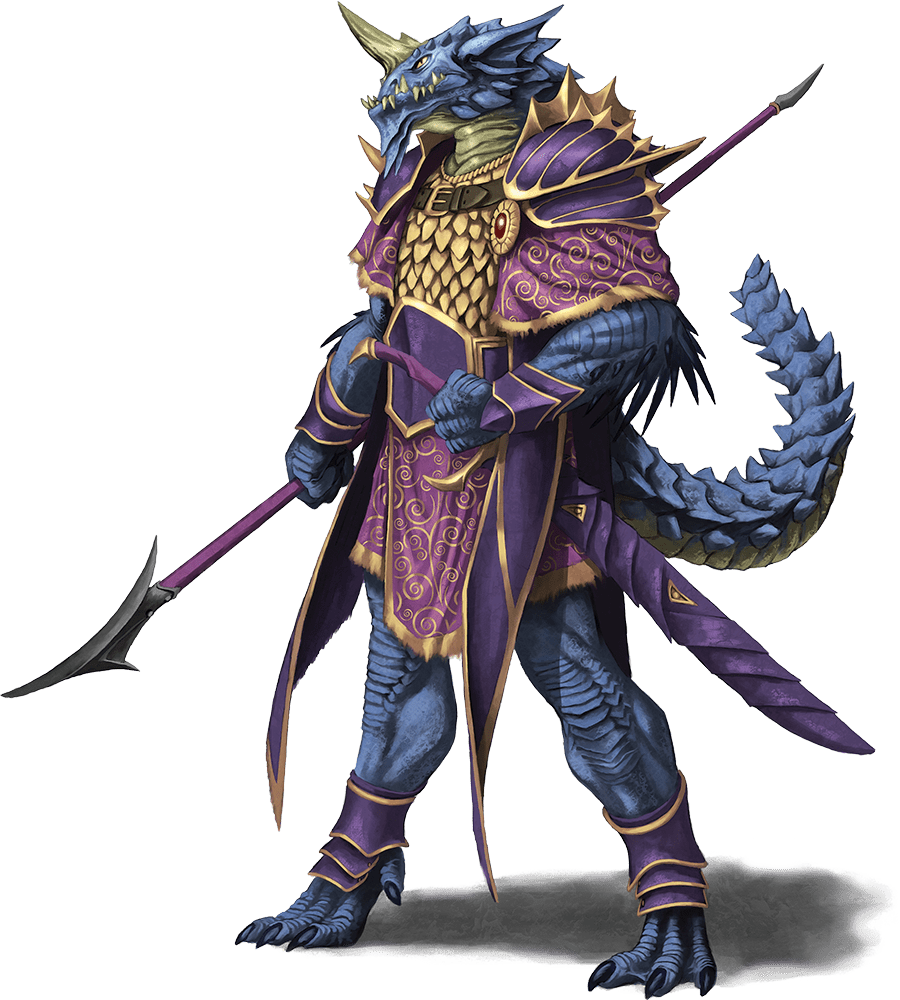
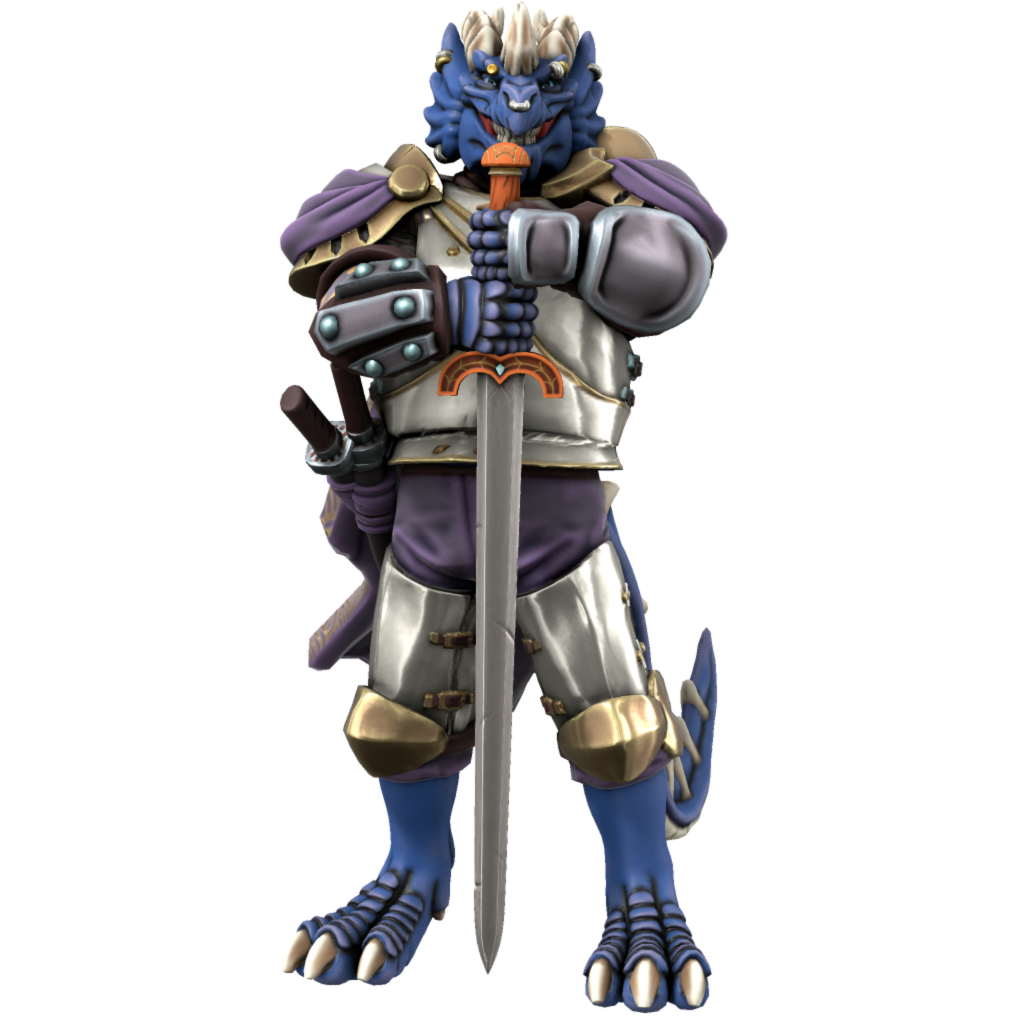
    First up, we received a new version of dragonborn that helps bring them more in-line with what I and many other players were expecting after Fizban’s Treasury of Dragons. The breath weapon is back to being a one-attack replacement during your Attack action, it has a scaling number of uses per long rest, and it can even be either a cone or a line attack each time you use the feature. They also threw dragonborn players a bone here with the new Draconic Flight, allowing them to gain a flying speed for ten minutes once per day. I love this ability, I’m excited about the flair of it being made of your ancestry’s damage type (lightning, fire, ice, etc.), I’m jazzed about using it on a rogue or fighter character to keep up with flying foes – a dragonborn might be the first character I make in OneD&D.

    Goliath characters also gained awesome new options here with the choice of taking a limited use effect based on the type of giant they’re descended from. Each option feels viable, with them all having different uses and effects that make them really excellent. This was something I myself scratched the surface on in my current campaign: one of my players is a goliath character and I coordinated with him to see if he wanted to be from a specific giant ancestry and adjust a trait or two from the lineage to reflect it. We only ended up changing the flavor of Stone’s Endurance to be based around a storm giant’s innate foresight to allow him to mitigate the damage from a momentary prescience, but it was still a flavorful adjustment. The other new feature present, allowing them to grow large for ten minutes, is kind of just icing on the cake that can create cool moments on its own.

    Now, onto the one class included in this UA.

    The Cleric

    There’s a lot of adjustments here for the cleric. Previously, clerics were one of only two classes that chose their subclass at 1st level in their divine domain. This made some level of sense, of course: you were devoted to a specific deity, after all, so you’d probably already have aligned with one of their domains. With Wizards’ intention to normalize subclass feature acquisition, this has been delayed to third level, and the clerics received a few new things in the trade. First, they now gain Channel Divinity at first level with two baseline options: Divine Spark and the classic Turn Undead. I think divine spark is an incredible addition: it has two options for its own use, as either a straight up heal for an ally, or a potential damage burst for a foe. It’s been constructed with built-in scaling, gaining an additional d8 each time your proficiency bonus increases, and all of this is on top of Channel Divinity now having a number of uses equal to your proficiency bonus.

    Additionally, with this iteration of Turn Undead, we have a look at a new condition in the game, “Dazed.” Dazed looks wonderful as a potential replacement for some of the more punishing stuns and other CC effects, since it still allows the affected creature to use either their action or their movement, rather than be completely locked down. Turn Undead also still specifically limits undead to only being allow to move, so there’s no loss of effectiveness for the cleric there.

    Next, the cleric gains a new built option with Holy Order at second level. Now, a cleric can choose to either be trained in heavy armor and martial weapons no matter what domain they select, gain two additional skill proficiencies with an added bonus equal to your wisdom modifier, or an additional cantrip and the ability to restore one use of their Channel Divinity on a short rest. They also are able to select a second option later on at 9th level. This puts much more into the player’s hands when they’re building their cleric, and that’s a good direction for the game to be heading in.

    We’ll dive a bit more into life domain shortly, so next I’m looking at the new functionality of Smite Undead. This sounds like a straight up improvement to me. Previously, Smite Undead outright destroyed undead monsters below a certain challenge rating, but, usually, monsters that would be destroyed by it were showing up less frequently as you grew more powerful. Now, no matter how strong an undead you’re facing, you can potentially deal damage and harm them.

    Blessed Strikes is a transplant from Tasha’s Cauldron of Everything‘s optional new features, and I think it’s great to see it become baseline.

    And, last for this section, is Divine Intervention. In my opinion, this remains as a very odd feature in the game. It’s both extremely rare for its effect to occur, but also not at all rare if your players are gaming the system a bit and attempting it every day during travel or downtime? In a reddit thread, I saw a comment that proposed a complete redesign: basically, instead of it having the “ask for anything you want” component of the Wish spell, give it the other component – allow it to cast a spell from the divine spell list whether you have it prepared or not without consuming a spell slot. The commentor proposed it allowing you to cast a spell with a 4th level slot when the feature is gained at 11, and then bumping it to a 7th level slot at 18. I personally like this version so much, I might allow any future cleric players to switch to it whether it’s codified into the rules or not.

    Life Domain

    Life domain remains mostly unchanged here, for good or ill. Their domain spell list has seen a bit of a shake-up: there’s no 1st level spells on the list, Spiritual Weapon has been replaced with Prayer of Healing (more on both of these spells later), Beacon of Hope has been usurped by Mass Healing Word, there’s Aura of Life over Guardian of Faith, and Greater Restoration over Raise Dead. Personally, I think these are all much more fitting or better staple spells to have prepared, so that’s a win.

    Disciple of Life has a cheeky little clause addition to close a rules loophole related to Goodberry, which is another good change. Blessed Healer has moved four levels down for its acquisition but remained unchanged otherwise, but that’s counterbalanced with Supreme Healing also staying unchanged and coming up from 17th level to 14th.

    Lastly is the domain’s unique Channel Divinity, Preserve Life, unchanged and dropped from 2nd level to 6th. I think, ultimately, this now has a weird place in the system with Divine Spark’s existence. Unless you can really get nearly all of the hit points Preserve Life can restore, I think Divine Spark is generally the better option. Of course, it’s also got potentially many more uses with the new scaling on Channel Divinity, so its power might be fine: you could use Preserve Life to keep your party fighting in a challenging encounter well beyond where they’d normally be toast.

    I’m still uncertain if I’m happy with it though. I’ve rarely seen it used overall, and it usually has a lot of HP remaining that it can’t spend when I do see it expended. It might be okay if it spent its pool of hit points to bring everyone in range up to their halfway point, then allowed the cleric to spend what’s leftover however they chose? But that might be overly complicated. Maybe I’ll make a magic item that does that if anyone picks up life domain in one my games in the future.

    Now, onto the really controversial stuff: spell changes.

    Adjusted Spells

    We’ll dive right into the big one here: Spiritual Weapon. The overall reaction here seems to be anger at a nerf to the spell’s functionality, but … I think it’s a good change – a healthy one. The way Jeremy Crawford and Todd Kenreck discussed it in this video (@2:30) in regards to spells that are both effective over the course of several rounds that also extend a player’s turns makes perfect sense to me. As a trade-off, its scaling has been vastly improved, gaining more damage each slot used above 2nd level rather than every second slot level above. I think if its speed were doubled (or at a minimum set to 30 ft.), it would be perfect, because its inability to keep pace with nearly every monster in the game is going to feel even worse now.

    Otherwise, I think most of what’s here is a clear positive. Resistance has become another reaction cantrip that makes it much more viable as a pick up. Guidance had its absurdly limited use clause removed and it’s just down to a shortened range to adjust its new functionality. Prayer of Healing is incredibly powerful now that it grants the party an abbreviated short rest with bonus healing, even if a creature can only gain the benefit once per long rest it’s an incredible spell.

    The other elephant in the room here is Banishment, which, again … I think is overall a healthier adjustment to the game. Hard CC effects have been a long running topic of discussion between my current players and I (one which has a blog post in the drafting phase), and this spell gaining a roll to end the effect each round just brings it in-line with other similar spells. It does, unfortunately mean that its cool feature of potentially removing the target back to its plane of origin is a much rarer occurrence, but I think there’s potentially other ways that can be addressed here than making it a spell that just utterly removes someone from the fight anyway. Perhaps the spell’s effect can remain even if the creature makes its saving throw, and if you can maintain the spell for the full minute, it successfully banishes the creature. Maybe it can send them back to the demiplane at the start of their turns if they fail the saving throw again, like a reverse Blink. Maybe they can build-in the listed creatures having an innate weakness to this specific spell and they roll against it at disadvantage. I just remember a cleric enemy using this once against a player back when my campaign was much younger than it is now, and the only recourse the party had was to wail on the enemy until they broke their concentration, and the affected player just had to wait for them to succeed.

    Well, that’s not entirely comprehensive of the changes presented in this UA, but it is everything I had something to say about. As always, thank you for reading! Good luck out there, heroes.
  • D&D: Player Power Optimization

    D&D: Player Power Optimization

    The D&D fandom at large has baggage with the term “power gaming.” Across the internet, there are thousands of posts bemoaning the practice and deterring new players from pursuing power for their character. Some go so far as to say that anyone “roll-playing” over “role-playing” are unwelcome at their tables; that having even one such guest detracts from everyone else’s fun at their table. And, more power to them. If they think people who play this way won’t gel with their game’s style, that’s a perfectly valid reason to disallow someone from joining your table. It could save a lot of headache from coming up down the road.

    But the stigma is everywhere. Which is a little strange, right? After all, it’s perfectly natural to want to be strong in the fantasy game you’re playing. You’re the heroes of the adventure. Not everyone wants to be the farmer kid out of their depth. Some people want to play a veteran adventurer who knows what they’re doing. It can be a great time to be a group of bumbling fools that somehow make their way through a dragon’s lair by sheer luck, and if you’re running a less serious kind of game, that might be the perfect fit.

    But if you’re running a campaign that takes itself seriously, with dangerous foes that will challenge the players’ ability to think strategically – why should they be pressured away from making powerful characters?

    But this aversion didn’t come from nowhere. I’ve got some theories; I’ve done some research. Let’s sort the whole thing out.

    Optimization isn’t the Problem

    As far as the D&D fandom goes, there exists a clear, hard line between “min-maxxers” and “power gamers.” And, defined the way I’ve seen, I don’t disagree with the delineation. So, by and large, “min-maxxers” are players who are making the best choices they can with their character to make them as powerful as they can be, and the fandom at large doesn’t consider this a bad thing. Building to get the maximum bonus from your primary ability score early into the game isn’t something they do with their nose pinched so they don’t have to smell the stench. It’s a normal and valid thing to do.

    In an ancient post on Wizards of the Coast’s forums in 2006, user Tempest Stormwind made a post to really enshrine the dissonance as fallacious, the Stormwind Fallacy (reposted here on reddit). He concluded “D&D, like it or not, has elements of both optimization AND roleplay in it. Any game that involves rules has optimization, and any role-playing game has roleplay. These are inherent to the game.” It is pointless to behave like either precludes a player from engaging in the other.

    But “power gaming” has an entirely different definition: one that newer players might not realize makes it something wholly uglier and less welcome than simple min-maxxing.

    Power gaming, in this context, is reserved for players that don’t just want their character to be powerful. They want their character to be the most powerful. They aren’t satisfied unless the other players’ characters are weaker than theirs. They want to frustrate the DM by killing the biggest monster in one turn and ruining the experience for everyone else. Or they want to dictate to other players what they should be doing every turn to have the greatest effect on the battlefield.

    In a lot of other gaming spheres, the terms are kind of interchangeable. And carrying that learned understanding into D&D might be a deterrent for newer players, forcing them to think that making their characters strong is something to be looked down upon. Posts still crop up across the fandom to ask why “power gaming” is so hated, what’s wrong with wanting your character to be powerful? And it might be difficult for them to discover that optimizing their character isn’t the issue.

    But there is another facet here that’s worth discussing.

    The Arms Race

    Combat in D&D can quickly become an area of the game that creates imbalance. If you have a table that’s split down the middle between min-maxxers and people casually playing the game, the optimization-focused players are likely to overshadow the casual players’ characters, intentionally or not. If these optimized characters smash through an encounter or two, the DM may scale the difficulty up to ensure that combat doesn’t become an uninteresting slog and remains challenging. The min-maxxing players have further incentive to pursue power to ensure that the challenges presented can still be overcome, and those casual players might be left even further behind.

    There’s certainly something to be said for how that can completely change the dynamics of the table. It’s unfair to assume that everyone enjoys optimizing their characters, and if we want to acknowledge that optimization is a way people have fun in games, then we also need to accept that suboptimal play and casual interaction is equally valid.

    How can we address that? If we’re playing a game with our friends and they interact with games in different ways, can we come to some middle ground? Is the onus entirely on the DM, or the min-maxxers? Should they tone it down? Or ask the casual player to step up?

    My own table could be considered split down the middle. My current party consists of a cleric, a paladin, a barbarian, and a druid. The cleric and paladin have optimized their characters to be strong, while the barbarian is a newer player, and our druid is extremely busy with her job so she can’t put in the time to game the system as well as the others can. What did we do?

    Well, we weren’t utterly hands-off when they were making characters. We helped them allocate their points for point-buy, we advise them on feats when they ask, and discussed different subclass options. They’ve built powerful characters in their own right, even if they weren’t specifically engaging with the system to do so alone.

    We also approached some rigid rules with some more leniency. For instance, barbarians in 5th edition are most powerful when wielding a greataxe or other d12 weapon, and my player wanted to take the Piercer feat with its synergy for adding more dice to his crits. Rather than force him to use a lance or rapier, I allowed him to just take it with his greataxe.

    I also don’t get punitive with the rules. If my players are doing something suboptimal or if they forget to mention something, I don’t hold them to their lack of word, and I’ll remind them that they have another option that they might have been meaning to think of. For instance, our Circle of Stars druid had believed that the bonus healing provided by her Chalice starry form required her bonus action, but I reminded her that it didn’t, and she could still use one during a major fight.

    It’s a simple thought for me: if we’re going to have a TPK, we’re going to have one by the rules. If their character is balanced to be capable of something or intended to be able to use an ability, I’m not going to be looking for a specific set of circumstances or a forgotten word to take it away from them. If my barbarian forgets to rage on the first turn, but they still have their bonus action, I’ll let them throw it on and add that bonus damage, even if they already rolled to hit an enemy. I run tough battles, but they’re not balanced to only be hard if they’re forgetting how to play their characters.

    It’s a middle ground that works perfectly for my table. All the players feel like they have an equal chance to make big swings in an encounter to affect the battlefield, and no one is left to feel like they’re underperforming. It does require a bit more creativity when it comes to encounter design: more powerful monsters, unique challenges – but I’ve been at this for over a decade and I’m not even close to being out of ideas.

    There’s only one wrong way to play D&D, and that’s only if people aren’t having fun. Knowing which rules you can handwave comes with experience, but a good rule-of-thumb is to allow flavor choices through without layering a drawback on a character’s efficiency. If you want to be doing wrestling maneuvers to style your attacks while dealing your longsword damage? That’s no problem for me. Just ask your DM, and I expect they’ll say the same. I always loved it when my players were engaged enough to say more than just “I attack,” chances are they will be too.

    As always, thank you for reading. Good luck out there, heroes.

  • Ebonskar and D&D – How Much Changed?

    Ebonskar and D&D – How Much Changed?

    Since its release last year, I’ve made it no secret that much of the story of Ebonskar was inspired by a D&D campaign I ran featuring the titular character as its primary villain. Obviously, a lot of changes occurred to craft a narrative fit for a novel, but many of the characters and facts of the world were kept whole in the adjustment. With today being the one year anniversary of Ebonskar’s launch, I thought it would be fun to invite you to take a closer look at some of the changes that were made.

    As a warning, this post will contain some spoilers for the novel, but I’ll do my best to avoid anything too significant.

    What characters in the novel originated in the campaign?

    Several of the characters I created as NPCs carried over into the novel. In the game, Kheta existed, but she had fled Rafdorek alone. And, she wasn’t responsible for the invention of firearms: she’d just been a garden variety smith who got fed up with the society and decided to leave. She ran the only forge in the town the campaign began in, and was the first clue about where the game was ultimately going to go. One of the first quests in the campaign was to track down and defeat a Hobgoblin Iron Shade that had come to the town specifically to kill Kheta.

    Captain Jameson had a different name (Captain Thomas), but his role as guard captain that’s been left in charge of the town because of a pause in greater politics remained. And Lieutenant Nicholas carried over, as did his heroic sacrifice when Ebonskar came to the town.

    However, beyond them, it’s almost entirely the hobgoblins that carried over (Redeye, Scalpseam, Charscowl, many others – all names I used in the campaign). Most of the other characters were entirely invented for the novel, or were so fundamentally changed that sharing a name isn’t enough for me to think of them as being the same.

    Did the Geren-thal change at all?

    All of the Geren-thal with the sole exception of Inquisitor Suthri existed in the campaign and were defeated by the party eventually. Suthri was created for the novel when I expanded Rafdorek’s history and society more than I had for the campaign. An inquisition made perfect sense for the oppressive regime and the original Eighth of the Geren-thal was simply a ranger-styled hobgoblin fighter.

    They were set up in a more gamified manner, however. Each one’s rank was an indicator for how powerful they were. Ebonskar was fourth, and the first the party encountered. In the battle, the party had two allies they’d gained that helped even the playing field. Ebonskar was built off of a 15th level fighter, and the players came up against him when they were around level 7 or 8.

    Did any of the player’s characters transition over?

    No – or at least, not in Ebonskar. Many of the characters wouldn’t work in the more restricted setting for the novel. In the party, we had a dragonborn paladin, a halfling barbarian, and my brothers were a drow gunslinger and a human ranger with a wolf companion. The setting as adjusted for the novel lacks both elves and halflings, so neither of those characters would transition over well. The deregal are more-or-less the dragonborn, so the paladin could work, but I also believe those characters belong to my friends who played them: even with their permission, I can’t say I’d want to write them myself.

    The only facet that carried over at all was that my brother’s drow had discovered the plans for firearms when his people had raided a dwarven settlement and decided to hide them from his people and escape to the surface. The dwarves had long ago made firearms and decided they were horribly dangerous and refused to trade them. The other nations of the world tried to force them to do so, and lost what was then remembered as the Thundering War.

    So, the deregal are basically dragonborn, the hobgoblins are practically one-to-one – did the Jerrath exist?

    They did not! I decided before I got into writing Ebonskar that I didn’t want it to be as sprawling as a D&D setting with a vast array of fantasy races. Orcs are among my favorites of the usual inclusions, and I didn’t want to lose the “these people are just all big and badass” flair with their absence. I started creating the Jerrath, and my first visualizations had them more similar to the Amani trolls from Warcraft than they ended up being. (I had this very well defined picture of Zephal in my imagination: massive, muscular, long curled tusks coming down from his upper lip, a vibrant mohawk. It’s really just the tusks that didn’t carry over.) I also generally like the “we have been here longer than everyone else and we live longer” trait of elven races and how that can add a different texture to a setting, so that got rolled into the Jerrath too. In the D&D campaign, the world was even still named Crucible, only in Elvish!

    Obviously the rules for magic are codified in a D&D game, how did the magic system in the novel evolve to where it ended up?

    The “vancian magic” of D&D wasn’t something I wanted to copy full cloth into the novel, so I knew I was going to be changing things up. When I was writing Ebonskar, I was playing through Dark Souls III for the fourth or fifth time and happened to be running a pyromancer build. I loved the divide in the game of pyromancy, sorcery, and miracle-based divine casting and the divisions of magic were inspired by that. I love magic in fantasy novels because it can create incredible moments, but without any sort of included drawback having a wizard around can make it difficult to keep tension. Having magic turn into something of a faucet that the spell casters have to very carefully use or risk drowning themselves into nonexistence felt like a good stopgap to allow for some impressive feats that couldn’t solve every single issue the characters came across.

    How did Tanda exist in the campaign?

    As a different, much more centrally located town called Borno’s Crossing. It began as a bridge over a river along a major trade route before a Trader’s Highway went up and it fell off with reduced foot traffic. The premiere establishment was Brandywood’s, a tavern opened by Borno Brandywood when he founded the town about three hundred years before the campaign. When the party arrived, it was operated by his great-great-niece. A lot of the opening quests did lay hints regarding the hobgoblin threat, but the party didn’t track them down, and their big hurrah before Ebonskar arrived was defeated a hag that had been terrorizing the town for half a decade. Much like Tanda, it did suffer Ebonskar’s presence first in Vromali, and running the game that evening was really something.


    As a bonus, I’ve used dndbeyond to create a more presentable stat block for Ebonskar (my old notes were a mess) and had some artwork done up! If you’ve got any interested in using Ebonskar against your players, here’s the stats I made to run him as an enemy against my own party.

    As always, thank you for reading! I hope you enjoyed this little retrospective.

  • D&D: Power Differential Between Classes

    D&D: Power Differential Between Classes

    In D&D, martial fighters and spell casters have vastly different powersets. In any game with choices that affect a character’s power, there will always be power differential between the presented options. One will always be the strongest, most efficient way to damage or control your foes – and one will always be the weakest, least valuable option. When it comes to the fandom at large, there’s a widespread conception that martial characters (fighters, monks, barbarians: those who do not have access to spells) are inherently weaker and more restricted than their spell casting counterparts.

    This is a bit of a strange topic for me.

    In my decade and more of running D&D, I’ve never had someone play a martial character at my table and be upset about the power differential. This is not at all to imply that it doesn’t exist or isn’t as bad as the math makes it out to be. A wizard throwing a fireball into a packed room is overpowered by design, and of course it does more damage for that action than the fighter can manage with two swings of their sword.

    Design-wise, Wizards thought that the best way to address the differential would be in limiting the number of fireballs that wizard can throw. At fifth level, the wizard gets two spell slots of the requisite level, and the ability to get another one back on a short rest once a day. In the books, Wizards listed their ideal adventuring day to consist of seven to eight encounters, so the wizard wouldn’t be able to fireball every battle, while the fighter’s steady ability to attack twice in a round would never lose value throughout the day.

    But I don’t know anyone who has ever had consistent adventuring days with that encounter volume. D&D has evolved a lot over the years, and it isn’t just a string of dungeon crawls with a half dozen encounters between each long rest. At my table, I generally only run somewhere between three and five encounters in a day, but I ratchet them up in difficulty: almost every one of them would qualify as a “deadly” encounter by the game’s rules, and once the party starts getting magic items, they ramp up even further. Yet, despite that jump in difficulty, I still haven’t had my players complain that their fighter isn’t able to clear a room like the wizard can. In my own limited opportunities to be a player at someone else’s table, I’ve usually chosen martial characters and never felt disadvantaged by the differential.

    So, I want to try and nail that down. Here’s some factors I’ve had on my mind since I discussed this with a few friends. Let’s see if we can parse something out.

    Choice in D&D

    One piece of this discussion I haven’t touched on yet is the versatility of spells. Wizards and clerics have a lot of different things they can accomplish with their magic, both in and out of combat. It trends toward the belief that fighters and barbarians need more things they can do outside of combat, more abilities and tools that can be used so they’re more valuable on the whole. In Tasha’s Cauldron of Everything, they added some optional features to barbarians that trended this way: giving them more skill proficiencies and the ability to cast Speak with Animals as a ritual.

    I’m not sure that’s the right direction for them to move, though. A friend of mine is beginning a new game in a few weeks, and I’ve actually settled on a fighter for my newest PC. I’m incredibly excited about my character, who I’ve built to be a normal freaking guy. I specifically don’t want him to gain innate magic in any way during the game – from an item? Sure, that’s fine. But he is just a normal dwarf.

    I don’t worry at all that I’m going to be lacking choices with him. Not in combat or out of it. Every piece of every turn is a choice – where I’ll move, who I choose to attack, how I might spend an action if no one is in reach of my weapons. A wizard or cleric might have the same decision points and a few more when it comes to their long list of spells and different levels at which to cast them, but in the grand scheme of the game, I don’t think it’s really that many more.

    Because character creation is the most amount of choices anyone makes in D&D, and the moments between combat are nearly just as freeform as that. I think the standard volume of decision points that every character has access to is so high by default, that the additional decisions provided by access to spellcasting is negligible overall.

    And maybe it’s really an implicit understanding that fuels this. Anyone who chooses to play a fighter knows that they won’t have spells (with the exception of one subclass). Understanding that intrinsically might be why none of my players have ever broached the topic.

    Wizards Do Not Cast Spells in a Vacuum

    As I mentioned before, fireball is by design the most effective tool to clear a packed room. It is intentionally a spike of power that breaks the more linear advancement of spells. Burning Hands is the most near-equivalent spell at 1st level, and it is only 3d6 in a 15-foot cone originating from you. Fireball is a 20-foot radius sphere that you can place anywhere within 150 feet that deals 8d6 damage. It is safer, larger, and more damaging. Casting Burning Hands at 3rd level only deals a measly 5d6. The value between the two isn’t even close.

    It obviously does more damage on cast than a fighter can manage as long as there’s multiple targets. In a formless void of grey sludge, the wizard can destroy more of that sludge per round with his spells than the fighter can manage.

    But no combat plays out like that.

    If there are three enemy martial characters in a battle that the party’s fighter is keeping from chasing down the wizard, and, safe from repercussions, that wizard casts a spell that changes the texture of the battle? I believe it’s fair to say the fighter contributed to that spell’s casting. Battlefield control isn’t something that only spells accomplish – every square of movement affects how the enemies will act on their turn, and their actions affect the party’s decisions. Hold Person is an excellent tool to lock an enemy down, but it gets its best value when a martial can capitalize on the critical strikes it confers. The best way to remove an enemy from the fight is to reduce their hitpoints to 0, after all. Hold Person itself doesn’t do any damage, and the enemies can save out of the effect at the end of each of their turns.

    A Point of Philosophy

    All this boils down to D&D being first and foremost a game about teamwork and camaraderie. When I play a fighter and see a wizard cast Fireball and clear a room of mooks, I never think, “Man. As a fighter, I can’t do anything like that.” I think instead, “Wow, incredible! Thank goodness one of my allies can do something like that.

    I’ve never sat at a table where the characters that killed the most enemies got bonus experience – when the encounter ends, everyone gets the same amount. That’s how I’ve always run it. That’s how Wizards intended it to be run with 5th edition, because no matter whatever differential in power exists, every encounter is affected by every member of the party.

    And, again, I am not at all claiming that the differential isn’t there – it is. But I do think it’s become a bit overblown of late. With the OneD&D information on a slow drip, people are wondering what, if anything, might be done to address it. Will Wizards back pedal to 5th edition’s play test and give every fighter some maneuvers? (I think that would be great.) With the nerfs to Sharpshooter and Great Weapon Master, people are curious if the gap is going to widen. I’m not worried–because if things don’t shake out, I’ll just keep running 5th edition.

    Maybe the differential is felt more keenly for your players, or even for you. If that’s the case, the best thing to do is to talk to your DM or the table and find out if there’s something to be done for it or change tack. Keep presenting interesting arenas and scenarios that cause variation in the value of a spell – Spirit Guardians on an armored cleric is a great tool to deal damage to a thick mob of enemies, but when there’s only a few, spread out spell casters and bowmen, it’s not the end-all answer any longer.

    As always, thank you for reading. Good luck out there, heroes.

  • OneD&D: Expert Classes

    OneD&D: Expert Classes

    Yesterday, Wizards of the Coast dropped their second set of playtest materials for the upcoming OneD&D featuring the rules for Rogues, Rangers, and Bards, the new spell list divisions, a wide selection of feats, and some updates to the glossary. Overall? I find myself immensely impressed – not only with the rules themselves, but with Wizards’ commitment to trying new ideas and responding to community feedback.

    So, here’s some of the highlights.

    General Rules Changes

    One of the best changes Wizards has settled on so far is to normalize subclass feature acquisition. Everyone in this UA gets those bonuses at the same levels, and it sounds like they want that to be the case for everyone. They’ve also moved the “Capstone” feature for each class down to level 18, which makes them much more attainable for the normal game group, and you’ll actually get to have them for some time before the game reaches its end. (I’ve yet to have a game reach level 20, but I don’t imagine it would go much further beyond that anyway.)

    Dual-wielding got a massive change to make it much more viable. Now, attacking with an off-hand weapon is part of your Attack action, instead of costing your bonus action. For rogues and rangers, this change is massive. Cunning action and adjusting hunter’s mark just got a lot less painful if you wanted to fight with two swords.

    They’re testing out some new stuff with Natural 20s and 1s. They’ve struck the line about an automatic success on a Natural 20 after the community reception, but they want to test having a Natural 1 grant your character advantage when it’s the result of a skill check. I think it takes the sting out of a one, certainly, but it mostly just moves that pain point onto rolling a 2. I talked in my last blog about enjoying the momentum of inspiring each other on Natural 20s, so it’s likely that I’d choose that rule over this one.

    Feats of at least 4th level all appear to have an ability score bump added to them now, which is great! My players and I have been talking about adjusting some rules for our next campaign, and one thing we’ve been considering is a much lower budget for point buy, but gaining more power on each ASI/Feat level to accentuate a power curve. Some feats got a bit better than they were before, others had some power stripped down. Great Weapon Master and Sharpshooter both lost the drop 5 from your attack roll for 10 additional damage, and I’m in favor. Those two feats presented so much power it was nearly impossible to justify anything else if you cared even a little about optimization. Polearm Master also had its reaction attack changed to no longer be specified as an Attack of Opportunity, which makes its combination with Sentinel much less frustrating.

    Rogues

    Rogue is, in my opinion, one of 5th edition’s best designed classes, perhaps the best. It has a clear mechanical throughline during combat: you get one big hit, so ensure you’re set up to land it. Its subclasses have all added unique flavor and power without utterly invalidating the others as they’ve been released. I haven’t been a player often throughout 5th edition’s lifetime, but when it comes to characters I made for anything longer than a one-shot, I’ve run rogues more than anything else. My current PC is a rogue that is adventuring in the Sword Coast in some homebrew content post-Rime of the Frostmaiden. My first 5th edition character was a rogue.

    Wizards themselves knew they’d done a great job with the class, and so it’s seen relatively few changes here. Most of their features are intact, just shifted a bit in their acquisition. Evasion has dropped to a 9th-level feature instead of 7th, but that truly feels more in-line with its power and it makes room for earlier acquisition of subclass features – which definitely came in a bit too late before. The rogue picked their subclass, like most, at 3rd level, then didn’t get their follow-up features until 9th, 13th, and 17th level. The majority of Wizards’ published adventures end around 12th level, so most had a 6 level gap between their subclass features, then their games were close to finishing.

    Slippery Mind at 15th level now gives proficiency in Wisdom and Charisma saving throws, to make rogues even harder to nail down. (That’s four out of six saving throw proficiencies in the base class!) Subtle Strikes is the one new feature for the base rogue, replacing Blindsense, which is a massive trade-up in power at the loss of being able to detect invisible creatures within a mere 10 feet.

    Then there’s the Thief. In the interview with Jeremy Crawford, they talked a lot about just letting the thief cheat and break the rules, and boy did they mean it. Thieves gaining a climb speed flat out is an elegant adjustment toward using more concise rules language than before. Allowing them to use their Dexterity for the new jump calculation is great. Permanent advantage on stealth checks so long as they’re not wearing medium or heavy armor? Few rogues do that, anyway. And then they gain an additional item attunement, a chance to save their item’s charges, an ability to use any scroll they find (and with expertise, a way to guarantee they can use whatever scrolls they want), and then, finally, to occasionally get TWO bonus actions? I think this is a huge improvement for the subclass. Two bonus actions might be less powerful than getting two turns in the first round of a battle, but it’s much more game-friendly, and usable throughout an encounter rather than just at the beginning of one.

    Rangers

    I think the ranger here looks better than ever. Despite some decent updates and subclasses throughout 5th edition, the class never managed to entirely shake off its underpowered reputation from its reception. I’m a fan of them becoming a Prepared caster instead of a Memorized one, giving them the ability to cast Hunter’s Mark without concentration is great, since that spell iconic for their class. Allowing them to take Fighting Styles as feats even though they aren’t of the “Warrior” class group is great. I love roving giving them 40 feet of movement and a climb and swim speed. Rangers picking up Expertise is great, I think Tireless is awesome, and it looks like they nabbed the rogue’s blindsight feature and improved it, going as far as 30 feet of blindsight.

    Hunter’s features are interesting, too. They’ve removed the Colossus Slayer / Giant Killer / Horde Breaker choice, and made Colossus Slayer baseline, which I believe to be a good adjustment. They’ve changed the second feature to grant Hunter’s Mark the ability to reveal immunities, resistances, and vulnerabilities. And their last feature is like a rogue’s uncanny dodge, but it hurts someone else? I love it.

    Bards

    Bards are also becoming a prepared caster (and I think it’s even better for them than it is for rangers), but their spell choice limitation survives in allowing them to access the Arcane list, but only choose spells that are Divination, Enchantment, Illusion, or Transmutation. There’s a lot of good spells there I can recall from the top of my head, however. Haste, Hold Person, Catapult, Blur, Hideous Laughter. The biggest thing here is that their Magical Secrets feature is also spells the prepare! So each day they’ll get to pick a few spells from the list they chose without limitation once they get that feature.

    Bardic Inspiration is also so much cooler as a reaction, so you know it’s getting used and might change the result. Also, it can be used to heal now, which is incredible. At 1st level, a bard can heal you for 1d6 as a reaction after you suffer damage within 60 feet. It’s the best healing on the market!

    They’ve also given bards a selection of healing spells to have prepared for free, to really emphasize their support role.

    All of this to say, these new playtest rules have provided some very welcome context to the way Wizards of the Coast is considering the rules for OneD&D. If we can expect more drops like this, the next evolution of the game is looking very bright. I can’t think of a single piece of this set of rules I didn’t like, so I’m excited to see more. I think the biggest hurdle is going to be a fear that Wizards has a good idea that is shot down by the community for being too powerful or good: like the Battlemaster maneuvers of Fighter were originally intended to be a class feature, and not just a subclass, which would’ve been a much more interesting design space. I’d hate to see something like that get watered down again, but I’m feeling really hopeful for now.

    As always, thank you for reading! Good luck out there, heroes.