Tag: games

  • Reworking Tyranny of Dragons 5: Masks of the Dragon

    Reworking Tyranny of Dragons 5: Masks of the Dragon

    Both when I ran this module at the beginning of 5th edition and as I was preparing to run it again now, I always had this distaste for the way the module advises us to withhold the Masks of the Dragon. The few times they’re within the party’s reach, it wants you to use a magic chest to teleport it away, to reveal it to be a fake, or otherwise deny the party their victory.

    I think that sucks. I think if my players have overcome these Wyrmspeakers, they should get that tangible reward for doing so. When I ran the module back in 2014/2015, my party looted the Black mask from Rezmir, and in my current campaign, they did so again.

    However, these masks are stated by the book to be a necessary component to the ritual to summon Tiamat. I’ve seen it interpreted that this just means that at least one mask must remain in the cult’s possession, but I frankly prefer it to mean that they need all five. This competes with my desire to allow the party to obtain them; if they’ve got them safe in their bags, how can I ensure the cult obtains them to summon their god? After all, as much as the characters want to prevent Tiamat from being summoned, my players absolutely want to throw down with the Dragon Queen of Avernus. She’s on the cover! We’ve got to fight her!

    So, how do we square this circle?


    How’s About a Curse?

    That seemed the most straightforward to me. When my current table vanquished Rezmir and claimed her mask, they were able to Identify it and learn its properties. I didn’t hide the curse from them at all, I gave them the full text of the item as I’d written it.

    Mask of the Dragon (Black)

    Wondrous Item, Requires Attunement by an evil creature.

    While attuned to a Mask of the Dragon, its bearer gains potent bonuses based upon the color of the mask. These items are necessary for the ritual to bring Tiamat into the world from Avernus, but they also corrupt any who possess them.

    This horned mask of glossy ebony has a skull-like mien. While in possession of this mask, any time you complete a rest, you must make a DC 12 Charisma saving throw. On a failed save, you must attune this item. If you are already attuned to three items, you select one that you immediately lose attunement to, replacing it with this item. If your alignment is not evil, it changes to become so (your alignment returns to normal once you are no longer attuned to this item). While attuned to the mask and wearing it, you gain the following benefits:

    • Damage Absorption. You gain resistance Acid damage. If you already have Acid resistance, you instead gain immunity to Acid damage. If you already have immunity to Acid damage, you retain it and additionally heal for half of the Acid damage you would take whenever you would suffer acid damage.
    • Dragon Sight. You gain darkvision out to 60 feet, or to an additional 60 feet if you already have that sense. Once per day, you can gain blindsight out to 30 feet for 5 minutes.
    • Dragon’s Tongue. You gain the ability to speak and understand Draconic. You additionally gain advantage on any Charisma check you make against Black Dragons.
    • Water Breathing. You can breathe underwater.
    • Legendary Resistance (1/Day). If you fail a saving throw, you can choose to succeed instead.

    This item is Cursed. To remove your attunement to this item, you must first be the target of a Remove Curse spell, cast at 5th level or higher. While you are cursed by this item, you are jealous and protective of it. You do not want to let it leave your sight. Members of the Cult of the Dragon are unaffected by this curse.

    The curse may be removed from this item if it is targeted by a Remove Curse or Wish spell cast at 9th level. However, once it has been in the possession of a chromatic dragon for 7 days, it regains its curse. Some creatures are immune to the Charisma saving throw this items requires – any clerics or paladins sworn to Bahamut and metallic dragons may possess this mask without worry of succumbing to its will.

    The benefits of the item are exactly those conferred by the mask(s) in the module. The information on the curse, the item’s importance to the ritual, and the final paragraphs are the only additions I made.

    Now, this is close to perfect. It lets my party secure the item and make meaningful, tangible progress toward preventing the cult’s goals. But, even this minor curse, makes it nearly unusable. My party had no paladin or cleric (and none of them are secretly metallic dragons), so they’d be making this save each time they rested. It’s not a hard save, but the ranger who held onto the mask for their first long rest after collecting it failed the save. It influencing your character’s actions is pretty detrimental, but I think the real trouble comes from it forcing its way into a character’s attunement slots, despite the item’s clear power. They’ve likely got the items they want attuned on, right?

    Well, I solved that part of the problem, but I made a whole new one, didn’t I? Now, the party wasn’t gaining a cool magic item they could use for conquering these tough bosses. I didn’t want the byproduct of future-proofing this item (more on that in a future post) to be denying them a cool reward for beating their foes.


    So, How’s About a Second Item?

    Following the advice of a poster on /r/TyrannyOfDragons, I added an additional relic to the ritual inspired by an existing item, the Orbs of Dragonkind. These I envisioned as an optional component for the ritual; something the cult wants to retain, but not something they cannot afford to lose. (And Tiamat will be gaining a buff corresponding to the orbs the Cult of the Dragon still has, but we’re a few weeks out from that climactic battle and many of my players read this blog, so we’ll unfortunately be saving what that is for the final post in this series.)

    The orbs themselves are quite powerful. Honestly, probably a bit too powerful. However, the ones my players have gained were all used by the Wyrmspeakers in battle beforehand, so they felt the bite before they earned the boon. Here’s an example of what they do:

    Orb of Dragonkind (Black)

    Wondrous Item

    This unbreakable glass orb contains a swirling dark mist sparkling with specs of glittering dust. When staring into its ever-churning depths, on might see the flit of a dragon’s silhouette darting through the storm. While in possession of the orb, you may use a bonus action to invoke its magic, gaining the following bonuses for one minute:

    • +1 AC as black scales sheath your arms and shoulders
    • +1d8 acid damage to your weapon attacks
    • +1 to your spell save DC
    • Resistance to Acid damage

    Additionally, you gain the following action until the magic fades:

    Acid Breath (Recharge 6). Exhale a 20-foot line of acid. Each creature in the area must make a DC 15 Dexterity saving throw, taking 33 (6d10) acid damage on a failed save, or half as much damage on a successful one.

    When activated by a Wyrmspeaker of the Cult of the Dragon, this bonus action additionally heals the bearer for 70 hit points. Once the orb has conferred these bonuses, it dims and cannot confer these bonuses again until the following day at dawn.

    I think if I were to run this module again, I’d change the activation to provide the damage resistance, and then one of the other effects at the player’s discretion. As is, it’s rare someone benefits from the damage on their weapon attacks and their spell save DC anyway. Perhaps I’d let the AC bonus gain the breath weapon, too, since it might be the least selected option if they were competing. (Maybe wrap the weapon damage and spell DC together as Draconic Fury, and the remaining two as Draconic Majesty … hm.)

    Regardless, at the time of writing my party’s collected three of these from their adventures; even the one time they were too slow to claim a Mask of the Dragon (more on that in a future post), they still got an orb during their quest.


    So, there we have it. No bait-and-switch on the Masks; when the players earn them, they get them. Keeping them, however, remains a tough prospect, since I’ve got my thumb on the scale with that curse to get them to hand it off to someone who won’t be corrupted by it. To make up for that denial, we’ve got a nice secondary item that still will affect the final battle for their successes in retrieving them.

    (Look, I know it’s a bit of a run-around to get back to almost exactly where we’d be if the party either never looted a mask or if they weren’t mandatory for the ritual, but I’ve got something up my sleeve, alright? Stay tuned for the next posts in the series!)

    As always, thank you for reading! Good luck out there, heroes.

  • Legion Remix and the Mage Tower

    Legion Remix and the Mage Tower

    Last week, Blizzard announced in a blue post that during the upcoming Legion Remix event, the unique weapon appearances from the Mage Tower will not be made available again. This was a rather contentious announcement – there are many who want the weapon appearances to return, and there are perhaps just as many that want them to remain gone to elevate the weapon appearances; to grant them a level of prestige from their exclusivity.

    As someone who’s been playing Warcraft way too long, I’ve got my own opinion.


    A Brief on FOMO

    I’ve written on my blog before that I find weaponizing FOMO (the Fear of Missing Out) to be a blight upon game design. Usually, they’re used to pressure players into spending money on microtransactions, to incentivize daily engagement, or prolong retention. Frankly, I think if a game isn’t simply fun enough for its players to want to log in every day, or week, or month, then maybe the game has other issues it should address?

    Presently, there’s a few events going on in World of Warcraft. Right now, there’s Turbulent Timeways, which grants a unique mount for playing a handful of Timewalking Dungeons for a number of weeks during the event’s duration. There’s Collector’s Bounty, which has boosted the drop rates of many rare mounts and items from old raid and dungeon bosses. There’s Greedy Emissaries, treasure goblins from Diablo invading our capital cities and the patch zone that give you currency when killed that you can use to buy recolors of an HD updated version of one of the classic and iconic class sets from the game’s earliest years.

    To some degree, these all engage in some level of FOMO, to varying degrees of vexation. First, the special recolor armor sets from the Greedy Emissary event, we have no information on if they’ll ever be available again. Get them now, or maybe lose the chance to earn them forever. Second, the Collector’s Bounty event offers a greater amount of efficiency to earning old, rare mounts and items, but those items will remain in the game after the event ends; you’ll only lose the increased efficiency. Lastly, for engaging in Turbulent Timeways, the unique mount you can earn will likely become available for Timewarped Badges (a currency earned from Timewalking events) the next time the event runs, like the two mounts from the previous time this event has been available have.

    Naturally, I think the Greedy Emissary event is the most egregious with FOMO – but even it is something you can earn every reward from in one week if you’re willing and able to put in enough time. For Collector’s Bounty, missing out on the efficiency will be tough, but all the items will still exist. For Turbulent Timeways, I myself realized I started engaging in the event a week too late, and until I discovered the mount would likely be made available again in the future, I was really kicking myself for missing one week too many.

    Luckily, between Remix events and the game’s monthly Trading Post, the items from the Greedy Emissary event will likely come around again in the future – but right now, we don’t know if they ever will.

    But enough about that. Let’s discuss the Legion Remix.


    The Mage Tower

    During the Legion expansion, in patch 7.2, our brave heroes returned to the Broken Shore to establish a foothold and stage an assault on the Tomb of Sargaeras raid when it launched a few months later. As part of this patch, there were several buildings the players could cooperate to construct, and the most compelling to many players was the Mage Tower.

    The Mage Tower provided everyone with a single-player boss scenario focused on mechanics to overcome, and when successful, you’d unlock a special appearance for your artifact weapon and an achievement for doing so. These are some of the most unique and special weapon appearances that exist in the game, and at the end of Legion, they were removed when the Mage Tower became inaccessible.

    Now, after nearly nine years, we likely have players who’ve come to the game who, if they’re the same age I was when I started playing, would have been in preschool during Legion. These players could be some of the best in the world – they may become world-first class raiders. But they can never earn these weapon appearances because they weren’t playing the game at the right time?

    To me, that sounds like bullshit.

    And, before anyone wants to say that I just want to earn these weapons myself – I told you I’ve been playing this game too damn long. The 7.2 patch launched on 03/28/2017. This is my former main, who has the achievement for A Challenging Look from the first time the Mage Tower was built, earned on 04/05/2017. Throughout the expansion, as players earned more gear and more power from their artifact weapons, these challenges became easier. I completed them on classes I had no business playing by the end of the expansion, they became so simple. Completing the Mage Tower challenges now, with the scaling tech involved, is harder than they were at the end of Legion.

    But I don’t feel like my achievement is any less valuable for other people having earned it themselves. I have a sense of prestige not because I own this appearance, but because I overcame the challenge. And if these weapon appearances will give people an incentive to challenge themselves, then I say they should come back. Give us a reason to enjoy remix. Lock our scaling in the Mage Tower to retain the challenge? Whatever. Just let people earn them again.

    A recolor is the least Blizzard should do, but I think they should just come back in full.


    As always, thank you for reading. Now, if you’ll excuse me, I’ve got some more Stonecore runs to do to see if I can loot this dragon.

  • Starfield

    Starfield

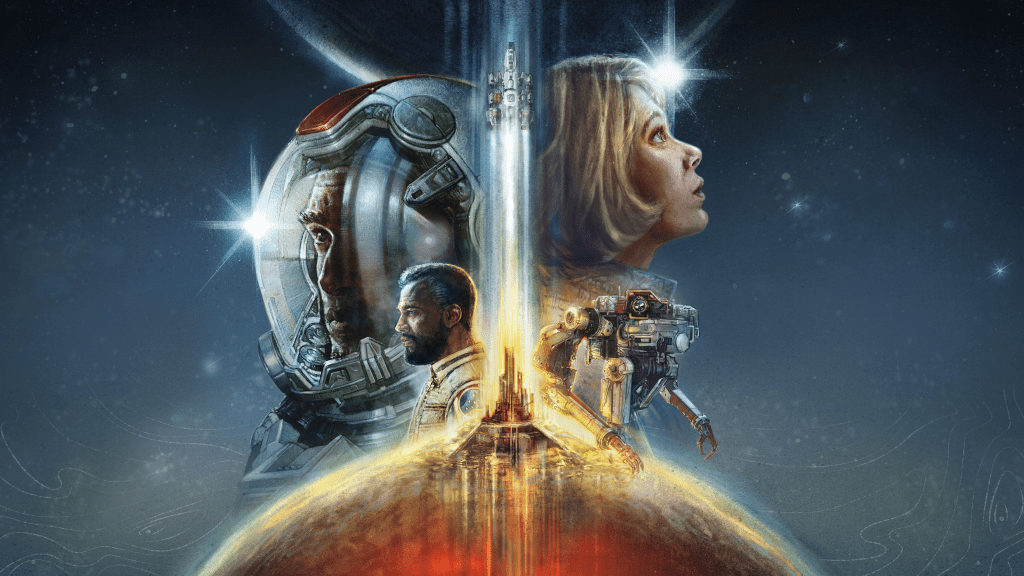
    Last summer, I bought a new PC just before the release of Baldur’s Gate 3. I can’t imagine how poorly my old rig would’ve handled that game, but it ran very well on my new machine and I couldn’t have been happier with it. A side benefit of this purchase was I received a code to gain a free month of Xbox Game Pass, and I thought, “Oh, neat. I can use this in September to try out Starfield!”

    Starfield’s early release window rolled around, and news began to break. It was divisive. People were tearing the game apart, people were cheering it on. This article boosted a sentiment from its fans saying the game really picked up 12 hours in. I avoided reading too much into any of this, content to wait and form my own opinion once I could play the game myself.

    Due to my usual weekly schedule, I didn’t check it out until the Thursday after it’s full release. I launched the game after work, I threw together my character, and I played for three hours before I decided it wasn’t working for me and I uninstalled the game.

    I chatted with a few friends, trying to parse out my exact feelings. I didn’t expect to bounce off of this game so hard, so completely. Oblivion and Skyrim are two of my favorite games ever; both utterly consumed my teenage years and early adulthood. While I never had the same fondness for Fallout 3 or 4, I still played and enjoyed them, though not nearly to the same extent as the Elder Scrolls games.

    I’ve thought about that experience a few times since. Frankly, I’m not sure if I can really make peace with it without writing about it, and, well, if I write about it, I might as well post it, eh? So, here’s what I’ve settled on as my reasons for bouncing off of the game: my own conclusions and some video essays for additional viewing.


    A Poorly Paced Introduction

    (Spoilers for the openings of several Bethesda games.)

    Bethesda’s gotten worse at opening their games as time has gone on.

    Now, I’ve only played from Oblivion forward, and it might just be that trajectory of experience that’s led me to that conclusion. Still, I think Oblivion’s got the best introduction of the five I’ve played. It does the least to muddle whatever thoughts you might want to bring to your character and gives you a great dungeon to explore within moments of its launch, which really shows off a major pillar of the game. Once it’s done, you have a quest, but it doesn’t feel like you need to sort that out and you can just go wherever you want. (I was one of the weirdos who enjoyed going through Oblivion gates, so I usually got to the point in the quest where they’d start opening up and then did whatever I was feeling like.)

    I think Skyrim takes second place despite there being another game between the two Elder Scrolls entries. Its major weakness is how long you’re waiting before you get to define anything about your character, watching the wagons trundle on down toward Helgen. Once you’ve got the character editor open, I think it’s super solid, but launching a fresh playthrough can feel like a slog if you don’t have a holdover save from the end of the wagon ride.

    Fallout 3 and 4 are some of the worst that Bethesda’s done. FO3 really drags with you playing through your character’s childhood in spurts, and it’s on firm rails. You can’t do anything about people coming at you with guns for the crime of being the child of your father at its end. Hbomberguy did an incredible takedown of the intro’s faults in this long essay from 8:30 to 15:50. (The whole video’s excellent.) And FO4 is that little bit punchier, but the game decides a lot about your character before you ever have a say – you’re married, you’ve got a kid, you’re from before the bombs dropped.

    To some degree, that’s a bit unavoidable. Bethesda wants to make games that let you feel like you can go anywhere, do anything, be anyone, but there’s inherent limitations with video games. Bethesda can’t let you start anywhere unless they drop a menu on you (and they’ve got more than enough of those already), and there’s no feasible way to make a hundred or a thousand different starting scenarios match up in their fidelity and playability and excitement. They’ve got to build this reverse-funnel, this narrow entry point that then opens up to the enormous berth of their games. (And on the point of menus to choose a starting point, there are literally mods for their games to create that functionality, because the people who play these games the most would rather have that option.)

    Starfield doesn’t fail in the same ways as its predecessors, but I’d call it the worst. You have these options in character creation that you can pick to really build an exciting history for your character. I think I’d chosen to be a bounty hunter, thinking it’d be a good all-round skill set for adventuring and exploring the galaxy and some traits I thought sounded interesting for that kind of hero. And the game starts with me … working in a mine? Like, I’m a good space pilot and a bounty hunter, but I’ve got to fire this laser on some iron for a bit while two NPCs chatter on and sound nothing like people as they do?

    It’s simultaneously long-in-the-tooth and too quick. You’re walking behind these slow NPCs until you touch the dumb rock and it drags on forever. It’s aggressively unexciting (outside of the dogfight–I liked the dogfight) and incoherent. You touched the rock those guys wanted and it knocked you our, now the stranger who flew a spaceship here is going to stay and … mine? Kill pirates if they keep showing up? Your boss is like, “I guess this is happening now. Bye.” Last paycheck in the mail? And then you’re in a (fun, though I died the first try) dogfight and it’s a menu button to fly to the moon that is right there like you can see it on the screen but you have to go into the menus–


    A Whole Lot of Loading

    I thought I’d get to fly in space.

    I know – technically, you do! When you’re in a dogfight. And I know, space is vast and mostly empty, but I’m not asking for a 1:1 scenario here. Let me zoom through the stars and discover derelict wrecks to explore; let me go from planet to planet; at least let me fly within a single star system. You feel more like you’re flying through space playing Mass Effect than Starfield, and in the former you’re just moving a tiny ship across ringed maps of different star systems. Hell, there are times where you have to hit a handful of loading screens to move from one region of a planet to another.

    Bethesda’s had fast travel in their games at least as long as I’ve been playing them. But before, you had to walk somewhere before you could teleport there. Now, it’s just teleporting, and that really, really took me out of the experience.


    Divergent Innovation

    I think it’s incorrect to say that Bethesda hasn’t iterated on their formula since Oblivion. There’s a lot of new features in their games that they’ve been building and improving with their other titles. Building settlements and outposts is a whole subsystem in these games, refine out, and with a mechanical benefit for engaging with them.

    Unfortunately, that’s the last thing I’m interested in when I play a Bethesda title. I’m not here to build a town, I want to go delve into caves; I want to have that awe-inspiring moment of finding Blackreach beneath Skyrim. Hell, maybe I would’ve been more invested in the system if it’d shown up in an Elder Scrolls game (that setting is just more my speed than Fallout), but I couldn’t say for sure. I certainly didn’t play Starfield long enough to engage with it there.

    For me, playing Starfield didn’t feel better than playing an earlier title from Bethesda. I think the combat’s more fluid and enjoyable in Skyrim than their newest release; their gunplay just doesn’t hold up to what I expect from the industry anymore. I’m not excited to shoot the guns in Starfield when I can launch RoboQuest or Deep Rock Galactic or the original Halo game and feel like I’m having a better FPS experience.

    Bethesda Shouldn’t Get a Free Pass

    People loved Bethesda games; I loved Bethesda games. They were once one of the best developers, pushing the cutting edge of the tech, making the biggest worlds we’d ever seen. All that nostalgia bought them a lot of leeway these last few years. Fallout 76 hoodwinked thousands of players, both underdelivering with a buggy, misfired mess of a game, and also shipping out a bag with the collector’s deluxe edition that was not even nearly what they’d advertised. People were on the edge of their seats, waiting for Starfield to be the next must play game from the studio that defined their childhoods.

    But we didn’t get it. We got another janky mess that didn’t deliver on the hype the studio kept promising.

    That’s just not good enough anymore. Bethesda used to make the best games we’d ever played. Now, they make games I wouldn’t want to play for free.


    And Thanks for all the Fish

    So that’s where it all landed for me. If you’d like to see more, here’s a video from NakeyJakey and another from Girlfriend Reviews about their experiences with the game. Here’s hoping that Bethesda can right the ship, but I wouldn’t hold my breath.

    As always, thank you for reading. Good luck out there, space cowboy.

  • Revisiting Mass Effect

    Revisiting Mass Effect

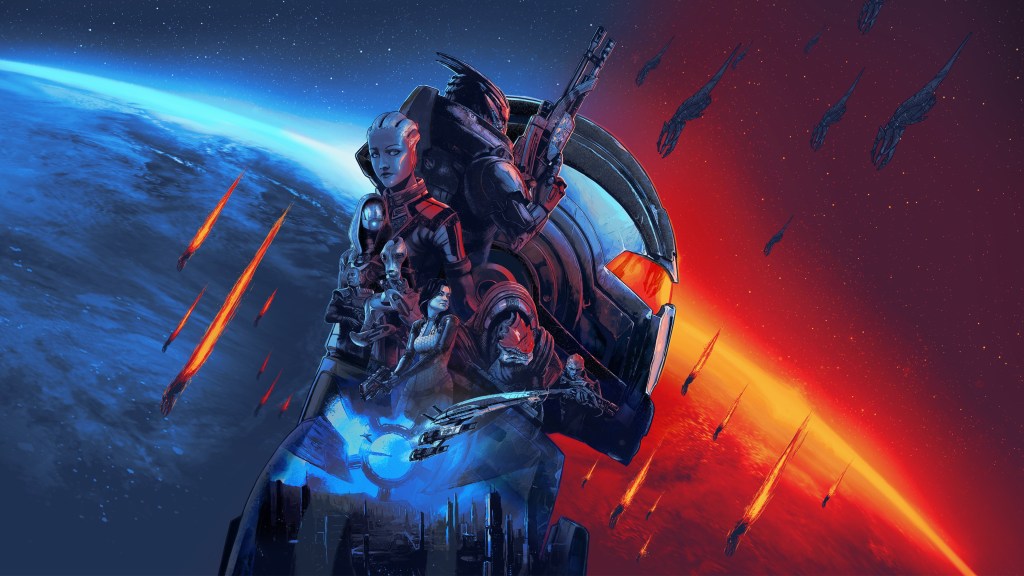
    Some of the most artistically influential and significant games I’ve played in my life were developed by BioWare. I latched onto the series for much of my teenage years; I couldn’t tell you how many times I played Dragon Age: Origins throughout high school: seeing each origin, building my perfect world state to import into the sequel, finding obscure conditional options. I loved the game so much I decided to check out BioWare’s other series and got myself a copy of Mass Effect. (Spoilers follow.)

    Amazingly, I latched onto it just as hard as I had Dragon Age. Harder, perhaps. I tore through Mass Effect, playing every night to explore the galaxy BioWare made. On my first run of the game I hadn’t completed Wrex’s personal quest before Virmire and failed to have the points to successfully persuade him to calm down, but I was so attached to his character that I loaded an earlier save before I’d spent my most recent level up and managed the check. It legitimately infuriated me when Ashley shot him in the back the first time. I immediately launched into New Game+ once I’d finished the campaign and went out of my way to do everything on the next run.

    By the time that was all done, I learned Mass Effect 2 had been out for well over a month already and managed to pick a copy up when my birthday came around. I’d fallen in love with the first game because of its setting and narrative; Mass Effect 2 brought the game into modernity with vastly improved gameplay and ensnared me even further. I survived the so-called Suicide Mission without a single casualty on my first run. I played Overlord when it released. I blew up the Batarian Alpha Relay in Arrival and waited very impatiently for the trilogy’s end to arrive.

    I took two days off of work for its release and binged through the game. I played hours of the multiplayer, beyond what was required for my Galactic Readiness to be maxed out, I felt mist in my eyes as Mordin rode the elevator on Tuchanka. I froze, wondering if I’d be able to broker a peace between the Geth and the Quarians at the end of Rannoch. The game was incredible, and I was riding high on the wave of that experience as I charged toward the beam that would let me access the citadel and use our superweapon to exterminate the Reapers and save the galaxy.

    And I, like many others, felt like the ending slapped me in the face. I felt burned for being so invested in everything that had happened up to that point. Everything I’d done came down to a trinary choice that did not feel adequate in the least. I could either pursue what the villain of the first game wanted (violating every galactic citizen’s bodily autonomy in the process), pursue the Illusive Man’s goal (with an undercurrent of “this might not work forever”), or commit a genocide not just of my enemy, but also one of my allied species and sideswipe slay a member of my own damn crew. I stood there in disbelief for a handful of moments, then grimaced as I did what I’d been sent there to do: Destroy the Reapers.

    I found I was not alone in my upset. I scrolled through dozens of threads on Reddit in the following days. Criticism was not hard to find. Theories decrying the ending as a hallucination felt more acceptable than what had been served. I returned to replay the final moments when BioWare released their Extended Cut of the ending, and still left dissatisfied. So badly had I felt burned by the ending that I did not buy any DLC for Mass Effect 3 or play the campaign again. (That multiplayer rocked though, I played it a few more times.)

    This year, I purchased the Legendary Edition during the steam sale for $15, which combines the trilogy into a single platform with updated graphics (and gameplay for the original). I hadn’t played these games in over a decade (I’d originally owned them on an Xbox 360 and hadn’t repurchased them on PC at any point, so I hadn’t even had the ability for perhaps six years).

    For a few weeks during the summer, I was consumed by them once again. Every evening when I got off work, I launched into Mass Effect. These games were just as incredible now as they were before, but all the while, I wondered if the other shoe would land as harshly as it had before. I reached the third game and reveled in how unbelievably well they managed to make it, dreading the moment I would reach the end and wondering if I would be angry about it all over again.

    It was near the end of the game that I played Mass Effect 3’s DLCs for the first time. I retook Omega just before Priority: Thessia, I discovered the truth of the Leviathan just before exposing Sanctuary and Cerberus’s activities there, and completed the Citadel just before launching the assault on the Illusive Man’s base. After these missions, when I finally reached the end of the game, I discovered that my anger about the ending had materially changed.

    In 2012, when I spoke to the Catalyst and was given my three decisions for how to irrevocably change the galaxy, I hated its existence as a writing device. It felt like the voice of the author had come down to tell me how it ended, and I couldn’t have been more frustrated. Now, in 2023, after Leviathan and the Citadel, I only disliked the personified Catalyst as a character. I thought it to be fallible now, and not a voice of omnipotent knowledge. I knew now that it had been created by the race that it turned into the Reapers and it had a flawed understanding of the galaxy. It thought war between organic and synthetic life was an irrefutable fact, when I had already brokered peace between the Geth and Quarians and they were working together to resettle Rannoch. I had seen an AI and a human man fall in love with one another. I knew it was just a dumb machine rather than an authority, and I blew the Reapers to hell once again.

    The Catalyst didn’t know the galaxy half as well as it thought it did. For it, the status quo of galactic extinction every 50,000 years was an acceptable outcome. Whatever it thinks isn’t worth a damn. It’s probably wrong about the Geth and EDI being destroyed anyway, or it’s lying because it wants to save its toys.

    These games were some of the most influential and significant games of my life. It’s incredible to have found a way to enjoy and love them again, whether my interpretation of the ending is supported by canon or not. As always, thank you for reading. I should go.

  • Diablo 4: What’s With Microtransaction Counter Criticism?

    Diablo 4: What’s With Microtransaction Counter Criticism?

    Outside of Tears of the Kingdom (which I don’t have a Switch to play), Diablo 4 is likely my most anticipated game release this year. A friend gifted the deluxe edition of the game to me as a birthday present, so I’ve been playing it for about a week, and I’ve had a blast. I’ve got some problems with the game’s story (maybe I’ll write a post about it), but playing the game itself has been fun; I love blindly exploring a game, and Diablo certainly delivers there.

    Now, I’ve made no secret of my thoughts on microtransactions in the past, and I’ve got some gripes with the existence of a cosmetic shop in Diablo 4. The prices are pretty out of whack, the store rotates to inspire a FOMO response, and given Overwatch 2, I’m unable to take Blizzard at their word that no power or in-game advantages will never be sold on the shop or included in a battlepass.

    Browsing the subreddits for the game, the thing that has shocked me the most is seeing people defending the shop’s inclusion, with threads full of people being snide or dismissive of people with a negative view of the premium store. I’m left wondering how this massive corporation cultivated these knights to defend their ability to rake in cash hand-over-fist.

    I haven’t put in the time to really answer that question, but I can find flaws in their arguments. I thought we could at least start there.


    A Necessary Evil?

    Before we dive all the way in, I do think it’s important to state that for this post, I’ll be addressing the points I’ve seen made in defense of Diablo 4’s microtransactions, and what about Diablo and Activision Blizzard makes me think that they’re poor arguments.

    I’ve seen a lot of people say that a game with constant updates and seasonal content needs a revenue stream to keep the service alive, and often it’s presented as a necessary compromise to allow a game with dedicated service to exist at all. Only, it isn’t necessary for Diablo 4. The game has a box price, and its launch week is not the last time people are going to buy the game. Blizzard will continue to make money on sales for months.

    They’ve sold millions of copies already at $70-100 a piece. They’ve gotten millions of hours of nearly-free advertising on twitch.tv. Games are expensive, certainly, both to make and maintain, but we must dispense with the idea that this is some small studio scraping by to develop this experience at cost.

    Activision Blizzard is a corporation, and it exists in pursuit of profit; profit pays the shareholders and executives. It is not funneled directly back into the game. It might serve as an incentive for the further investment in that product, but even then it is not for the sake of the product, but for further profit.

    These shop items and battlepasses will not even pay for future large content updates – the game will have paid DLC expansions. If you think the shop is allowing the game to be run without a subscription service, you’re not realizing that a planned pay-for-expansion update is a subscription cost, just served in bulk at specific release dates.


    Cosmetics Only: The Lesser Evil?

    A cosmetic-only shop certainly harms a game less than the ability to buy power or in-game currency. The former cheapens every difficult accomplishment in the game, while the latter creates a real world price point for every in-game item or service. (A 300,000 gold mount in Warcraft just costs about $25, depending on token values.) But, I again think it’s wrong to pretend it does negligible damage to the game. I want my character to look cool. There’s certainly ways to accomplish that in Diablo without spending cash, but unlocking new appearances has an expiration date until the next content update. If you settle into an outfit you like for months and begin to tire of it, you might want new options to craft your next look around, and you might not have any left to obtain in the game.

    Then, there’s often an element a clashing aesthetic to premium cosmetics. There’s a long list of games that sell absurd helmets and effects for money that are purposefully eye-catching and distinct. People want to stand out – they’ll buy hot pink armor and a rainbow trail given the chance; I don’t mean to question or belittle what these people enjoy, but I’m fond of Diablo’s existing tone and aesthetic and wouldn’t want to see it sacrificed upon the altar of shareholder profits.

    And, it’s certainly not a big deal for these things to exist, and they likely won’t be the reason I stop logging in one day. They just contribute to a lessened experience for me.

    But, well, I don’t want to spend money on the shop, so maybe I’m just not the target audience anyway.

    I don’t necessarily see this all eroding my interest in the game anytime soon. Even if it gets bad with the cosmetics, that might not push me away. I’d love to pretend I’m principled, but I’m getting the first battlepass as a perk for the edition of the game I received, and I’m not unlikely to grab the second one if I’m still playing when it rolls around. This genie is well and truly out of its bottle, and gamers never boycotted anything successfully. I’ll keep taking my individual stand when I can, but I really just want to kill some demons sometimes.

    As always, thank you for reading. Now, I think there’s a Helltide coming up here soon …

  • Warcraft: Mythic+ Affixes Are Overbearing

    Warcraft: Mythic+ Affixes Are Overbearing

    Since its addition in Legion, Warcraft’s Mythic+ dungeons have become an insanely popular endgame activity. I’ve participated in most seasons, missing only seasons 3 and 4 of Shadowlands while I was unsubscribed. Overall, it’s been a huge boon to the game. Mythic+ serves as a PVE activity that doesn’t require the level of investment and set-up that raiding needs.

    The system has survived some large changes since its inception. Fortified and Tyrannical were originally envisioned as a hurdle for keys beyond level 10, but are now present on all keystones. We’ve seen several affixes nerfed, rotating seasonal affixes, and some that have been introduced and removed entirely.

    Presently, Blizzard is testing a new slate of affixes on the Public Test Realm, and much of the player base has had few kind things to say for them. Many players find the affixes to be unduly impactful, to the extent that players have to focus more on avoiding the negative consequences of failing the affixes over battling the mechanics designed specifically for the dungeon.

    Others claim this criticism is the whining of a player that lacks the skill to engage with the affixes as they are. However, many of the top-rated Mythic+ players share these opinions, as I do. And, while I’m certainly not in the realm of the very best players, I’ve never lacked the ability to attain the goals I chase in the game.

    But, as a pre-emptive counter to anyone who would discredit this post on the merit of skill or accomplishment, here is my raider.io profile. I have two characters beyond the rating threshold for Keystone Hero and several Keystone Master achievements.

    Now, let’s talk affixes: new, old, and philosophically.

    Playing the Affix

    The most criticized affixes are the ones that become so intrusive to the standard gameplay that they overshadow the usual dungeon experience, such as Explosive and Sanguine.

    With Explosive, we are constantly battling our UI to kill these priority target bombs before they explode for heavy group-wide damage. For many players, the task of killing these bombs falls on the healer’s shoulders – at the lower levels of play, players are unlikely to swap targets and kill them, while at the top-end of play, the group loses the least amount of damage throughput if the healer defeats them all. Since these spawns scale with the number of enemies engaged, many orbs might be active at once, rolling throughout the duration of a fight. On the PTR over the weekend, there was an adjustment in testing to make these orbs several more times durable, but with a reduced spawn frequency.

    Now, conceptually, I don’t think this was a bad direction. However, the pool of hit points tested over the weekend was bloated such that players were simply ignoring them outright with their spawn cadence. I’d prefer to see the spawn rate reduced further, but I think another nerf to both values would be an even an even better adjustment. UPDATE: Blizzard has since proposed a huge change to the functionality of Explosive orbs, having them instead shield enemies based on the health remaining instead of damaging the party. I think this would be better for the experience of the affix, but I don’t think it addresses much the feeling of playing against the affix over the dungeon. We’ll see how it works when that begins testing.

    Then, Sanguine requires a dedication to movement and area control beyond what is usually asked by the affixes or base dungeon mechanics. Even the tools players bring to aid the tank in repositioning monsters are suspect in many scenarios, with enemies that are immune to knockback and grip effects, or uninterruptible casts, which adds an element of target prioritization on top of this affix’s asks. I think it’s wrong to say that all affixes shouldn’t affect tanks because of the role they play in the group, but I think Sanguine is a bit heavy handed in that it requires the tank’s engagement the most with minimal impact from the other players.

    There’s even a couple more affixes that have been adjusted since their introduction, but would’ve fit here before: Bursting and Bolstering.

    Bursting changes the way every pull in a dungeon should be played, with the enemies afflicting the players with a stacking damage-over-time effect for each enemy they kill. This extends the danger of a pull beyond the point where the monsters are dead, and asks for halting damage to prevent refreshing the damage effect’s duration. It’s since had a change to make it dispellable, allowing a class-utility counter to make it much more bearable with a priest’s Mass Dispel, but I haven’t chosen to run a dungeon with this affix without a priest all season, and not all groups have that luxury.

    Bolstering once called for adjusting target priority on many pulls in a dungeon, but the new duration limit on the buff has significantly reduced the impact of pulls with one monster of higher health than the smaller creatures around it that die from passive cleave.

    And there’s many more affixes that contribute negatively to the experience of running dungeons without overtaking the gameplay loop to the degree of those above outliers. Quaking hits casters harder than tanks and melee players by interrupting their casts and has required multiple specific exceptions to be installed to avoid catastrophic overlaps; Raging can create unavoidable one-shot damage instances with the only counter being large defensive cooldowns or limited soothe effects; Overflowing affected some healers much more negatively than others; Necrotic and Skittish put more responsibility on the tank in an unfun way; Inspiring created painful monster groups by restricting the use of the class tools we had to overcome dangerous enemies; Infested and Beguiling were infuriating to deal with throughout their respective seasons.

    And I think it’s bad for dungeon affixes to exist solely in this space – to add only annoyance to a dungeon. These were originally created to add variance to the dungeons week-to-week, because, for most people, running the same encounters ad infinitum would get stale fast.

    But Blizzard doesn’t seem to agree. Let’s look at those new test affixes.

    Our New Afflictions

    So, available for testing over the weekend, we had Incorporeal, Afflicted, and Entangling. Despite the callout, Afflicted looked to be the least offensive of these three. It functions a lot like explosive, but in reverse. A ghost spawns with low health and dispellable afflictions. Removing any of these effects or healing the ghost to full health removes the ghost. Should the ghost be left alone, it afflicts the party with a Haste reduction (which we don’t want). Unlike Explosive, the affix is presented more directly healer-facing. They can address it with their usual game play, and hybrid classes can ease the burden at low-cost, and I think both have factored into its reception thus far.

    Then, there’s Incorporeal, which has been adjusted a bit for the better since the weekend’s testing, but I still think could use a redesign. These creatures require direct crowd control effects or kicks to prevent them from massively hampering your group, but you generally would like to invest those abilities into the dungeon’s monsters instead. However, since it’s intended that they be immune to damage, and things like Blind, Polymorph, Hex, or Hibernate would deal with them completely, I think they’re not in as worse a place as they were when those effects were breaking.

    And, last, we have Entangling. Like Quaking before it, this affix is just going to be at its worst creating painful overlaps with the dungeon’s mechanics. I know it’s going away next season, but imagine this effect occurring during Odyn’s runes in Halls of Valor. That extra delay of movement could spell catastrophe for an otherwise successful key. In Blizzard’s post, they do talk about increasing the visual clarity of the effect, which was a pain point for testers over the weekend.

    Even as unintrusive as Afflicted looks, these affixes are all still annoyances to be layered onto the game. But I think it’s wrong to behave like that’s the best or only avenue to add challenge to the game.

    Examining the Philosophy

    In the past, I had discussions about my grips with the Mythic+ system and often talked about Hades, an isometric roguelite with fantastic game play. After you’ve had a successful clear or two, the game opens up a “Heat” system, where you can elect to add on additional modifier to make the run more challenge, and more rewarding.

    There’s options here that would be an annoyance if they were prescribed: enemies need to be hit a number of times before they begin taking damage; monsters can deal up to 100% more damage and have up to 30% more life or both; you have to sacrifice a boon to climb between the underworld regions; you put yourself on a timer. Yet, these never felt intrusive because of two reasons: one, they affected the “Heat” of the run at different values, so harder affixes increased the rewards more; and two, you picked every single effect you were going to deal with on a run. So, why the hell doesn’t Warcraft do it that way?

    Well, as far as picking your poison goes, I don’t think it would work as well in Warcraft. Hades is played solo, while Mythic+ is a 5-man group activity with the active player base of an MMO. Everyone having the same affixes on their key every week is good for people forming and joining groups. It just wouldn’t work as well to go from Volcanic in one key to realizing you have Spiteful ghosts chasing you down on the next.

    As for the former, there is a built-in rating system for Mythic+, and Tyrannical and Fortified already provide semi-separate score values, but I don’t think increasing the requisite investment to have all players engage with every affix would be health for the game. Currently, you can get a real decent rating on one month’s subscription, but if every affix had its own point contribution, it’d take several weeks to clear your scorecard of any zeroes.

    So, fundamentally, I think affixes-as-annoyances is a bad design space for Warcraft. It is good for the process of grouping to have keys prescribed for the week, and detrimental that we cannot opt-in to the annoyances.

    So, I’d propose–

    Affixes-as-Boons

    I think affixes should exist. Tyrannical and Fortified don’t need to go anywhere; they do a lot of the legwork in modifying the week-to-week experience in these dungeons.

    But positive-effect affixes – even built as a reward for engaging with something like Afflicted – would be better than what we have. I don’t propose this as a way to make dungeons easier; I’d want to see it paired with an adjustment to the overall scaling, so that obtaining the benefits from the affixes would affect the dungeon’s success.

    I wouldn’t even begrudge the existence of an annoyance affix paired with a boon affix. Just by virtue of design, the affixes will always be less interesting than the dungeon mechanics, because the affixes must be designed to be applied to all the dungeons, whereas a boss or monster pack have a lot more freedom in their design space.

    What affixes do to add variety to dungeons in the long-term is valuable, but instead of each week ending with the sentiment, “That goodness I don’t have to deal with that anymore,” dungeon affixes could instead foster excitement for the gameplay opportunities they provide. At the very least, I’d be interested to try.

    As always, thank you for reading. I’m looking forward to starting the climb all over again in season two, even with all my complaints. I just wonder if things can be better. Now, to get after these last few portals for my paladin …
  • Returning to Warcraft

    Returning to Warcraft

    In July of 2021, news broke about a lawsuit against Blizzard Entertainment. The suit alleged that, as a company, Blizzard had systemically mistreated their female employees. There was a “frat boy culture” complete with “cube crawls” in which workers would drink at one another’s cubicles during the workday and grope their female coworkers. Employees who reported these behaviors faced retaliation. A female employee committed suicide during a business trip with a male supervisor who had brought sex toys with him on the trip. Their courtesy rooms for recently pregnant employees who needed to pump were poorly furnished and lacked security with someone reporting their breast milk stolen from the fridge. In the midst of all this news, two people were promoted to fill J. Allen Brack’s position once he left the company, Mike Ybarra and Jen O’neal, and they did not pay Jen as much as they paid Ybarra despite both of them advocating for it.

    I ended an eleven-year concurrent subscription to World of Warcraft the same day that this news broke. I was horrified and disgusted that this company that had been a part of my life for so long was like this. Unfortunately, it was more akin to the last straw than a strictly moral stance. Shadowlands was the least fun I’d ever had playing Warcraft, but I was more-or-less in charge of the guild I’d been playing with for over a decade, so I felt some sort of duty to stick around.

    When this news broke, I told the guild that when my time expired, I was done. I didn’t think I’d ever be coming back. My game time lasted until November, and on the last possible night we managed to finish the raid on heroic after several weeks of attempts on the final boss. I did not open Battle.net for an entire year after that moment.

    I kept up with some news. I watched the Dragonflight announcement and felt underwhelmed. I didn’t really think Blizzard would change – not in philosophy, and not in culture.

    But, maybe they did.


    New Direction

    I’ve been a fan of Preach Gaming for a long time. I think I first found his channel in 2012 during Mists of Pandaria, but I probably became a subscriber and fan in the time of Legion (2016). Like much of the player base, Preach had been heartbroken with the news and resolved to risk his entire livelihood and stop his daily coverage of Warcraft as his primary work for his videos. Like many of us, he had been passionate about this game for a long time despite it feeling worse and worse over time.

    Late last year, Preach spent his own money to take a trip to California and visit the Blizzard campus, interviewing the developers to talk about the new direction of the game and the fallout of the lawsuit. And, honestly, it began to look like the lawsuit had helped remove the problematic people who had been with Blizzard all those years. Things looked like they’d gotten better.

    The game was headed to a healthier place: one designed for the player’s enjoyment and not just their retention. Gone were the nonoptional activities that advanced your character’s power outside of the endgame pillars. Gone were the restrictive systems and grinds that made players feel the need to engage with content they’d long since grown tired of to continue gaining artifact and anima power. Playing multiple characters became something encouraged by the game, instead of a burden as players saw a laundry list of dozens of things they’d need to complete again to get their characters ready for the fun stuff they wanted to do.

    Even hearing this from friends, I was skeptical. Many of them hadn’t quit in Shadowlands, maybe it was just survivorship bias. Ultimately, I knew I couldn’t take anyone’s word but my own, so I decided to drop some of the gold I’d had in game for a token and give it a shot.

    It’s been about a month since then. I’ve leveled four of my characters to 70, when I only ever got one to 60 in Shadowlands. I’ve just achieved Keystone Master with my friends, despite us now needing to find people to fill our groups instead of having an active guild to run with. I’ve been making gold with my professions, in the hopes of continuing to pay for the game with that virtual currency. I haven’t been into the raid yet, but I’ve been completely satisfied with the dungeon endgame.

    That game is just fun again.

    But I’m not ready to give Blizzard a full pass.


    There’s Still Room to Improve

    Ultimately, the monetization of Blizzard’s games is still disgusting. Diablo: Immortal is not even a year old. Diablo 4 is set to release this year with a battle pass system for cosmetics and so far, they’ve been quiet on what, if anything, they’re doing with this system to address FOMO. And, at any point, they could fall into their old ways and start designing poor systems that restrict the players again.

    But, unlike before, I’m not going to stick around if the game stops being fun. There’s really not much else to it.


    As always, thank you for reading. Now let’s drop that ready check and get this run going.

  • The Pokémon Problem

    The Pokémon Problem

    Back in 2019, Nintendo and Gamefreak made a highly anticipated announcement for the next mainline Pokémon games, Sword and Shield. With one controversial decision made during development, this became one of the most divisive reveals ever made by the company. For the first time, a mainline entry in the Pokémon series would not launch with support for all of the previous Pokémon. Sword and Shield would release with a significantly reduced roster.

    This announcement ignited a backlash still burning to this day. People called for boycotts. Internet petitions were signed. We desperately wanted Gamefreak to reconsider this choice, but the fandom’s arguments fell on deaf ears. Sword and Shield were the first Pokémon games I did not buy.

    Now, new releases are yet again on the horizon: Scarlett and Violet, and again, they will launch bereft of hundreds of Pokémon. This post is going to dive in on this controversy – to examine why it mattered then and why it matters now. To clarify why Gamefreak’s excuses don’t satisfy many former fans.

    Every Pokémon is Someone’s Favorite Pokémon

    I remember reading through threads upon threads on Reddit when the announcement came through. So many people were upset with Gamefreak’s decision and they were listing their favorites and despondent at the possibility that they might be absent from a future title. It was astounding how varied each comment read. Pokémon I had no care for whatsoever were hailed as a poster’s favorite, or their sibling’s, or their child’s. Pokémon widely considered ugly or poorly designed (people harped on the ice-cream-cone Pokémon for years) were beloved by someone. Some artist painstakingly designed these creatures. And it never sat right with me that they would just toss them aside like that.

    One of Gamefreak’s chief reasons for their choice came down to the ever growing roster of Pokémon in their games. Right now, prior to the launch of their new games, there are 905 Pokémon in the Pokédex. Yeah. It’s a lot. But it has always been a strength of their design that you can nearly always tell what type of Pokémon you’re up against immediately. Each environment carries an implicit rule for the encounters you can expect. You never have to walk into a gym or Elite Four match blind. The design of their trainer sprites clued players in on the type of Pokémon those trainers would field. Ultimately, I don’t find the claim of a bloated roster compelling in the least – I believe it to be undermined by the excellent clarity existent already in each game.

    At the time of the announcement, a counter-argument sprung up to call for the fanbase’s understanding of Gamefreak’s decision. Commentors asked, “How many people will this really affect?” How many players of the Pokémon games will really be disenfranchised by these limitations? What’s the percentage of Gamefreak’s player base that use every Pokémon or have collected them each? And, clearly, collecting a “Living Dex*” or constantly switching between dozens and dozens of Pokémon is something a low number of players would do in these games. I myself collected a near-complete Living Dex (missing only a percentage of the event-only Pokémon) back in Pokémon Y (and though Pokémon Sun ended up being my last venture into the franchise to present, I did not at the time invest the time to fill out that game’s Pokédex). But, I think that’s ultimately incorrect.

    The truth is, this decision affected every player. Maybe their favorite Pokémon had the fortune to remain in the roster, but their second, third, seventy-eighth favorite–maybe they weren’t. Perhaps they just had an enormously abridged list of potential enemies. The games lost the true extent of their variability, and I don’t think that was the right decision to make.

    Regional Forms: A Flawed Compromise

    In Pokémon Sun and Moon, Gamefreak added a new variable to the mix: classic Pokémon with new appearances based on the environments in the latest games. Looking back, I think this was an attempt at future-proofing the games by reducing the volume of new Pokémon added each game. I think it’s possible Gamefreak by the time of Sun and Moon knew they would need to change their strategy when it comes to the addition of new Pokémon, and with regional forms they might’ve been trying to walk the middle road. They could add new, exciting Pokémon appearances and fill out the availability of Pokémon types, while having a version of older Pokémon that wouldn’t carry the expectation of being carried forward. Alolan Vulpix is from Alola, after all. Do we need to worry about its availability in the next region?

    But therein lies the problem, right? What if Alolan Vulpix or Ninetails becomes you favorite Pokémon in the space of Sun and Moon? With a DLC package, many Alolan Pokémon became available in Sword and Shield, is that going to be standard going forward? Is it acceptable to put these Pokémon behind an additional paywall beyond the game itself?

    New Pokémon are always the most exciting part of each new generation. My friends that have interest in Scarlet and Violet love Fidough and Lechonk. They had their starting Pokémon selected months ago. Just rebranding an old design doesn’t carry the same splash. Wooper’s got a new type and a palette swap! Ok? It just doesn’t land in the same way this adorably chubby pig.

    Regional forms fell short of both of their goals I assume they were intended to reach. They aren’t as exciting to obtain as truly new Pokémon, and they didn’t aid in the reduction of new Pokémon in a way that kept them from needing to limit the roster. And it is a shame, because Pokémon reacting to different environments to become discernibly different is a good idea: I just think it came much too late. That role had already been taken by a wide array of new Pokémon being available in every region.

    There isn’t a Hoenn region Pidgey, they have Taillow. They have Plusle and Minun, Pikachu was in the exotic safari zone.

    Conclusion

    This post isn’t meant at all to call for a boycott or dissuade a Pokémon fan from buying the next game in one of their favorite series. Scarlet and Violet will at a minimum be the standard Pokémon fare, and they’ve been the name in monster-pet-battling games for decades. It’s likely to be another fun romp in a beloved series I spent a lot of time on as a child and teen and young adult. But I won’t be there until all of the Pokémon are in again – and not as DLC, but from the jump.

    As always, thank you for reading. Now, I need to go run uselessly after a trio of criminals while an electric rat rescues himself with a blast of lightning.

  • Pay-to-Win Video Games

    Pay-to-Win Video Games

    One of my earliest memories is about video games. I remember waking up one morning, I must’ve been around four or five. It was a Sunday, I think, and both my mom and dad were asleep, my brother was asleep. And, usually, I’d wake someone up to get breakfast made or something. Instead, I hurried over to the TV and the Nintendo 64, booted up Super Mario 64, and played. When my mom finally got up, she was so surprised to find me out there playing the game, having booted it all up on my own.

    Video games are an entirely different beast these days. Back then, you bought the game, you had it. That was all there was to it. I remember my brother and all his friends were way better at Super Smash Bros. and NFL Blitz N64 than me.

    None of them paid for that, though. They’d played the games more, they were older, and given time, I could match up to them no problem.

    Last week, Activision Blizzard released Diablo Immortal, and almost everyone I know is talking about this predatory pay-to-win video game. For those who don’t know, the math indicates that if you want to pay to get the best gear, it costs around $110,000 to max out a single character through the “legendary gems.” If you don’t want to spend a cent? About 10 years of daily gameplay. Assuming nothing more powerful gets added to the game from its launch state.

    Disgusting.

    Abusing Psychology

    These games use a lot of predatory tactics to get their players to throw their money at the software, no matter how miserly they might want to be. One of the most widespread tactics in games nowadays is utilizing your player base’s “Fear-of-Missing-Out” (FOMO). These games have cosmetics and powerful items that vanish after a set amount of time. Think you might want to use that cool superhero inspired costume? Buy it now for $19.99! Or try to gain enough in game currency in the one week its available to obtain it for “free.” It might never be available for purchase again.

    They also create these “daily bonuses” you “earn” by opening the game every day. They want booting the game to be habitual. These bonuses are usually redeemed in these games’ shops, to make opening them a more usual interaction for their players. Diablo Immortal, naturally, does this. Even worse, the game has a “battle pass” with a free track, a premium track, a super-premium pass with exclusive cosmetics, and an ability to outright buy the ranks of the pass. You buy it for $5, but if you fail to complete the pass, you miss out on the last of the rewards you didn’t earn at the end of the season. They’re just gone. Unless you spend some cash to boost through the last few levels.

    The battle pass purchase in Diablo Immortal also gives you extra inventory space – but just until the pass expires. This first one is gone on July 7th. And speaking of expiring rewards you might’ve paid for – there’s a “Boon of Plenty” system that grants daily login rewards and a few other perks. And if you don’t login on one of those days, those items that you’ve paid for just vanish into the ether. That’s worth $9.99, right?

    These games also use a secondary currency for their purchases. In Diablo Immortal, you spend your money on orbs that you then use to buy other items. Naturally, these orbs are sold in bundles that do not line up with the prices in the shop. The first time you play the game, you get a special deal to buy a box that gives you 60 orbs for $0.99 – but there’s nothing in the shop available for 60 orbs.

    Not to mention the elephant in the room: these games are targeted at children first and foremost. I remember when iPhone games were just becoming a thing. Seemed like there was a story in the news every week about some kid who’d spent $500 or more on a game without their parents realizing.

    Can Pay-to-Win be Ethical?

    There are some games on the market with features that aren’t as immediately pay-to-win as buying stronger units or better items than are available to free-to-play gamers. These games are often dubbed “pay-for-convenience.” People like to overlook that such a moniker betrays the truth of the systems: if the developers of the game have a financial incentive to make the game inconvenient, why wouldn’t they? If you can pay to skip levels, they have a financial incentive to make leveling as long and monotonous as possible.

    If, say, there’s a game that only has the same level of gear available for free-to-play and premium players, they have a built-in incentive to ensure that obtaining that gear is frustrating and repetitive, to push people toward a purchase. Why run the same dungeon, fight the same boss, dozens or hundreds of times, when you could swipe your credit card and be done with it? Be as strong as you can be?

    Even in a game like Lost Ark, which equalizes gear in a player-versus-player setting, still allows you to specifically purchase an advantage over other players. You can buy the items needed to reach the highest gear potency, or spend weeks, gated by daily timers killing the same bosses for the items to drop naturally. But doing the same thing over and over isn’t content. It’s a grind.

    Some games only release purchasable cosmetics, which can be a much more ethical model, but even then, in a lot of these games, having a cool-looking character is the goal of the endgame. Why make that very interesting set of gear available from in-game activities, when you can charge $20 for it?

    This gets even more absurd in another game from Activision Blizzard that I (until last year) played a lot myself. In World of Warcraft, you have to pay a monthly subscription to play the game (for the ongoing development of the game, allegedly), buy each expansion when it releases to access that part of the game ($40 minimum purchase every two years), and then there is a cosmetic shop that allows you to buy armor sets and mounts and pets for varying prices, and then there’s a way to exchange money for the in-game currency, which you can then use to buy services and goods from other players.

    It became obvious that the majority of work was going into these premium cosmetics instead of the ones added to the game. They’d add a mount with a dozen recolors spread out over several acquisition streams, and then a truly unique mount with a special skeleton to the shop for more money than you pay every month to play the game.

    Buying gold for your real money also lets people buy themselves through the hardest content in the game, obtaining achievements that normal players might work at for months without success. A rich player could buy themselves to “Gladiator,” a special PvP rank that comes with a unique mount each season, by buying gold for cash. A lot of people like to combat World of Warcraft becoming pay-to-win with the WOW Token (the option to exchange your real life money for the in-game gold) by reminding everyone that people bought gold or just straight-up exchanged money for these carries before the token was introduced, but that doesn’t excuse anything. Blizzard could have hired more employees to moderate their game to crack down on these actions that were clearly against the game’s Terms of Service, but instead they cut themselves in on the profit and legitimized it all at once.

    So, no, I don’t really think Pay-to-Win can be ethical.

    Becoming the Product

    Some people play these games with the stubborn insistence that it’s alright because they aren’t spending money. They aren’t aiding in the perpetuation of this predatory business model with their wallet.

    Instead, they’re doing it with their time.

    They become part of the product doing this. They become the fodder that high-paying “whales” (people who spend an inordinate amount of money on these games) are paying to smile satisfied at for having paid for their rewards rather than enduring the grind the free players suffer through. These are the players that get rolled over by the whales in competitive game modes, much to the spending player’s delight.

    The science has been around for a while: the vast majority of these games’ player bases never spend a dime, then a small percentage make a few purchases, and then the whales, a fraction of a percent of the player base, subsidize the entire game by spending thousands, such as the person who spent $14,000 dollars on Mass Effect 3’s multiplayer mode. Such as the streamers playing Diablo Immortal or Lost Ark and dropping thousands. These games need to exploit these players to financially justify their existence and all the time and money that went into their development.

    The Genuine Answer

    It’s clear by now that these games will never self-regulate. It is just a fact of business that these companies are always going to push the boundaries to obtain more money this quarter than the last. The only thing that stops them is legislation.

    Belgium and the Netherlands have laws preventing these games from obtaining widespread appeal in their countries. Games with “lootboxes,” where you spend money to obtain random rewards of vastly different value, are correctly identified as gambling mechanics and disallowed. These games must either adjust their mechanics, or as is the case for Diablo Immortal, never release in those two countries.

    And the gamers there are thankful for that.

    Additional Viewing

    Here’s an additional video if you are interested in learning more about this topic. This is a game developer conference discussing the exact methods they should use to entice “whales” into their games.