Tag: gaming

  • December 2024 Irregular Update

    December 2024 Irregular Update

    Hi.

    Yes. I know. It’s been much, much longer than I intended since the last one of these. Since the last blog post in general. I … did not mean for it to go this way. Hell, I think the only thing that’s putting a fire beneath my ass to do this now is that I have my 2024 Year in Review post ready to go and it feels like I should probably address some stuff before I do that.

    So. What the hell happened, huh? Maybe we can both figure it out after prattling on for a while.


    Where were the blog posts?

    Well, at the top of the year, I had some turmoil with D&D. Well, more correctly, holdover turmoil from our experiment with Pathfinder. The homebrew game I was running petered out. We had one player who wasn’t all that jazzed about going back to D&D and another who was losing availability for a couple of months. So, we wrapped up the dungeon we were in and called the game.

    Not something I’m unfamiliar with – I’ve been running D&D for nearly fifteen damn years at this point. I’ve had more games get canned than reach their intended conclusion. Still, this one stung. This game was practically full-on sandbox and I wanted to more or less run the game as a gift for the table, let them explore and self-direct to the extreme. I was happy to put in the extraordinary time I might need to week-to-week to set the track down right in front of the train, but it still didn’t work out. And perhaps the complete lack of direction wasn’t the right fit for the table or the characters they made, maybe it was entirely down to the external obstacles, but it stung to lose that campaign.

    After that, I ran Blades in the Dark for about three months or so with the two players who stuck around. That system was some good fun, and we enjoyed it well. It’s built incredibly well for allowing the players to have the initiative in their choices and actions – it’s the exact inverse of D&D. In the latter, the DM has a situation they present to the players and the players respond; in Blades, the players lay out a heist (called Scores) and the GM reacts to their actions. Perhaps a bit of an oversimplification, but it runs well and we had some good fun!

    Once we got to the end of our “first season” of that game, we got one of our players back and were joined by two others and we went back to D&D. I’ve been running Tyranny of Dragons since June and it’s been going well. It’s my second time using the module and I’ve made some major edits to its structure – ones I’d love to share here on the blog, but half of my table has a habit of reading this blog, so that’ll have to wait – at least until we’ve passed the moments that have been adjusted.

    (I know, I know. How can someone have a habit of reading this blog when it’s been silent basically all year. Hush.)

    Another major source for much of my RPG related-posts was playing in a friend’s game who was running the game for the first time. I had the boon of seeing someone with no experience running the game and it reminded me of many of the lessons I’ve learned over the years – and he managed to do some inspired things despite his inexperience that I wanted to praise. Unfortunately, that table also dissolved due to out-of-game circumstances (luckily after the module’s completion).

    I’ve since had the privilege of joining another game that’s run once a month run by another friend, but I had this block, this wall up, that held me off from drafting anything.

    I had some other topic ideas at the start of the year, which made me feel fired up enough back in the January Irregular update, but … well. I lost confidence in claiming that I had any worthwhile experience to actually write those posts.

    These ideas were about the steps I took for independent publishing. Problem is, it’d be delusional to say I’ve done this successfully – at least, to the degree that I feel like my experience would be valuable to someone desperately googling for advice. Regardless of the validity of that worry – it held me off from drafting those posts. So. There it is.


    And … Red Watch?

    In January, I was feeling good about my decision to rewrite the first two books, and I still think pulling them down was the right decision for me. By February, I had completed the draft of A Violent Peace, and sent it out to several folks, people who’ve previously read for me. To my knowledge, none of them ever got around to it, or got very far into it. And I do not begrudge or blame or have any negative feelings toward them; beta reading is a lot of work for no compensation – any time it’s done, it’s a favor, and I’m thankful for them all offering to begin with.

    The point is, the complete lack of engagement was disheartening. The book probably still has many problems. I think there’s some stuff within it that works well, but there’s likely far more that just isn’t working.

    I spent the next two months diving headfirst into the rewrite of A Tide of Bones. I made some excellent headway and I was really liking some of the changes I made. … But there were many more things that were proving exceptionally difficult. I had adjusted the characters a little to provide a new central tension in the first quest of the book, but those changes were … I don’t know if they were right. And I just kept struggling with more and more things; with proper POV division, with some repetitive motivations following the events in Souhal. There’s obviously too many characters, too, but I don’t know what to do about that.

    I mean, clearly the solution would be to cut characters. But to do that would be to surrender the goal I had of not completely changing the canon of the stories so returning readers could pick up A Violent Peace. And would require major rewrites to A Violent Peace, given that it was written with the previous canon to begin with.

    So … do I scupper the whole thing? This project is like a hydra – every problem I address spawns more. How much more do I want to wrestle with it? How much does it get mangled before it’s unrecognizable? Am I going to tie myself to this anchor and just keep on with it? Or do I cut it loose?

    I think … it’s probably the latter, isn’t it? It’s been eight months since I’ve written a word that wasn’t for D&D because of this weight around my neck. I even flubbed the journaling.

    “Sometimes, taking a leap forward means leaving a few things behind.”

    Maybe it’s time to do just that, Ekko.


    So … what’s next?

    If I’ve learned anything, it’s that making promises or exclamations in a random blog post aren’t worth a damn from me. Lately, I’ve been failing to find things to do – to find distractions that will keep me busy and off-track. For a long time this year, I was playing too much Warcraft, too much Baldur’s Gate and Deep Rock Galactic, over-prepping for D&D, all sorts of stuff. But, the sheen’s wearing off.

    When I’m not doing anything else, I end up writing.

    So. Let’s see what we end up working on, then.

  • Starfield

    Starfield

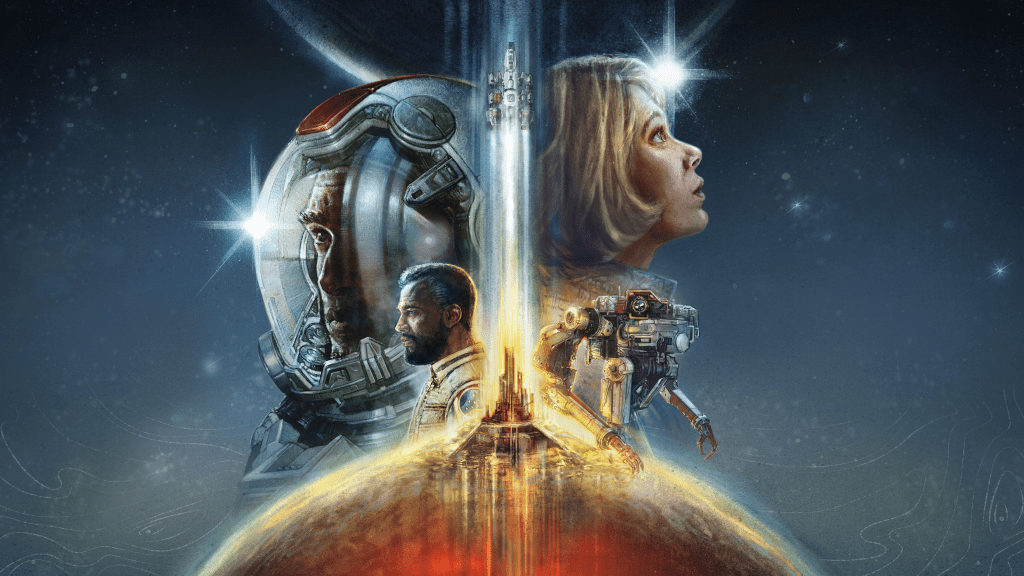
    Last summer, I bought a new PC just before the release of Baldur’s Gate 3. I can’t imagine how poorly my old rig would’ve handled that game, but it ran very well on my new machine and I couldn’t have been happier with it. A side benefit of this purchase was I received a code to gain a free month of Xbox Game Pass, and I thought, “Oh, neat. I can use this in September to try out Starfield!”

    Starfield’s early release window rolled around, and news began to break. It was divisive. People were tearing the game apart, people were cheering it on. This article boosted a sentiment from its fans saying the game really picked up 12 hours in. I avoided reading too much into any of this, content to wait and form my own opinion once I could play the game myself.

    Due to my usual weekly schedule, I didn’t check it out until the Thursday after it’s full release. I launched the game after work, I threw together my character, and I played for three hours before I decided it wasn’t working for me and I uninstalled the game.

    I chatted with a few friends, trying to parse out my exact feelings. I didn’t expect to bounce off of this game so hard, so completely. Oblivion and Skyrim are two of my favorite games ever; both utterly consumed my teenage years and early adulthood. While I never had the same fondness for Fallout 3 or 4, I still played and enjoyed them, though not nearly to the same extent as the Elder Scrolls games.

    I’ve thought about that experience a few times since. Frankly, I’m not sure if I can really make peace with it without writing about it, and, well, if I write about it, I might as well post it, eh? So, here’s what I’ve settled on as my reasons for bouncing off of the game: my own conclusions and some video essays for additional viewing.


    A Poorly Paced Introduction

    (Spoilers for the openings of several Bethesda games.)

    Bethesda’s gotten worse at opening their games as time has gone on.

    Now, I’ve only played from Oblivion forward, and it might just be that trajectory of experience that’s led me to that conclusion. Still, I think Oblivion’s got the best introduction of the five I’ve played. It does the least to muddle whatever thoughts you might want to bring to your character and gives you a great dungeon to explore within moments of its launch, which really shows off a major pillar of the game. Once it’s done, you have a quest, but it doesn’t feel like you need to sort that out and you can just go wherever you want. (I was one of the weirdos who enjoyed going through Oblivion gates, so I usually got to the point in the quest where they’d start opening up and then did whatever I was feeling like.)

    I think Skyrim takes second place despite there being another game between the two Elder Scrolls entries. Its major weakness is how long you’re waiting before you get to define anything about your character, watching the wagons trundle on down toward Helgen. Once you’ve got the character editor open, I think it’s super solid, but launching a fresh playthrough can feel like a slog if you don’t have a holdover save from the end of the wagon ride.

    Fallout 3 and 4 are some of the worst that Bethesda’s done. FO3 really drags with you playing through your character’s childhood in spurts, and it’s on firm rails. You can’t do anything about people coming at you with guns for the crime of being the child of your father at its end. Hbomberguy did an incredible takedown of the intro’s faults in this long essay from 8:30 to 15:50. (The whole video’s excellent.) And FO4 is that little bit punchier, but the game decides a lot about your character before you ever have a say – you’re married, you’ve got a kid, you’re from before the bombs dropped.

    To some degree, that’s a bit unavoidable. Bethesda wants to make games that let you feel like you can go anywhere, do anything, be anyone, but there’s inherent limitations with video games. Bethesda can’t let you start anywhere unless they drop a menu on you (and they’ve got more than enough of those already), and there’s no feasible way to make a hundred or a thousand different starting scenarios match up in their fidelity and playability and excitement. They’ve got to build this reverse-funnel, this narrow entry point that then opens up to the enormous berth of their games. (And on the point of menus to choose a starting point, there are literally mods for their games to create that functionality, because the people who play these games the most would rather have that option.)

    Starfield doesn’t fail in the same ways as its predecessors, but I’d call it the worst. You have these options in character creation that you can pick to really build an exciting history for your character. I think I’d chosen to be a bounty hunter, thinking it’d be a good all-round skill set for adventuring and exploring the galaxy and some traits I thought sounded interesting for that kind of hero. And the game starts with me … working in a mine? Like, I’m a good space pilot and a bounty hunter, but I’ve got to fire this laser on some iron for a bit while two NPCs chatter on and sound nothing like people as they do?

    It’s simultaneously long-in-the-tooth and too quick. You’re walking behind these slow NPCs until you touch the dumb rock and it drags on forever. It’s aggressively unexciting (outside of the dogfight–I liked the dogfight) and incoherent. You touched the rock those guys wanted and it knocked you our, now the stranger who flew a spaceship here is going to stay and … mine? Kill pirates if they keep showing up? Your boss is like, “I guess this is happening now. Bye.” Last paycheck in the mail? And then you’re in a (fun, though I died the first try) dogfight and it’s a menu button to fly to the moon that is right there like you can see it on the screen but you have to go into the menus–


    A Whole Lot of Loading

    I thought I’d get to fly in space.

    I know – technically, you do! When you’re in a dogfight. And I know, space is vast and mostly empty, but I’m not asking for a 1:1 scenario here. Let me zoom through the stars and discover derelict wrecks to explore; let me go from planet to planet; at least let me fly within a single star system. You feel more like you’re flying through space playing Mass Effect than Starfield, and in the former you’re just moving a tiny ship across ringed maps of different star systems. Hell, there are times where you have to hit a handful of loading screens to move from one region of a planet to another.

    Bethesda’s had fast travel in their games at least as long as I’ve been playing them. But before, you had to walk somewhere before you could teleport there. Now, it’s just teleporting, and that really, really took me out of the experience.


    Divergent Innovation

    I think it’s incorrect to say that Bethesda hasn’t iterated on their formula since Oblivion. There’s a lot of new features in their games that they’ve been building and improving with their other titles. Building settlements and outposts is a whole subsystem in these games, refine out, and with a mechanical benefit for engaging with them.

    Unfortunately, that’s the last thing I’m interested in when I play a Bethesda title. I’m not here to build a town, I want to go delve into caves; I want to have that awe-inspiring moment of finding Blackreach beneath Skyrim. Hell, maybe I would’ve been more invested in the system if it’d shown up in an Elder Scrolls game (that setting is just more my speed than Fallout), but I couldn’t say for sure. I certainly didn’t play Starfield long enough to engage with it there.

    For me, playing Starfield didn’t feel better than playing an earlier title from Bethesda. I think the combat’s more fluid and enjoyable in Skyrim than their newest release; their gunplay just doesn’t hold up to what I expect from the industry anymore. I’m not excited to shoot the guns in Starfield when I can launch RoboQuest or Deep Rock Galactic or the original Halo game and feel like I’m having a better FPS experience.

    Bethesda Shouldn’t Get a Free Pass

    People loved Bethesda games; I loved Bethesda games. They were once one of the best developers, pushing the cutting edge of the tech, making the biggest worlds we’d ever seen. All that nostalgia bought them a lot of leeway these last few years. Fallout 76 hoodwinked thousands of players, both underdelivering with a buggy, misfired mess of a game, and also shipping out a bag with the collector’s deluxe edition that was not even nearly what they’d advertised. People were on the edge of their seats, waiting for Starfield to be the next must play game from the studio that defined their childhoods.

    But we didn’t get it. We got another janky mess that didn’t deliver on the hype the studio kept promising.

    That’s just not good enough anymore. Bethesda used to make the best games we’d ever played. Now, they make games I wouldn’t want to play for free.


    And Thanks for all the Fish

    So that’s where it all landed for me. If you’d like to see more, here’s a video from NakeyJakey and another from Girlfriend Reviews about their experiences with the game. Here’s hoping that Bethesda can right the ship, but I wouldn’t hold my breath.

    As always, thank you for reading. Good luck out there, space cowboy.

  • Ben Recommends: JetLag the Game

    Ben Recommends: JetLag the Game

    So much of the media I enjoyed last year got saved up for my Year in Review post in December. I haven’t actually had a standalone Ben Recommends post since the first, when I talked about the then-finishing Dimension 20 series. That’s in part because there’s some properties I think work better in that retrospective post rather than on their own. I think these standalone posts are more fit for long-form content or stocked libraries – stuff like series, specific creator channels, podcasts, etc. Which, brings us to today.

    Late last year, I got introduced to Jet Lag: The Game through a livestream. I found the crew compelling and got hooked, catching up on many of their earlier “seasons” while watching their weekly uploads on the season they were airing then, their second race across Europe. And now, with the wrap up to a race from the United States’ northernmost point to its furthest point south, I wanted to give them a shout out and maybe find them some more fans.


    What is it?

    Jet Lag: The Game is a game show/travel vlog show where three or four players compete, with various harebrained challenges to earn methods of travel or other victory conditions. In their races across Europe, they needed to complete their challenges to earn currency that could be used to buy rides on trains, planes, or automobiles (paid for in minutes spent traveling based on the method’s speed). In a game of Capture the Flag in Japan, they had to do challenges both to use the country’s public transportation and acquire powerful defensive options to delay their opponents.


    What do I like about it?

    There’s a ton to like about the show; you get to see fantastic vistas and learn about the countries they visit; the crew and their guests are fantastic hosts and storytellers. There’s so many gags and gaffes that will bring the laughs, and it’s easy to get invested in a team or player’s progress through their season.


    How does it compare to similar shows?

    I’ve never seen The Amazing Race myself, but I imagine they’re pretty similar with Jet Lag having a continuity in its players that can be either better or worse depending on one’s taste. They still mix things up with a guest when the games call for equal teams, but if you don’t like the boys there’s no getting around it.

    So that’s Jet Lag: The Game. It’s been a blast to watch the show and I’m looking forward to the next season! They upload episodes one week early on Nebula, but it’s available free on YouTube. If you end up checking it out, I’d love to know!

    As always, thank you for reading.

  • Revisiting Mass Effect

    Revisiting Mass Effect

    Some of the most artistically influential and significant games I’ve played in my life were developed by BioWare. I latched onto the series for much of my teenage years; I couldn’t tell you how many times I played Dragon Age: Origins throughout high school: seeing each origin, building my perfect world state to import into the sequel, finding obscure conditional options. I loved the game so much I decided to check out BioWare’s other series and got myself a copy of Mass Effect. (Spoilers follow.)

    Amazingly, I latched onto it just as hard as I had Dragon Age. Harder, perhaps. I tore through Mass Effect, playing every night to explore the galaxy BioWare made. On my first run of the game I hadn’t completed Wrex’s personal quest before Virmire and failed to have the points to successfully persuade him to calm down, but I was so attached to his character that I loaded an earlier save before I’d spent my most recent level up and managed the check. It legitimately infuriated me when Ashley shot him in the back the first time. I immediately launched into New Game+ once I’d finished the campaign and went out of my way to do everything on the next run.

    By the time that was all done, I learned Mass Effect 2 had been out for well over a month already and managed to pick a copy up when my birthday came around. I’d fallen in love with the first game because of its setting and narrative; Mass Effect 2 brought the game into modernity with vastly improved gameplay and ensnared me even further. I survived the so-called Suicide Mission without a single casualty on my first run. I played Overlord when it released. I blew up the Batarian Alpha Relay in Arrival and waited very impatiently for the trilogy’s end to arrive.

    I took two days off of work for its release and binged through the game. I played hours of the multiplayer, beyond what was required for my Galactic Readiness to be maxed out, I felt mist in my eyes as Mordin rode the elevator on Tuchanka. I froze, wondering if I’d be able to broker a peace between the Geth and the Quarians at the end of Rannoch. The game was incredible, and I was riding high on the wave of that experience as I charged toward the beam that would let me access the citadel and use our superweapon to exterminate the Reapers and save the galaxy.

    And I, like many others, felt like the ending slapped me in the face. I felt burned for being so invested in everything that had happened up to that point. Everything I’d done came down to a trinary choice that did not feel adequate in the least. I could either pursue what the villain of the first game wanted (violating every galactic citizen’s bodily autonomy in the process), pursue the Illusive Man’s goal (with an undercurrent of “this might not work forever”), or commit a genocide not just of my enemy, but also one of my allied species and sideswipe slay a member of my own damn crew. I stood there in disbelief for a handful of moments, then grimaced as I did what I’d been sent there to do: Destroy the Reapers.

    I found I was not alone in my upset. I scrolled through dozens of threads on Reddit in the following days. Criticism was not hard to find. Theories decrying the ending as a hallucination felt more acceptable than what had been served. I returned to replay the final moments when BioWare released their Extended Cut of the ending, and still left dissatisfied. So badly had I felt burned by the ending that I did not buy any DLC for Mass Effect 3 or play the campaign again. (That multiplayer rocked though, I played it a few more times.)

    This year, I purchased the Legendary Edition during the steam sale for $15, which combines the trilogy into a single platform with updated graphics (and gameplay for the original). I hadn’t played these games in over a decade (I’d originally owned them on an Xbox 360 and hadn’t repurchased them on PC at any point, so I hadn’t even had the ability for perhaps six years).

    For a few weeks during the summer, I was consumed by them once again. Every evening when I got off work, I launched into Mass Effect. These games were just as incredible now as they were before, but all the while, I wondered if the other shoe would land as harshly as it had before. I reached the third game and reveled in how unbelievably well they managed to make it, dreading the moment I would reach the end and wondering if I would be angry about it all over again.

    It was near the end of the game that I played Mass Effect 3’s DLCs for the first time. I retook Omega just before Priority: Thessia, I discovered the truth of the Leviathan just before exposing Sanctuary and Cerberus’s activities there, and completed the Citadel just before launching the assault on the Illusive Man’s base. After these missions, when I finally reached the end of the game, I discovered that my anger about the ending had materially changed.

    In 2012, when I spoke to the Catalyst and was given my three decisions for how to irrevocably change the galaxy, I hated its existence as a writing device. It felt like the voice of the author had come down to tell me how it ended, and I couldn’t have been more frustrated. Now, in 2023, after Leviathan and the Citadel, I only disliked the personified Catalyst as a character. I thought it to be fallible now, and not a voice of omnipotent knowledge. I knew now that it had been created by the race that it turned into the Reapers and it had a flawed understanding of the galaxy. It thought war between organic and synthetic life was an irrefutable fact, when I had already brokered peace between the Geth and Quarians and they were working together to resettle Rannoch. I had seen an AI and a human man fall in love with one another. I knew it was just a dumb machine rather than an authority, and I blew the Reapers to hell once again.

    The Catalyst didn’t know the galaxy half as well as it thought it did. For it, the status quo of galactic extinction every 50,000 years was an acceptable outcome. Whatever it thinks isn’t worth a damn. It’s probably wrong about the Geth and EDI being destroyed anyway, or it’s lying because it wants to save its toys.

    These games were some of the most influential and significant games of my life. It’s incredible to have found a way to enjoy and love them again, whether my interpretation of the ending is supported by canon or not. As always, thank you for reading. I should go.

  • My Experience Running Pathfinder 2e

    My Experience Running Pathfinder 2e

    Spinning out of the OGL fiasco earlier this year, I decided with my table to give Pathfinder 2nd Edition a try when we began our new campaign. It’s been just about 5 months now, and after 14 sessions, I’ve come to the conclusion that the system is a very poor fit for me. Each time we got deeper into the game, as we came to understand more of its rules and functions, I found more and more to dislike about it.

    A lot of it comes down entirely to personal preference. What I’ve been upset with in the system might be the selfsame things its foremost fans love. As an example, I think the system sacrifices a lot of things that are mysterious, exciting, or interesting in the name of balance. There’s a well-defined table listing the number of gold pieces and magic items your party should find at each level. Weapon runes are baked directly into the game’s scaling arithmetic, so missing out on one feels way worse than not finding a magic weapon in D&D. The magic items themselves are narrow, incremental bonuses – never providing that oomph that powerful items grant in D&D.

    And, again, the DMs and players who like for that to be codified in that way will be glad for it – for me, it felt like it took the magic away. (More on that later.)

    So, that’s the topic of today’s post – my experience running Pathfinder 2e. What I liked, what I didn’t, my major gripes with the system, and why I decided to switch back to 5e D&D for my campaign.


    Pathfinder’s Strengths

    Even despite all the things that I dislike out of preference, I can still appreciate a lot of stuff that Pathfinder does. I really like the way they set-up their dragons as opposed to 5e: after the dragon uses its breath weapon, you roll 1d4 to see how many rounds it needs to recharge, instead of rolling a 33% chance at the start of the dragon’s turns. And, any time they score a critical hit, their breath immediately recharges, which they can theoretically fish for before locking them out of using it that turn. I liked that so much, I decided to rip that out and carry it back to D&D.

    Then, any time you roll 10 over the difficulty threshold of an action (be it a saving throw, skill check, or attack roll), your result becomes a critical success. This changed the texture of Armor Class a bit, as the higher value your AC was, the more it mitigated damage by preventing critical blows. (This, additionally, is something I’m adapting a bit for D&D – if someone exceeds a creature’s AC by 5, they get 5 additional points of damage.)

    Pathfinder’s 3-Action system also provided a lot of opportunities to think tactically through your turn, potentially sacrificing some things that are baseline parts of your round in 5e. You might not need to move, so you can drop that spare action point into striking out against someone an additional time, or attempting to knock them down, or inflicting one of the game’s numerous conditions onto your foes to the benefit of your allies.

    For many players, the modularity Pathfinder offers when building out a player character will feel unrivaled by many contemporary systems on the market. There are (on paper) no empty levels. Each time you rack up 1000 xp, you are getting something new – a class feat, an ancestry feat, a skill feat. There are dozens of options to choose from, and anyone feeling underserved by the options presented by 5e will find so many more feature to add on to their character sheet. However …


    Complexity is not Value

    These features are not created equal. A very narrow selection of skill feats provide new options in combat, giving them more value than their contemporaries (since, just like D&D, the system is primarily designed for running combat). A few skill feats enable mechanics that many DMs would assume are a baseline ability for a character to have. The long list of class feats for fighters presents options for specific fighting styles, drastically cutting the number of options down once you’ve picked your weapon set-up. So, there’s a long list, but a lot of it is bloat. Bon Mot, Intimidating Glare, Risky Surgery – these are certainly going to be taken by one or more members of your party. They just slot into what the game is designed for better than the other options.

    And that delta between options exists in the action economy too. Each character builds out to have a named move in their arsenal that is their optimal choice for throughput which makes other options inherently less valuable to use. Despite the long, long list of actions available, I very rarely saw my players change up their slate of actions. It didn’t help that casters were generally locked out of two actions (minimum) to cast any of their spells, but even the Fighter and Swashbuckler often had the same rotation of abilities – like they were hitting their buttons to perform DPS in a dungeon on Warcraft.

    And it isn’t that D&D doesn’t suffer from players doing the same thing turn-to-turn. However, it is so much simpler to get to that same problem in D&D than Pathfinder with a greatly reduced load on me to keep track of a handful of conditions and the way that they interact with a creature’s AC, save DCs, to-hit bonus, and damage rolls. Even with my players staying on top of keeping track of those conditions to help me.

    And the list of conditions is so long and vast, accounting for a lot of minute differences that don’t necessarily need to be accounted for. I found this blog post that really dug into this, and rather than regurgitating a lot of their points I’ll just share the link.

    And I think it’s a misfire from Paizo to have built this way, unless their intent is to capitalize on a more niche market of disaffected 5e players. Pathfinder’s 1st edition outsold 4th edition D&D for a simple reason – it was the simpler alternative on the market. For all of D&D brand-name recognition and staying power, a new kid on the block showed up and captured the community’s attention by just being D&D 3.5 with a few patch notes to streamline the game.


    A System of Disengagement

    This, however, was the biggest problem for me. And, like many of the issues I’ve brought up already, there are going to be many, many people who are glad for the system to function this way. For me, it very much did not work.

    Running Pathfinder, I often felt like the game would have preferred a machine over a human person behind the DM screen. It’s tighter in design, and it’s gone to great lengths to try and provide an answer for every question, a rule for every experience. There’s not a hole that needs an off-the-cuff ruling – just crack open that book (or visit Nethys) and find the answer, despite how much that slows the game down. And that’s the better option, because trying an off-the-cuff ruling can be overly punitive (such as when I imposed the Sickened condition on my barbarian player for biting a mimic and failing to roll well on an improvised Fortitude save to overcome an adhesive goop filling their mouth and throat).

    And I hit a DM-side problem with the 3-Action system – the monsters rarely had a unique or cool ability to use. We fought a handful of Xulgath early into the campaign, and outside of the Fortitude save to overcome their stink, they just strode and struck until the party defeated them. Even the Bilebearer didn’t have some cool full-round move to splash nasty gunk on everyone around it (and I improvised one on the spot because it felt boring for it to just keep doing the same thing). For all the talk from Pathfinder’s community about tactical combat, it seems there’s rarely anything the monsters have at their disposal to actually make you consider how to engage them – they just have a high damage output because of the game’s scaling damage die and critical hit rules. In time, maybe I’d have learned to have the same comfort I do for building monsters in D&D, but I felt like it was much easier to do in 5e than in Pathfinder, even from the start.

    And, last, the system felt like taking a step backward.


    Regression

    It’s clear in a lot of ways that Pathfinder is a child of the old branch of D&D. Pathfinder’s 2nd Edition is Paizo’s evolution of 3.5 into 4e, and it held onto a lot more from that system than 5e did. Things like Vancian casting – prepping each spell into each individual spell slot, needing to relearn them at higher levels to cast them in those more potent slots. It does a lot to differentiate the feel of different casters, certainly. For me, it absolutely filtered them out between the casters I’d play (spontaneous) and those I wouldn’t (Vancian).

    It also stings to be unable to split up your movement. If you burn one of your three actions to stride, why do you need to lose whatever left over movement you had so you can attack? If you walk fifteen feet to get to an enemy on its own, then use your following two actions to defeat them, you don’t get the last ten feet of your movement that you already spent an action to buy – it’s just gone. Is there value in that?

    After I played 5th Edition D&D, I never once thought I’d want to go back to 3.5 one day. I loved the elegance of advantage and disadvantage to handle the floating numbers. I appreciated the new formula for spell attack rolls rather than needing to track a creature’s Touch AC. Playing Pathfinder felt like opting in to several regressive mechanics to complicate the game in a way I did not enjoy. One I don’t think I’ll revisit in the future.


    So, that’s my account of my time playing Pathfinder. The system has a lot of fans – and I personally appreciate a lot of things about Paizo – that all their rules are available for free on the Internet is a huge benefit to the game’s accessibility, one that D&D could seriously learn from (were it not for Hasbro’s greed). If you or a DM you know would love to feel like the game has all the answers, then Pathfinder would be a great fit for them, urge them to give it a try. For me, it felt constraining and limiting; it revealed to me how much I enjoyed fiddling with D&D to customize monsters and items and really curate the experience for my players, which was something I didn’t feel like I could do in Pathfinder.

    There’s often a lot said for the ways these two games function similarly. They’re in the same genre, after all – they’re both dungeon crawlers at heart that take a group of characters from near-nobodies into basically superheroes. The way they achieve that fantasy, however, doesn’t feel like it could be more different.

    As always, thank you for reading. Good luck out there heroes.

  • RPGs: Metagaming

    RPGs: Metagaming

    There’s a strong negative sentiment in the TTRPG space around “metagaming.” It’s almost like a dirty word – a curse so potent that players will go to incredible lengths to avoid even the potential for an accusation of such a sin.

    And I think this is mistaken; at least to the degree to which it exists. In general, it’s great for the players to be invested in your game, to plan out combo moves between their characters, or share the information they gained when separated. The adventures in these games occur over the space of months and years, it’s impossible to roleplay every moment of that time, and it’s okay for things to be discussed off screen.

    Yet, there are other instances were metagaming can spoil the experience of the game. So, today, we’re talking about acceptable and unacceptable metagaming, and some instances where peeling back the curtain can even further enhance the game.


    Negative Metagaming

    Obviously, the most egregious instances of metagaming are why the stigma exists at all. Choosing to read ahead in a published adventure to discover optimal solutions, researching a monster’s stat block to understand its strengths and weaknesses, or even going so far as to read the GM’s notes when they are out of the room are all ways to quickly spoil the game for everyone present.

    Additionally, there’s acting on information your character wouldn’t yet know. If your party is split, and two characters learn information revealing that an NPC that is journeying with the party intends to betray them. A character in the other half of the split party might have no reason at all to suspect such an occurrence, even though the player does. I’m lucky enough to have players at my table that will revel in that level of dramatic irony, but leaning on this scenario too often can harm the player’s ability to trust that the GM doesn’t simply mean to screw them over.

    Another harmful way to metagame is to override or interrupt another player’s turn in combat to present an optimal turn without request. It’s not bad to be helpful when asked, but everyone should have the chance to make their own decisions. Hell, a suboptimal turn in combat is often intentional for the character.


    Acceptable Metagaming

    Ultimately, I think a lot of acceptable metagaming boils down to the things that we quietly understand about the game’s mechanics and other knowledge inherent to the experience. Knowing your damage averages, knowing how your ally’s staple spells work, understanding DC tiers – these are common mechanics that being aware of doesn’t break the immersion of the game. As an adventurer, you’d know about how hard you can hit with your weapon, you’d know how your comrades fight in battle, and you’d know about how hard something might be at a glance.

    There’s also the implications I discussed in my Presentation and Assumption post. How an enemy appears can give your characters immediate implications about how they might fight, and understanding the expression of that mechanically I feel is in effect metagaming, but a strength of the readability of the game.


    Acknowledging the Game

    Now, every table is different in this regard; some players will desire to be as immersed as possible, and acknowledging the rules of the game for a moment could damage their experience. However, in some cases, taking a few minutes out to expressly clarify difficult mechanics can help prevent the players from needing to clarify them further and maintain immersion better in the long run.

    As an example, giving the dimensions of an area-of-effect spell or aura outright when playing without a battle map. Theater-of-the-mind combat can get messy and confusing fast, and it’s not doing anyone any favors to be coy about the size of these effects.

    For my table specifically, I’ve given them exact AC, HP, and saving throw values in many battles. I’ll let them know how much health a creature has, so they understand the gamble they’re making if they choose to attack rather than defend themselves. I usually hold on to giving the specific number when the circumstances are dire, but otherwise I give them clues liberally to describe an opponent’s state; when a monster is down to half of its hit point maximum, I’ll narrate how it is visibly weakening; when the players land a blow that leaves an enemy with less hit points remaining than the damage they just suffered, I say, “They cannot take another hit like that.”

    Descriptive combat narration is the best way to lead into these reveals. A creature with a high wisdom saving throw might appear utterly unfazed by a spell targeting that value, while a low-score enemy who just gets lucky on his resistance roll might reel for a moment before overcoming the effect with a miraculous force-of-will.

    When I first started playing D&D, the rule-of-thumb was to always keep enemy statistics secret, but I think that’s more valuable to newer GMs who are still learning how to build encounters than a veteran like myself. I’m confident in my knowledge (especially of 5e D&D) that I don’t need that ability to adjust my encounters on-the-fly. The last times I ran games in person, I didn’t even use a screen, rolling every dice in the open. As we’re currently playing online, I’ve replaced that inclination by borrowing from Dimension 20’s flair for the Box of Doom by rolling momentous rolls in our VTT Talespire.

    So, there’s a dissection on the nuance of metagaming in RPGs. As always, thank you for reading. Good luck out there heroes.

  • Diablo 4: What’s With Microtransaction Counter Criticism?

    Diablo 4: What’s With Microtransaction Counter Criticism?

    Outside of Tears of the Kingdom (which I don’t have a Switch to play), Diablo 4 is likely my most anticipated game release this year. A friend gifted the deluxe edition of the game to me as a birthday present, so I’ve been playing it for about a week, and I’ve had a blast. I’ve got some problems with the game’s story (maybe I’ll write a post about it), but playing the game itself has been fun; I love blindly exploring a game, and Diablo certainly delivers there.

    Now, I’ve made no secret of my thoughts on microtransactions in the past, and I’ve got some gripes with the existence of a cosmetic shop in Diablo 4. The prices are pretty out of whack, the store rotates to inspire a FOMO response, and given Overwatch 2, I’m unable to take Blizzard at their word that no power or in-game advantages will never be sold on the shop or included in a battlepass.

    Browsing the subreddits for the game, the thing that has shocked me the most is seeing people defending the shop’s inclusion, with threads full of people being snide or dismissive of people with a negative view of the premium store. I’m left wondering how this massive corporation cultivated these knights to defend their ability to rake in cash hand-over-fist.

    I haven’t put in the time to really answer that question, but I can find flaws in their arguments. I thought we could at least start there.


    A Necessary Evil?

    Before we dive all the way in, I do think it’s important to state that for this post, I’ll be addressing the points I’ve seen made in defense of Diablo 4’s microtransactions, and what about Diablo and Activision Blizzard makes me think that they’re poor arguments.

    I’ve seen a lot of people say that a game with constant updates and seasonal content needs a revenue stream to keep the service alive, and often it’s presented as a necessary compromise to allow a game with dedicated service to exist at all. Only, it isn’t necessary for Diablo 4. The game has a box price, and its launch week is not the last time people are going to buy the game. Blizzard will continue to make money on sales for months.

    They’ve sold millions of copies already at $70-100 a piece. They’ve gotten millions of hours of nearly-free advertising on twitch.tv. Games are expensive, certainly, both to make and maintain, but we must dispense with the idea that this is some small studio scraping by to develop this experience at cost.

    Activision Blizzard is a corporation, and it exists in pursuit of profit; profit pays the shareholders and executives. It is not funneled directly back into the game. It might serve as an incentive for the further investment in that product, but even then it is not for the sake of the product, but for further profit.

    These shop items and battlepasses will not even pay for future large content updates – the game will have paid DLC expansions. If you think the shop is allowing the game to be run without a subscription service, you’re not realizing that a planned pay-for-expansion update is a subscription cost, just served in bulk at specific release dates.


    Cosmetics Only: The Lesser Evil?

    A cosmetic-only shop certainly harms a game less than the ability to buy power or in-game currency. The former cheapens every difficult accomplishment in the game, while the latter creates a real world price point for every in-game item or service. (A 300,000 gold mount in Warcraft just costs about $25, depending on token values.) But, I again think it’s wrong to pretend it does negligible damage to the game. I want my character to look cool. There’s certainly ways to accomplish that in Diablo without spending cash, but unlocking new appearances has an expiration date until the next content update. If you settle into an outfit you like for months and begin to tire of it, you might want new options to craft your next look around, and you might not have any left to obtain in the game.

    Then, there’s often an element a clashing aesthetic to premium cosmetics. There’s a long list of games that sell absurd helmets and effects for money that are purposefully eye-catching and distinct. People want to stand out – they’ll buy hot pink armor and a rainbow trail given the chance; I don’t mean to question or belittle what these people enjoy, but I’m fond of Diablo’s existing tone and aesthetic and wouldn’t want to see it sacrificed upon the altar of shareholder profits.

    And, it’s certainly not a big deal for these things to exist, and they likely won’t be the reason I stop logging in one day. They just contribute to a lessened experience for me.

    But, well, I don’t want to spend money on the shop, so maybe I’m just not the target audience anyway.

    I don’t necessarily see this all eroding my interest in the game anytime soon. Even if it gets bad with the cosmetics, that might not push me away. I’d love to pretend I’m principled, but I’m getting the first battlepass as a perk for the edition of the game I received, and I’m not unlikely to grab the second one if I’m still playing when it rolls around. This genie is well and truly out of its bottle, and gamers never boycotted anything successfully. I’ll keep taking my individual stand when I can, but I really just want to kill some demons sometimes.

    As always, thank you for reading. Now, I think there’s a Helltide coming up here soon …

  • RPGs: Session Zero

    RPGs: Session Zero

    For the majority of the games I’ve run in my tenure as a GM, we had a perfunctory session zero, if we had one at all. In the early years, I was seeing my players throughout the week, and we’d have piecemeal discussions at random to talk about the upcoming game. Lately, however, I’ve taken to setting up a robust session zero with everyone present, and I’ve found it invaluable.

    But, I noticed one snag in the process when I was making that switch. There’s plenty of discussion about the value of session zero on the internet, but I didn’t find a good blueprint anywhere. That’s why we’re here today: we’re looking in depth at session zero. What is it, why should you do it, and when should it be.


    What is Session Zero?

    Alright, say a gaming group is starting a new campaign. They just finished a published adventure and are deciding which one they might want to run next, or they’ve reached the end of a homebrew game and everyone is ready for new characters, or maybe it’s just been several months since they played last and they need something new to get back into it.

    In all these scenarios, there’s a lot of different paths they could take. Maybe the group that runs published adventures just dealt with Strahd and they want a change of pace – something more laid back or comedic. Maybe the homebrew table wants to try another system. Perhaps the group that fell into a hiatus has been able to identify what wasn’t working in that last campaign and everyone wants to get on the same page.

    For all these reasons and many more, hosting a session zero is the best way to discuss these topics. It needs the same respect as a normal gaming session: full focus, phone set aside, snacks at the ready, ideas prepared. Then you’re ready to begin.


    What should we discuss for session zero?

    Foremost, you should discuss your ideas for the campaign. Things like tone, themes, setting. If you have several discrete ideas that you’re equally interested in running, this is the time to talk about them and see what your players latch onto.

    As an example, last August one of my players was going to be away for several weeks, and a friend-of-a-friend was interested in joining our campaign. Rather than go on hiatus, I ran a small scale campaign to introduce that friend to D&D. Our main campaign had reached the higher levels by this point, and my players and I were looking for a brief change of pace. So, session zero, we set the tone: this was a game for goofs and jokes. We decided the PCs knew each other – tangentially, at least – and that they’d been on a bender and lost their employer’s magic item. As part of session zero, I asked them each to tell me in secret one reason they might have stolen the magic item. They each remembered their own problem, and they used those hooks they generated to try and track the item down.

    For players at session zero, I recommend arriving with a few ideas about the kind of characters you’d like to play. You’d hate to show up to a party dressed in the same thing – even in a mono-class kind of game, you’d still want your PCs to have specific strengths and weaknesses. Pick a couple classes, develop a concept that works with multiple classes, or come with a few different ideas and build a party that can work well together.

    And, as implied above, discuss the campaign at large: what’s the trajectory? Are we heroic or villainous or just trying to get by? Is there a level range we should expect to conclude around? Decide what system you’ll use, discuss house rules; if there’s a mechanic you mean to make the backbone of your character, clarify that you and the GM interpret it the same way.

    Perhaps most importantly, decide what’s off-limits. I have a hard rule against any portrayal of sexual assault. I had a player with arachnophobia who asked for limited spider encounters (and less descriptive narration for spiders). Do the players want to deal with racism or homophobia from the NPCs? – Are you as a GM comfortable portraying those kinds of people?

    Session zero is the time to set everyone’s expectations in the right place, so everyone can engage with and enjoy the game.


    When should you have session zero?

    I think the best time to host it is one or two weeks before beginning the game itself, during your planned session window. Naturally, if your group meets less often, than just that first meet-up should be session zero, with the game beginning the following meet.


    Any other tips?

    My main goal in hosting session zero is to understand the PCs as much as possible. With that mini campaign and my upcoming game, I really wanted the direction of the game (at least at the early levels) to be player-driven. I want them to tell me their goals and desires so I can put them on pathways toward those items.

    So. That’s my advice on session zero. I hope it helps make your games better. As always, thank you for reading! Good luck out there, heroes.

  • Homebrew Mechanic: Heroic Vignettes

    Homebrew Mechanic: Heroic Vignettes

    In my tenure as a GM, I’ve never been fond of encounters with a clear outcome. Spending upwards of half-an-hour running turn-by-turn combat where the characters are only in danger if they play extremely foolishly just doesn’t entice me. A battle needs stakes to be interesting at all, a chance for the party to fail, a consequence looming overhead, or it feels rote and my narration of events suffers from my disinterest.

    At lower levels, every fight can carry a threat of permanent character death from poor decisions or poorer luck, but as my party reached the higher tiers of character power in my campaign, I needed a new solution. They had many enemies that had their own wealth of resources to bring to bear, but running every battle against an array of grunts or mooks was just going to waste time we could spend on more interesting battles.

    So, I devised Heroic Vignettes. I mentioned this idea in passing in my Defining Dungeons post, but I’ve since had another chance to use this mechanic and I think it’s got real teeth. So, what better place to share it out than here?


    The Basics

    The idea began with me wanting to give my players a chance to use their hit die to recover from a battle when there absolutely wouldn’t be enough time for a short rest in our 5e D&D game. However, they had all of their hit die available to them, and I didn’t want them to be able to just spend all their hit die to reach full health without a worry. So, I created small instances – scenarios where a hero’s intervention would ensure a heroic result. As an example, my first use was during an attack on a city, and some townspeople were trying to evacuate some children, but the invaders were charging to slay them. These attackers were not going to be threatening to my party of 16th level adventurers, but they would annihilate the children and their shepherds.

    So, electing to intervene, I asked the table to expend four of their hit die. Any of the four players could choose to expend the cost and in any variation: one player could spend four, intervening alone; they could have two characters split, each spending two; or all four of them could spend one. Whatever their decision, they spent the required hit die and rolled it, suffering whatever they rolled as incidental damage from the skirmish.

    There were several more instances where they could spend their hit die and intervene, then, at the end of the gauntlet as they approached the next battle that would be run in initiative, I allowed them to spend whatever hit die they had left to heal as if from a short rest.

    I also told them that would be the intention from the start. As we launched into the heroic vignettes, they all understood that any hit die they spent intervening they would not be able to use later to recover. But, they were quite high level adventurers with many hit die at their disposal, and they elected to intervene in each scenario I’d built and still recovered well for the further fights.


    Open-Ended Vignettes

    Just last week, I used this mechanic for the second time. My party is now four 20th level adventurers, making their way toward what might be the final boss encounter of the campaign. They’ve come to a land to slay a primordial elemental that was never meant to be on the prime material plane, but there are two forces they have to contend with: the Tempest Faithful, a cult devoted to this living storm, and He Who Has Laid Claim to the Skies, a storm giant who has gained the allegiance of a goliath clan to attempt to shackle the Primordial Tempest to their will and reclaim the ancient glory of their people.

    This tribe of goliaths had attacked a flying city home to a clan of dwarves, Ava Dannad. The goliath tribe is massive, swollen with conquered tribes from elsewhere on the continent, but they are pretty run-of-the-mill combatants. Without attacking in ludicrous numbers, they shouldn’t serve as much of a threat to a party of four 20th level heroes – these are some of the mightiest people that may ever exist, after all.

    My players wanted to strike into Ava Dannad using Transport via Plants and make a ruckus to draw out the storm giant and the tribe’s leader to battle them before they reached the Tempest. Rather than run several rote encounters with minimal danger, we launched into freeform heroic vignettes. I asked them to tell me how they would like to draw out or incense the goliaths and then we worked out how many hit die they might spend for each battle, and rolled to tally a score that once attained would successfully draw the giant from his perch. They also had a deadline as the giant was having the flying city crash into a mountainside.

    They had several great ideas, using skills or the environment, using details about goliath culture they knew to incense them, casting Daylight on themselves to make a beacon visible through the storm raging all around to draw their enemies in. For each hit die they spent, we rolled 1d10 (with a few other bonus die thrown in for particularly good ideas) to rack up to a score of 200 that they needed to get the giant to come fight them. It still came down to the wire, with the battle against this storm giant and the champion of the goliath tribe meeting them when the city was a mere 5 rounds (we rolled 2d4) from crashing into the mountainside. And, as before, they were allowed to spend their remaining hit die to recover before that encounter and it still was a tough fight.


    So that’s Heroic Vignettes. It accomplishes a lot in maintaining scope and world consistency without dragging extra hours of easy encounters into the field. I’m interested to see how I might be able to adapt this mechanic for Pathfinder in the future when we start using that system. For now, I think it’s a wonderful tool for 5e D&D games, and every tool we can put into our toolbox as GMs enriches our games all that much more. As always, thank you for reading! Good luck out there, heroes.
  • Warcraft: Mythic+ Affixes Are Overbearing

    Warcraft: Mythic+ Affixes Are Overbearing

    Since its addition in Legion, Warcraft’s Mythic+ dungeons have become an insanely popular endgame activity. I’ve participated in most seasons, missing only seasons 3 and 4 of Shadowlands while I was unsubscribed. Overall, it’s been a huge boon to the game. Mythic+ serves as a PVE activity that doesn’t require the level of investment and set-up that raiding needs.

    The system has survived some large changes since its inception. Fortified and Tyrannical were originally envisioned as a hurdle for keys beyond level 10, but are now present on all keystones. We’ve seen several affixes nerfed, rotating seasonal affixes, and some that have been introduced and removed entirely.

    Presently, Blizzard is testing a new slate of affixes on the Public Test Realm, and much of the player base has had few kind things to say for them. Many players find the affixes to be unduly impactful, to the extent that players have to focus more on avoiding the negative consequences of failing the affixes over battling the mechanics designed specifically for the dungeon.

    Others claim this criticism is the whining of a player that lacks the skill to engage with the affixes as they are. However, many of the top-rated Mythic+ players share these opinions, as I do. And, while I’m certainly not in the realm of the very best players, I’ve never lacked the ability to attain the goals I chase in the game.

    But, as a pre-emptive counter to anyone who would discredit this post on the merit of skill or accomplishment, here is my raider.io profile. I have two characters beyond the rating threshold for Keystone Hero and several Keystone Master achievements.

    Now, let’s talk affixes: new, old, and philosophically.

    Playing the Affix

    The most criticized affixes are the ones that become so intrusive to the standard gameplay that they overshadow the usual dungeon experience, such as Explosive and Sanguine.

    With Explosive, we are constantly battling our UI to kill these priority target bombs before they explode for heavy group-wide damage. For many players, the task of killing these bombs falls on the healer’s shoulders – at the lower levels of play, players are unlikely to swap targets and kill them, while at the top-end of play, the group loses the least amount of damage throughput if the healer defeats them all. Since these spawns scale with the number of enemies engaged, many orbs might be active at once, rolling throughout the duration of a fight. On the PTR over the weekend, there was an adjustment in testing to make these orbs several more times durable, but with a reduced spawn frequency.

    Now, conceptually, I don’t think this was a bad direction. However, the pool of hit points tested over the weekend was bloated such that players were simply ignoring them outright with their spawn cadence. I’d prefer to see the spawn rate reduced further, but I think another nerf to both values would be an even an even better adjustment. UPDATE: Blizzard has since proposed a huge change to the functionality of Explosive orbs, having them instead shield enemies based on the health remaining instead of damaging the party. I think this would be better for the experience of the affix, but I don’t think it addresses much the feeling of playing against the affix over the dungeon. We’ll see how it works when that begins testing.

    Then, Sanguine requires a dedication to movement and area control beyond what is usually asked by the affixes or base dungeon mechanics. Even the tools players bring to aid the tank in repositioning monsters are suspect in many scenarios, with enemies that are immune to knockback and grip effects, or uninterruptible casts, which adds an element of target prioritization on top of this affix’s asks. I think it’s wrong to say that all affixes shouldn’t affect tanks because of the role they play in the group, but I think Sanguine is a bit heavy handed in that it requires the tank’s engagement the most with minimal impact from the other players.

    There’s even a couple more affixes that have been adjusted since their introduction, but would’ve fit here before: Bursting and Bolstering.

    Bursting changes the way every pull in a dungeon should be played, with the enemies afflicting the players with a stacking damage-over-time effect for each enemy they kill. This extends the danger of a pull beyond the point where the monsters are dead, and asks for halting damage to prevent refreshing the damage effect’s duration. It’s since had a change to make it dispellable, allowing a class-utility counter to make it much more bearable with a priest’s Mass Dispel, but I haven’t chosen to run a dungeon with this affix without a priest all season, and not all groups have that luxury.

    Bolstering once called for adjusting target priority on many pulls in a dungeon, but the new duration limit on the buff has significantly reduced the impact of pulls with one monster of higher health than the smaller creatures around it that die from passive cleave.

    And there’s many more affixes that contribute negatively to the experience of running dungeons without overtaking the gameplay loop to the degree of those above outliers. Quaking hits casters harder than tanks and melee players by interrupting their casts and has required multiple specific exceptions to be installed to avoid catastrophic overlaps; Raging can create unavoidable one-shot damage instances with the only counter being large defensive cooldowns or limited soothe effects; Overflowing affected some healers much more negatively than others; Necrotic and Skittish put more responsibility on the tank in an unfun way; Inspiring created painful monster groups by restricting the use of the class tools we had to overcome dangerous enemies; Infested and Beguiling were infuriating to deal with throughout their respective seasons.

    And I think it’s bad for dungeon affixes to exist solely in this space – to add only annoyance to a dungeon. These were originally created to add variance to the dungeons week-to-week, because, for most people, running the same encounters ad infinitum would get stale fast.

    But Blizzard doesn’t seem to agree. Let’s look at those new test affixes.

    Our New Afflictions

    So, available for testing over the weekend, we had Incorporeal, Afflicted, and Entangling. Despite the callout, Afflicted looked to be the least offensive of these three. It functions a lot like explosive, but in reverse. A ghost spawns with low health and dispellable afflictions. Removing any of these effects or healing the ghost to full health removes the ghost. Should the ghost be left alone, it afflicts the party with a Haste reduction (which we don’t want). Unlike Explosive, the affix is presented more directly healer-facing. They can address it with their usual game play, and hybrid classes can ease the burden at low-cost, and I think both have factored into its reception thus far.

    Then, there’s Incorporeal, which has been adjusted a bit for the better since the weekend’s testing, but I still think could use a redesign. These creatures require direct crowd control effects or kicks to prevent them from massively hampering your group, but you generally would like to invest those abilities into the dungeon’s monsters instead. However, since it’s intended that they be immune to damage, and things like Blind, Polymorph, Hex, or Hibernate would deal with them completely, I think they’re not in as worse a place as they were when those effects were breaking.

    And, last, we have Entangling. Like Quaking before it, this affix is just going to be at its worst creating painful overlaps with the dungeon’s mechanics. I know it’s going away next season, but imagine this effect occurring during Odyn’s runes in Halls of Valor. That extra delay of movement could spell catastrophe for an otherwise successful key. In Blizzard’s post, they do talk about increasing the visual clarity of the effect, which was a pain point for testers over the weekend.

    Even as unintrusive as Afflicted looks, these affixes are all still annoyances to be layered onto the game. But I think it’s wrong to behave like that’s the best or only avenue to add challenge to the game.

    Examining the Philosophy

    In the past, I had discussions about my grips with the Mythic+ system and often talked about Hades, an isometric roguelite with fantastic game play. After you’ve had a successful clear or two, the game opens up a “Heat” system, where you can elect to add on additional modifier to make the run more challenge, and more rewarding.

    There’s options here that would be an annoyance if they were prescribed: enemies need to be hit a number of times before they begin taking damage; monsters can deal up to 100% more damage and have up to 30% more life or both; you have to sacrifice a boon to climb between the underworld regions; you put yourself on a timer. Yet, these never felt intrusive because of two reasons: one, they affected the “Heat” of the run at different values, so harder affixes increased the rewards more; and two, you picked every single effect you were going to deal with on a run. So, why the hell doesn’t Warcraft do it that way?

    Well, as far as picking your poison goes, I don’t think it would work as well in Warcraft. Hades is played solo, while Mythic+ is a 5-man group activity with the active player base of an MMO. Everyone having the same affixes on their key every week is good for people forming and joining groups. It just wouldn’t work as well to go from Volcanic in one key to realizing you have Spiteful ghosts chasing you down on the next.

    As for the former, there is a built-in rating system for Mythic+, and Tyrannical and Fortified already provide semi-separate score values, but I don’t think increasing the requisite investment to have all players engage with every affix would be health for the game. Currently, you can get a real decent rating on one month’s subscription, but if every affix had its own point contribution, it’d take several weeks to clear your scorecard of any zeroes.

    So, fundamentally, I think affixes-as-annoyances is a bad design space for Warcraft. It is good for the process of grouping to have keys prescribed for the week, and detrimental that we cannot opt-in to the annoyances.

    So, I’d propose–

    Affixes-as-Boons

    I think affixes should exist. Tyrannical and Fortified don’t need to go anywhere; they do a lot of the legwork in modifying the week-to-week experience in these dungeons.

    But positive-effect affixes – even built as a reward for engaging with something like Afflicted – would be better than what we have. I don’t propose this as a way to make dungeons easier; I’d want to see it paired with an adjustment to the overall scaling, so that obtaining the benefits from the affixes would affect the dungeon’s success.

    I wouldn’t even begrudge the existence of an annoyance affix paired with a boon affix. Just by virtue of design, the affixes will always be less interesting than the dungeon mechanics, because the affixes must be designed to be applied to all the dungeons, whereas a boss or monster pack have a lot more freedom in their design space.

    What affixes do to add variety to dungeons in the long-term is valuable, but instead of each week ending with the sentiment, “That goodness I don’t have to deal with that anymore,” dungeon affixes could instead foster excitement for the gameplay opportunities they provide. At the very least, I’d be interested to try.

    As always, thank you for reading. I’m looking forward to starting the climb all over again in season two, even with all my complaints. I just wonder if things can be better. Now, to get after these last few portals for my paladin …