Tag: gaming

  • D&D: Power Differential Between Classes

    D&D: Power Differential Between Classes

    In D&D, martial fighters and spell casters have vastly different powersets. In any game with choices that affect a character’s power, there will always be power differential between the presented options. One will always be the strongest, most efficient way to damage or control your foes – and one will always be the weakest, least valuable option. When it comes to the fandom at large, there’s a widespread conception that martial characters (fighters, monks, barbarians: those who do not have access to spells) are inherently weaker and more restricted than their spell casting counterparts.

    This is a bit of a strange topic for me.

    In my decade and more of running D&D, I’ve never had someone play a martial character at my table and be upset about the power differential. This is not at all to imply that it doesn’t exist or isn’t as bad as the math makes it out to be. A wizard throwing a fireball into a packed room is overpowered by design, and of course it does more damage for that action than the fighter can manage with two swings of their sword.

    Design-wise, Wizards thought that the best way to address the differential would be in limiting the number of fireballs that wizard can throw. At fifth level, the wizard gets two spell slots of the requisite level, and the ability to get another one back on a short rest once a day. In the books, Wizards listed their ideal adventuring day to consist of seven to eight encounters, so the wizard wouldn’t be able to fireball every battle, while the fighter’s steady ability to attack twice in a round would never lose value throughout the day.

    But I don’t know anyone who has ever had consistent adventuring days with that encounter volume. D&D has evolved a lot over the years, and it isn’t just a string of dungeon crawls with a half dozen encounters between each long rest. At my table, I generally only run somewhere between three and five encounters in a day, but I ratchet them up in difficulty: almost every one of them would qualify as a “deadly” encounter by the game’s rules, and once the party starts getting magic items, they ramp up even further. Yet, despite that jump in difficulty, I still haven’t had my players complain that their fighter isn’t able to clear a room like the wizard can. In my own limited opportunities to be a player at someone else’s table, I’ve usually chosen martial characters and never felt disadvantaged by the differential.

    So, I want to try and nail that down. Here’s some factors I’ve had on my mind since I discussed this with a few friends. Let’s see if we can parse something out.

    Choice in D&D

    One piece of this discussion I haven’t touched on yet is the versatility of spells. Wizards and clerics have a lot of different things they can accomplish with their magic, both in and out of combat. It trends toward the belief that fighters and barbarians need more things they can do outside of combat, more abilities and tools that can be used so they’re more valuable on the whole. In Tasha’s Cauldron of Everything, they added some optional features to barbarians that trended this way: giving them more skill proficiencies and the ability to cast Speak with Animals as a ritual.

    I’m not sure that’s the right direction for them to move, though. A friend of mine is beginning a new game in a few weeks, and I’ve actually settled on a fighter for my newest PC. I’m incredibly excited about my character, who I’ve built to be a normal freaking guy. I specifically don’t want him to gain innate magic in any way during the game – from an item? Sure, that’s fine. But he is just a normal dwarf.

    I don’t worry at all that I’m going to be lacking choices with him. Not in combat or out of it. Every piece of every turn is a choice – where I’ll move, who I choose to attack, how I might spend an action if no one is in reach of my weapons. A wizard or cleric might have the same decision points and a few more when it comes to their long list of spells and different levels at which to cast them, but in the grand scheme of the game, I don’t think it’s really that many more.

    Because character creation is the most amount of choices anyone makes in D&D, and the moments between combat are nearly just as freeform as that. I think the standard volume of decision points that every character has access to is so high by default, that the additional decisions provided by access to spellcasting is negligible overall.

    And maybe it’s really an implicit understanding that fuels this. Anyone who chooses to play a fighter knows that they won’t have spells (with the exception of one subclass). Understanding that intrinsically might be why none of my players have ever broached the topic.

    Wizards Do Not Cast Spells in a Vacuum

    As I mentioned before, fireball is by design the most effective tool to clear a packed room. It is intentionally a spike of power that breaks the more linear advancement of spells. Burning Hands is the most near-equivalent spell at 1st level, and it is only 3d6 in a 15-foot cone originating from you. Fireball is a 20-foot radius sphere that you can place anywhere within 150 feet that deals 8d6 damage. It is safer, larger, and more damaging. Casting Burning Hands at 3rd level only deals a measly 5d6. The value between the two isn’t even close.

    It obviously does more damage on cast than a fighter can manage as long as there’s multiple targets. In a formless void of grey sludge, the wizard can destroy more of that sludge per round with his spells than the fighter can manage.

    But no combat plays out like that.

    If there are three enemy martial characters in a battle that the party’s fighter is keeping from chasing down the wizard, and, safe from repercussions, that wizard casts a spell that changes the texture of the battle? I believe it’s fair to say the fighter contributed to that spell’s casting. Battlefield control isn’t something that only spells accomplish – every square of movement affects how the enemies will act on their turn, and their actions affect the party’s decisions. Hold Person is an excellent tool to lock an enemy down, but it gets its best value when a martial can capitalize on the critical strikes it confers. The best way to remove an enemy from the fight is to reduce their hitpoints to 0, after all. Hold Person itself doesn’t do any damage, and the enemies can save out of the effect at the end of each of their turns.

    A Point of Philosophy

    All this boils down to D&D being first and foremost a game about teamwork and camaraderie. When I play a fighter and see a wizard cast Fireball and clear a room of mooks, I never think, “Man. As a fighter, I can’t do anything like that.” I think instead, “Wow, incredible! Thank goodness one of my allies can do something like that.

    I’ve never sat at a table where the characters that killed the most enemies got bonus experience – when the encounter ends, everyone gets the same amount. That’s how I’ve always run it. That’s how Wizards intended it to be run with 5th edition, because no matter whatever differential in power exists, every encounter is affected by every member of the party.

    And, again, I am not at all claiming that the differential isn’t there – it is. But I do think it’s become a bit overblown of late. With the OneD&D information on a slow drip, people are wondering what, if anything, might be done to address it. Will Wizards back pedal to 5th edition’s play test and give every fighter some maneuvers? (I think that would be great.) With the nerfs to Sharpshooter and Great Weapon Master, people are curious if the gap is going to widen. I’m not worried–because if things don’t shake out, I’ll just keep running 5th edition.

    Maybe the differential is felt more keenly for your players, or even for you. If that’s the case, the best thing to do is to talk to your DM or the table and find out if there’s something to be done for it or change tack. Keep presenting interesting arenas and scenarios that cause variation in the value of a spell – Spirit Guardians on an armored cleric is a great tool to deal damage to a thick mob of enemies, but when there’s only a few, spread out spell casters and bowmen, it’s not the end-all answer any longer.

    As always, thank you for reading. Good luck out there, heroes.
  • The Pokémon Problem

    The Pokémon Problem

    Back in 2019, Nintendo and Gamefreak made a highly anticipated announcement for the next mainline Pokémon games, Sword and Shield. With one controversial decision made during development, this became one of the most divisive reveals ever made by the company. For the first time, a mainline entry in the Pokémon series would not launch with support for all of the previous Pokémon. Sword and Shield would release with a significantly reduced roster.

    This announcement ignited a backlash still burning to this day. People called for boycotts. Internet petitions were signed. We desperately wanted Gamefreak to reconsider this choice, but the fandom’s arguments fell on deaf ears. Sword and Shield were the first Pokémon games I did not buy.

    Now, new releases are yet again on the horizon: Scarlett and Violet, and again, they will launch bereft of hundreds of Pokémon. This post is going to dive in on this controversy – to examine why it mattered then and why it matters now. To clarify why Gamefreak’s excuses don’t satisfy many former fans.

    Every Pokémon is Someone’s Favorite Pokémon

    I remember reading through threads upon threads on Reddit when the announcement came through. So many people were upset with Gamefreak’s decision and they were listing their favorites and despondent at the possibility that they might be absent from a future title. It was astounding how varied each comment read. Pokémon I had no care for whatsoever were hailed as a poster’s favorite, or their sibling’s, or their child’s. Pokémon widely considered ugly or poorly designed (people harped on the ice-cream-cone Pokémon for years) were beloved by someone. Some artist painstakingly designed these creatures. And it never sat right with me that they would just toss them aside like that.

    One of Gamefreak’s chief reasons for their choice came down to the ever growing roster of Pokémon in their games. Right now, prior to the launch of their new games, there are 905 Pokémon in the Pokédex. Yeah. It’s a lot. But it has always been a strength of their design that you can nearly always tell what type of Pokémon you’re up against immediately. Each environment carries an implicit rule for the encounters you can expect. You never have to walk into a gym or Elite Four match blind. The design of their trainer sprites clued players in on the type of Pokémon those trainers would field. Ultimately, I don’t find the claim of a bloated roster compelling in the least – I believe it to be undermined by the excellent clarity existent already in each game.

    At the time of the announcement, a counter-argument sprung up to call for the fanbase’s understanding of Gamefreak’s decision. Commentors asked, “How many people will this really affect?” How many players of the Pokémon games will really be disenfranchised by these limitations? What’s the percentage of Gamefreak’s player base that use every Pokémon or have collected them each? And, clearly, collecting a “Living Dex*” or constantly switching between dozens and dozens of Pokémon is something a low number of players would do in these games. I myself collected a near-complete Living Dex (missing only a percentage of the event-only Pokémon) back in Pokémon Y (and though Pokémon Sun ended up being my last venture into the franchise to present, I did not at the time invest the time to fill out that game’s Pokédex). But, I think that’s ultimately incorrect.

    The truth is, this decision affected every player. Maybe their favorite Pokémon had the fortune to remain in the roster, but their second, third, seventy-eighth favorite–maybe they weren’t. Perhaps they just had an enormously abridged list of potential enemies. The games lost the true extent of their variability, and I don’t think that was the right decision to make.

    Regional Forms: A Flawed Compromise

    In Pokémon Sun and Moon, Gamefreak added a new variable to the mix: classic Pokémon with new appearances based on the environments in the latest games. Looking back, I think this was an attempt at future-proofing the games by reducing the volume of new Pokémon added each game. I think it’s possible Gamefreak by the time of Sun and Moon knew they would need to change their strategy when it comes to the addition of new Pokémon, and with regional forms they might’ve been trying to walk the middle road. They could add new, exciting Pokémon appearances and fill out the availability of Pokémon types, while having a version of older Pokémon that wouldn’t carry the expectation of being carried forward. Alolan Vulpix is from Alola, after all. Do we need to worry about its availability in the next region?

    But therein lies the problem, right? What if Alolan Vulpix or Ninetails becomes you favorite Pokémon in the space of Sun and Moon? With a DLC package, many Alolan Pokémon became available in Sword and Shield, is that going to be standard going forward? Is it acceptable to put these Pokémon behind an additional paywall beyond the game itself?

    New Pokémon are always the most exciting part of each new generation. My friends that have interest in Scarlet and Violet love Fidough and Lechonk. They had their starting Pokémon selected months ago. Just rebranding an old design doesn’t carry the same splash. Wooper’s got a new type and a palette swap! Ok? It just doesn’t land in the same way this adorably chubby pig.

    Regional forms fell short of both of their goals I assume they were intended to reach. They aren’t as exciting to obtain as truly new Pokémon, and they didn’t aid in the reduction of new Pokémon in a way that kept them from needing to limit the roster. And it is a shame, because Pokémon reacting to different environments to become discernibly different is a good idea: I just think it came much too late. That role had already been taken by a wide array of new Pokémon being available in every region.

    There isn’t a Hoenn region Pidgey, they have Taillow. They have Plusle and Minun, Pikachu was in the exotic safari zone.

    Conclusion

    This post isn’t meant at all to call for a boycott or dissuade a Pokémon fan from buying the next game in one of their favorite series. Scarlet and Violet will at a minimum be the standard Pokémon fare, and they’ve been the name in monster-pet-battling games for decades. It’s likely to be another fun romp in a beloved series I spent a lot of time on as a child and teen and young adult. But I won’t be there until all of the Pokémon are in again – and not as DLC, but from the jump.

    As always, thank you for reading. Now, I need to go run uselessly after a trio of criminals while an electric rat rescues himself with a blast of lightning.

  • OneD&D: Expert Classes

    OneD&D: Expert Classes

    Yesterday, Wizards of the Coast dropped their second set of playtest materials for the upcoming OneD&D featuring the rules for Rogues, Rangers, and Bards, the new spell list divisions, a wide selection of feats, and some updates to the glossary. Overall? I find myself immensely impressed – not only with the rules themselves, but with Wizards’ commitment to trying new ideas and responding to community feedback.

    So, here’s some of the highlights.

    General Rules Changes

    One of the best changes Wizards has settled on so far is to normalize subclass feature acquisition. Everyone in this UA gets those bonuses at the same levels, and it sounds like they want that to be the case for everyone. They’ve also moved the “Capstone” feature for each class down to level 18, which makes them much more attainable for the normal game group, and you’ll actually get to have them for some time before the game reaches its end. (I’ve yet to have a game reach level 20, but I don’t imagine it would go much further beyond that anyway.)

    Dual-wielding got a massive change to make it much more viable. Now, attacking with an off-hand weapon is part of your Attack action, instead of costing your bonus action. For rogues and rangers, this change is massive. Cunning action and adjusting hunter’s mark just got a lot less painful if you wanted to fight with two swords.

    They’re testing out some new stuff with Natural 20s and 1s. They’ve struck the line about an automatic success on a Natural 20 after the community reception, but they want to test having a Natural 1 grant your character advantage when it’s the result of a skill check. I think it takes the sting out of a one, certainly, but it mostly just moves that pain point onto rolling a 2. I talked in my last blog about enjoying the momentum of inspiring each other on Natural 20s, so it’s likely that I’d choose that rule over this one.

    Feats of at least 4th level all appear to have an ability score bump added to them now, which is great! My players and I have been talking about adjusting some rules for our next campaign, and one thing we’ve been considering is a much lower budget for point buy, but gaining more power on each ASI/Feat level to accentuate a power curve. Some feats got a bit better than they were before, others had some power stripped down. Great Weapon Master and Sharpshooter both lost the drop 5 from your attack roll for 10 additional damage, and I’m in favor. Those two feats presented so much power it was nearly impossible to justify anything else if you cared even a little about optimization. Polearm Master also had its reaction attack changed to no longer be specified as an Attack of Opportunity, which makes its combination with Sentinel much less frustrating.

    Rogues

    Rogue is, in my opinion, one of 5th edition’s best designed classes, perhaps the best. It has a clear mechanical throughline during combat: you get one big hit, so ensure you’re set up to land it. Its subclasses have all added unique flavor and power without utterly invalidating the others as they’ve been released. I haven’t been a player often throughout 5th edition’s lifetime, but when it comes to characters I made for anything longer than a one-shot, I’ve run rogues more than anything else. My current PC is a rogue that is adventuring in the Sword Coast in some homebrew content post-Rime of the Frostmaiden. My first 5th edition character was a rogue.

    Wizards themselves knew they’d done a great job with the class, and so it’s seen relatively few changes here. Most of their features are intact, just shifted a bit in their acquisition. Evasion has dropped to a 9th-level feature instead of 7th, but that truly feels more in-line with its power and it makes room for earlier acquisition of subclass features – which definitely came in a bit too late before. The rogue picked their subclass, like most, at 3rd level, then didn’t get their follow-up features until 9th, 13th, and 17th level. The majority of Wizards’ published adventures end around 12th level, so most had a 6 level gap between their subclass features, then their games were close to finishing.

    Slippery Mind at 15th level now gives proficiency in Wisdom and Charisma saving throws, to make rogues even harder to nail down. (That’s four out of six saving throw proficiencies in the base class!) Subtle Strikes is the one new feature for the base rogue, replacing Blindsense, which is a massive trade-up in power at the loss of being able to detect invisible creatures within a mere 10 feet.

    Then there’s the Thief. In the interview with Jeremy Crawford, they talked a lot about just letting the thief cheat and break the rules, and boy did they mean it. Thieves gaining a climb speed flat out is an elegant adjustment toward using more concise rules language than before. Allowing them to use their Dexterity for the new jump calculation is great. Permanent advantage on stealth checks so long as they’re not wearing medium or heavy armor? Few rogues do that, anyway. And then they gain an additional item attunement, a chance to save their item’s charges, an ability to use any scroll they find (and with expertise, a way to guarantee they can use whatever scrolls they want), and then, finally, to occasionally get TWO bonus actions? I think this is a huge improvement for the subclass. Two bonus actions might be less powerful than getting two turns in the first round of a battle, but it’s much more game-friendly, and usable throughout an encounter rather than just at the beginning of one.

    Rangers

    I think the ranger here looks better than ever. Despite some decent updates and subclasses throughout 5th edition, the class never managed to entirely shake off its underpowered reputation from its reception. I’m a fan of them becoming a Prepared caster instead of a Memorized one, giving them the ability to cast Hunter’s Mark without concentration is great, since that spell iconic for their class. Allowing them to take Fighting Styles as feats even though they aren’t of the “Warrior” class group is great. I love roving giving them 40 feet of movement and a climb and swim speed. Rangers picking up Expertise is great, I think Tireless is awesome, and it looks like they nabbed the rogue’s blindsight feature and improved it, going as far as 30 feet of blindsight.

    Hunter’s features are interesting, too. They’ve removed the Colossus Slayer / Giant Killer / Horde Breaker choice, and made Colossus Slayer baseline, which I believe to be a good adjustment. They’ve changed the second feature to grant Hunter’s Mark the ability to reveal immunities, resistances, and vulnerabilities. And their last feature is like a rogue’s uncanny dodge, but it hurts someone else? I love it.

    Bards

    Bards are also becoming a prepared caster (and I think it’s even better for them than it is for rangers), but their spell choice limitation survives in allowing them to access the Arcane list, but only choose spells that are Divination, Enchantment, Illusion, or Transmutation. There’s a lot of good spells there I can recall from the top of my head, however. Haste, Hold Person, Catapult, Blur, Hideous Laughter. The biggest thing here is that their Magical Secrets feature is also spells the prepare! So each day they’ll get to pick a few spells from the list they chose without limitation once they get that feature.

    Bardic Inspiration is also so much cooler as a reaction, so you know it’s getting used and might change the result. Also, it can be used to heal now, which is incredible. At 1st level, a bard can heal you for 1d6 as a reaction after you suffer damage within 60 feet. It’s the best healing on the market!

    They’ve also given bards a selection of healing spells to have prepared for free, to really emphasize their support role.

    All of this to say, these new playtest rules have provided some very welcome context to the way Wizards of the Coast is considering the rules for OneD&D. If we can expect more drops like this, the next evolution of the game is looking very bright. I can’t think of a single piece of this set of rules I didn’t like, so I’m excited to see more. I think the biggest hurdle is going to be a fear that Wizards has a good idea that is shot down by the community for being too powerful or good: like the Battlemaster maneuvers of Fighter were originally intended to be a class feature, and not just a subclass, which would’ve been a much more interesting design space. I’d hate to see something like that get watered down again, but I’m feeling really hopeful for now.

    As always, thank you for reading! Good luck out there, heroes.

  • Ben Recommends: A Starstruck Odyssey

    Ben Recommends: A Starstruck Odyssey

    It feels like every time I write about media on this blog, it’s in a negative–or at least critical light. Partially, there’s something easier about criticism; it’s really apparent when there’s something you don’t like. It can be harder to parse out the specifics of a piece of media that made you appreciate it.

    And it’s unfair, because there is a lot of media these days and so much of it is crafted with care and passion. So, that’s where this comes in. I want to celebrate works (movies, shows, etc.) that really resonated with me; I want to share out some positivity, some reinforcement. I want the things I love to get the recognition that they deserve.

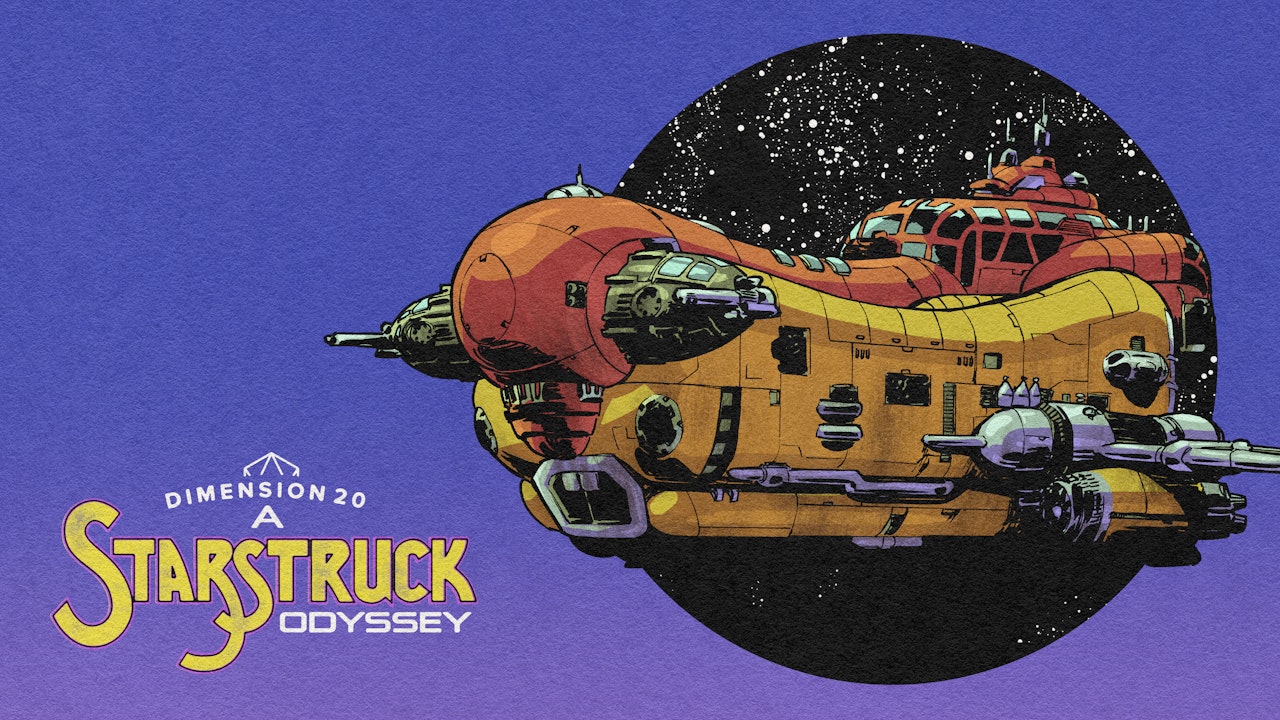
    Welcome to Ben Recommends. Today, I want to talk about Dimension 20’s A Starstruck Odyssey.

    What is it?

    I’ve mentioned Dimension 20 and other “actual play” RPG shows on my D&D blog posts before. These days, Dimension 20 is my favorite of the bunch (more on that later). For the uninitiated, these “actual play” shows are a bunch of people playing a table-top role-playing game (TTRPG) on camera.

    Naturally, this isn’t something everyone will be interested in. You might love TTRPGs but watching someone else play will do nothing for you. You might have no experience in D&D or its contemporaries, and that lack of knowledge might cause the inherent limitations of the content to fall flat. However, there are tons of people who are fans of these shows despite never dabbling in RPGs themselves, so it might be worth a try regardless.

    Dimension 20 began after long-running Internet content creation company CollegeHumor picked up Brennan Lee Mulligan, featuring a mix of new and old CollegeHumor alumni as the cast (seven total, Brennan and six players). Unlike many other actual play shows, Dimension 20 has a staffed production team making their battle maps and miniatures and a set number of episodes each season (usually 17+ episodes for the core cast, and between 6-10 for “sidequest” campaigns with guests).

    In this specific season of Dimension 20, they used a heavily modified version of 5th edition D&D to run a crazy, galaxy-spanning adventure full of exciting shootouts and climactic space battles. This is the core D20 cast at their absolute best (yet). It is one of the most entertaining and compelling TTRPG shows I’ve ever seen.

    What do I like about it?

    Dimension 20 has explored a vast selection of settings since their first season. In Fantasy High, we have teenage heroes in a strikingly modern setting; the Unsleeping City is an urban fantasy in New York City; Escape From the Bloodkeep is an adventure about Not-Sauron-For-Legal-Reasons’s death and his lieutenants and advisors trying to keep everything they’ve fought for (evil) from collapsing.

    A Starstruck Odyssey is their first foray into the stars, and it couldn’t have been a more perfect setting for them to explore. It is an age of anarchy and the chaos gremlins are off the leash. The electricity of their first time at a table together since COVID-19 began fuels the game and their energy never comes down.

    It’s fast paced. It’s hilarious. I’ve never had more fun watching a show.

    How does it compare to similar shows?

    I mentioned earlier that D20 is my favorite show of its kind, and that’s for a reason others might view as a mark against the show.

    I like Dimension 20’s production. My longest-standing gripe with Critical Role (and even my own D&D games) is when the party waffles around, uncertain of what to do next. With Dimension 20’s limited seasons and driving narratives, there’s no time for that aimlessness. It is more of a “show” than Critical Role: less of a group of friends just recording their game and uploading as-is. But I’ve come to appreciate that artifice immensely.

    There’s less room for a long-term character reveal or mysterious overarching plot that spans several months of games, but for the trade they gained a show that I find vastly more watchable. I can actively view D20 with no distractions. Critical Role I generally listen to when I work or build maps for my own games. Where you fall between those two comes down to personal preference.

    Potential Cons

    There are some facets of this show that might be a dealbreaker for you.

    • Beyond the 1st episode, the show is behind a paywall on dropout.tv

    I think it’s entirely fair for the company and the team behind D20 to ask for compensation for their show, of course. But Dropout isn’t likely a service you’re using if you haven’t already seen A Starstruck Odyssey. I personally think the service is a great deal, and there’s other fun shows on there, but that barrier to entry might prove too high for some. (But! Those three other seasons I mentioned before? All of them are entirely available for free on Youtube!)

    • These are long episodes

    And the length is really variable. I didn’t have trouble keeping up week-to-week (or catching up on older seasons while I was unemployed), but there is a lot of content here. It might be unfeasible, even, depending on your schedule. But if I didn’t think it was worth the commitment, I wouldn’t have written this post.

    That seems to be the most critical and compelling talking points I could conjure. I’d love to hear from you if this post convinced you to give the show a try. As always, thank you for reading! It’s a tough galaxy out there, but someone’s got to live in it. It might as well be you!

  • D&D: Presentation and Assumption

    D&D: Presentation and Assumption

    Dungeons and Dragons leans pretty hard into stereotypes when it comes to encounter design. When a hulking, plate armored warrior with a greatsword comes lumbering out from behind a door, you don’t expect them to be able to dance their way out of a fireball unscathed. When a frail, elderly wizard is in your grasp, it’s the easy assumption to think they won’t be able to worm their way out of a grapple without magic.

    And this isn’t a mark against the system – this is a good thing to have. Even less detailed descriptions can still communicate the shorthand for these ideas. I don’t need to say anything more than “rogue” to fill a player’s mind with a dozen assumptions about the opponent’s appearance, demeanor, and tactics. Nearly everyone in the world knows what a dragon looks like and what it’s usually capable of.

    It’s a system strength, but it can trip up an unwary DM when they deviate from these stereotypes to present something unusual or uniquely challenging. So, to alleviate the potential for frustration, here’s some things to keep in mind when it’s time to exercise your right to break the damn rules however you like.

    Symmetrical vs. Asymmetrical Opponents

    Recently, I found a retrospective video about the differences between Dragon Age: Origins and Dragon Age II from a former Bioware Executive Producer, Mark Darrah. In the video, he describes a change in the development philosophy of the two games’ combat systems. In Origins, the combat was symmetrical: the enemies had the same abilities you could access through the talents of the classes. In Dragon Age II, they flipped the system into asymmetry with the characters’ abilities doing much more damage than the monsters’ attacks with adjusted health pools to match (Mark Darrah even mentions a specific problem where some of the companion characters might become hostile to the party and deal excessive amounts of damage, more than they’re built to handle).

    At first, I didn’t realize how this articulated a bias I had buried into my subconscious with D&D. Many of my old and current players, and even when I am a player myself, expect humanoid enemies to have symmetrical rules to the party, but with monstrous enemies I assume they have asymmetrical abilities. I inherently designed encounters with this in mind, only breaking the rule when designing a significant boss (such as recently adding Blood Hunter class features to a Loup Garou as a boss). In the first games I ran, I had players express frustration with humanoid enemies doing things they wouldn’t be able to do – perhaps this was a learned behavior that became part of my toolset.

    Regardless of where it came from, it’s been an unspoken, unwritten, informal rule at every table I’ve sat at. So, how do we break it?

    The Power of Presentation

    Breaking these norms can be an important part of designing an adventure, and it all comes down to ensuring that these peculiarities are implied beforehand. If a king tells the players about a rival nation whose soldiers have all sworn themselves to a dark entity, and now they have access to dark magic that has left the king’s army unequal to the fight, you’re more than halfway done. The players know to expect unusual stuff from the run-of-the-mill soldiery of the enemy faction. A classic, normal looking fighter might suddenly cast a spell of some kind! Awesome! It might go without saying that higher ranking soldiers have greater magic to hand, and the enemy ruler might have the greatest level of these powers of them all.

    Providing information to the players that doesn’t give away all the details about their foes, but prepares them for the abnormal abilities those enemies will have is invaluable. There’s a middle ground between surprise and perfect knowledge that’s ideal for the first few encounters with a new type of enemy. And it doesn’t always need to be well ahead of time, at the adventure’s introduction – it could be as late as when the opponent appears when initiative is being rolled to give those hints.

    It seems too-obvious, right? When you introduce a monster the players haven’t battled before, you might describe its long limbs and claws to give them clues as to how it will battle. Yet, when a humanoid opponent is introduced with something unusual in their statblock, a moment might not be taken to describe the arcane focus dangling at their hip just beside their sword scabbard. An aberration using magic to appear like a humanoid might be skilled enough that the characters can’t see all the through its masking magic, but they will be much happier knowing there is something off about their foe.

    With these tricks, you’ll be able to keep your players on their toes, but in a way that feels more fair and balanced. As always, thank you for reading. Good luck out there, heroes.

  • Pay-to-Win Video Games

    Pay-to-Win Video Games

    One of my earliest memories is about video games. I remember waking up one morning, I must’ve been around four or five. It was a Sunday, I think, and both my mom and dad were asleep, my brother was asleep. And, usually, I’d wake someone up to get breakfast made or something. Instead, I hurried over to the TV and the Nintendo 64, booted up Super Mario 64, and played. When my mom finally got up, she was so surprised to find me out there playing the game, having booted it all up on my own.

    Video games are an entirely different beast these days. Back then, you bought the game, you had it. That was all there was to it. I remember my brother and all his friends were way better at Super Smash Bros. and NFL Blitz N64 than me.

    None of them paid for that, though. They’d played the games more, they were older, and given time, I could match up to them no problem.

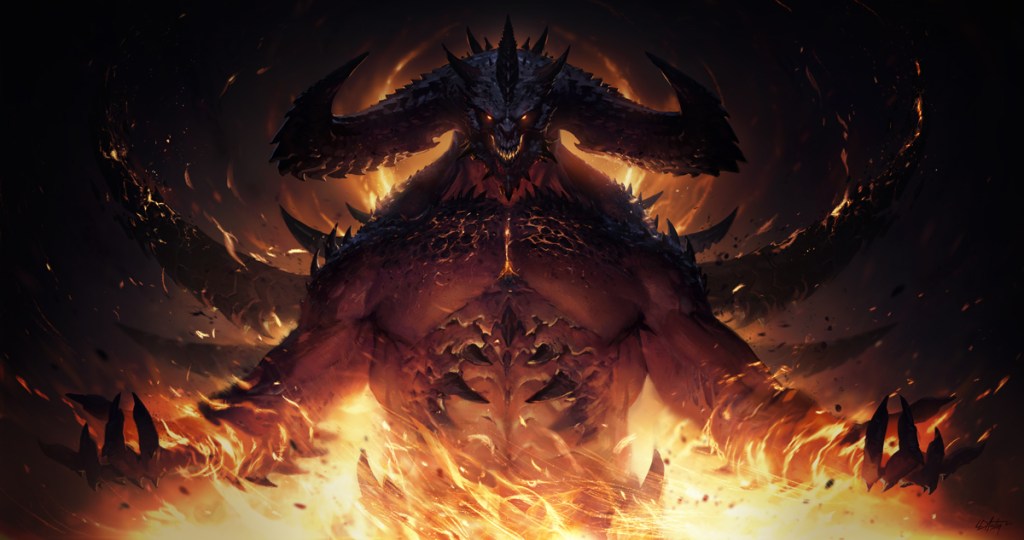
    Last week, Activision Blizzard released Diablo Immortal, and almost everyone I know is talking about this predatory pay-to-win video game. For those who don’t know, the math indicates that if you want to pay to get the best gear, it costs around $110,000 to max out a single character through the “legendary gems.” If you don’t want to spend a cent? About 10 years of daily gameplay. Assuming nothing more powerful gets added to the game from its launch state.

    Disgusting.

    Abusing Psychology

    These games use a lot of predatory tactics to get their players to throw their money at the software, no matter how miserly they might want to be. One of the most widespread tactics in games nowadays is utilizing your player base’s “Fear-of-Missing-Out” (FOMO). These games have cosmetics and powerful items that vanish after a set amount of time. Think you might want to use that cool superhero inspired costume? Buy it now for $19.99! Or try to gain enough in game currency in the one week its available to obtain it for “free.” It might never be available for purchase again.

    They also create these “daily bonuses” you “earn” by opening the game every day. They want booting the game to be habitual. These bonuses are usually redeemed in these games’ shops, to make opening them a more usual interaction for their players. Diablo Immortal, naturally, does this. Even worse, the game has a “battle pass” with a free track, a premium track, a super-premium pass with exclusive cosmetics, and an ability to outright buy the ranks of the pass. You buy it for $5, but if you fail to complete the pass, you miss out on the last of the rewards you didn’t earn at the end of the season. They’re just gone. Unless you spend some cash to boost through the last few levels.

    The battle pass purchase in Diablo Immortal also gives you extra inventory space – but just until the pass expires. This first one is gone on July 7th. And speaking of expiring rewards you might’ve paid for – there’s a “Boon of Plenty” system that grants daily login rewards and a few other perks. And if you don’t login on one of those days, those items that you’ve paid for just vanish into the ether. That’s worth $9.99, right?

    These games also use a secondary currency for their purchases. In Diablo Immortal, you spend your money on orbs that you then use to buy other items. Naturally, these orbs are sold in bundles that do not line up with the prices in the shop. The first time you play the game, you get a special deal to buy a box that gives you 60 orbs for $0.99 – but there’s nothing in the shop available for 60 orbs.

    Not to mention the elephant in the room: these games are targeted at children first and foremost. I remember when iPhone games were just becoming a thing. Seemed like there was a story in the news every week about some kid who’d spent $500 or more on a game without their parents realizing.

    Can Pay-to-Win be Ethical?

    There are some games on the market with features that aren’t as immediately pay-to-win as buying stronger units or better items than are available to free-to-play gamers. These games are often dubbed “pay-for-convenience.” People like to overlook that such a moniker betrays the truth of the systems: if the developers of the game have a financial incentive to make the game inconvenient, why wouldn’t they? If you can pay to skip levels, they have a financial incentive to make leveling as long and monotonous as possible.

    If, say, there’s a game that only has the same level of gear available for free-to-play and premium players, they have a built-in incentive to ensure that obtaining that gear is frustrating and repetitive, to push people toward a purchase. Why run the same dungeon, fight the same boss, dozens or hundreds of times, when you could swipe your credit card and be done with it? Be as strong as you can be?

    Even in a game like Lost Ark, which equalizes gear in a player-versus-player setting, still allows you to specifically purchase an advantage over other players. You can buy the items needed to reach the highest gear potency, or spend weeks, gated by daily timers killing the same bosses for the items to drop naturally. But doing the same thing over and over isn’t content. It’s a grind.

    Some games only release purchasable cosmetics, which can be a much more ethical model, but even then, in a lot of these games, having a cool-looking character is the goal of the endgame. Why make that very interesting set of gear available from in-game activities, when you can charge $20 for it?

    This gets even more absurd in another game from Activision Blizzard that I (until last year) played a lot myself. In World of Warcraft, you have to pay a monthly subscription to play the game (for the ongoing development of the game, allegedly), buy each expansion when it releases to access that part of the game ($40 minimum purchase every two years), and then there is a cosmetic shop that allows you to buy armor sets and mounts and pets for varying prices, and then there’s a way to exchange money for the in-game currency, which you can then use to buy services and goods from other players.

    It became obvious that the majority of work was going into these premium cosmetics instead of the ones added to the game. They’d add a mount with a dozen recolors spread out over several acquisition streams, and then a truly unique mount with a special skeleton to the shop for more money than you pay every month to play the game.

    Buying gold for your real money also lets people buy themselves through the hardest content in the game, obtaining achievements that normal players might work at for months without success. A rich player could buy themselves to “Gladiator,” a special PvP rank that comes with a unique mount each season, by buying gold for cash. A lot of people like to combat World of Warcraft becoming pay-to-win with the WOW Token (the option to exchange your real life money for the in-game gold) by reminding everyone that people bought gold or just straight-up exchanged money for these carries before the token was introduced, but that doesn’t excuse anything. Blizzard could have hired more employees to moderate their game to crack down on these actions that were clearly against the game’s Terms of Service, but instead they cut themselves in on the profit and legitimized it all at once.

    So, no, I don’t really think Pay-to-Win can be ethical.

    Becoming the Product

    Some people play these games with the stubborn insistence that it’s alright because they aren’t spending money. They aren’t aiding in the perpetuation of this predatory business model with their wallet.

    Instead, they’re doing it with their time.

    They become part of the product doing this. They become the fodder that high-paying “whales” (people who spend an inordinate amount of money on these games) are paying to smile satisfied at for having paid for their rewards rather than enduring the grind the free players suffer through. These are the players that get rolled over by the whales in competitive game modes, much to the spending player’s delight.

    The science has been around for a while: the vast majority of these games’ player bases never spend a dime, then a small percentage make a few purchases, and then the whales, a fraction of a percent of the player base, subsidize the entire game by spending thousands, such as the person who spent $14,000 dollars on Mass Effect 3’s multiplayer mode. Such as the streamers playing Diablo Immortal or Lost Ark and dropping thousands. These games need to exploit these players to financially justify their existence and all the time and money that went into their development.

    The Genuine Answer

    It’s clear by now that these games will never self-regulate. It is just a fact of business that these companies are always going to push the boundaries to obtain more money this quarter than the last. The only thing that stops them is legislation.

    Belgium and the Netherlands have laws preventing these games from obtaining widespread appeal in their countries. Games with “lootboxes,” where you spend money to obtain random rewards of vastly different value, are correctly identified as gambling mechanics and disallowed. These games must either adjust their mechanics, or as is the case for Diablo Immortal, never release in those two countries.

    And the gamers there are thankful for that.

    Additional Viewing

    Here’s an additional video if you are interested in learning more about this topic. This is a game developer conference discussing the exact methods they should use to entice “whales” into their games.

  • D&D: Your Boss Needs Minions

    D&D: Your Boss Needs Minions

    In my Running Dragons blog, I briefly mentioned the danger of an imbalance in the “action economy” during a boss encounter. A lot players coming into D&D might have their expectations for boss fights shaped by video games, where one extremely strong enemy takes on the party despite a numerical disadvantage. For your bosses in D&D, this is suicide.

    Even the game’s own mechanics for making this more available fall short. “Legendary actions” (special moves the boss monsters may take at the end of other creature’s turns) only go so far: a lone dragon with only the legendary actions listed in the official statblock will be destroyed by an appropriate level party without a problem. Hell, the two dragon encounters I’ve run in my current game both featured clusters of minions, and they were a tier above the players – at level 8, they fought an adult black dragon (a CR 14 monster), and just a few weeks ago, at level 14, they battled an ancient black dragon (a CR 21 monster). The party slayed both dragons with only one casualty between the two encounters (during the latter, and easily reversed with a Revivify).

    Part of that is because of some of the shortcomings that exist in the Challenge Rating (CR) system that we’ll get into in a moment. My table also consists of a lot of bona fide gamers that work hard to conserve resources and adequately prepare. They knew well ahead of time what kind of dragon lair they were walking into, and both times obtained some tools to mitigate the damage it could deal with its breath attack. All this to say that my advice here will not be good advice for every table: it could be that where I see failure in challenge ratings, they’ll be perfectly workable for your table. A crew of careful, calculating players, however, might want for a bit more difficulty when they roll for initiative.

    Here’s some tips to give them that.

    Reexamining Challenge Rating

    The first things to take to heart when trying to make a more challenging encounter for D&D is to take CR less seriously. It can be very useful for determining whether a creature is an accessible foe for your players at their level, but it doesn’t mean it can hold its own without allies. In the Dungeon Master’s Guide example of this, they mention a Rakshasa (CR 13) being something that might prove more difficult than you think against a party with its limited magic immunity trait, but with its low pool of hit points, any well-balanced group will annihilate one of these fiends no problem. I think the Rakshasa works best as a late tier 2 antagonist, for a party of 8th to 11th level, despite the spellcasters at this level having no ability whatsoever to damage the creature without some kind of physical weapon.

    And! With minions included in an encounter with a Rakshasa, your spellcaster players will have a valuable task to undertake once they know of its magic immunity while the more martial characters deal with the fiend himself.

    Perhaps the worst problem the challenge rating values suffer is how hard they crash the second your players obtain combat-oriented magic items. That fighter finding a +1 shield? Your barbarian getting a +1 greataxe? Your wizard finding a wand of the war mage? Banded accuracy is thrown out of a window.

    Your fighter is suddenly much, much more difficult for CR-appropriate creatures to strike. Your barbarian and wizard are both now landing their attacks much more often than the game was balanced around. Consider this: the scaling component included in the player characters’ power, their proficiency bonus, scales one point every four levels. An item granting them a +1 bonus accelerates them that much further ahead.

    Now, I’m not advocating for holding these items back from the party. Magic items are a lot of fun to have – especially homebrew items that are on the cusp of breaking the game. It’s just another factor that contributes to CR faltering in the mid-to-late stages of the game.

    Ultimately, I think bosses can comfortably sit a tier above a party playing strategically in combat and provide a healthy challenge. There’s a few cases that can cause that to fall short – spells that will pancake the player characters or attacks that deal an amount of damage they won’t be able to play around, but I think it’s easier to adjust those outliers than to try and scale a numerically-appropriate monster up to boss viability. I suppose that brings up another question …

    How Powerful Should the Minions Be?

    I generally include a creature or two very close to my boss’s listed CR as their lieutenants. In my ancient dragon encounter, I included a Blue Abishai (a CR 17 creature) as the primary lieutenant, with a homebrew dragonborn fighter opponent that I set at CR 11. The dragon and the abishai both began the battle away from the room’s entrance, hidden in the darkness of the cave, so the fighter and a few guard drakes (CR 2 creatures) were present to oppose the party while the big monsters got into position.

    The party ended up successfully locking the fighter lieutenant down with a Banishment spell, removing them from the battle until well after everything else had been handled. The abishai used its Greater Invisibility to fight unseen, but the players managed to break his concentration and used a Stunning Strike to keep him grounded long enough for his elimination. Even the additional bonuses I gave my dragon – an antimagic darkness zone lair action, an ability to use an action and legendary actions to heal if it was at its hoard, an immunity to movement speed reduction when using its Wing Attack legendary action – couldn’t make this monster powerful enough to battle the party alone.

    Create an array of additional enemies for your boss with a variety in their challenge ratings. Give them some chaff, weak monsters that can be eliminated with well-placed area-of-effect abilities. Give them an ally that’s dangerous, but wouldn’t be a problem without the heavier hitters in the room aiding them. And give them a powerful lieutenant almost as dangerous as the boss themselves to force a division of the party’s attention.

    Building Complex Encounters

    Another option for adding difficulty to an encounter is to ensure the goal isn’t just reduce all the enemies’ HP pools to zero. If every battle in the game runs that way, it can get stale regardless of the challenge you’re building. One of my most successful encounters in this campaign was earlier on (I believe they were around level 6, it was well over a year ago now). They had infiltrated the compound of an extremist group of zealots bent on using an ancient magic ritual to call radiant fury down on a village the party sought to defend. In that battle, I included a cleric NPC enemy as the boss, and calculated her to be about CR 9, gave her a martial ally based on an adjusted Champion statblock (down to what I thought to be CR 7), and a handful of CR 2 swordsmen and several priests. These priests, however, were first-and-foremost working on the ritual. The party needed to split their focus on interrupting the magic and defeating the dangerous enemies in the battle. Chapter 3 of the Dungeon Master’s Guide has several other ideas for diverse encounter goals.

    The trick to these kinds of encounters if to ensure there’s a clearly defined win condition for the players – but not necessarily one that you’re responsible to prescribe. Your players can deduce a lot about your encounters on the scant amount of information each dice roll will tell them. They can calculate where the enemy’s AC might lie, they’ll know when a foe is putting out more damage than they can sustain for multiple rounds, and they can react accordingly.

    That said, one of the hardest things for newer players to learn is when they should run from an encounter. There are some situations that truly become untenable, and unlike a video game where everything is usually balanced around you being able to overcome it with the tools you have to hand, some battles in D&D might just not be feasible for you to win. I was in a game once where at level 4 we came across an ancient white dragon (CR 20). I had the most experience of all the players at the table, including the DM (who had rolled the encounter from his module’s table) and I immediately knew we needed to split. If it weren’t for a successful saving throw and a ring that conferred resistance to cold damage, one of our party members would’ve been killed outright by the breath weapon. (But we all made it out with the clever use of an illusion and Rope Trick.)

    A Never-Ending Education

    By the very structure of its rules, D&D is a more combat-oriented tabletop RPG than other contemporary systems. Encounters are something you as a DM will spend a lot of time cobbling together. All of your dungeons, your factions, and your wildernesses will be expected to have their own unique array of enemies to overcome. And designing these battles is a process that will never run out of things to teach you, and not just because every table is different.

    At my table, it would be blasphemous were I to on-the-fly adjust an encounter I designed and make it easier. That doesn’t mean that design stops when initiative is rolled for every party. If you had enemies in reserve, but the players are getting thwomped just fine already, maybe they don’t need to show up. Maybe that high level spell slot lingering up their foe’s sleeve got used on something before this battle. My advice in these instances is to keep any of these adjustments under wraps, and whatever you do, don’t begin making tactical blunders that the enemies don’t have a justification to make. Nothing has killed a mood at my tables quicker than them being able to tell when a battle got easier.

    Don’t be afraid to try new things with your encounters. If it doesn’t work, that’s okay. There will always be another roll.

    As always, thanks for reading. Good luck out there, heroes.
  • RPGs: Introducing Your Villain

    RPGs: Introducing Your Villain

    Villains are integral to any great narrative. Whether they stand atop a battlefield and glare at your players, or they threaten them directly for a slight imposed, or if they are nothing more than a whisper on the lips of their soldiers in their final moments, your villain matters. But they need to do more than strike an imposing figure – if your characters never meet the villain, why would they care about him? Why would the heroes throw themselves into danger to stand between them and their goals? Why would their name ever pass the player’s lips with a hint of trepidation?

    There’s a delicate balance to strike, however. You could have the villain show up, blade (or spellbook) in hand and have him thrash your players in a deadly encounter with the intention being your characters performing a narrow escape – but that’s … risky. Playing through a no-win scenario (or a scenario with an unclear victory objective) often leaves a bad taste in players’ mouths. Once you let them know that the villain has hitpoints, they’ll think they can kill him. And what if the fight goes poorly? How many characters will they lose in the attempt?

    Or, even worse, what if they succeed? What if your villain who you’ve spent weeks preparing, whose plans will be the focus of the next several months of sessions, dies at their hands? What if they become the big damn heroes, the ones they’ve been working to become due to a turn of the dice?

    But your villain must do something. There must be stakes. In most stories, the heroes need to lose before they can win, but there must be a way for the players to accomplish some kind of victory; otherwise, it won’t incite fear against your villain, but frustration against the whoever’s behind the screen.

    So, what do we do? How can we pull off something this delicate?

    Defining the Stakes

    Number one: clearly define a path to success. If they can’t win in a fight, make it clear from the beginning – cause something that makes it clear they need to flee. Give them villagers to rescue and mooks to fight, don’t throw the villain and his lieutenants at the party. Two, don’t force the villain onto your players. Not yet. Have his stats ready but leave the decision to roll initiative to the players this time. The heroes aren’t even on your villain’s radar yet. Three, take something away from the players – now, I don’t mean steal their magic items or their armor; in fact, don’t try to take anything that has to do with playing their character away. Put a mentor or other NPC that the players have come to trust and love in mortal danger.

    As I mentioned in my Beginning the Adventure blog, I like to leave the first few levels of my games very open-ended. I lay seeds all around with various enemies and storylines to pursue, then either pick one the players have become invested in, or one that I’ve wanted to flesh out.

    In the game that went on to inspire Ebonskar, I focused on using hobgoblins. The eponymous general approached the game’s starting town, a fixture of the campaign for six or so weeks of play full of fun and loved characters, and he set the town to the torch. The characters woke in the early hours of the night to the scent of smoke and bright flames licking the buildings all around the home they’d come to know. People were screaming, the heat was oppressive, and hobgoblin soldiers (several types of which they had encountered in the early stages of the game) patrolling the streets with bloodied weapons in hand.

    This scenario met all my earlier criteria. The objective was immediately clear – one, save as many people as they can and escape the town before it’s death throes take them with it. Two, the general never even acknowledged the party until the end of the event, and by then there was a street covered in burning debris between them and him. Three, the town they’d spent most of the campaign with was reduced to ash, and only the NPCs they managed to save survived.

    When morning came and the villagers looked out at the burnt-out husk that had once been their home, the characters had a villain they hated, and they had become heroes to all they had saved. And as they learned what the hobgoblin general was after, they did all they could to stand in his way.

    The Visage of Villainy

    Another thing to consider is your villain’s appearance. Your players will assume a dozen things from that first glance they get of their foe – what kind of capabilities they might have, the way they might fight, perhaps even some guesses at the kind of things they value or idolize.

    From that first look at Ebonskar across the burning field, they saw him bedecked in black plate armor, they saw that nearly featureless ivory mask with its painted lines, and they saw his greatsword, sheathed on his back with no shield in sight. They knew immediately he was an in-your-face swordsman, aggressive and determined to strike his foes down. They’d learned a lot about the usual hobgoblin statblock, which meant the hints were there for how that might be emphasized for a soldier of his station.

    If your villain is a more subdued flavor of evil, present the places that disguised devilishness shines through. In my current campaign, an early-game villain was a zealot that had co-opted a benevolent deity’s doctrine for hateful and destructive motives. She looked disdainfully on the nonhuman members of the party – and the players were ecstatic when they finally had the chance to strike her down before she could accomplish her goals.

    This is your excuse to steal the spotlight for your villain. The players will have their moments, and they will be all the sweeter with a clear picture in their minds of their foremost opposition. Portraying a villain my players came to truly despise allowed them to latch on to pursuing their defeat both in-and-out of character. There is something to be careful of with that level of investment, however …

    Portraying Adversaries Vs. Being Adversarial

    As the game master, your role is to control all the bad guys. Sometimes you get to toss in a good guy too, but you’re almost entirely relegated to the forces opposing your heroes. But that doesn’t mean you’re actively working against the party. It’s a collaborative medium, and there’s a delicate balance between challenging the players and battling them.

    It’s something that can creep up on the table – you won’t always notice when it’s happening. A quick as-you-go rule of thumb is to remember that while you are trying to play the bad guys as faithfully as you can, you are at the heart of it all rooting for the players to succeed.

    Now, I allow the dice their seat at the table unshackled. If I were playing at a physical table with my current game, I’d be rolling in the open. But the players can still hear the excitement in my voice when they throw a wrench into the carefully laid plans of my antagonists. I’m always ready for something crazy to happen that I never expected. I’ve even played into some jokey antagonism when they slay one of the big monsters in a battle or lock it down with a loss-of-control effect to communicate how much I enjoyed their maneuvers to accomplish those ends. My players rise to the challenge time and again, as I set them against harder and harder foes week-to-week.

    I will often acknowledge it outside of game when just hanging out with my players, or even allow myself a little slip to say something to the effect of “we’re not out of the woods yet” when the tide is shifting into their favor in a battle. They know I want to see them overcome the deadly opposition I’ve designed, and knowing I’m in their corner while still allowing the dice to have their say allows the relief of every hard fought victory to be something the whole table shares.

    For my next post, I’ll be throwing together some tips to ensure you can construct a truly incredible encounter when it does finally come time to face those villains down. Until then, thanks as always for reading. Good luck out there, heroes.
  • RPGs: Beginning The Adventure

    RPGs: Beginning The Adventure

    Running a tabletop RPG for my friends is the most instantly gratifying creative experience I partake in. Each week I get immediate feedback on worldbuilding, narrative construction, character development, arena building, and several other things from people in a collaborative setting where the implicit goal is improving the experience for everyone present.

    I’ve written a handful of blog entries already about my love for this hobby, but none of them have provided much information that’s useful to begin running a game. That’s the goal today. I’ve started up at least a dozen games since my first time sitting behind the screen over a decade ago, two of which have actually reached a conclusion (which is rare, believe me), and I’ve thought a lot about ways to begin a game well.

    Here’s what I’ve got.

    Before the Beginning

    There’s a lot of things to consider before inviting everyone over and setting out the dice. The foundation, the first question, is, simply, “What is the adventure?” What is the driving action that throws the players’ characters together? The answer truly depends on how much work you want to do before the game begins. Running an adventure entirely from scratch (a “homebrew” game) isn’t right for every game master, and running from a published adventure is not inherently worse than a homebrew campaign in any way. I’ve run both in my tenure, using the Tyranny of Dragons two part module back in 5th edition’s infancy, and it was one of the two games I’ve run that ran to its conclusion.

    One of the best games I’ve had the privilege to be in as a player is my friend’s current game that started as a run of the Rime of the Frostmaiden module (which has now shifted into some homebrew after we reached the module’s conclusion and our DM wants to see if he can take a game to 20). Neither style is intrinsically more valuable than the other. It will all depend on the table.

    Where’s the Beginning?

    The backdrop for the start of your adventure is immensely important. For some players it will grow into a place that feels like home. Published adventures do a lot of legwork here, but even they can be improved.

    My best beginning towns have all provided a handful of smaller stakes hooks to pursue and investigate. I use them to determine what the table as a whole is most drawn to. In the game that inspired Ebonskar, sightings of hobgoblins had been noted by the town and the party had latched onto it pretty well – but their primary antagonist at the time was a hag that had just stolen a child.

    That’s not to discount a more linear beginning experience. When I ran Tyranny of Dragons, I used the opening straight from the book, with the party arriving at Greenrest as it was razed by the Cult of the Dragon and their blue ally in the sky. There’s several things I’d do differently if I ran that module again, but a lot of that attack on Greenrest would survive the transition.

    One of the most important things, unless your entire campaign is set in a big city, is to start somewhere that’s a shithole. My best towns – Borno’s Crossing, Saltwallow, Longmire – have all been in a decades-long slump. They’ve been forgotten towns that were once on a major roadway now bypassed by a trader’s highway or set in a forbidding locale that made them undesirable to visit. It helps to have that humble start, and it gives a lot of room for that first settlement to grow in response to the players’ actions. Even in big-city campaigns, beginning in the worse parts of town still aids in that feeling of becoming too big of a fish for the pond.

    Session Zero

    The first time you gather your party to venture forth, you really shouldn’t do much venturing at all.

    Seriously.

    Getting everyone together to lay the foundation for the game is massively important. It matters more than all the prep work in the world. It gets everyone on the same page, and can help you massively understand the type of game you’ll want to run for your table.

    You need to discuss what everyone’s idea for the game is. Do they want to be heroes that start from humble beginnings that go on to save the world? Do they want to fight liches and hydras and dragons, plumbing the depths of the darkest dungeons that ever were buried and forgotten? Or do they want to plan out the best party and make inroads with the nobility to affect change on a systemic scale?

    D&D might not be the perfect fit for every type of game out there. If you guys want to run something focusing less on delving into dungeons and swinging swords and spells at monsters, this is a good time to discuss other game systems.

    And you need to discuss what is and isn’t on the table. One of my current players has arachnophobia and asked that I avoid spiders as much as I could, while giving me the pass to use them occasionally. When they do show up, if he just says the word, I’ll stop describing their spindly little legs racing up and down the sides of the cavern walls or how restrictive the webbing is. It’ll be glossed over with no loss to the game. I have a few other things that aren’t going to be in the games I run, some rules that are hard and fast, and others that are malleable, at least to a degree. Listen carefully and take notes.

    Once you’ve got that squared away, you’ll be ready to truly begin your game. Just, one last thing …

    A Time and Place for Taverns

    Cliché, sure, but for good reason. Don’t let anyone rag on you for beginning your game in a tavern. It can be, and is, a perfect opening for many different games. I’ve started some that way, started many others, and some of my favorite times as a player began in taverns. Just because it’s been done before doesn’t mean it shouldn’t be done again.

    A lot of the alternatives I’ve seen presented online seem like going out of one’s way to avoid the tavern. Some ideas take a really specific group of players to work well. But even those aren’t without merit. Beginning in the midst of a siege with the players all needing to take up arms can be exciting! In Dimension 20’s Fantasy High, the players’ characters didn’t interact with one another much until they all ended up getting detention. (Which, when watching I figured they’d all be told beforehand to try and land themselves detention day one – but that still doesn’t detract from how effective it was to group the PCs together!) Even Critical Role’s 2nd campaign began in a tavern – if Matthew Mercer can “get away with it”, then maybe he’s not really “getting away” with anything.

    And, hey, maybe during session zero your players decided they just wanted to have known each other beforehand anyway.

    Before You Go

    A few last-last minute things I wanted to include here.

    First of all, remember that as the game master, you are still a player too. If you aren’t having fun, there’s something wrong. Find whatever you need to find to alleviate that.

    Second, there is a lot of times that bending or ignoring a rule can provide a fantastically cool moment. Go for it! The rules are guidelines, right? And everyone will talk about it forever! The inverse, however, is also true. There will be times that you need to enforce the rules, things that are too janky or overpowered that they can’t become part of the game. Try not to beat yourself up over it, even if you get them wrong on either side.

    As always, thank you for reading. Good luck out there, heroes.
  • How Elden Ring Could Perfect the Soulsborne Formula

    How Elden Ring Could Perfect the Soulsborne Formula

    I’ve been following the Soulsborne series since I was in high school. I didn’t pick up the series at the time, busy as I was with school and a few other games (spent a lot of time playing MMOs in high school), but a friend of mine had the game and played through it at my house, the go-to hangout spot. Just watching, I knew the series was something special. But I was of a mind that I’d get frustrated battering my head against the same bosses over and over again, and didn’t give the game a shot.

    When Dark Souls III released, I took the plunge. My worries of frustration were immediately snuffed. The game was fair first and foremost – it wasn’t like the major boss encounters in the MMOs I was playing, where bad performance from one group member could sink the whole attempt. It was just me and the boss. If I died, it was because I did something I shouldn’t have.

    Seeing how much I’d fallen into the game, a friend of mine gifted me Bloodborne, and I slammed through it hungrily. Through both games I settled into fighting evasively with a big sword, weaving around attacks to find my openings.

    That playstyle (and my lack of passion for the aesthetic) led me to bounce off of Sekiro, but spectating alone proved enough for me to appreciate the game. And hopefully I’ll come around on it eventually and give it another go.

    That response to Sekiro made Elden Ring’s announcement feel like the exact thing I wanted to hear from FromSoftware. It’s been my most anticipated game since 2019, and a month ago I finally got my hands on it.

    It did not disappoint.

    A Perfect Storm

    It’s been a week since I finished my first playthrough. And I do need to clarify first – I definitely started another character the following day and if my six completions of Dark Souls III are any indication, I’ll sink several more hours into Elden Ring before I set it aside entirely.

    I’m not here to discuss the story, though. No interest in spilling spoilers today. Instead, as you might have guessed from the title, I want to highlight the game’s design.

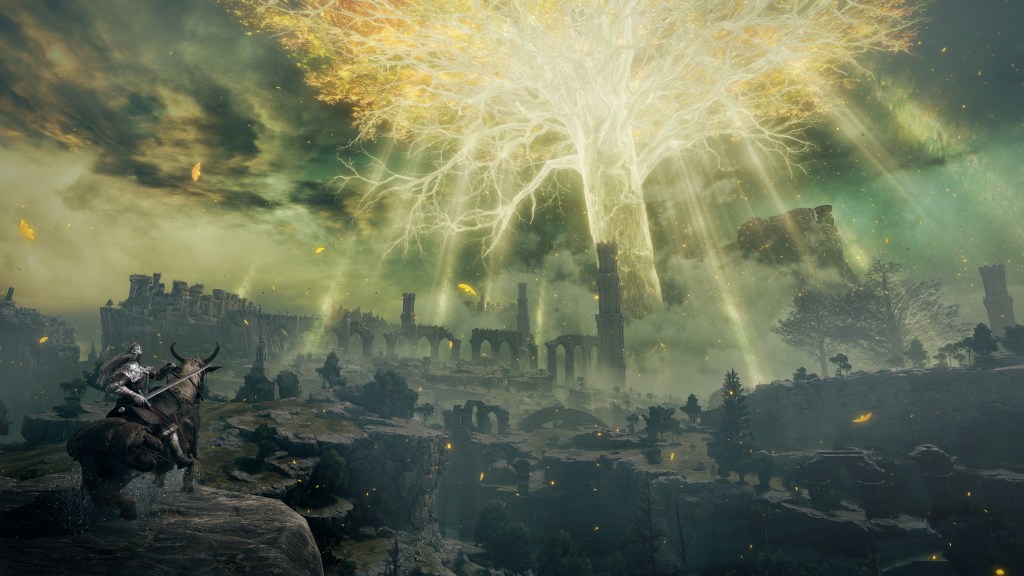
    Adding an open world to Elden Ring could’ve been a mixed bag. I think, ultimately, it’s vastly more beneficial than detrimental to the game. In previous Soulsborne entries, if you came to a difficult boss, it was a roadblock. There might be some optional areas, but for the most part, you needed to break down the barrier before your story could continue. Now, it doesn’t have to stall out your experience.

    I know the first time I encountered our friend the Fell Omen, I was not yet good enough at the game. I wasn’t used to the delays in the enemy swing times, I was dodging far too early, and I built to wield a big sword in two hands so I wasn’t parrying either. Margit whooped me. In another Souls entry, I might’ve been more prepared for that first boss, but in Elden Ring I wasn’t.

    But, after an undisclosed number of YOU DIED screens, I turned away from that fog wall and opened that map up again. I’d basically gone straight to Margit from the opening of the game. What else was out there anyway?

    A whole hell of a lot. I got better at the game, I leveled up, and I came back and got my revenge.

    There’s two ways to look at that experience. You could say that the difficult spikes in the game’s primary progression path are uneven to justify the open world. I prefer to look at the game as offering more paths to explore than I expected. I know people that returned Dark Souls III after hitting a roadblock on Iudex Gundyr, the first boss. If those players give Elden Ring more of a chance since they can travel elsewhere, it can only be good for the game.

    Open World Done Right

    For the most part, I’ve cooled on open-world style games. Every now and again, one will come along with innovations or a setting that catches my interest, but there’s a dozen Assassin’s Creed games and only one Breath of the Wild (for now). That piece of Elden Ring was the one thing that made me consider pumping the breaks. But, FromSoftware knows how to do it right.

    Gathering? I don’t know if I’ll ever be able to stomach a game that forces you to entirely stop moving to collect crafting materials after Elden Ring allowed me to sprint passed rowa bushes and flowers on horseback spamming to grab them all up. Crafting? I almost entirely ignored it, but I know the value that it has. The consumable items like throwable firebombs and weapon enhancements can be used so much more now that you can find items in the world to make more of them.

    Even FromSoftware’s own systems were iterated on in a new way. Getting more flasks for defeating powerful foes or groups of enemies made exploring much easier to sink into. Stakes of Marika allowing a respawn location outside of sites of grace (bonfires) is inspired. I absolutely dived into the open world bosses and areas without hesitation, even if I hadn’t found a traditional checkpoint in a while.

    And exploration was so rewarding in Elden Ring. Each small little dungeon had something interesting in it. Even if the aesthetics or bosses became repetitive, there was nearly always something about the delve that made it different from anywhere else you’d been. Finding a Cleanrot Knight in a cave before I’d begun encountering them in the world forced me to respect their moveset and learn how best to battle them with how I’d built my character. For me, it never got stale to explore the game.

    I’d be surprised if a game better than Elden Ring comes out this year. But even all my love for the experience doesn’t mean the game was perfect.

    The Shortcomings

    FromSoftware’s approach to storytelling has its ups and downs. Every single item and piece of dialogue can help illustrate the world and lore in such a mystifying and enticing way that leaves you hungry for the next discovery. The other side of that coin, however, is how easy it can be to miss something.

    In my playthrough, I’d already been to many of Elden Ring’s endgame areas and reached the final few bosses before my friends directed me to huge, incredible dungeons I wouldn’t have found otherwise. Having no direction to find those places – even when some of them were directly related to quests I’d begun with the game’s NPCs – can lead to so much missed content. It can be convoluted in a way that isn’t intuitive to follow.

    Between that and the other instances of open world exploration, my character ended up vastly over leveled for some sections of the game. While that same ability paved my path to success against Margit, it felt worse in these areas – because I hadn’t left them to come back to them stronger later on. I’d arrived already more powerful than I would’ve preferred to be. While I still fall on the more positive reception to the open world in Elden Ring, there is absolutely something to be said for the difficulty scaling FromSoftware is able to achieve in a linear experience.

    And, as another potential detriment of the open world, its vastness may prove to be a deterrent for repeat playthroughs. While I’ve already begun a second character myself, I absolutely struggle to imagine plaything Elden Ring as many times as I did Dark Souls III. That’s not to indicate that it isn’t worth the cost, though. My one completed playthrough clocked in just under half the total time I’d spent on Dark Souls III. It’s a vast experience with a lot on offer.

    Though I might be tempted skip Melania next time …

    Looking Forward

    In conclusion, there’s lessons I think FromSoftware can take from this ambitious project that, in my eyes, is an overwhelming success. Truthfully, if there’s one AAA developer that can leverage that opportunity to learn, I believe it’s FromSoftware. I’ve got my fingers crossed for some sweet DLC, but if that’s not in the cards, I’ll be there waiting for their next release.

    Now if you’ll excuse me, I need to go collect my runes.