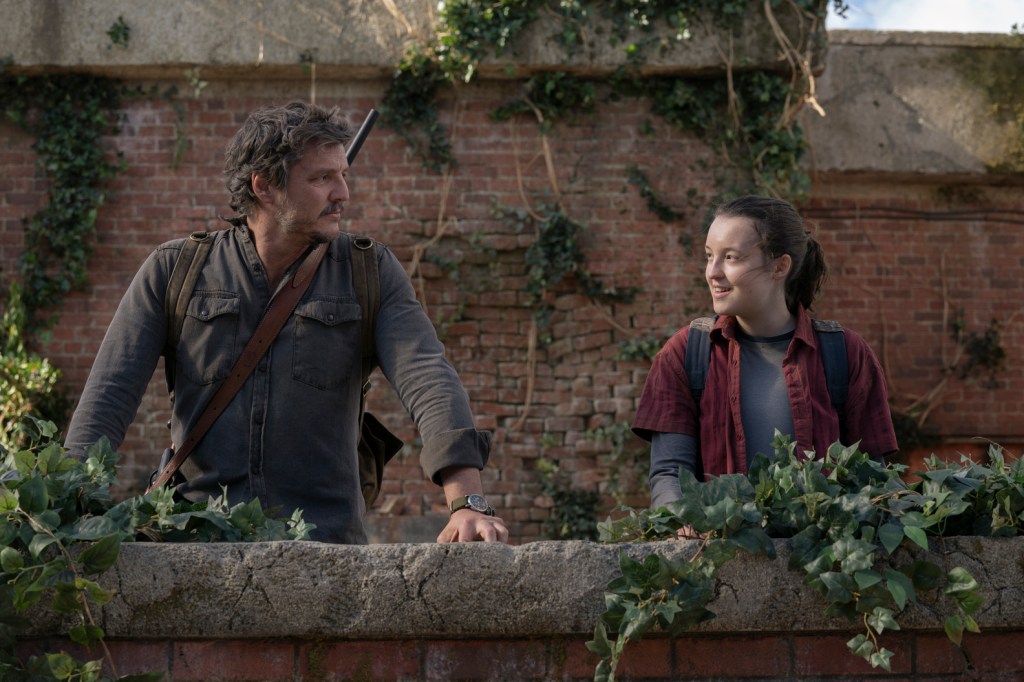
There are few games whose stories were as moving and affecting as the Last of Us, and it’s no surprise to its many fans how well this adaptation landed. The gameplay is good, but the meat and potatoes of this game was always its narrative. So, despite the storied history of failed video game adaptations, I and many others were excited for this show for a long time.
I can certainly say I wasn’t disappointed.

Changes Made for the Better
I’ve talked before in this blog about how adaptation often necessitates change – going from one medium to another requires work. Things that are fun to play through might get stale to watch. Something that reads well might be hard to present in a way that captures the attention of the audience. Here, the creative team deviated from the game in several places (and held fast to the game in others), but never did I feel like what they were doing wasn’t the right move for the show.
Bill and Frank receiving practically their own episode devoted to their lives together made perfect sense for the show over the gameplay sections involving their story. Exploring a booby-trapped town and battling infected was fun to play through, but I don’t think it would’ve worked as well as a viewing experience – certainly not as well as what we did get. Sam being deaf and needing Henry’s protection even more was inspired; Druckmann himself was frustrated he hadn’t thought of it.
Every moment of this show oozed with the respect and love the original story deserved from the team behind it. Craig Mazin in the “Behind the Episode” segments spoke unabashedly about his love for the game. More than anything else, I think that care and devotion to the original really brought the best things forward while providing them the room to make changes and come out the better for it. As a result, we have two incredible stories that exist in a shared space, but their differences remain and give them each a different flavor. If you prefer a show, the series is excellent; if you love an interactive experience, the game is there for you.
All Killer, No Filler
There’s been a few criticisms online about the third and seventh episodes in the series. Some derided them as filler: pointless excursions that did nothing to further the story present. I read comments from users on Reddit that posited that all flashbacks are bad for media, in any story – that stories told nonlinearly are just inherently poorly written (which, ridiculous).
Never mind that this whole thing is just outright about the characters within it. The journey across the country is just the backdrop for Ellie and Joel to come to find family in one another. Each obstacle they encounter and overcome isn’t them battling against FEDRA or learning more about the fireflies – it’s just an exploration of the world, how these characters behave within it, and, most importantly, how that changes while they’re orbiting around each other.
An interesting facet of this criticism is that both of these episodes featured homosexual romance, and they received the harshest response. But, that doesn’t have anything to do with it, right?
History Repeating
For years after people reached the credits on the Last of Us, there were debates about the ending. This story is challenging. It is upfront and honest about these characters, about how human they are. Everyone knows that a parent will do anything to protect their child, and this story doesn’t shy away from it. It doesn’t give us an out.
Joel commits an atrocity for Ellie. He refuses to let her die, to lose her, even though it will allow humanity to overcome cordyceps. And, playing the game, I was with him. I wasn’t going to let them kill Ellie. In the game, it’s a final shootout and run-and-gun, a finale and set piece. In the show, it is the most violence we get on screen between humans.
To me, the show is even less ambiguous about whether the cure will work than the game. It is presented as a certainty. Yet, just as with the game a decade ago, people cast doubts about its effectiveness so that Joel’s actions can be justifiable. And, the fact of the matter is, that what Joel does is horrific, but many people would do the same.
This story challenges us to recognize that. To accept that piece of human nature, what love can drive us to do. To behave like the cure is uncertain is to attempt to disengage with the question, to create a moral justification for the mundane horror humankind is capable of. And it’s interesting to see that happening again in the wake of the finale.
Suffice it to say that I loved the show and I’m looking forward for more. A few weeks ago, the series inspired me to revisit the game’s sequel, and my next post will be about that experience. As always, thank you for reading. When you’re lost in the darkness, look for the light.
 Ben Stovall Blog