One of my earliest memories is about video games. I remember waking up one morning, I must’ve been around four or five. It was a Sunday, I think, and both my mom and dad were asleep, my brother was asleep. And, usually, I’d wake someone up to get breakfast made or something. Instead, I hurried over to the TV and the Nintendo 64, booted up Super Mario 64, and played. When my mom finally got up, she was so surprised to find me out there playing the game, having booted it all up on my own.
Video games are an entirely different beast these days. Back then, you bought the game, you had it. That was all there was to it. I remember my brother and all his friends were way better at Super Smash Bros. and NFL Blitz N64 than me.
None of them paid for that, though. They’d played the games more, they were older, and given time, I could match up to them no problem.
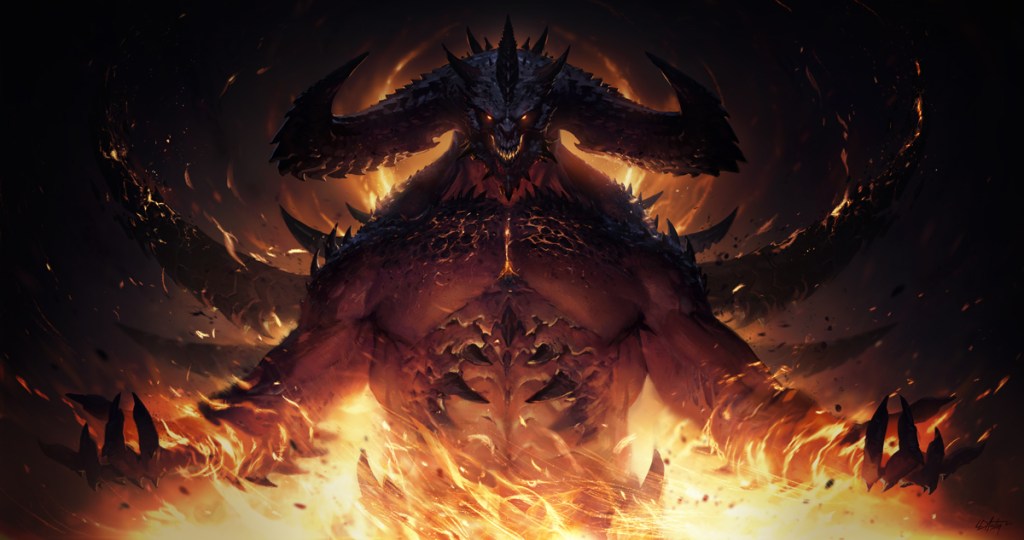
Last week, Activision Blizzard released Diablo Immortal, and almost everyone I know is talking about this predatory pay-to-win video game. For those who don’t know, the math indicates that if you want to pay to get the best gear, it costs around $110,000 to max out a single character through the “legendary gems.” If you don’t want to spend a cent? About 10 years of daily gameplay. Assuming nothing more powerful gets added to the game from its launch state.
Disgusting.
Abusing Psychology
These games use a lot of predatory tactics to get their players to throw their money at the software, no matter how miserly they might want to be. One of the most widespread tactics in games nowadays is utilizing your player base’s “Fear-of-Missing-Out” (FOMO). These games have cosmetics and powerful items that vanish after a set amount of time. Think you might want to use that cool superhero inspired costume? Buy it now for $19.99! Or try to gain enough in game currency in the one week its available to obtain it for “free.” It might never be available for purchase again.
They also create these “daily bonuses” you “earn” by opening the game every day. They want booting the game to be habitual. These bonuses are usually redeemed in these games’ shops, to make opening them a more usual interaction for their players. Diablo Immortal, naturally, does this. Even worse, the game has a “battle pass” with a free track, a premium track, a super-premium pass with exclusive cosmetics, and an ability to outright buy the ranks of the pass. You buy it for $5, but if you fail to complete the pass, you miss out on the last of the rewards you didn’t earn at the end of the season. They’re just gone. Unless you spend some cash to boost through the last few levels.
The battle pass purchase in Diablo Immortal also gives you extra inventory space – but just until the pass expires. This first one is gone on July 7th. And speaking of expiring rewards you might’ve paid for – there’s a “Boon of Plenty” system that grants daily login rewards and a few other perks. And if you don’t login on one of those days, those items that you’ve paid for just vanish into the ether. That’s worth $9.99, right?
These games also use a secondary currency for their purchases. In Diablo Immortal, you spend your money on orbs that you then use to buy other items. Naturally, these orbs are sold in bundles that do not line up with the prices in the shop. The first time you play the game, you get a special deal to buy a box that gives you 60 orbs for $0.99 – but there’s nothing in the shop available for 60 orbs.
Not to mention the elephant in the room: these games are targeted at children first and foremost. I remember when iPhone games were just becoming a thing. Seemed like there was a story in the news every week about some kid who’d spent $500 or more on a game without their parents realizing.
Can Pay-to-Win be Ethical?
There are some games on the market with features that aren’t as immediately pay-to-win as buying stronger units or better items than are available to free-to-play gamers. These games are often dubbed “pay-for-convenience.” People like to overlook that such a moniker betrays the truth of the systems: if the developers of the game have a financial incentive to make the game inconvenient, why wouldn’t they? If you can pay to skip levels, they have a financial incentive to make leveling as long and monotonous as possible.
If, say, there’s a game that only has the same level of gear available for free-to-play and premium players, they have a built-in incentive to ensure that obtaining that gear is frustrating and repetitive, to push people toward a purchase. Why run the same dungeon, fight the same boss, dozens or hundreds of times, when you could swipe your credit card and be done with it? Be as strong as you can be?
Even in a game like Lost Ark, which equalizes gear in a player-versus-player setting, still allows you to specifically purchase an advantage over other players. You can buy the items needed to reach the highest gear potency, or spend weeks, gated by daily timers killing the same bosses for the items to drop naturally. But doing the same thing over and over isn’t content. It’s a grind.
Some games only release purchasable cosmetics, which can be a much more ethical model, but even then, in a lot of these games, having a cool-looking character is the goal of the endgame. Why make that very interesting set of gear available from in-game activities, when you can charge $20 for it?
This gets even more absurd in another game from Activision Blizzard that I (until last year) played a lot myself. In World of Warcraft, you have to pay a monthly subscription to play the game (for the ongoing development of the game, allegedly), buy each expansion when it releases to access that part of the game ($40 minimum purchase every two years), and then there is a cosmetic shop that allows you to buy armor sets and mounts and pets for varying prices, and then there’s a way to exchange money for the in-game currency, which you can then use to buy services and goods from other players.
It became obvious that the majority of work was going into these premium cosmetics instead of the ones added to the game. They’d add a mount with a dozen recolors spread out over several acquisition streams, and then a truly unique mount with a special skeleton to the shop for more money than you pay every month to play the game.
Buying gold for your real money also lets people buy themselves through the hardest content in the game, obtaining achievements that normal players might work at for months without success. A rich player could buy themselves to “Gladiator,” a special PvP rank that comes with a unique mount each season, by buying gold for cash. A lot of people like to combat World of Warcraft becoming pay-to-win with the WOW Token (the option to exchange your real life money for the in-game gold) by reminding everyone that people bought gold or just straight-up exchanged money for these carries before the token was introduced, but that doesn’t excuse anything. Blizzard could have hired more employees to moderate their game to crack down on these actions that were clearly against the game’s Terms of Service, but instead they cut themselves in on the profit and legitimized it all at once.
So, no, I don’t really think Pay-to-Win can be ethical.
Becoming the Product
Some people play these games with the stubborn insistence that it’s alright because they aren’t spending money. They aren’t aiding in the perpetuation of this predatory business model with their wallet.
Instead, they’re doing it with their time.
They become part of the product doing this. They become the fodder that high-paying “whales” (people who spend an inordinate amount of money on these games) are paying to smile satisfied at for having paid for their rewards rather than enduring the grind the free players suffer through. These are the players that get rolled over by the whales in competitive game modes, much to the spending player’s delight.
The science has been around for a while: the vast majority of these games’ player bases never spend a dime, then a small percentage make a few purchases, and then the whales, a fraction of a percent of the player base, subsidize the entire game by spending thousands, such as the person who spent $14,000 dollars on Mass Effect 3’s multiplayer mode. Such as the streamers playing Diablo Immortal or Lost Ark and dropping thousands. These games need to exploit these players to financially justify their existence and all the time and money that went into their development.
The Genuine Answer
It’s clear by now that these games will never self-regulate. It is just a fact of business that these companies are always going to push the boundaries to obtain more money this quarter than the last. The only thing that stops them is legislation.
Belgium and the Netherlands have laws preventing these games from obtaining widespread appeal in their countries. Games with “lootboxes,” where you spend money to obtain random rewards of vastly different value, are correctly identified as gambling mechanics and disallowed. These games must either adjust their mechanics, or as is the case for Diablo Immortal, never release in those two countries.
And the gamers there are thankful for that.
Additional Viewing
Here’s an additional video if you are interested in learning more about this topic. This is a game developer conference discussing the exact methods they should use to entice “whales” into their games.
 Ben Stovall Blog