Tag: video-games

  • 2024: Year in Review

    2024: Year in Review

    For me, it feels like the theme of this year was that I wish I’d done more. I read fewer books than I’d planned to, I didn’t play very many new games, I scarcely watched movies or tv shows. And I certainly didn’t write as much as I’d wanted to. It’s like I stalled out after the first third of the year, but we talked about that plenty in the Irregular Update a couple weeks ago, didn’t we? Despite a relatively austere year, I had the privilege of experiencing some media that really stuck with me, grabbed me, or inspired me.

    Let’s get into it.


    Books

    I had a much easier time burning through books back when I wasn’t working from home, to be honest. Taking them in to read during my lunch break really worked out, and often left me on some interesting cliffhanger that made it easier to read some more once I got home. With my current schedule, I only have a 30 minute break for lunch, and often don’t read during that window. (Exceptions were made for Wind and Truth this month.)

    Over time, I was excited to play different video games and hopped right into them when I was done with my shift. I played a lot of Warcraft following the War Within’s launch, and other games kept drawing me back like a magnet over the year. So it goes.

    I think, when I brought a book in to the office and didn’t have something else I could be doing, it made it easier to stick with things that weren’t grabbing me in a vise-like grip. I could muddle through something I had a middling opinion of just to fill the time. Couple books this year I grit my teeth and plowed through, and it might’ve proved detrimental to my desire to keep reading through the rest of the year.

    (I just need to throw my smartphone in a box and take a book into another room to get around this.)

    Anyway.

    Gideon the Ninth by Tamsyn Muir

    This was a book I read early on in the year and it ruled. I loved the intrigue, I loved Gideon and Harrow’s fraught relationship, I loved reading about space necromancers. I’m looking forward to reading more of the series in 2025, and I can’t recommend this book enough.

    The Sunlit Man by Brandon Sanderson

    I got around to the other two Secret Projects back at the start of the year. In the afterword of the Sunlit Man, Sanderson called the project a book he wrote for his fans – where Yumi and Tress had been more as gifts for his wife. I have to say, as a fan, Sunlit Man absolutely rules. It left so many questions in my head, waiting for Wind and Truth. It had a breakneck pace and excellent action. It is, without a doubt, the most cinematic cosmere novel so far. A movie could be made from this book practically one-to-one and it would rock.

    I also greatly enjoyed Yumi and the Nightmare Painter and Wind and Truth this year from Sanderson, but I wanted to specifically celebrate Sunlit Man for the ways it’s different from many cosmere novels here.

    The Blacktongue Thief by Christopher Buehlman

    This book is a lot easier to recommend than Between Two Fires. It’s a fun classic quest from the perspective of our eponymous thief as he’s taken on a march across the continent with a host of interesting characters and fun action. It was fun to read despite some grim details in the setting, and books that are just fun to read will be a balm to many in the coming years.


    Movies

    I think I went to a movie theater once this year. Whatever time I might’ve spent watching movies, I think I watched longform video essays instead – like F. D. Signifier’s many drops throughout the year, Lindsey Ellis’s nebula-exclusives, Matt Colville’s video about the Elusive Shift, and videos about movies from Patrick H. Willems. And I thoroughly enjoyed them all!

    Point is, I saw like three movies this year total, and we all know which ones I’m going to be talking about here.

    Dune: Part Two

    A cinematic achievement. An excellent adaptation. Incredible effects, an excellent story translated near-perfectly to screen. I love Dune, and I loved these movies. The way they’ve infected culture, with people jokingly calling their friends Lisan al-Gaib or Maud’dib or permutations thereof is endlessly entertaining. What more is there to say, really?

    Furiosa: A Mad Max Story

    Fury Road is one of my favorite aesthetics in modern fiction. I love the wasteland, I love the motorized bikes and buggies, and I had a blast with this film. While many bemoaned it as an unnecessary addition to the canon, when every minute of this movie is as awesome as this was, it needs no further justification.


    TV Shows

    I didn’t watch much TV either, to be honest. I had Netflix for exactly two months this year; I watched a lot of Peaky Blinders when I was running Blades in the Dark near the start of the year for inspiration, and I returned for one month specifically for the first show below (but ended up watching the second show on this list too, on the recommendation of a friend). I never got around to temporarily using Hulu to watch Shogun despite meaning to, and as much as I love Invincible, I do think it was hurt a little by splitting up the season. House of the Dragon? Woof. I hope there were some external circumstances behind that season’s ending, because that was a fine episode in a vacuum, but not as a season finale.

    Anyway, onto the good.

    Arcane Season 2

    Arcane’s final season aired a little over a month ago, and I’m still thinking about it – mostly the small moments, like those which filled the seventh episode. I remember the end of the first batch, with Ambessa’s plan revealed as the music swelled with the punctuation of the crowd beating their chests – what a moment that was. This show is so far beyond the gold-standard for animation it isn’t fair. It’s so premium in its presentation, I loved every minute.

    Delicious in Dungeon

    So, I don’t really watch anime.

    Look, it’s a personal thing, okay? It’s nothing to do with animation – three of the shows I’m mentioning here are animated. It’s … more to do with the common themes that exist in anime not being those I’m particularly interested in. Delicious in Dungeon (or Dungeon Meshi) doesn’t avoid these things, but I liked everything else about the show enough to get over them. The aesthetic of a classic D&D party delving into a megadungeon rules. The show’s got some problems with an inconsistent tone – it doesn’t want you to take it too seriously, but things keep happening that feels like they should be taken seriously. Without spoiling anything beyond the show’s very first scene – our hero Laios is fighting a huge dragon with his party when he realizes he’s so hungry he can’t fight. And it’s pretty funny – except, people are getting mauled in the background and someone gets full-on eaten.

    If any of that’s a dealbreaker, probably safe to skip this one. Otherwise, you might have a fun, zany little show to enjoy.

    The Legend of Vox Machina Season 3

    Critical Role continues to make inspired adjustments to their live streamed D&D game to make for a compelling TV show. There were some fans disappointed by the changes made to this specific leg of the campaign – from people disliking the stakes becoming more personal for our heroes, to a couple of beloved moments from the campaign not occurring as the fans expected.

    I, however, think there’s something to be gleaned from these adjustments. If you don’t want any spoilers, skip to the next section.

    So, one major criticism was the change to Grog’s delivery of “Fix him!” in the show. In the livestreamed game, Travis yells the words, shouting for Scanlan to be resurrected following his death at the hands of Raishan. In the animated series, Scanlan is unconscious after escaping certain death at Thordak’s claws, and the delivery of the line is much more subdued. There is certainly a lot of power and pathos in the original delivery – but perhaps it always felt out of place? Immediately after that shouted line, Travis speaks his next few lines in a more mundane register. Perhaps, with how much closer he and Pike have remained (with her not being absent for so much of these adventures) has developed Grog into someone who’s much more reluctant to scream at her – especially when she’s trying her best.

    The next major problem many fans had stems from the Bard’s Lament moment being skipped – at least, that’s the way it appears. There’s still certainly enough in the show to bring the moment back in season 4, but given the show’s uncertain future, they decided not to leave the team on such a bitter, tragic note. If this had been the final season, Scanlan blowing up at his friends and entirely withdrawing from the team would’ve been a rather sour note, and all of the ingredients for the moment are still there. Perhaps Scanlan will be hesitant to return to the party come season 4 – let’s give the team some grace, eh?

    Fallout

    Ella Purnell makes the list twice! This show was a good, fun romp through our favorite wasteland, and I’m looking forward to seeing more. The moment toward the end of the first or second episode where our heroine’s chipper attitude holds despite her needing to decapitate someone just really sells the whole vibe of the show.


    Video Games

    Much of my year was spent enthralled to my old staples – Warcraft and Deep Rock Galactic. I played a few new games; things I saw on the odd stream, a few anticipated titles. And I got around to getting a Nintendo Switch, more on that later.

    Balatro

    Last year, I had this long paragraph about how much gameplay matters in a roguelike game – about how if the game isn’t fun, it won’t work? Balatro has the sauce. This indie game from a solo dev blew everyone’s minds this year for good reason. Hell, it had an honest chance to win Game of the Year at the VGAs, and while I haven’t had the chance to play Astro Bot myself, I’ve heard a wealth of good things about it. Whatever LocalThunk makes next is sure to be on everyone’s radar.

    Windblown

    From the developers behind Dead Cells comes this little isometric co-op roguelite I’ve been enjoying with a friend. It’s been a blast to play, and every time I launch the game I can’t bear to skip it’s little anime intro! It’s still in early access right now, but I’m willing to stake my flag and say this will be one worth checking out.

    My Game of the Year: Tears of the Kingdom

    See, this is the benefit of being behind on some games. I get to celebrate Baldur’s Gate 3 last year, and the Legend of Zelda this year! I get to have the cake and eat it after all.

    Jokes aside, yeah. Nothing this year grabbed me half as well as Tears of the Kingdom. It was an excellent evolution of everything Breath of the Wild did, and the new tools were so fun to play around with. With some truly stellar cinematic fights and small ways the game broke the expectations it gave you, I loved every minute. Never would I have guessed how powerful a handshake could be. (If you know, you know.)

    So. That’s the year as remembered by me. Here’s hoping for some good media in 2025!
  • Starfield

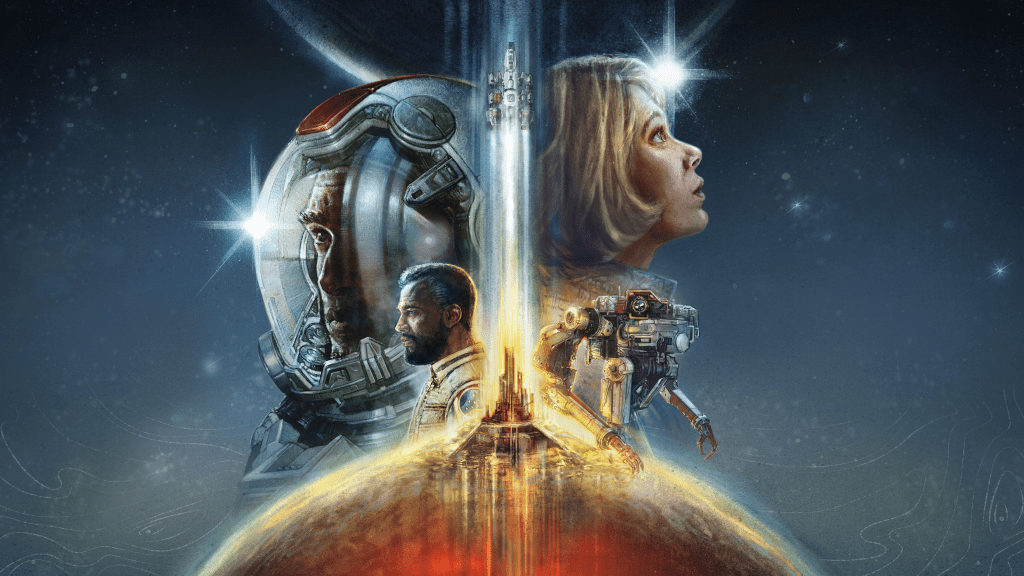
    Starfield

    Last summer, I bought a new PC just before the release of Baldur’s Gate 3. I can’t imagine how poorly my old rig would’ve handled that game, but it ran very well on my new machine and I couldn’t have been happier with it. A side benefit of this purchase was I received a code to gain a free month of Xbox Game Pass, and I thought, “Oh, neat. I can use this in September to try out Starfield!”

    Starfield’s early release window rolled around, and news began to break. It was divisive. People were tearing the game apart, people were cheering it on. This article boosted a sentiment from its fans saying the game really picked up 12 hours in. I avoided reading too much into any of this, content to wait and form my own opinion once I could play the game myself.

    Due to my usual weekly schedule, I didn’t check it out until the Thursday after it’s full release. I launched the game after work, I threw together my character, and I played for three hours before I decided it wasn’t working for me and I uninstalled the game.

    I chatted with a few friends, trying to parse out my exact feelings. I didn’t expect to bounce off of this game so hard, so completely. Oblivion and Skyrim are two of my favorite games ever; both utterly consumed my teenage years and early adulthood. While I never had the same fondness for Fallout 3 or 4, I still played and enjoyed them, though not nearly to the same extent as the Elder Scrolls games.

    I’ve thought about that experience a few times since. Frankly, I’m not sure if I can really make peace with it without writing about it, and, well, if I write about it, I might as well post it, eh? So, here’s what I’ve settled on as my reasons for bouncing off of the game: my own conclusions and some video essays for additional viewing.


    A Poorly Paced Introduction

    (Spoilers for the openings of several Bethesda games.)

    Bethesda’s gotten worse at opening their games as time has gone on.

    Now, I’ve only played from Oblivion forward, and it might just be that trajectory of experience that’s led me to that conclusion. Still, I think Oblivion’s got the best introduction of the five I’ve played. It does the least to muddle whatever thoughts you might want to bring to your character and gives you a great dungeon to explore within moments of its launch, which really shows off a major pillar of the game. Once it’s done, you have a quest, but it doesn’t feel like you need to sort that out and you can just go wherever you want. (I was one of the weirdos who enjoyed going through Oblivion gates, so I usually got to the point in the quest where they’d start opening up and then did whatever I was feeling like.)

    I think Skyrim takes second place despite there being another game between the two Elder Scrolls entries. Its major weakness is how long you’re waiting before you get to define anything about your character, watching the wagons trundle on down toward Helgen. Once you’ve got the character editor open, I think it’s super solid, but launching a fresh playthrough can feel like a slog if you don’t have a holdover save from the end of the wagon ride.

    Fallout 3 and 4 are some of the worst that Bethesda’s done. FO3 really drags with you playing through your character’s childhood in spurts, and it’s on firm rails. You can’t do anything about people coming at you with guns for the crime of being the child of your father at its end. Hbomberguy did an incredible takedown of the intro’s faults in this long essay from 8:30 to 15:50. (The whole video’s excellent.) And FO4 is that little bit punchier, but the game decides a lot about your character before you ever have a say – you’re married, you’ve got a kid, you’re from before the bombs dropped.

    To some degree, that’s a bit unavoidable. Bethesda wants to make games that let you feel like you can go anywhere, do anything, be anyone, but there’s inherent limitations with video games. Bethesda can’t let you start anywhere unless they drop a menu on you (and they’ve got more than enough of those already), and there’s no feasible way to make a hundred or a thousand different starting scenarios match up in their fidelity and playability and excitement. They’ve got to build this reverse-funnel, this narrow entry point that then opens up to the enormous berth of their games. (And on the point of menus to choose a starting point, there are literally mods for their games to create that functionality, because the people who play these games the most would rather have that option.)

    Starfield doesn’t fail in the same ways as its predecessors, but I’d call it the worst. You have these options in character creation that you can pick to really build an exciting history for your character. I think I’d chosen to be a bounty hunter, thinking it’d be a good all-round skill set for adventuring and exploring the galaxy and some traits I thought sounded interesting for that kind of hero. And the game starts with me … working in a mine? Like, I’m a good space pilot and a bounty hunter, but I’ve got to fire this laser on some iron for a bit while two NPCs chatter on and sound nothing like people as they do?

    It’s simultaneously long-in-the-tooth and too quick. You’re walking behind these slow NPCs until you touch the dumb rock and it drags on forever. It’s aggressively unexciting (outside of the dogfight–I liked the dogfight) and incoherent. You touched the rock those guys wanted and it knocked you our, now the stranger who flew a spaceship here is going to stay and … mine? Kill pirates if they keep showing up? Your boss is like, “I guess this is happening now. Bye.” Last paycheck in the mail? And then you’re in a (fun, though I died the first try) dogfight and it’s a menu button to fly to the moon that is right there like you can see it on the screen but you have to go into the menus–


    A Whole Lot of Loading

    I thought I’d get to fly in space.

    I know – technically, you do! When you’re in a dogfight. And I know, space is vast and mostly empty, but I’m not asking for a 1:1 scenario here. Let me zoom through the stars and discover derelict wrecks to explore; let me go from planet to planet; at least let me fly within a single star system. You feel more like you’re flying through space playing Mass Effect than Starfield, and in the former you’re just moving a tiny ship across ringed maps of different star systems. Hell, there are times where you have to hit a handful of loading screens to move from one region of a planet to another.

    Bethesda’s had fast travel in their games at least as long as I’ve been playing them. But before, you had to walk somewhere before you could teleport there. Now, it’s just teleporting, and that really, really took me out of the experience.


    Divergent Innovation

    I think it’s incorrect to say that Bethesda hasn’t iterated on their formula since Oblivion. There’s a lot of new features in their games that they’ve been building and improving with their other titles. Building settlements and outposts is a whole subsystem in these games, refine out, and with a mechanical benefit for engaging with them.

    Unfortunately, that’s the last thing I’m interested in when I play a Bethesda title. I’m not here to build a town, I want to go delve into caves; I want to have that awe-inspiring moment of finding Blackreach beneath Skyrim. Hell, maybe I would’ve been more invested in the system if it’d shown up in an Elder Scrolls game (that setting is just more my speed than Fallout), but I couldn’t say for sure. I certainly didn’t play Starfield long enough to engage with it there.

    For me, playing Starfield didn’t feel better than playing an earlier title from Bethesda. I think the combat’s more fluid and enjoyable in Skyrim than their newest release; their gunplay just doesn’t hold up to what I expect from the industry anymore. I’m not excited to shoot the guns in Starfield when I can launch RoboQuest or Deep Rock Galactic or the original Halo game and feel like I’m having a better FPS experience.

    Bethesda Shouldn’t Get a Free Pass

    People loved Bethesda games; I loved Bethesda games. They were once one of the best developers, pushing the cutting edge of the tech, making the biggest worlds we’d ever seen. All that nostalgia bought them a lot of leeway these last few years. Fallout 76 hoodwinked thousands of players, both underdelivering with a buggy, misfired mess of a game, and also shipping out a bag with the collector’s deluxe edition that was not even nearly what they’d advertised. People were on the edge of their seats, waiting for Starfield to be the next must play game from the studio that defined their childhoods.

    But we didn’t get it. We got another janky mess that didn’t deliver on the hype the studio kept promising.

    That’s just not good enough anymore. Bethesda used to make the best games we’d ever played. Now, they make games I wouldn’t want to play for free.


    And Thanks for all the Fish

    So that’s where it all landed for me. If you’d like to see more, here’s a video from NakeyJakey and another from Girlfriend Reviews about their experiences with the game. Here’s hoping that Bethesda can right the ship, but I wouldn’t hold my breath.

    As always, thank you for reading. Good luck out there, space cowboy.

  • 2023: Year In Review

    2023: Year In Review

    In 2022, it wasn’t until September that I’d decided to make a retrospective post about the media I’d enjoyed that year. This time, I had it in mind from the start, and I jotted down little notes throughout about what I wanted to include. I’ve had some of the below on the list as far back as February (and my friends and family will recognize them, since I’ve talked them up all year long). As before, I’ll avoid spoilers as much as I can. Let’s get to it!


    Books

    As last year, I didn’t read as much as I’d hoped. I’ve played maybe a few too many hours of video games, watched a few too many episodes of TV shows or movies. I’m still figuring out how I want to sketch out my daily routine with my new job, but I’ll get there. Regardless, there were still several books the absolutely ensnared me and that I want to maybe draw more eyes toward.

    The Fires of Vengeance by Evan Winter

    I don’t really have a whole lot to say here; I liked this book just as much as I did the first and I’m excited to see more from Evan Winter. I think this could be one of those series that becomes mainstream as it gets more and more entries. With how much I’ve enjoyed this series so far, I’d hate to be wrong.

    Tress of the Emerald Sea by Brandon Sanderson

    It’s been an amazing year for Sanderson, there’s no doubt about that. Perhaps the only people coming out ahead of him are his fans, receiving five books of his this year – myself included. I was unemployed when the kickstarter for his Four Secret Projects launched and I still made an incredibly silly financial decision and backed him. I’ve only read the first two of those releases thus far, and between them and The Lost Metal, Tress is my certain favorite.

    I think something that really worked here was the perspective of the book – most Sanderson stories I’ve read are in third person, bouncing perspectives on chapter changes or on scene breaks when things are kicking off, and I think the consistent voice really enhanced this book.

    Between my love for this and Scott Lynch’s Red Seas Under Red Skies, maybe I’m just a big fan of fantasy pirate books.

    Between Two Fires by Christopher Buehlman

    This is probably the best book I read all year, but it’s one I hesitate to recommend. It is a hard read. Horrible things happen to these characters, but then, of course they do – it’s a dark fantasy story set in France during the Black Plague, and Buehlman really makes it easy to feel the suffering of our tiny band of characters. He does not shy away from the horror of our history, and it is made much worse by the supernatural.

    Children of Time & Ruin by Adrian Tchaikovsky

    I wonder if I’m going to end up having an “off-the-wall weird” sci-fi rec each year. In this book, a scientist, Avrana Kern, wants to make a garden world for humanity to eventually settle. A utopia with genetically-engineered servitors and an impeccable biosphere, an Eden amidst the stars. Unfortunately, a saboteur tries to utterly upend her goal, killing the monkeys she intended to see the planet with, but rather than admit defeat, she launches her nanovirus anyway and it infects a surprising host … we witness some of their development over the course of hundreds of years, then a wave of humans eventually comes to settle the garden world, discovering things are so much different than they expected.

    And – wouldn’t you know it, this duology won a best series Hugo award this year! I was ahead of the game this time.


    Movies

    I saw as many new movies at home as I did in theaters this year – which is to say, I didn’t see that many movies. It isn’t that I don’t like movies, I love film, but going to the theater has become unbearably expensive and when I’m home, I usually gravitate toward games or shorter-form media instead. Despite all that, I saw a few movies that really mattered to me this year.

    Dungeons and Dragons: Honor Among Thieves

    I had a lot of fun seeing this movie and I’d love to see this gang of adventurers again someday – another heist, a dungeon crawl, whatever. We’ll see if anything comes of that. Hasbro continues to prove itself a poor parent company with layoffs right before Christmas this year despite D&D having a banner year all around (more on that later).

    Oppenheimer

    This is the first biopic I’ve ever seen. I wanted to give it a shot because I’ve been enjoyed every Christopher Nolan film I’ve seen and I was interested in the subject. I loved it. I don’t know when on earth I’ll find time to watch it again, but I know that I want to. The use of color and black-and-white presentation really blew me away when I discovered the reason for it.

    Puss in Boots: the Last Wish

    This movie released last December and I kept hearing praise for it all over the place. On a whim, once it showed up on Amazon, I rented it and it still blew me away with how fantastic it was. It’s an animated movie that treats its audience, kids and adults both, with respect. It’s incredibly stylish with crisp and beautiful animation. It was the first thing to be thrown onto my list for this blog post this year – hell, I saw it about a week before I started really getting back into writing, so maybe it was just straight-up inspirational for me.


    Music

    I didn’t include music on my list last year because I am perpetually behind on music and my tastes haven’t changed much from my teenage years. Luckily, they didn’t need to.

    This is Why from Paramore dominated my listening for several weeks when it dropped back in February. I had the album on endless repeat, especially Running Out of Time and You First. I’ve also been obsessed with The Adults Are Talking from the Strokes’ The New Abnormal since I heard it this summer. (Which, yes, is from 2020. As I said, perpetually behind.)


    Video Games

    It’s probably because they dominate most of my time as my primary hobby, but this feels like the real meat-and-potatoes of the post to me. Maybe I just trust my opinions about video games more than I do anything else since I’ve been playing them as long as I can remember. Regardless, here’s some of the highlights of my year and anyone who knows me will already know what my game of the year is.

    Core Keeper

    Survival games are hit-or-miss for me. If it finds me in the right mood, or it’s got a good story or good RPG elements, I can get hooked. But it can also have both of those things and just still fail to grab me. Core Keeper was a hit, right on target. It’s got a full release planned for next year, and I played the hell out of it for a few weeks this summer. My friends and I enjoyed it immensely, getting all the way to the hard edge of the progression curve right before their big biome update a few months ago. I’m glad to know there’s new stuff waiting for me whenever I get back into it. (And I will!)

    God of War: Valhalla

    It feels like Santa Monica Studio made an excellent little bonus game mode they could’ve sold for like $20 and they handed it out for free. It’s an excellent epilogue for Ragnarok, and it is what I’m going to get back to playing the moment I finish drafting this post (hopefully I’ll be done with its story when this goes up).

    Roboquest

    Roguelites put their gameplay front-and-center – if that doesn’t work, the whole game fails. They must be fun to play. And Roboquest is a freakin’ blast. The gunplay here is so immaculate and satisfying (I really love the comic-book style sound effects that pop up right next to your guns) that it’s a blast to play through. And it’s got 2-player co-op! Grab your best brobot and run-and-gun to your mechanical heart’s content! You will not regret it.

    My Game of the Year: Baldur’s Gate 3

    If I still had the time on my hands like I did when I was a teenager slamming through Dragon Age: Origins runs, I’d probably have six completed playthroughs by now. I’ve yet to make good on my goal to get all of the achievements (a few of them are contingent on a co-op run I have in Act 3 that my friend and I haven’t gotten back to yet), but it’s still my plan to do it. Even that new one for an Honor Mode completion. I can’t wait to see what Larian does next (and I really appreciate the post-release support. That reunion party was exactly what I wanted when I finished the game the first time).


    Well, there we have it. Farewell, 2023. As always, thank you for reading. Here’s to many new stories and adventures in 2024. Happy New Year, everyone.

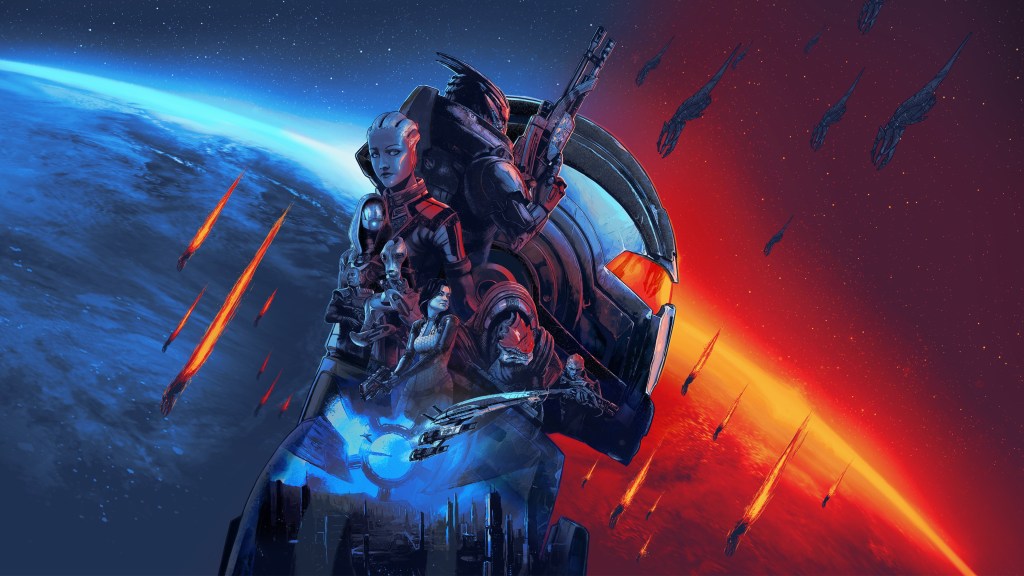
  • Revisiting Mass Effect

    Revisiting Mass Effect

    Some of the most artistically influential and significant games I’ve played in my life were developed by BioWare. I latched onto the series for much of my teenage years; I couldn’t tell you how many times I played Dragon Age: Origins throughout high school: seeing each origin, building my perfect world state to import into the sequel, finding obscure conditional options. I loved the game so much I decided to check out BioWare’s other series and got myself a copy of Mass Effect. (Spoilers follow.)

    Amazingly, I latched onto it just as hard as I had Dragon Age. Harder, perhaps. I tore through Mass Effect, playing every night to explore the galaxy BioWare made. On my first run of the game I hadn’t completed Wrex’s personal quest before Virmire and failed to have the points to successfully persuade him to calm down, but I was so attached to his character that I loaded an earlier save before I’d spent my most recent level up and managed the check. It legitimately infuriated me when Ashley shot him in the back the first time. I immediately launched into New Game+ once I’d finished the campaign and went out of my way to do everything on the next run.

    By the time that was all done, I learned Mass Effect 2 had been out for well over a month already and managed to pick a copy up when my birthday came around. I’d fallen in love with the first game because of its setting and narrative; Mass Effect 2 brought the game into modernity with vastly improved gameplay and ensnared me even further. I survived the so-called Suicide Mission without a single casualty on my first run. I played Overlord when it released. I blew up the Batarian Alpha Relay in Arrival and waited very impatiently for the trilogy’s end to arrive.

    I took two days off of work for its release and binged through the game. I played hours of the multiplayer, beyond what was required for my Galactic Readiness to be maxed out, I felt mist in my eyes as Mordin rode the elevator on Tuchanka. I froze, wondering if I’d be able to broker a peace between the Geth and the Quarians at the end of Rannoch. The game was incredible, and I was riding high on the wave of that experience as I charged toward the beam that would let me access the citadel and use our superweapon to exterminate the Reapers and save the galaxy.

    And I, like many others, felt like the ending slapped me in the face. I felt burned for being so invested in everything that had happened up to that point. Everything I’d done came down to a trinary choice that did not feel adequate in the least. I could either pursue what the villain of the first game wanted (violating every galactic citizen’s bodily autonomy in the process), pursue the Illusive Man’s goal (with an undercurrent of “this might not work forever”), or commit a genocide not just of my enemy, but also one of my allied species and sideswipe slay a member of my own damn crew. I stood there in disbelief for a handful of moments, then grimaced as I did what I’d been sent there to do: Destroy the Reapers.

    I found I was not alone in my upset. I scrolled through dozens of threads on Reddit in the following days. Criticism was not hard to find. Theories decrying the ending as a hallucination felt more acceptable than what had been served. I returned to replay the final moments when BioWare released their Extended Cut of the ending, and still left dissatisfied. So badly had I felt burned by the ending that I did not buy any DLC for Mass Effect 3 or play the campaign again. (That multiplayer rocked though, I played it a few more times.)

    This year, I purchased the Legendary Edition during the steam sale for $15, which combines the trilogy into a single platform with updated graphics (and gameplay for the original). I hadn’t played these games in over a decade (I’d originally owned them on an Xbox 360 and hadn’t repurchased them on PC at any point, so I hadn’t even had the ability for perhaps six years).

    For a few weeks during the summer, I was consumed by them once again. Every evening when I got off work, I launched into Mass Effect. These games were just as incredible now as they were before, but all the while, I wondered if the other shoe would land as harshly as it had before. I reached the third game and reveled in how unbelievably well they managed to make it, dreading the moment I would reach the end and wondering if I would be angry about it all over again.

    It was near the end of the game that I played Mass Effect 3’s DLCs for the first time. I retook Omega just before Priority: Thessia, I discovered the truth of the Leviathan just before exposing Sanctuary and Cerberus’s activities there, and completed the Citadel just before launching the assault on the Illusive Man’s base. After these missions, when I finally reached the end of the game, I discovered that my anger about the ending had materially changed.

    In 2012, when I spoke to the Catalyst and was given my three decisions for how to irrevocably change the galaxy, I hated its existence as a writing device. It felt like the voice of the author had come down to tell me how it ended, and I couldn’t have been more frustrated. Now, in 2023, after Leviathan and the Citadel, I only disliked the personified Catalyst as a character. I thought it to be fallible now, and not a voice of omnipotent knowledge. I knew now that it had been created by the race that it turned into the Reapers and it had a flawed understanding of the galaxy. It thought war between organic and synthetic life was an irrefutable fact, when I had already brokered peace between the Geth and Quarians and they were working together to resettle Rannoch. I had seen an AI and a human man fall in love with one another. I knew it was just a dumb machine rather than an authority, and I blew the Reapers to hell once again.

    The Catalyst didn’t know the galaxy half as well as it thought it did. For it, the status quo of galactic extinction every 50,000 years was an acceptable outcome. Whatever it thinks isn’t worth a damn. It’s probably wrong about the Geth and EDI being destroyed anyway, or it’s lying because it wants to save its toys.

    These games were some of the most influential and significant games of my life. It’s incredible to have found a way to enjoy and love them again, whether my interpretation of the ending is supported by canon or not. As always, thank you for reading. I should go.

  • Diablo 4: What’s With Microtransaction Counter Criticism?

    Diablo 4: What’s With Microtransaction Counter Criticism?

    Outside of Tears of the Kingdom (which I don’t have a Switch to play), Diablo 4 is likely my most anticipated game release this year. A friend gifted the deluxe edition of the game to me as a birthday present, so I’ve been playing it for about a week, and I’ve had a blast. I’ve got some problems with the game’s story (maybe I’ll write a post about it), but playing the game itself has been fun; I love blindly exploring a game, and Diablo certainly delivers there.

    Now, I’ve made no secret of my thoughts on microtransactions in the past, and I’ve got some gripes with the existence of a cosmetic shop in Diablo 4. The prices are pretty out of whack, the store rotates to inspire a FOMO response, and given Overwatch 2, I’m unable to take Blizzard at their word that no power or in-game advantages will never be sold on the shop or included in a battlepass.

    Browsing the subreddits for the game, the thing that has shocked me the most is seeing people defending the shop’s inclusion, with threads full of people being snide or dismissive of people with a negative view of the premium store. I’m left wondering how this massive corporation cultivated these knights to defend their ability to rake in cash hand-over-fist.

    I haven’t put in the time to really answer that question, but I can find flaws in their arguments. I thought we could at least start there.


    A Necessary Evil?

    Before we dive all the way in, I do think it’s important to state that for this post, I’ll be addressing the points I’ve seen made in defense of Diablo 4’s microtransactions, and what about Diablo and Activision Blizzard makes me think that they’re poor arguments.

    I’ve seen a lot of people say that a game with constant updates and seasonal content needs a revenue stream to keep the service alive, and often it’s presented as a necessary compromise to allow a game with dedicated service to exist at all. Only, it isn’t necessary for Diablo 4. The game has a box price, and its launch week is not the last time people are going to buy the game. Blizzard will continue to make money on sales for months.

    They’ve sold millions of copies already at $70-100 a piece. They’ve gotten millions of hours of nearly-free advertising on twitch.tv. Games are expensive, certainly, both to make and maintain, but we must dispense with the idea that this is some small studio scraping by to develop this experience at cost.

    Activision Blizzard is a corporation, and it exists in pursuit of profit; profit pays the shareholders and executives. It is not funneled directly back into the game. It might serve as an incentive for the further investment in that product, but even then it is not for the sake of the product, but for further profit.

    These shop items and battlepasses will not even pay for future large content updates – the game will have paid DLC expansions. If you think the shop is allowing the game to be run without a subscription service, you’re not realizing that a planned pay-for-expansion update is a subscription cost, just served in bulk at specific release dates.


    Cosmetics Only: The Lesser Evil?

    A cosmetic-only shop certainly harms a game less than the ability to buy power or in-game currency. The former cheapens every difficult accomplishment in the game, while the latter creates a real world price point for every in-game item or service. (A 300,000 gold mount in Warcraft just costs about $25, depending on token values.) But, I again think it’s wrong to pretend it does negligible damage to the game. I want my character to look cool. There’s certainly ways to accomplish that in Diablo without spending cash, but unlocking new appearances has an expiration date until the next content update. If you settle into an outfit you like for months and begin to tire of it, you might want new options to craft your next look around, and you might not have any left to obtain in the game.

    Then, there’s often an element a clashing aesthetic to premium cosmetics. There’s a long list of games that sell absurd helmets and effects for money that are purposefully eye-catching and distinct. People want to stand out – they’ll buy hot pink armor and a rainbow trail given the chance; I don’t mean to question or belittle what these people enjoy, but I’m fond of Diablo’s existing tone and aesthetic and wouldn’t want to see it sacrificed upon the altar of shareholder profits.

    And, it’s certainly not a big deal for these things to exist, and they likely won’t be the reason I stop logging in one day. They just contribute to a lessened experience for me.

    But, well, I don’t want to spend money on the shop, so maybe I’m just not the target audience anyway.

    I don’t necessarily see this all eroding my interest in the game anytime soon. Even if it gets bad with the cosmetics, that might not push me away. I’d love to pretend I’m principled, but I’m getting the first battlepass as a perk for the edition of the game I received, and I’m not unlikely to grab the second one if I’m still playing when it rolls around. This genie is well and truly out of its bottle, and gamers never boycotted anything successfully. I’ll keep taking my individual stand when I can, but I really just want to kill some demons sometimes.

    As always, thank you for reading. Now, I think there’s a Helltide coming up here soon …

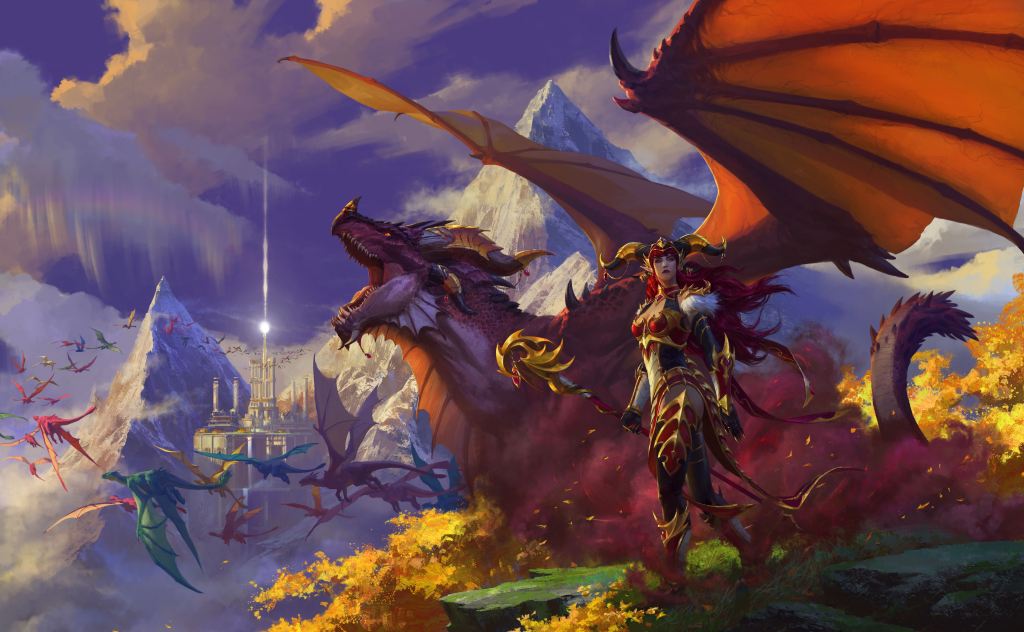
  • Warcraft: Mythic+ Affixes Are Overbearing

    Warcraft: Mythic+ Affixes Are Overbearing

    Since its addition in Legion, Warcraft’s Mythic+ dungeons have become an insanely popular endgame activity. I’ve participated in most seasons, missing only seasons 3 and 4 of Shadowlands while I was unsubscribed. Overall, it’s been a huge boon to the game. Mythic+ serves as a PVE activity that doesn’t require the level of investment and set-up that raiding needs.

    The system has survived some large changes since its inception. Fortified and Tyrannical were originally envisioned as a hurdle for keys beyond level 10, but are now present on all keystones. We’ve seen several affixes nerfed, rotating seasonal affixes, and some that have been introduced and removed entirely.

    Presently, Blizzard is testing a new slate of affixes on the Public Test Realm, and much of the player base has had few kind things to say for them. Many players find the affixes to be unduly impactful, to the extent that players have to focus more on avoiding the negative consequences of failing the affixes over battling the mechanics designed specifically for the dungeon.

    Others claim this criticism is the whining of a player that lacks the skill to engage with the affixes as they are. However, many of the top-rated Mythic+ players share these opinions, as I do. And, while I’m certainly not in the realm of the very best players, I’ve never lacked the ability to attain the goals I chase in the game.

    But, as a pre-emptive counter to anyone who would discredit this post on the merit of skill or accomplishment, here is my raider.io profile. I have two characters beyond the rating threshold for Keystone Hero and several Keystone Master achievements.

    Now, let’s talk affixes: new, old, and philosophically.

    Playing the Affix

    The most criticized affixes are the ones that become so intrusive to the standard gameplay that they overshadow the usual dungeon experience, such as Explosive and Sanguine.

    With Explosive, we are constantly battling our UI to kill these priority target bombs before they explode for heavy group-wide damage. For many players, the task of killing these bombs falls on the healer’s shoulders – at the lower levels of play, players are unlikely to swap targets and kill them, while at the top-end of play, the group loses the least amount of damage throughput if the healer defeats them all. Since these spawns scale with the number of enemies engaged, many orbs might be active at once, rolling throughout the duration of a fight. On the PTR over the weekend, there was an adjustment in testing to make these orbs several more times durable, but with a reduced spawn frequency.

    Now, conceptually, I don’t think this was a bad direction. However, the pool of hit points tested over the weekend was bloated such that players were simply ignoring them outright with their spawn cadence. I’d prefer to see the spawn rate reduced further, but I think another nerf to both values would be an even an even better adjustment. UPDATE: Blizzard has since proposed a huge change to the functionality of Explosive orbs, having them instead shield enemies based on the health remaining instead of damaging the party. I think this would be better for the experience of the affix, but I don’t think it addresses much the feeling of playing against the affix over the dungeon. We’ll see how it works when that begins testing.

    Then, Sanguine requires a dedication to movement and area control beyond what is usually asked by the affixes or base dungeon mechanics. Even the tools players bring to aid the tank in repositioning monsters are suspect in many scenarios, with enemies that are immune to knockback and grip effects, or uninterruptible casts, which adds an element of target prioritization on top of this affix’s asks. I think it’s wrong to say that all affixes shouldn’t affect tanks because of the role they play in the group, but I think Sanguine is a bit heavy handed in that it requires the tank’s engagement the most with minimal impact from the other players.

    There’s even a couple more affixes that have been adjusted since their introduction, but would’ve fit here before: Bursting and Bolstering.

    Bursting changes the way every pull in a dungeon should be played, with the enemies afflicting the players with a stacking damage-over-time effect for each enemy they kill. This extends the danger of a pull beyond the point where the monsters are dead, and asks for halting damage to prevent refreshing the damage effect’s duration. It’s since had a change to make it dispellable, allowing a class-utility counter to make it much more bearable with a priest’s Mass Dispel, but I haven’t chosen to run a dungeon with this affix without a priest all season, and not all groups have that luxury.

    Bolstering once called for adjusting target priority on many pulls in a dungeon, but the new duration limit on the buff has significantly reduced the impact of pulls with one monster of higher health than the smaller creatures around it that die from passive cleave.

    And there’s many more affixes that contribute negatively to the experience of running dungeons without overtaking the gameplay loop to the degree of those above outliers. Quaking hits casters harder than tanks and melee players by interrupting their casts and has required multiple specific exceptions to be installed to avoid catastrophic overlaps; Raging can create unavoidable one-shot damage instances with the only counter being large defensive cooldowns or limited soothe effects; Overflowing affected some healers much more negatively than others; Necrotic and Skittish put more responsibility on the tank in an unfun way; Inspiring created painful monster groups by restricting the use of the class tools we had to overcome dangerous enemies; Infested and Beguiling were infuriating to deal with throughout their respective seasons.

    And I think it’s bad for dungeon affixes to exist solely in this space – to add only annoyance to a dungeon. These were originally created to add variance to the dungeons week-to-week, because, for most people, running the same encounters ad infinitum would get stale fast.

    But Blizzard doesn’t seem to agree. Let’s look at those new test affixes.

    Our New Afflictions

    So, available for testing over the weekend, we had Incorporeal, Afflicted, and Entangling. Despite the callout, Afflicted looked to be the least offensive of these three. It functions a lot like explosive, but in reverse. A ghost spawns with low health and dispellable afflictions. Removing any of these effects or healing the ghost to full health removes the ghost. Should the ghost be left alone, it afflicts the party with a Haste reduction (which we don’t want). Unlike Explosive, the affix is presented more directly healer-facing. They can address it with their usual game play, and hybrid classes can ease the burden at low-cost, and I think both have factored into its reception thus far.

    Then, there’s Incorporeal, which has been adjusted a bit for the better since the weekend’s testing, but I still think could use a redesign. These creatures require direct crowd control effects or kicks to prevent them from massively hampering your group, but you generally would like to invest those abilities into the dungeon’s monsters instead. However, since it’s intended that they be immune to damage, and things like Blind, Polymorph, Hex, or Hibernate would deal with them completely, I think they’re not in as worse a place as they were when those effects were breaking.

    And, last, we have Entangling. Like Quaking before it, this affix is just going to be at its worst creating painful overlaps with the dungeon’s mechanics. I know it’s going away next season, but imagine this effect occurring during Odyn’s runes in Halls of Valor. That extra delay of movement could spell catastrophe for an otherwise successful key. In Blizzard’s post, they do talk about increasing the visual clarity of the effect, which was a pain point for testers over the weekend.

    Even as unintrusive as Afflicted looks, these affixes are all still annoyances to be layered onto the game. But I think it’s wrong to behave like that’s the best or only avenue to add challenge to the game.

    Examining the Philosophy

    In the past, I had discussions about my grips with the Mythic+ system and often talked about Hades, an isometric roguelite with fantastic game play. After you’ve had a successful clear or two, the game opens up a “Heat” system, where you can elect to add on additional modifier to make the run more challenge, and more rewarding.

    There’s options here that would be an annoyance if they were prescribed: enemies need to be hit a number of times before they begin taking damage; monsters can deal up to 100% more damage and have up to 30% more life or both; you have to sacrifice a boon to climb between the underworld regions; you put yourself on a timer. Yet, these never felt intrusive because of two reasons: one, they affected the “Heat” of the run at different values, so harder affixes increased the rewards more; and two, you picked every single effect you were going to deal with on a run. So, why the hell doesn’t Warcraft do it that way?

    Well, as far as picking your poison goes, I don’t think it would work as well in Warcraft. Hades is played solo, while Mythic+ is a 5-man group activity with the active player base of an MMO. Everyone having the same affixes on their key every week is good for people forming and joining groups. It just wouldn’t work as well to go from Volcanic in one key to realizing you have Spiteful ghosts chasing you down on the next.

    As for the former, there is a built-in rating system for Mythic+, and Tyrannical and Fortified already provide semi-separate score values, but I don’t think increasing the requisite investment to have all players engage with every affix would be health for the game. Currently, you can get a real decent rating on one month’s subscription, but if every affix had its own point contribution, it’d take several weeks to clear your scorecard of any zeroes.

    So, fundamentally, I think affixes-as-annoyances is a bad design space for Warcraft. It is good for the process of grouping to have keys prescribed for the week, and detrimental that we cannot opt-in to the annoyances.

    So, I’d propose–

    Affixes-as-Boons

    I think affixes should exist. Tyrannical and Fortified don’t need to go anywhere; they do a lot of the legwork in modifying the week-to-week experience in these dungeons.

    But positive-effect affixes – even built as a reward for engaging with something like Afflicted – would be better than what we have. I don’t propose this as a way to make dungeons easier; I’d want to see it paired with an adjustment to the overall scaling, so that obtaining the benefits from the affixes would affect the dungeon’s success.

    I wouldn’t even begrudge the existence of an annoyance affix paired with a boon affix. Just by virtue of design, the affixes will always be less interesting than the dungeon mechanics, because the affixes must be designed to be applied to all the dungeons, whereas a boss or monster pack have a lot more freedom in their design space.

    What affixes do to add variety to dungeons in the long-term is valuable, but instead of each week ending with the sentiment, “That goodness I don’t have to deal with that anymore,” dungeon affixes could instead foster excitement for the gameplay opportunities they provide. At the very least, I’d be interested to try.

    As always, thank you for reading. I’m looking forward to starting the climb all over again in season two, even with all my complaints. I just wonder if things can be better. Now, to get after these last few portals for my paladin …

  • Revisiting the Last of Us Part II

    Revisiting the Last of Us Part II

    In June of 2020, a sequel many never thought would come released on the Playstation 4. When the news of a new entry in the Last of Us world was first announced, I was tentative. The first game ended so well, and I wasn’t sure how a direct sequel would affect the ambiguous and emotional ending between Joel and Ellie. But, one day, I watched Grounded: The Making of the Last of Us; I saw the care and thought and effort that was poured into the game, and I felt assured that the team behind the game wouldn’t rush headlong into anything without that same level of love.

    I ended up with an unfortunately uncommon experience with the game. As anticipated as its release came, in the last few weeks before its debut, there was a massive leak. Major story elements were laid bare as walls of text on the internet. Many people had their experience with this game poisoned by these leaks. I, oblivious to their existence entirely, avoided these spoilers and managed to meet the story where it asked to be met.

    The Last of Us Part II was every bit the sequel the first game deserved. For three consecutive days, I was enthralled by the game. I barely did anything else at all. When I was in the last section of the game, my then-roommate-who-was-actually-just-moving-out came by to gather some of his things, and found me there in the living room. He asked how I was liking the game, and when I said it was fantastic, I knew he’d expected me to have the opinion that was circulating on the internet already.

    I never managed to find any clarity about why people were mad about this game when it released. There were some comments that were unmasked homo- and transphobia, but the criticism was so mainstream it didn’t seem like that could be the cornerstone to the wider reaction. There were people that dismissed the story as basic and overbearing, but those comments were rarely insightful about what the story was saying or the details of the plot. There were people who criticized the story structure, and I will admit it is unusual in its shape, but that is not at all without purpose.

    Revisiting the game, examining where the discourse online has shifted in the nearly three years since its release – that brought all these criticisms back to mind. And, I didn’t have a blog back then, so I’m going to talk about it now. This is my space after all, I get to do whatever the hell I want with it.

    Spoilers ahead – and since this game is getting adapted, I sincerely recommend disengaging with this post if you haven’t experienced the story before. Maybe come back in a couple years, or give the game a go: but just as this story was damaged by the leaks before its release, this story is best experienced as the authors intended. Do not let me ruin it for you.

    Here we go.


    A Quick Rundown of Events

    As mentioned, there’s been a lot said about the narrative structure of this game. And, well, it is unusual. Everything carries on at a pretty normal clip, then you reach the moment you’ve been anticipating for a dozen hours. Abby and Ellie finally meet again, there’s a gun at-the-ready and–hard stop. Flashback.

    You’re Abby now. She’s plagued by nightmares about her father’s death. It’s three days ago. You’ve got practically the same amount of game ahead of you as behind you, just to get back to where you just were, to see what happens next.

    Also, you hate Abby. Maybe you don’t want to play as her, but it’s the only way forward. So, you keep going. You see Abby’s struggles, see the horror she puts up with. We see that vengeance didn’t bring her peace, but opening herself up and helping a pair of strangers – that does. Like Joel in the game before, a relationship with a child brings Abby back in touch with her humanity, and many of us are able to look beyond the worst things she’s ever done and forgive her.

    Then we get slammed with the discovery of the carnage Ellie left in her wake. And we know why Abby would want to get revenge again. There you are, back at the theater.

    You fight Ellie as Abby, and the fight only ends one way: Abby victorious, but sparing Ellie and Dina because of Lev, because of wanting to be better for Lev.

    Some time passes, and we see Ellie and Dina on a farm. On the surface, it looks like it’s over. Like Ellie is past it all and has found some peace. But, she hasn’t. She’s plagued with nightmares about her father’s death. She’s barely human – not eating, not sleeping. To her, it doesn’t seem like anything other than the vengeance denied to her will bring her peace. And she abandons her happy ending because this character is just too human for it all to end perfectly.

    She hunts Abby down across-country, one last time. She fights through a stronghold of some of the worst scum that humanity has become since the infection: the Rattlers. People who use the infected to torture slaves for their own amusement. It’s hell fighting through them and Ellie is horribly wounded the whole time, and you finally find Abby crucified in their camp with Lev for trying to escape. She’s a shell of her former self, withered and weak, but she’s alive. You cut her down and she immediately goes to Lev and gets him down, carrying him down to some boats nearby. Ellie follows, and she seems so disconnected. Part of her knows how pointless it all would be. They’re at these two boats, Ellie has a flash of memory, and by threatening Lev she forces Abby to fight her.

    And she wins.

    But she doesn’t kill Abby, and people were furious.


    Empathy on Hardmode

    This game did not make it easy for itself. So many critics of the game think it would be better for the experience if you know who Abby is and why she wants to kill Joel before she does. But this team knew what they were doing. They put it out in front: this is Abby. For whatever reason, she wants to kill your favorite character, and she does. Also, we’re going to make you play as her.

    They bury this lead to set the player so firmly against Abby, to help the player feel as Ellie feels for the adventure, then drop you into her shoes halfway through the game. They show you who Abby is: compassionate, caring, tough as all hell, and willing to lose everything she has to rescue one kid.

    The Last of Us challenges its player to forgive Abby after you watch her do the worst thing she’s ever done. By the end of the game, the literal last thing I wanted to see was for Ellie to kill Abby. I don’t imagine it’s an uncommon experience for people to stop interacting with the button prompt in that last fight and die at least once, just to be certain that the game won’t let you stop and choose. They set everything against themselves, and still they pulled it off. At least, they did for me.


    The Purpose of the Rattlers

    Another specific criticism I wanted to pick at here – the Rattlers and Santa Barbara. There’s been some people that say the last level of the game feels “tacked on.” It’s in a different state with so many people we’ve never seen or cared about before, just to show the lengths that Ellie’s gone to pursuing Abby? No, that’s too dismissive, I think. This team does everything they do with deliberation.

    So, the Rattlers. Slavers that have infected tied up, allowing their prisoners to be bitten and turned for their amusement. The worst of the worst that humanity has to offer in this world. These people are so disconnected from their humanity, that it’s maybe the first-and-only time in the game that you can engage in the gunplay without any remorse. That’s got value for sure, this game’s run-and-gun hide-and-seek is a blast, but even that’s not quite there.

    I think the Rattlers are here as a warning. They weaponize the infected, like Ellie does throughout the game. If Ellie killed Abby, it wouldn’t have brought her peace. She might’ve lost her ability for empathy living with that pain. I don’t think she’d ever have been as bad as they were, but I don’t think she would have recovered, not into the girl we knew.


    Where Things Are Now

    I spent time scrolling through threads on the Last of Us subreddit. There’s posts of people who’ve come to the game recently and were blown away by it, comments from people saying the game’s finally getting the recognition it deserves, counter-criticism to some of the most popular “proposed changes” essays.

    Reception has changed, because this game is truly incredible. It’s so affecting and challenging, so moving. A common sentiment I’ve seen reads, “It’s the best game I’ve played that I can never play again.” And, I guess if you value replayability in games, that’s sad to hear. But the journey experienced even once was worthwhile and one of the best games I’ve ever played.

    The reception of the game at launch was unforgiving. People wanted to hate this game because it wasn’t giving them what they thought they wanted. Years on, however, people see the value in the game as it is. People nowadays are willing to meet the game where it’s asking to be met, and that’s all you really need to do.

    As always, thank you for reading. See you again soon.

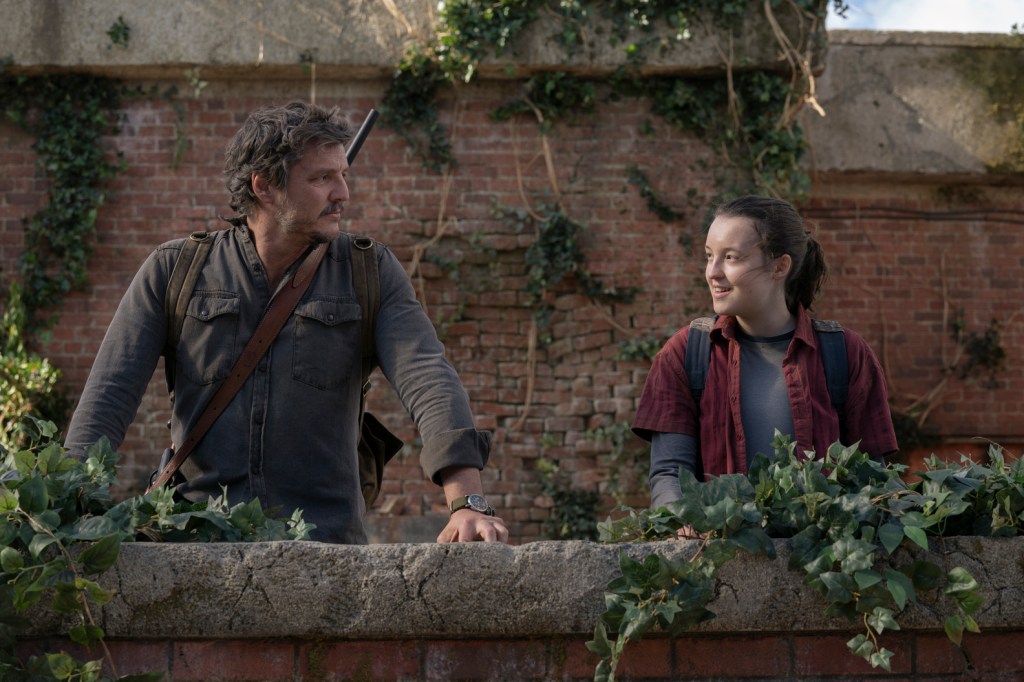
  • The Last of Us: An Incredible Adaptation

    The Last of Us: An Incredible Adaptation

    There are few games whose stories were as moving and affecting as the Last of Us, and it’s no surprise to its many fans how well this adaptation landed. The gameplay is good, but the meat and potatoes of this game was always its narrative. So, despite the storied history of failed video game adaptations, I and many others were excited for this show for a long time.

    I can certainly say I wasn’t disappointed.


    Changes Made for the Better

    I’ve talked before in this blog about how adaptation often necessitates change – going from one medium to another requires work. Things that are fun to play through might get stale to watch. Something that reads well might be hard to present in a way that captures the attention of the audience. Here, the creative team deviated from the game in several places (and held fast to the game in others), but never did I feel like what they were doing wasn’t the right move for the show.

    Bill and Frank receiving practically their own episode devoted to their lives together made perfect sense for the show over the gameplay sections involving their story. Exploring a booby-trapped town and battling infected was fun to play through, but I don’t think it would’ve worked as well as a viewing experience – certainly not as well as what we did get. Sam being deaf and needing Henry’s protection even more was inspired; Druckmann himself was frustrated he hadn’t thought of it.

    Every moment of this show oozed with the respect and love the original story deserved from the team behind it. Craig Mazin in the “Behind the Episode” segments spoke unabashedly about his love for the game. More than anything else, I think that care and devotion to the original really brought the best things forward while providing them the room to make changes and come out the better for it. As a result, we have two incredible stories that exist in a shared space, but their differences remain and give them each a different flavor. If you prefer a show, the series is excellent; if you love an interactive experience, the game is there for you.


    All Killer, No Filler

    There’s been a few criticisms online about the third and seventh episodes in the series. Some derided them as filler: pointless excursions that did nothing to further the story present. I read comments from users on Reddit that posited that all flashbacks are bad for media, in any story – that stories told nonlinearly are just inherently poorly written (which, ridiculous).

    Never mind that this whole thing is just outright about the characters within it. The journey across the country is just the backdrop for Ellie and Joel to come to find family in one another. Each obstacle they encounter and overcome isn’t them battling against FEDRA or learning more about the fireflies – it’s just an exploration of the world, how these characters behave within it, and, most importantly, how that changes while they’re orbiting around each other.

    An interesting facet of this criticism is that both of these episodes featured homosexual romance, and they received the harshest response. But, that doesn’t have anything to do with it, right?


    History Repeating

    For years after people reached the credits on the Last of Us, there were debates about the ending. This story is challenging. It is upfront and honest about these characters, about how human they are. Everyone knows that a parent will do anything to protect their child, and this story doesn’t shy away from it. It doesn’t give us an out.

    Joel commits an atrocity for Ellie. He refuses to let her die, to lose her, even though it will allow humanity to overcome cordyceps. And, playing the game, I was with him. I wasn’t going to let them kill Ellie. In the game, it’s a final shootout and run-and-gun, a finale and set piece. In the show, it is the most violence we get on screen between humans.

    To me, the show is even less ambiguous about whether the cure will work than the game. It is presented as a certainty. Yet, just as with the game a decade ago, people cast doubts about its effectiveness so that Joel’s actions can be justifiable. And, the fact of the matter is, that what Joel does is horrific, but many people would do the same.

    This story challenges us to recognize that. To accept that piece of human nature, what love can drive us to do. To behave like the cure is uncertain is to attempt to disengage with the question, to create a moral justification for the mundane horror humankind is capable of. And it’s interesting to see that happening again in the wake of the finale.

    Suffice it to say that I loved the show and I’m looking forward for more. A few weeks ago, the series inspired me to revisit the game’s sequel, and my next post will be about that experience. As always, thank you for reading. When you’re lost in the darkness, look for the light.

  • Returning to Warcraft

    Returning to Warcraft

    In July of 2021, news broke about a lawsuit against Blizzard Entertainment. The suit alleged that, as a company, Blizzard had systemically mistreated their female employees. There was a “frat boy culture” complete with “cube crawls” in which workers would drink at one another’s cubicles during the workday and grope their female coworkers. Employees who reported these behaviors faced retaliation. A female employee committed suicide during a business trip with a male supervisor who had brought sex toys with him on the trip. Their courtesy rooms for recently pregnant employees who needed to pump were poorly furnished and lacked security with someone reporting their breast milk stolen from the fridge. In the midst of all this news, two people were promoted to fill J. Allen Brack’s position once he left the company, Mike Ybarra and Jen O’neal, and they did not pay Jen as much as they paid Ybarra despite both of them advocating for it.

    I ended an eleven-year concurrent subscription to World of Warcraft the same day that this news broke. I was horrified and disgusted that this company that had been a part of my life for so long was like this. Unfortunately, it was more akin to the last straw than a strictly moral stance. Shadowlands was the least fun I’d ever had playing Warcraft, but I was more-or-less in charge of the guild I’d been playing with for over a decade, so I felt some sort of duty to stick around.

    When this news broke, I told the guild that when my time expired, I was done. I didn’t think I’d ever be coming back. My game time lasted until November, and on the last possible night we managed to finish the raid on heroic after several weeks of attempts on the final boss. I did not open Battle.net for an entire year after that moment.

    I kept up with some news. I watched the Dragonflight announcement and felt underwhelmed. I didn’t really think Blizzard would change – not in philosophy, and not in culture.

    But, maybe they did.


    New Direction

    I’ve been a fan of Preach Gaming for a long time. I think I first found his channel in 2012 during Mists of Pandaria, but I probably became a subscriber and fan in the time of Legion (2016). Like much of the player base, Preach had been heartbroken with the news and resolved to risk his entire livelihood and stop his daily coverage of Warcraft as his primary work for his videos. Like many of us, he had been passionate about this game for a long time despite it feeling worse and worse over time.

    Late last year, Preach spent his own money to take a trip to California and visit the Blizzard campus, interviewing the developers to talk about the new direction of the game and the fallout of the lawsuit. And, honestly, it began to look like the lawsuit had helped remove the problematic people who had been with Blizzard all those years. Things looked like they’d gotten better.

    The game was headed to a healthier place: one designed for the player’s enjoyment and not just their retention. Gone were the nonoptional activities that advanced your character’s power outside of the endgame pillars. Gone were the restrictive systems and grinds that made players feel the need to engage with content they’d long since grown tired of to continue gaining artifact and anima power. Playing multiple characters became something encouraged by the game, instead of a burden as players saw a laundry list of dozens of things they’d need to complete again to get their characters ready for the fun stuff they wanted to do.

    Even hearing this from friends, I was skeptical. Many of them hadn’t quit in Shadowlands, maybe it was just survivorship bias. Ultimately, I knew I couldn’t take anyone’s word but my own, so I decided to drop some of the gold I’d had in game for a token and give it a shot.

    It’s been about a month since then. I’ve leveled four of my characters to 70, when I only ever got one to 60 in Shadowlands. I’ve just achieved Keystone Master with my friends, despite us now needing to find people to fill our groups instead of having an active guild to run with. I’ve been making gold with my professions, in the hopes of continuing to pay for the game with that virtual currency. I haven’t been into the raid yet, but I’ve been completely satisfied with the dungeon endgame.

    That game is just fun again.

    But I’m not ready to give Blizzard a full pass.


    There’s Still Room to Improve

    Ultimately, the monetization of Blizzard’s games is still disgusting. Diablo: Immortal is not even a year old. Diablo 4 is set to release this year with a battle pass system for cosmetics and so far, they’ve been quiet on what, if anything, they’re doing with this system to address FOMO. And, at any point, they could fall into their old ways and start designing poor systems that restrict the players again.

    But, unlike before, I’m not going to stick around if the game stops being fun. There’s really not much else to it.


    As always, thank you for reading. Now let’s drop that ready check and get this run going.

  • 2022: Year in Review

    2022: Year in Review

    As we come upon the end of 2022, I wanted to take a moment to look back at all of the media I’ve enjoyed this year and talk about what I loved. Consider this a graduation of a “Ben Recommends” post, one plus-sized entry to talk about several games, books, movies, and TV shows that I didn’t devote an entire post to earlier in the year. Not all of these projects were released this year, but they were things I experienced for the first time in 2022. As always, we’ll avoid spoilers as much as we can, so without further delay, let’s dive in.


    Books

    I didn’t read as much as I’d planned to this year, but there was certainly no shortage of quality books that completely ensnared me. The craft on display inspired me to keep honing my own writing, to pursue the best I can manage and always improve.

    A Memory Called Empire & A Desolation Called Peace

    Arkady Martine’s Hugo winning duology was instantly one of the best books I’d ever read. I remember a moment – the first “on-screen” interaction between Ambassador Mahit and her predecessor Yskandr – that I just felt floored. Every time I pick up a Hugo winner, I find something, an idea or an impeccable presentation, some way to present a thought in a way that I hadn’t been able to consider or articulate myself, that just reminds me why I was so drawn to writing in the first place. I read Desolation before 2022’s Hugos were awarded, but I had no doubt it my mind it would snag the win.

    The Rage of Dragons

    I first picked up Evan Winter’s novel to read while I was unable to engage in my more persistent distractions, but I found it so gripping that even when I’d finally returned home, it was still consuming my time. Reading it reminded me of the way Game of Thrones made me feel when the show had been at its best, even despite how different the two tales are. The book is so deliberate, so consistent, that even moments that might drag in a lesser novel remained just as enthralling here. I can’t wait to catch up with the Fires of Vengeance and join everyone else in waiting for the next novel.

    Elder Race

    Adrian Tchaikovsky is an author whose name I’d see pop up on the fantasy subreddit time and again, so I decided to give Elder Race a try to dip my toes into his work. I finished the entire novella in a day, moving only when my spot on the couch started to become uncomfortable. Only once I’d finished did I set the book down, adding more of his work to my wish list for the holidays.


    Movies

    I only found my way into a theater a handful of times this year, catching The Batman and the new Marvel movies, and when I did sit down with a movie at home it was often one I’d already seen. Still, there was a notable exception that deserves a spot of recognition here.

    Knives Out & Glass Onion

    Say what you will for Rian Johnson’s entry into Star Wars, but the man knows how to craft an exciting mystery. I finally got around to seeing Knives Out this year, and I immediately knew I had to share the movie with my mother. It’s a wonderful film with surprising twists and turns all throughout, and Glass Onion certainly serves as a great sequel to expand the canon on Benoit Blanc.


    TV Shows

    There were a lot of new shows this year that I didn’t ever get around to watching. I’ve heard great things about dozens of shows, but never had the opportunity to check most of them out. Of what I did see, the two below really stick out as the best of the best.

    Better Call Saul

    I was a huge fan of Better Call Saul since the first season. Each time they finally got added to Netflix, I slammed through each episode, hungry for more. Peter Gould and Vince Gilligan worked a miracle, following up one of the best television dramas ever with a spinoff sequel, that, for me, surpassed the original. It’s a master class in pacing, in setup and payoff, in following through, even if it might become predictable. The final season stuck the landing, and I can’t wait to see what these guys do next.

    Andor

    If it hadn’t finished so close to the year, I think Andor would’ve had its own entire post. This show was something I’d always wanted from Star Wars: a gritty, grounded story about people rising against the tyranny of the empire. It isn’t afraid to take its time, to build clear stakes and show us who these characters are. Despite the darkness it is hopeful – things are bad, but there are those who are willing to fight, to build a tomorrow they will never see, so that things will be better one day.


    Video Games

    The video game industry continues to swing wildly between the best and the worst it can be. In the same year that we get Elden Ring and God of War: Ragnarok as examples of the pinnacle of what games can be, we get Diablo: Immortal, a blatant pay-to-win cash grab, and Pokémon Scarlet and Violet releases as a buggy mess with very little in the way of innovation despite being one of the highest grossing media franchises in the world. I’ve always been a bit of a patient gamer, only buying games on day one when they’re a highly anticipated release, but I still got around to a lot of games that were new this year.

    Vampire Survivors

    I was an early adopter of this tiny little game, picking it up at the start of February in early access. Very, very few games are as much of a value trade as this ended up being. For that $3 price point I got 54 hours of excellent gameplay, and they just released a $2 DLC that I’m excited to get around to diving into soon. For a while, I was keeping up with each patch and collecting the achievements as they came, but I hadn’t played since April until a couple weeks ago and I had a lot of new things to check out when I got back into it.

    Potionomics

    I was never someone who was interested in dating simulator games. I’d confidently skipped over them all, certain I wasn’t missing anything. Then, I saw someone playing Potionomics on a stream and decided to give it a shot. It had just enough of a game laid overtop that I bought in, and I enjoyed the game immensely. I stuck around for two full playthroughs to get all of the achievements on Steam and I have no regrets. I don’t think it’s completely changed my opinion on dating simulators, but if this team releases another one with another decent game on top, they’ve at a minimum earned my interest.

    Dicey Dungeons

    A friend of mine played this game on Game Pass and immediately knew I’d love it. That same day he sent me a gifted copy, and he was completely correct. This little roguelike battle game has been an absolute blast to play. The game gives you items to equip on each run that you use rolled six-sided dice to dismantle your foes with. There’s appropriately six characters to play as, each with their own unique dice interactions and mechanics: the warrior can reroll dice to get better results, the rogue wants lower dice values to unleash a flurry of attacks, the robot rolls each dice one-at-a-time with a hard cap on how much their CPU can handle each turn. With lots of comedy buried in the enemy profiles you unlock with each achievement, this game is overflowing with charm.

    My Game of the Year: God of War Ragnarok

    Ragnarok is a sequel in the most honest sense of the word. Everything about God of War (2018) is improved upon here: the gameplay is smoother, the systems are more developed with more options, things are expanded naturally, and the story and performances are top-notch. Elden Ring is absolutely one of the best games I’ve ever played, but Ragnarok appeals more to me as a person. It would be a lie to say Elden Ring lacks a narrative, but presentation between these two games couldn’t be more different, and I’m a sucker for a great story.

    There’s also something to be said for the difference in boss design in these two games. While you have so much more freedom in how you build your character in Elden Ring, there’s certainly a value in the way a God of War boss can have mechanics that require a specific answer to be dealt with. In Elden Ring and the Dark Souls games, what you’re capable of as a character can be so varied that I don’t believe there’s any mechanics in the game that the dodge roll can’t avoid. In Ragnarok, there was a boss that I needed to interrupt with a weapon throw, or a couple mechanics that I could use a specific arrow from my ally to interrupt, and it felt fantastic to go step-for-step in these dance-like encounters. Neither of these design philosophies is better than the other: what you gain in player choice and freedom in Elden Ring is incredibly valuable, while the limited choices you make in God of War can still adjust your playstyle, just not nearly as much as the decisions in Elden Ring.


    2022 delivered some truly incredible stories, and I couldn’t be more thankful to have the opportunity to experience them. I’m excited to see what new stories we can share with one another in 2023. As always, thank you for reading. I hope you have a happy New Year, and I’ll see you again soon.