
Tag: video-games

  • The Pokémon Problem

    The Pokémon Problem

    Back in 2019, Nintendo and Gamefreak made a highly anticipated announcement for the next mainline Pokémon games, Sword and Shield. With one controversial decision made during development, this became one of the most divisive reveals ever made by the company. For the first time, a mainline entry in the Pokémon series would not launch with support for all of the previous Pokémon. Sword and Shield would release with a significantly reduced roster.

    This announcement ignited a backlash still burning to this day. People called for boycotts. Internet petitions were signed. We desperately wanted Gamefreak to reconsider this choice, but the fandom’s arguments fell on deaf ears. Sword and Shield were the first Pokémon games I did not buy.

    Now, new releases are yet again on the horizon: Scarlett and Violet, and again, they will launch bereft of hundreds of Pokémon. This post is going to dive in on this controversy – to examine why it mattered then and why it matters now. To clarify why Gamefreak’s excuses don’t satisfy many former fans.

    Every Pokémon is Someone’s Favorite Pokémon

    I remember reading through threads upon threads on Reddit when the announcement came through. So many people were upset with Gamefreak’s decision and they were listing their favorites and despondent at the possibility that they might be absent from a future title. It was astounding how varied each comment read. Pokémon I had no care for whatsoever were hailed as a poster’s favorite, or their sibling’s, or their child’s. Pokémon widely considered ugly or poorly designed (people harped on the ice-cream-cone Pokémon for years) were beloved by someone. Some artist painstakingly designed these creatures. And it never sat right with me that they would just toss them aside like that.

    One of Gamefreak’s chief reasons for their choice came down to the ever growing roster of Pokémon in their games. Right now, prior to the launch of their new games, there are 905 Pokémon in the Pokédex. Yeah. It’s a lot. But it has always been a strength of their design that you can nearly always tell what type of Pokémon you’re up against immediately. Each environment carries an implicit rule for the encounters you can expect. You never have to walk into a gym or Elite Four match blind. The design of their trainer sprites clued players in on the type of Pokémon those trainers would field. Ultimately, I don’t find the claim of a bloated roster compelling in the least – I believe it to be undermined by the excellent clarity existent already in each game.

    At the time of the announcement, a counter-argument sprung up to call for the fanbase’s understanding of Gamefreak’s decision. Commentors asked, “How many people will this really affect?” How many players of the Pokémon games will really be disenfranchised by these limitations? What’s the percentage of Gamefreak’s player base that use every Pokémon or have collected them each? And, clearly, collecting a “Living Dex*” or constantly switching between dozens and dozens of Pokémon is something a low number of players would do in these games. I myself collected a near-complete Living Dex (missing only a percentage of the event-only Pokémon) back in Pokémon Y (and though Pokémon Sun ended up being my last venture into the franchise to present, I did not at the time invest the time to fill out that game’s Pokédex). But, I think that’s ultimately incorrect.

    The truth is, this decision affected every player. Maybe their favorite Pokémon had the fortune to remain in the roster, but their second, third, seventy-eighth favorite–maybe they weren’t. Perhaps they just had an enormously abridged list of potential enemies. The games lost the true extent of their variability, and I don’t think that was the right decision to make.

    Regional Forms: A Flawed Compromise

    In Pokémon Sun and Moon, Gamefreak added a new variable to the mix: classic Pokémon with new appearances based on the environments in the latest games. Looking back, I think this was an attempt at future-proofing the games by reducing the volume of new Pokémon added each game. I think it’s possible Gamefreak by the time of Sun and Moon knew they would need to change their strategy when it comes to the addition of new Pokémon, and with regional forms they might’ve been trying to walk the middle road. They could add new, exciting Pokémon appearances and fill out the availability of Pokémon types, while having a version of older Pokémon that wouldn’t carry the expectation of being carried forward. Alolan Vulpix is from Alola, after all. Do we need to worry about its availability in the next region?

    But therein lies the problem, right? What if Alolan Vulpix or Ninetails becomes you favorite Pokémon in the space of Sun and Moon? With a DLC package, many Alolan Pokémon became available in Sword and Shield, is that going to be standard going forward? Is it acceptable to put these Pokémon behind an additional paywall beyond the game itself?

    New Pokémon are always the most exciting part of each new generation. My friends that have interest in Scarlet and Violet love Fidough and Lechonk. They had their starting Pokémon selected months ago. Just rebranding an old design doesn’t carry the same splash. Wooper’s got a new type and a palette swap! Ok? It just doesn’t land in the same way this adorably chubby pig.

    Regional forms fell short of both of their goals I assume they were intended to reach. They aren’t as exciting to obtain as truly new Pokémon, and they didn’t aid in the reduction of new Pokémon in a way that kept them from needing to limit the roster. And it is a shame, because Pokémon reacting to different environments to become discernibly different is a good idea: I just think it came much too late. That role had already been taken by a wide array of new Pokémon being available in every region.

    There isn’t a Hoenn region Pidgey, they have Taillow. They have Plusle and Minun, Pikachu was in the exotic safari zone.

    Conclusion

    This post isn’t meant at all to call for a boycott or dissuade a Pokémon fan from buying the next game in one of their favorite series. Scarlet and Violet will at a minimum be the standard Pokémon fare, and they’ve been the name in monster-pet-battling games for decades. It’s likely to be another fun romp in a beloved series I spent a lot of time on as a child and teen and young adult. But I won’t be there until all of the Pokémon are in again – and not as DLC, but from the jump.

    As always, thank you for reading. Now, I need to go run uselessly after a trio of criminals while an electric rat rescues himself with a blast of lightning.
  • Pay-to-Win Video Games

    Pay-to-Win Video Games

    One of my earliest memories is about video games. I remember waking up one morning, I must’ve been around four or five. It was a Sunday, I think, and both my mom and dad were asleep, my brother was asleep. And, usually, I’d wake someone up to get breakfast made or something. Instead, I hurried over to the TV and the Nintendo 64, booted up Super Mario 64, and played. When my mom finally got up, she was so surprised to find me out there playing the game, having booted it all up on my own.

    Video games are an entirely different beast these days. Back then, you bought the game, you had it. That was all there was to it. I remember my brother and all his friends were way better at Super Smash Bros. and NFL Blitz N64 than me.

    None of them paid for that, though. They’d played the games more, they were older, and given time, I could match up to them no problem.

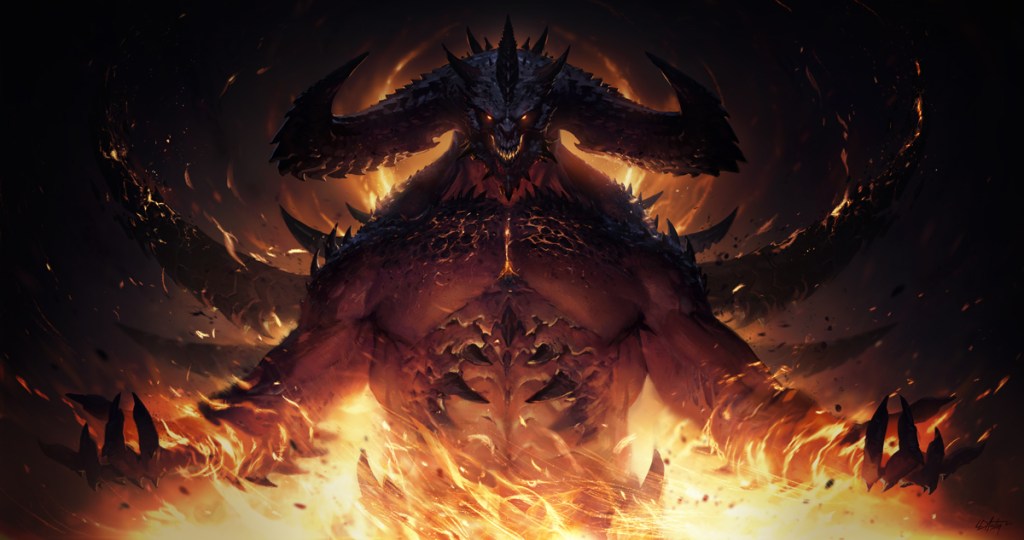
    Last week, Activision Blizzard released Diablo Immortal, and almost everyone I know is talking about this predatory pay-to-win video game. For those who don’t know, the math indicates that if you want to pay to get the best gear, it costs around $110,000 to max out a single character through the “legendary gems.” If you don’t want to spend a cent? About 10 years of daily gameplay. Assuming nothing more powerful gets added to the game from its launch state.

    Disgusting.

    Abusing Psychology

    These games use a lot of predatory tactics to get their players to throw their money at the software, no matter how miserly they might want to be. One of the most widespread tactics in games nowadays is utilizing your player base’s “Fear-of-Missing-Out” (FOMO). These games have cosmetics and powerful items that vanish after a set amount of time. Think you might want to use that cool superhero inspired costume? Buy it now for $19.99! Or try to gain enough in game currency in the one week its available to obtain it for “free.” It might never be available for purchase again.

    They also create these “daily bonuses” you “earn” by opening the game every day. They want booting the game to be habitual. These bonuses are usually redeemed in these games’ shops, to make opening them a more usual interaction for their players. Diablo Immortal, naturally, does this. Even worse, the game has a “battle pass” with a free track, a premium track, a super-premium pass with exclusive cosmetics, and an ability to outright buy the ranks of the pass. You buy it for $5, but if you fail to complete the pass, you miss out on the last of the rewards you didn’t earn at the end of the season. They’re just gone. Unless you spend some cash to boost through the last few levels.

    The battle pass purchase in Diablo Immortal also gives you extra inventory space – but just until the pass expires. This first one is gone on July 7th. And speaking of expiring rewards you might’ve paid for – there’s a “Boon of Plenty” system that grants daily login rewards and a few other perks. And if you don’t login on one of those days, those items that you’ve paid for just vanish into the ether. That’s worth $9.99, right?

    These games also use a secondary currency for their purchases. In Diablo Immortal, you spend your money on orbs that you then use to buy other items. Naturally, these orbs are sold in bundles that do not line up with the prices in the shop. The first time you play the game, you get a special deal to buy a box that gives you 60 orbs for $0.99 – but there’s nothing in the shop available for 60 orbs.

    Not to mention the elephant in the room: these games are targeted at children first and foremost. I remember when iPhone games were just becoming a thing. Seemed like there was a story in the news every week about some kid who’d spent $500 or more on a game without their parents realizing.

    Can Pay-to-Win be Ethical?

    There are some games on the market with features that aren’t as immediately pay-to-win as buying stronger units or better items than are available to free-to-play gamers. These games are often dubbed “pay-for-convenience.” People like to overlook that such a moniker betrays the truth of the systems: if the developers of the game have a financial incentive to make the game inconvenient, why wouldn’t they? If you can pay to skip levels, they have a financial incentive to make leveling as long and monotonous as possible.

    If, say, there’s a game that only has the same level of gear available for free-to-play and premium players, they have a built-in incentive to ensure that obtaining that gear is frustrating and repetitive, to push people toward a purchase. Why run the same dungeon, fight the same boss, dozens or hundreds of times, when you could swipe your credit card and be done with it? Be as strong as you can be?

    Even in a game like Lost Ark, which equalizes gear in a player-versus-player setting, still allows you to specifically purchase an advantage over other players. You can buy the items needed to reach the highest gear potency, or spend weeks, gated by daily timers killing the same bosses for the items to drop naturally. But doing the same thing over and over isn’t content. It’s a grind.

    Some games only release purchasable cosmetics, which can be a much more ethical model, but even then, in a lot of these games, having a cool-looking character is the goal of the endgame. Why make that very interesting set of gear available from in-game activities, when you can charge $20 for it?

    This gets even more absurd in another game from Activision Blizzard that I (until last year) played a lot myself. In World of Warcraft, you have to pay a monthly subscription to play the game (for the ongoing development of the game, allegedly), buy each expansion when it releases to access that part of the game ($40 minimum purchase every two years), and then there is a cosmetic shop that allows you to buy armor sets and mounts and pets for varying prices, and then there’s a way to exchange money for the in-game currency, which you can then use to buy services and goods from other players.

    It became obvious that the majority of work was going into these premium cosmetics instead of the ones added to the game. They’d add a mount with a dozen recolors spread out over several acquisition streams, and then a truly unique mount with a special skeleton to the shop for more money than you pay every month to play the game.

    Buying gold for your real money also lets people buy themselves through the hardest content in the game, obtaining achievements that normal players might work at for months without success. A rich player could buy themselves to “Gladiator,” a special PvP rank that comes with a unique mount each season, by buying gold for cash. A lot of people like to combat World of Warcraft becoming pay-to-win with the WOW Token (the option to exchange your real life money for the in-game gold) by reminding everyone that people bought gold or just straight-up exchanged money for these carries before the token was introduced, but that doesn’t excuse anything. Blizzard could have hired more employees to moderate their game to crack down on these actions that were clearly against the game’s Terms of Service, but instead they cut themselves in on the profit and legitimized it all at once.

    So, no, I don’t really think Pay-to-Win can be ethical.

    Becoming the Product

    Some people play these games with the stubborn insistence that it’s alright because they aren’t spending money. They aren’t aiding in the perpetuation of this predatory business model with their wallet.

    Instead, they’re doing it with their time.

    They become part of the product doing this. They become the fodder that high-paying “whales” (people who spend an inordinate amount of money on these games) are paying to smile satisfied at for having paid for their rewards rather than enduring the grind the free players suffer through. These are the players that get rolled over by the whales in competitive game modes, much to the spending player’s delight.

    The science has been around for a while: the vast majority of these games’ player bases never spend a dime, then a small percentage make a few purchases, and then the whales, a fraction of a percent of the player base, subsidize the entire game by spending thousands, such as the person who spent $14,000 dollars on Mass Effect 3’s multiplayer mode. Such as the streamers playing Diablo Immortal or Lost Ark and dropping thousands. These games need to exploit these players to financially justify their existence and all the time and money that went into their development.

    The Genuine Answer

    It’s clear by now that these games will never self-regulate. It is just a fact of business that these companies are always going to push the boundaries to obtain more money this quarter than the last. The only thing that stops them is legislation.

    Belgium and the Netherlands have laws preventing these games from obtaining widespread appeal in their countries. Games with “lootboxes,” where you spend money to obtain random rewards of vastly different value, are correctly identified as gambling mechanics and disallowed. These games must either adjust their mechanics, or as is the case for Diablo Immortal, never release in those two countries.

    And the gamers there are thankful for that.

    Additional Viewing

    Here’s an additional video if you are interested in learning more about this topic. This is a game developer conference discussing the exact methods they should use to entice “whales” into their games.

  • How Elden Ring Could Perfect the Soulsborne Formula

    How Elden Ring Could Perfect the Soulsborne Formula

    I’ve been following the Soulsborne series since I was in high school. I didn’t pick up the series at the time, busy as I was with school and a few other games (spent a lot of time playing MMOs in high school), but a friend of mine had the game and played through it at my house, the go-to hangout spot. Just watching, I knew the series was something special. But I was of a mind that I’d get frustrated battering my head against the same bosses over and over again, and didn’t give the game a shot.

    When Dark Souls III released, I took the plunge. My worries of frustration were immediately snuffed. The game was fair first and foremost – it wasn’t like the major boss encounters in the MMOs I was playing, where bad performance from one group member could sink the whole attempt. It was just me and the boss. If I died, it was because I did something I shouldn’t have.

    Seeing how much I’d fallen into the game, a friend of mine gifted me Bloodborne, and I slammed through it hungrily. Through both games I settled into fighting evasively with a big sword, weaving around attacks to find my openings.

    That playstyle (and my lack of passion for the aesthetic) led me to bounce off of Sekiro, but spectating alone proved enough for me to appreciate the game. And hopefully I’ll come around on it eventually and give it another go.

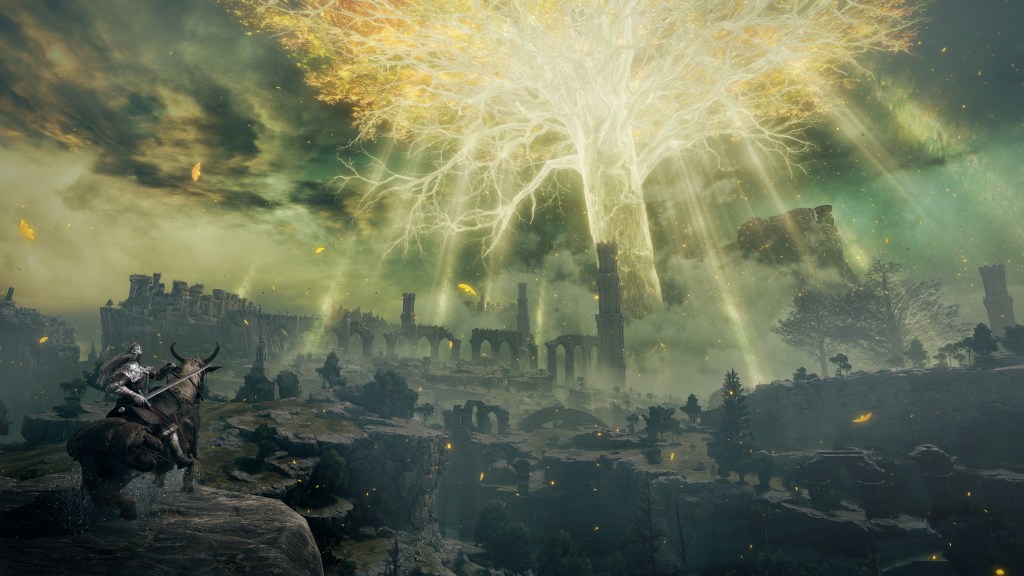
    That response to Sekiro made Elden Ring’s announcement feel like the exact thing I wanted to hear from FromSoftware. It’s been my most anticipated game since 2019, and a month ago I finally got my hands on it.

    It did not disappoint.

    A Perfect Storm

    It’s been a week since I finished my first playthrough. And I do need to clarify first – I definitely started another character the following day and if my six completions of Dark Souls III are any indication, I’ll sink several more hours into Elden Ring before I set it aside entirely.

    I’m not here to discuss the story, though. No interest in spilling spoilers today. Instead, as you might have guessed from the title, I want to highlight the game’s design.

    Adding an open world to Elden Ring could’ve been a mixed bag. I think, ultimately, it’s vastly more beneficial than detrimental to the game. In previous Soulsborne entries, if you came to a difficult boss, it was a roadblock. There might be some optional areas, but for the most part, you needed to break down the barrier before your story could continue. Now, it doesn’t have to stall out your experience.

    I know the first time I encountered our friend the Fell Omen, I was not yet good enough at the game. I wasn’t used to the delays in the enemy swing times, I was dodging far too early, and I built to wield a big sword in two hands so I wasn’t parrying either. Margit whooped me. In another Souls entry, I might’ve been more prepared for that first boss, but in Elden Ring I wasn’t.

    But, after an undisclosed number of YOU DIED screens, I turned away from that fog wall and opened that map up again. I’d basically gone straight to Margit from the opening of the game. What else was out there anyway?

    A whole hell of a lot. I got better at the game, I leveled up, and I came back and got my revenge.

    There’s two ways to look at that experience. You could say that the difficult spikes in the game’s primary progression path are uneven to justify the open world. I prefer to look at the game as offering more paths to explore than I expected. I know people that returned Dark Souls III after hitting a roadblock on Iudex Gundyr, the first boss. If those players give Elden Ring more of a chance since they can travel elsewhere, it can only be good for the game.

    Open World Done Right

    For the most part, I’ve cooled on open-world style games. Every now and again, one will come along with innovations or a setting that catches my interest, but there’s a dozen Assassin’s Creed games and only one Breath of the Wild (for now). That piece of Elden Ring was the one thing that made me consider pumping the breaks. But, FromSoftware knows how to do it right.

    Gathering? I don’t know if I’ll ever be able to stomach a game that forces you to entirely stop moving to collect crafting materials after Elden Ring allowed me to sprint passed rowa bushes and flowers on horseback spamming to grab them all up. Crafting? I almost entirely ignored it, but I know the value that it has. The consumable items like throwable firebombs and weapon enhancements can be used so much more now that you can find items in the world to make more of them.

    Even FromSoftware’s own systems were iterated on in a new way. Getting more flasks for defeating powerful foes or groups of enemies made exploring much easier to sink into. Stakes of Marika allowing a respawn location outside of sites of grace (bonfires) is inspired. I absolutely dived into the open world bosses and areas without hesitation, even if I hadn’t found a traditional checkpoint in a while.

    And exploration was so rewarding in Elden Ring. Each small little dungeon had something interesting in it. Even if the aesthetics or bosses became repetitive, there was nearly always something about the delve that made it different from anywhere else you’d been. Finding a Cleanrot Knight in a cave before I’d begun encountering them in the world forced me to respect their moveset and learn how best to battle them with how I’d built my character. For me, it never got stale to explore the game.

    I’d be surprised if a game better than Elden Ring comes out this year. But even all my love for the experience doesn’t mean the game was perfect.

    The Shortcomings

    FromSoftware’s approach to storytelling has its ups and downs. Every single item and piece of dialogue can help illustrate the world and lore in such a mystifying and enticing way that leaves you hungry for the next discovery. The other side of that coin, however, is how easy it can be to miss something.

    In my playthrough, I’d already been to many of Elden Ring’s endgame areas and reached the final few bosses before my friends directed me to huge, incredible dungeons I wouldn’t have found otherwise. Having no direction to find those places – even when some of them were directly related to quests I’d begun with the game’s NPCs – can lead to so much missed content. It can be convoluted in a way that isn’t intuitive to follow.

    Between that and the other instances of open world exploration, my character ended up vastly over leveled for some sections of the game. While that same ability paved my path to success against Margit, it felt worse in these areas – because I hadn’t left them to come back to them stronger later on. I’d arrived already more powerful than I would’ve preferred to be. While I still fall on the more positive reception to the open world in Elden Ring, there is absolutely something to be said for the difficulty scaling FromSoftware is able to achieve in a linear experience.

    And, as another potential detriment of the open world, its vastness may prove to be a deterrent for repeat playthroughs. While I’ve already begun a second character myself, I absolutely struggle to imagine plaything Elden Ring as many times as I did Dark Souls III. That’s not to indicate that it isn’t worth the cost, though. My one completed playthrough clocked in just under half the total time I’d spent on Dark Souls III. It’s a vast experience with a lot on offer.

    Though I might be tempted skip Melania next time …

    Looking Forward

    In conclusion, there’s lessons I think FromSoftware can take from this ambitious project that, in my eyes, is an overwhelming success. Truthfully, if there’s one AAA developer that can leverage that opportunity to learn, I believe it’s FromSoftware. I’ve got my fingers crossed for some sweet DLC, but if that’s not in the cards, I’ll be there waiting for their next release.

    Now if you’ll excuse me, I need to go collect my runes.