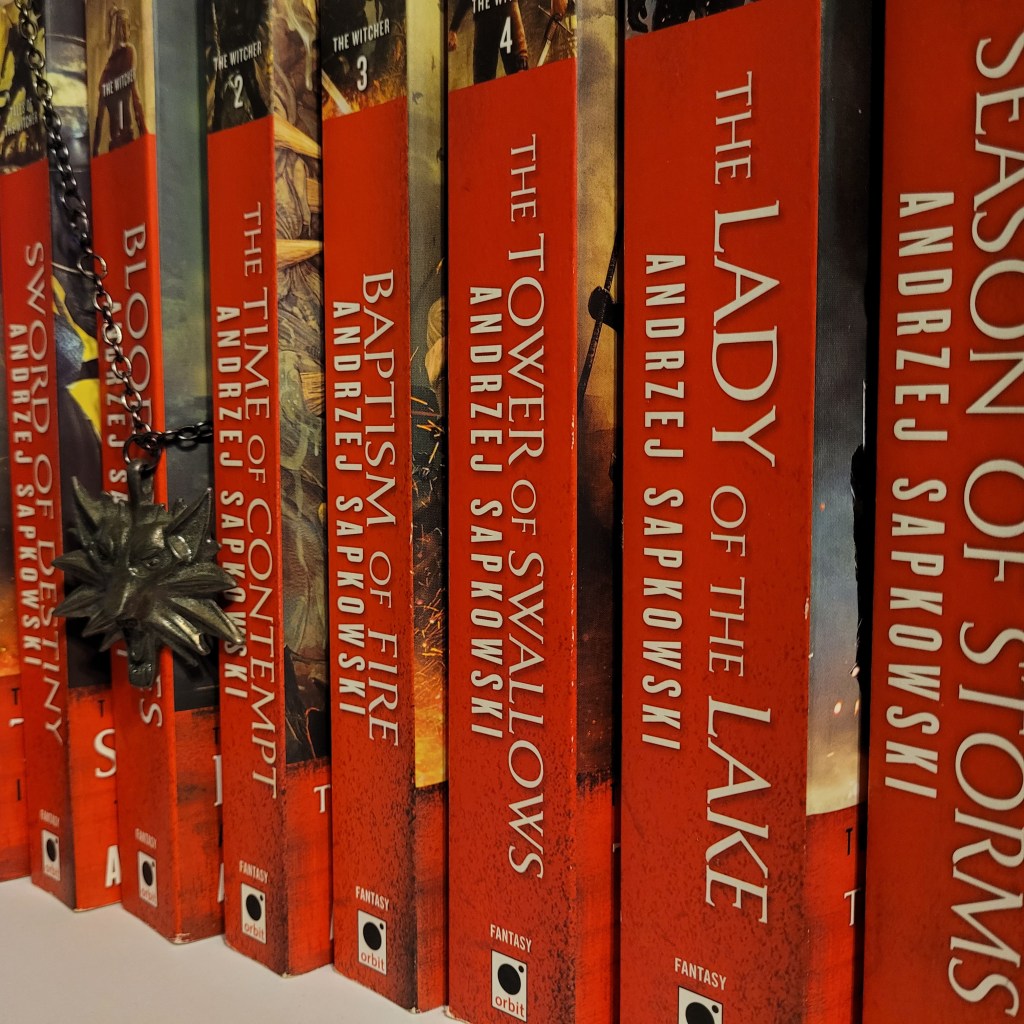
Sapkowski’s The Last Wish is a favorite of mine. I don’t often reread books, but after the second season of The Witcher on Netflix released, I revisited this one. One of my favorite short stories in the collection is The Lesser Evil, and I doubt it’s a coincidence that it’s what Netflix chose to adapt for their first episode of the series.
If you’re unfamiliar with it, I genuinely recommend picking up The Last Wish and giving it a read, or at least watching that episode of the show.
I want to talk about something from that story that I’ve seen be … misunderstood by a few people. Something that’s taken out of context and bandied like it means exactly what it says. Major spoilers for The Lesser Evil below.
The Context
In the short story, Geralt arrives in Blaviken and reunites with an old acquaintance who invites him to stay in his home. On his way into town, Geralt came across a monster and slayed it. He hoped there might be a contract for it in the town, but there isn’t. He’s about to throw it’s carcass out, when some of the townspeople mention that a wizard in town might have a use for the thing. Geralt decides to try his luck.
The wizard doesn’t want it. But he does want to hire Geralt for another monster that’s been chasing him. He talks about a Curse of the Black Sun, that women born during an eclipse are mutated, cursed, or possessed by demons. The wizard had encountered such a one, and tried to have the girl executed, but she escaped. He asks Geralt to kill her before she can try to hunt for him here, in Blaviken, and by her presence, lock him in his tower. Geralt doesn’t kill people for money, only monsters, and Stregobor pleads that he needs to compromise, as the wizards of old did when the curse first came around, and choose the lesser evil.
“Evil is evil, Stregobor,” said the witcher seriously as he got up. “Lesser, greater, middling, it’s all the same. Proportions are negotiated, boundaries blurred. I’m not a pious hermit. I haven’t done only good in my life. But if I’m to choose between one evil and another, then I prefer not to choose at all.”
Renfri, the girl allegedly cursed by the eclipse, speaks with him later. The legend behind the curse ruined her life, she was a princess, but Stregobor telling her family of the curse got her thrown out of the castle. She’s fought to survive, killed to avoid being killed, stolen to satiate starvation. She asks Geralt to kill Stregobor, as a lesser evil, and Geralt refuses again, saying he doesn’t believe in a lesser evil.
“You don’t believe in it, you say. Well you’re right, in a way. Only Evil and Greater Evil exist and beyond them, in the shadows, lurks True Evil. … And sometimes, True Evil seizes you by the throat and demands that you choose between it and another, slightly lesser, Evil.”
So Renfri employs the Tridam Ultimatum. Her and her crew are going to kill people at the market until the wizard vacates his tower. Geralt, panicked, rushes to the market before it opens to stop them. It ends in slaughter, Geralt forced to kill Renfri and her crew. Stregobor would have let them eradicate the whole town before he left his tower, and Renfri would not leave until she at last had her revenge.
The Evil of Inaction
Geralt, in his obstinance, didn’t act. Despite his sympathy for Renfri. Despite his existing disdain for Stregobor. It sticks with him forever. By not acting, he allowed a greater evil. By choosing to refrain, he chose a greater evil.
It’s crazy how often I’ve seen the quote thrown around without irony. The story very clearly shows how that philosophy just doesn’t work. Refusing to choose doesn’t mean you are absolved – after all, you haven’t refused to choose, you’ve just chosen to do nothing.
We can’t always see what all the consequences of our actions might be. We can only try and make our decisions with empathy and love in mind. Strive always toward good. Even if it means the most you can do is choose the lesser of two evils.
 Ben Stovall Blog
Leave a comment