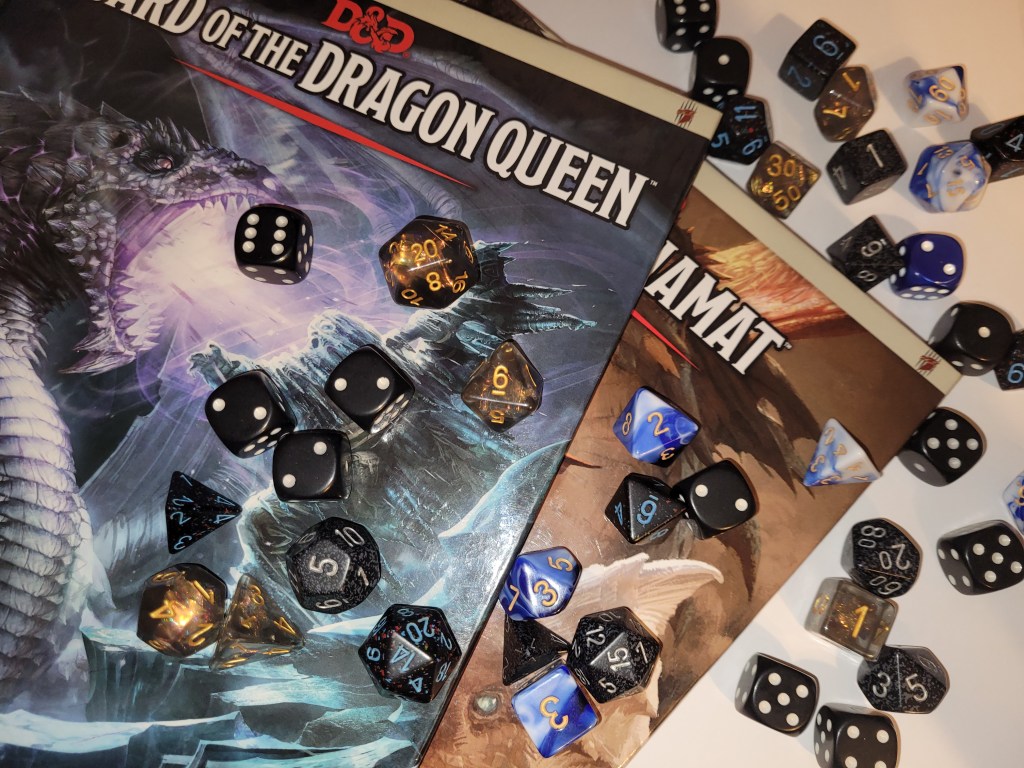
One facet of this double-book adventure that makes me wonder if the two books were written much in conversation with one another is the incredibly brief section Hoard of the Dragon Queen contains about Waterdeep. After months of travel with a caravan whose ultimate destination is Waterdeep, the module spares only six paragraphs for the city, and they’re basically all about how quickly the cult chooses to move through the city and in what direction. Now, it is still the party’s objective to follow the amassed wealth to its ultimate destination, but given that in Rise of Tiamat Waterdeep becomes a linchpin location the party returns to repeatedly, I wonder if this module should’ve at least contained a little bit of information on the city itself?
Perhaps WOTC hoped DMs would buy the Sword Coast Adventurer’s Guide in addition to the module if they needed more guidance on the default setting, or they wanted to leave things vague enough for one to transplant the module into a homebrew setting (though personally I think that would be better printed to be ignored, rather than withheld). Either way, the module doesn’t present Waterdeep as much of a playspace when the party first ventures through it; instead, it’s just one more brief blip on their road trip north. At least it’s almost the last one.
Between Waterdeep and the Mere of Dead Men lies Carnath Roadhouse. This small waystation serves as a depot for the resources being used to rebuild the road between Waterdeep and Neverwinter, and also a clandestine place for the cultists to try and lose any stubborn adventurers. Now, between being a little weary of more time on the road (and also obtaining so much information from Frida Maleer/Frulam Mondath with Detect Thoughts), my players more or less skipped Carnath Roadhouse. They had a brief stop, engaged a little with Bog Luck, and managed to find the tunnel out into the Mere before the cultists caught up to them. (Yes, caught up. With Longstrider uses and a much more agile group, the party got out ahead of the cultists and beat them to the Roadhouse and the Mere, but this is not without its own consequences and challenges; more on that later.)
I don’t feel we lost much in glossing over the Roadhouse. I think it can be a decent enough hook for a session or two, but even the module itself doesn’t consider this particularly monumental – it’s the one chapter in Hoard of the Dragon Queen that doesn’t provide a level to your party if you choose Milestone Advancement. It is more or less one inn and one encounter, so it’s not the most integral thing. It’s almost more like a road event from chapter four rather than a full chapter on its own.
And that let us move forward into a proper dungeon.
Castle Naerytar
After so much time spent on the road, the module finally remembers the game’s core elements once the party enters the Mere of Dead Men: dungeons and dragons. Twin dragons live within the Mere, and they masquerade as a singular dragon of incredible speed, coordinating attacks on distant locations to appear impossibly swift. These dragons are aligned with the Cult of the Dragon thanks to Rezmir’s persuasion, and they’ve shaped much of the situation within the swamp once the party arrives.
For the dungeon, we have Castle Naerytar (which we held as an ancient name for the place, but renamed by the cult to Castle Umberstone), a sinking old fort whose sole redeeming qualities in the eyes of the cult are the cheap labor of the dragons’ enslaved lizardfolk and the teleportation circle in the basement.
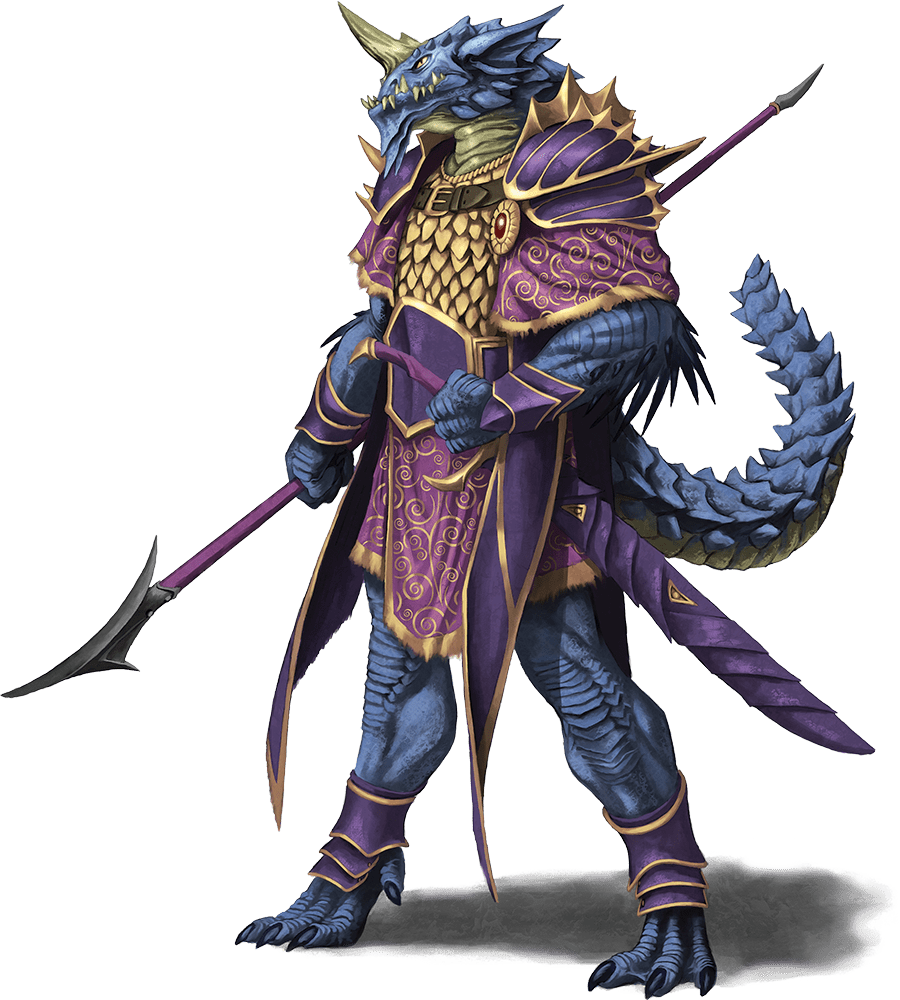
In the module, the party is meant to be presented with an option to help liberate these lizardfolk from the cult’s harsh yoke and that of the cult’s gleeful allies, the bullywugs. Now, I personally like lizardfolk a lot more the bullywugs, and I decided to make a slight change here. I exchanged the frog-folk for a second tribe of lizardfolk, ones who’d been in service to the dragons (but not knowing there were two) for generations: the Death-Hiss tribe. Then, the module’s original lizardfolk were called the Wizenroot tribe, and both were visible in their allegiances. The Death-Hiss, having long served the dragon(s) and several of their leaders being gifted with dragon’s blood or scales to grant them magic or armor, they had taken on the aspect of their masters: dark scales, sunken features, skull-like miens. The Wizenroot, meanwhile, were mostly green in scale and haler in appearance. These tribes had lived in quiet rivalry for many years, until one of the Wizenroot betrayed them in exchange for draconic sorcery – a lizardfolk I named Blessed Ulithara.
My party quickly struck an accord with the Wizenroot tribe, and prepared to assault Castle Umberstone. Their allies, however, couldn’t prepare to aid them in a full-on assault until after the cultists would arrive, negating the lead the party earned from their earlier actions. Rather than wait for those reinforcements to arrive, the party snuck into the castle (I have too many PCs that can fly), had a small dungeon crawl to get into position, and then we ran a wave-based encounter of them trying to distract the guardsmen of the castle until Jemma Gleamgold could throw open the gates and allow what few Wizenroot soldiers were nearby to flense the Death-Hiss from the fortification. This, obviously, isn’t anything like how the module would have you run this dungeon, but it proved an exciting combat for my players, and resulted in the death of an NPC ally that broke their hearts. (Not Jemma.)
The leader of the Death-Hiss tribe remained beneath the castle in the tunnels below during this commotion, and we retained enough of a dungeon crawl in the tunnels as the last holdouts of the Death-Hiss were slain. Then, our heroes used the teleportation circle.
Skyreach Castle
In the second post in this series, I explained most of my table’s tour of the Hunting Lodge in this campaign. We spent even less time in Parnast, however. Accompanied by Talis, the party feared they might have an angry abishai after them, and after only an hour of their time in the village, they watched Skyreach Castle begin to take flight. (They rested overnight at the lodge, and Rezmir didn’t want to take any chances after the forces at Naerytar failed to check-in.)
My party immediately activated their various means of flight and gave chase. And, in Skyreach, I once again made some pretty substantial changes. First, rather than Blagothkus simply going along with the cult’s wishes in hopes that the dragons amassing power might spur his kin to action, he’d become their despondent prisoner. Shortly after allying with the Cult of the Dragon, Rath Modar (and his simulacrum) assisted in capturing Skyreach for the cult, and he used dark sorcery to gain command of Esclarotta’s spirit as it became the new steward of Skyreach. Too frightful of their ability to harm his wife’s spirit, Blagothkus surrendered.
As our party approached Skyreach, they heard her voice, urging them forward. “Enemy of my enemy, be welcome. Find Blagothkus in the Grand Tower. Grant him your aid and rid Skyreach of its usurpers. I will hide you from the sentries.” Talis expressed concern for listening to this strange voice, but followed the party to their chosen destination.
Freely, I admit the following changes are much more specifically to my taste (and that of my table), but rather than retain the whole dungeon with its myriad encounters with cultist warriors, ogres, and kobolds that would only be dangerous in excessive numbers, I instead used this scenario to allow the party to act as a clandestine strike force. Blagothkus shared with them a map of the castle, and expressed that once the cult’s leadership – Rezmir, Sandesyl, (the simulacrum of) Rath Modar, and Glazhael – were vanquished, he could rally the ogres within the castle to eliminate the cultists and grant them sanctuary. I gave the party the unlabeled copy of the map from the module, and explained which rooms these targets could be found within. (Almost all were where the module would place them. I moved Rezmir into the larger room beside her chambers and reimagined it as a throne room, but otherwise, little changed here.)
One by one, my party snuck through the castle to these various encounters (using the tunnels to Glazhael and Rezmir, then flying down to Rath Modar’s balcony) and vanquished them each in turn. The vampire, they managed to burn within her coffin before night fell by exposing her to the sun, and Blagothkus’s forces exterminated the cultists, who failed to mount much of a counter offensive with their leadership eliminated.
And, with that, we reached the end of Hoard of the Dragon Queen and the first half of his module. From the various notes and documents in the castle, from the spirit of Esclarotta herself, the party discovered the destination of all the stolen gold and were on their way back to Waterdeep to begin the next leg of their adventure, with a Mask of the Dragon in hand.
One which an Identify spell had given them a lot of information on … But that’s a tale for another time.
Sorry for the delay since the last post; there’s been quite the string of games since then, huh? The last season for the War Within began and, as usual, I was playing a ton for a few weeks there to get all the new gear. Just as that settled down, we had the sudden release of Silksong! which I really did at times doubt we’d ever see. And then Hades 2! But, as of writing this, I’ve wrapped all those up … just in time for Legion Remix on warcraft.
… Look, let’s hope I get something else out this month, but no one hold their breath, alright?
As always, thanks for reading! Good luck out there, heroes.











 Ben Stovall Blog