Author: Ben Stovall

  • D&D: Power Differential Between Classes

    D&D: Power Differential Between Classes

    In D&D, martial fighters and spell casters have vastly different powersets. In any game with choices that affect a character’s power, there will always be power differential between the presented options. One will always be the strongest, most efficient way to damage or control your foes – and one will always be the weakest, least valuable option. When it comes to the fandom at large, there’s a widespread conception that martial characters (fighters, monks, barbarians: those who do not have access to spells) are inherently weaker and more restricted than their spell casting counterparts.

    This is a bit of a strange topic for me.

    In my decade and more of running D&D, I’ve never had someone play a martial character at my table and be upset about the power differential. This is not at all to imply that it doesn’t exist or isn’t as bad as the math makes it out to be. A wizard throwing a fireball into a packed room is overpowered by design, and of course it does more damage for that action than the fighter can manage with two swings of their sword.

    Design-wise, Wizards thought that the best way to address the differential would be in limiting the number of fireballs that wizard can throw. At fifth level, the wizard gets two spell slots of the requisite level, and the ability to get another one back on a short rest once a day. In the books, Wizards listed their ideal adventuring day to consist of seven to eight encounters, so the wizard wouldn’t be able to fireball every battle, while the fighter’s steady ability to attack twice in a round would never lose value throughout the day.

    But I don’t know anyone who has ever had consistent adventuring days with that encounter volume. D&D has evolved a lot over the years, and it isn’t just a string of dungeon crawls with a half dozen encounters between each long rest. At my table, I generally only run somewhere between three and five encounters in a day, but I ratchet them up in difficulty: almost every one of them would qualify as a “deadly” encounter by the game’s rules, and once the party starts getting magic items, they ramp up even further. Yet, despite that jump in difficulty, I still haven’t had my players complain that their fighter isn’t able to clear a room like the wizard can. In my own limited opportunities to be a player at someone else’s table, I’ve usually chosen martial characters and never felt disadvantaged by the differential.

    So, I want to try and nail that down. Here’s some factors I’ve had on my mind since I discussed this with a few friends. Let’s see if we can parse something out.

    Choice in D&D

    One piece of this discussion I haven’t touched on yet is the versatility of spells. Wizards and clerics have a lot of different things they can accomplish with their magic, both in and out of combat. It trends toward the belief that fighters and barbarians need more things they can do outside of combat, more abilities and tools that can be used so they’re more valuable on the whole. In Tasha’s Cauldron of Everything, they added some optional features to barbarians that trended this way: giving them more skill proficiencies and the ability to cast Speak with Animals as a ritual.

    I’m not sure that’s the right direction for them to move, though. A friend of mine is beginning a new game in a few weeks, and I’ve actually settled on a fighter for my newest PC. I’m incredibly excited about my character, who I’ve built to be a normal freaking guy. I specifically don’t want him to gain innate magic in any way during the game – from an item? Sure, that’s fine. But he is just a normal dwarf.

    I don’t worry at all that I’m going to be lacking choices with him. Not in combat or out of it. Every piece of every turn is a choice – where I’ll move, who I choose to attack, how I might spend an action if no one is in reach of my weapons. A wizard or cleric might have the same decision points and a few more when it comes to their long list of spells and different levels at which to cast them, but in the grand scheme of the game, I don’t think it’s really that many more.

    Because character creation is the most amount of choices anyone makes in D&D, and the moments between combat are nearly just as freeform as that. I think the standard volume of decision points that every character has access to is so high by default, that the additional decisions provided by access to spellcasting is negligible overall.

    And maybe it’s really an implicit understanding that fuels this. Anyone who chooses to play a fighter knows that they won’t have spells (with the exception of one subclass). Understanding that intrinsically might be why none of my players have ever broached the topic.

    Wizards Do Not Cast Spells in a Vacuum

    As I mentioned before, fireball is by design the most effective tool to clear a packed room. It is intentionally a spike of power that breaks the more linear advancement of spells. Burning Hands is the most near-equivalent spell at 1st level, and it is only 3d6 in a 15-foot cone originating from you. Fireball is a 20-foot radius sphere that you can place anywhere within 150 feet that deals 8d6 damage. It is safer, larger, and more damaging. Casting Burning Hands at 3rd level only deals a measly 5d6. The value between the two isn’t even close.

    It obviously does more damage on cast than a fighter can manage as long as there’s multiple targets. In a formless void of grey sludge, the wizard can destroy more of that sludge per round with his spells than the fighter can manage.

    But no combat plays out like that.

    If there are three enemy martial characters in a battle that the party’s fighter is keeping from chasing down the wizard, and, safe from repercussions, that wizard casts a spell that changes the texture of the battle? I believe it’s fair to say the fighter contributed to that spell’s casting. Battlefield control isn’t something that only spells accomplish – every square of movement affects how the enemies will act on their turn, and their actions affect the party’s decisions. Hold Person is an excellent tool to lock an enemy down, but it gets its best value when a martial can capitalize on the critical strikes it confers. The best way to remove an enemy from the fight is to reduce their hitpoints to 0, after all. Hold Person itself doesn’t do any damage, and the enemies can save out of the effect at the end of each of their turns.

    A Point of Philosophy

    All this boils down to D&D being first and foremost a game about teamwork and camaraderie. When I play a fighter and see a wizard cast Fireball and clear a room of mooks, I never think, “Man. As a fighter, I can’t do anything like that.” I think instead, “Wow, incredible! Thank goodness one of my allies can do something like that.

    I’ve never sat at a table where the characters that killed the most enemies got bonus experience – when the encounter ends, everyone gets the same amount. That’s how I’ve always run it. That’s how Wizards intended it to be run with 5th edition, because no matter whatever differential in power exists, every encounter is affected by every member of the party.

    And, again, I am not at all claiming that the differential isn’t there – it is. But I do think it’s become a bit overblown of late. With the OneD&D information on a slow drip, people are wondering what, if anything, might be done to address it. Will Wizards back pedal to 5th edition’s play test and give every fighter some maneuvers? (I think that would be great.) With the nerfs to Sharpshooter and Great Weapon Master, people are curious if the gap is going to widen. I’m not worried–because if things don’t shake out, I’ll just keep running 5th edition.

    Maybe the differential is felt more keenly for your players, or even for you. If that’s the case, the best thing to do is to talk to your DM or the table and find out if there’s something to be done for it or change tack. Keep presenting interesting arenas and scenarios that cause variation in the value of a spell – Spirit Guardians on an armored cleric is a great tool to deal damage to a thick mob of enemies, but when there’s only a few, spread out spell casters and bowmen, it’s not the end-all answer any longer.

    As always, thank you for reading. Good luck out there, heroes.

  • The Pokémon Problem

    The Pokémon Problem

    Back in 2019, Nintendo and Gamefreak made a highly anticipated announcement for the next mainline Pokémon games, Sword and Shield. With one controversial decision made during development, this became one of the most divisive reveals ever made by the company. For the first time, a mainline entry in the Pokémon series would not launch with support for all of the previous Pokémon. Sword and Shield would release with a significantly reduced roster.

    This announcement ignited a backlash still burning to this day. People called for boycotts. Internet petitions were signed. We desperately wanted Gamefreak to reconsider this choice, but the fandom’s arguments fell on deaf ears. Sword and Shield were the first Pokémon games I did not buy.

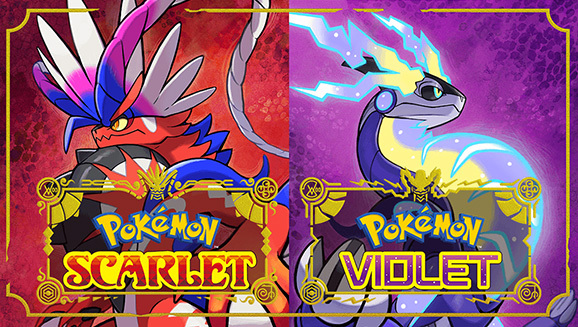
    Now, new releases are yet again on the horizon: Scarlett and Violet, and again, they will launch bereft of hundreds of Pokémon. This post is going to dive in on this controversy – to examine why it mattered then and why it matters now. To clarify why Gamefreak’s excuses don’t satisfy many former fans.

    Every Pokémon is Someone’s Favorite Pokémon

    I remember reading through threads upon threads on Reddit when the announcement came through. So many people were upset with Gamefreak’s decision and they were listing their favorites and despondent at the possibility that they might be absent from a future title. It was astounding how varied each comment read. Pokémon I had no care for whatsoever were hailed as a poster’s favorite, or their sibling’s, or their child’s. Pokémon widely considered ugly or poorly designed (people harped on the ice-cream-cone Pokémon for years) were beloved by someone. Some artist painstakingly designed these creatures. And it never sat right with me that they would just toss them aside like that.

    One of Gamefreak’s chief reasons for their choice came down to the ever growing roster of Pokémon in their games. Right now, prior to the launch of their new games, there are 905 Pokémon in the Pokédex. Yeah. It’s a lot. But it has always been a strength of their design that you can nearly always tell what type of Pokémon you’re up against immediately. Each environment carries an implicit rule for the encounters you can expect. You never have to walk into a gym or Elite Four match blind. The design of their trainer sprites clued players in on the type of Pokémon those trainers would field. Ultimately, I don’t find the claim of a bloated roster compelling in the least – I believe it to be undermined by the excellent clarity existent already in each game.

    At the time of the announcement, a counter-argument sprung up to call for the fanbase’s understanding of Gamefreak’s decision. Commentors asked, “How many people will this really affect?” How many players of the Pokémon games will really be disenfranchised by these limitations? What’s the percentage of Gamefreak’s player base that use every Pokémon or have collected them each? And, clearly, collecting a “Living Dex*” or constantly switching between dozens and dozens of Pokémon is something a low number of players would do in these games. I myself collected a near-complete Living Dex (missing only a percentage of the event-only Pokémon) back in Pokémon Y (and though Pokémon Sun ended up being my last venture into the franchise to present, I did not at the time invest the time to fill out that game’s Pokédex). But, I think that’s ultimately incorrect.

    The truth is, this decision affected every player. Maybe their favorite Pokémon had the fortune to remain in the roster, but their second, third, seventy-eighth favorite–maybe they weren’t. Perhaps they just had an enormously abridged list of potential enemies. The games lost the true extent of their variability, and I don’t think that was the right decision to make.

    Regional Forms: A Flawed Compromise

    In Pokémon Sun and Moon, Gamefreak added a new variable to the mix: classic Pokémon with new appearances based on the environments in the latest games. Looking back, I think this was an attempt at future-proofing the games by reducing the volume of new Pokémon added each game. I think it’s possible Gamefreak by the time of Sun and Moon knew they would need to change their strategy when it comes to the addition of new Pokémon, and with regional forms they might’ve been trying to walk the middle road. They could add new, exciting Pokémon appearances and fill out the availability of Pokémon types, while having a version of older Pokémon that wouldn’t carry the expectation of being carried forward. Alolan Vulpix is from Alola, after all. Do we need to worry about its availability in the next region?

    But therein lies the problem, right? What if Alolan Vulpix or Ninetails becomes you favorite Pokémon in the space of Sun and Moon? With a DLC package, many Alolan Pokémon became available in Sword and Shield, is that going to be standard going forward? Is it acceptable to put these Pokémon behind an additional paywall beyond the game itself?

    New Pokémon are always the most exciting part of each new generation. My friends that have interest in Scarlet and Violet love Fidough and Lechonk. They had their starting Pokémon selected months ago. Just rebranding an old design doesn’t carry the same splash. Wooper’s got a new type and a palette swap! Ok? It just doesn’t land in the same way this adorably chubby pig.

    Regional forms fell short of both of their goals I assume they were intended to reach. They aren’t as exciting to obtain as truly new Pokémon, and they didn’t aid in the reduction of new Pokémon in a way that kept them from needing to limit the roster. And it is a shame, because Pokémon reacting to different environments to become discernibly different is a good idea: I just think it came much too late. That role had already been taken by a wide array of new Pokémon being available in every region.

    There isn’t a Hoenn region Pidgey, they have Taillow. They have Plusle and Minun, Pikachu was in the exotic safari zone.

    Conclusion

    This post isn’t meant at all to call for a boycott or dissuade a Pokémon fan from buying the next game in one of their favorite series. Scarlet and Violet will at a minimum be the standard Pokémon fare, and they’ve been the name in monster-pet-battling games for decades. It’s likely to be another fun romp in a beloved series I spent a lot of time on as a child and teen and young adult. But I won’t be there until all of the Pokémon are in again – and not as DLC, but from the jump.

    As always, thank you for reading. Now, I need to go run uselessly after a trio of criminals while an electric rat rescues himself with a blast of lightning.

  • OneD&D: Expert Classes

    OneD&D: Expert Classes

    Yesterday, Wizards of the Coast dropped their second set of playtest materials for the upcoming OneD&D featuring the rules for Rogues, Rangers, and Bards, the new spell list divisions, a wide selection of feats, and some updates to the glossary. Overall? I find myself immensely impressed – not only with the rules themselves, but with Wizards’ commitment to trying new ideas and responding to community feedback.

    So, here’s some of the highlights.

    General Rules Changes

    One of the best changes Wizards has settled on so far is to normalize subclass feature acquisition. Everyone in this UA gets those bonuses at the same levels, and it sounds like they want that to be the case for everyone. They’ve also moved the “Capstone” feature for each class down to level 18, which makes them much more attainable for the normal game group, and you’ll actually get to have them for some time before the game reaches its end. (I’ve yet to have a game reach level 20, but I don’t imagine it would go much further beyond that anyway.)

    Dual-wielding got a massive change to make it much more viable. Now, attacking with an off-hand weapon is part of your Attack action, instead of costing your bonus action. For rogues and rangers, this change is massive. Cunning action and adjusting hunter’s mark just got a lot less painful if you wanted to fight with two swords.

    They’re testing out some new stuff with Natural 20s and 1s. They’ve struck the line about an automatic success on a Natural 20 after the community reception, but they want to test having a Natural 1 grant your character advantage when it’s the result of a skill check. I think it takes the sting out of a one, certainly, but it mostly just moves that pain point onto rolling a 2. I talked in my last blog about enjoying the momentum of inspiring each other on Natural 20s, so it’s likely that I’d choose that rule over this one.

    Feats of at least 4th level all appear to have an ability score bump added to them now, which is great! My players and I have been talking about adjusting some rules for our next campaign, and one thing we’ve been considering is a much lower budget for point buy, but gaining more power on each ASI/Feat level to accentuate a power curve. Some feats got a bit better than they were before, others had some power stripped down. Great Weapon Master and Sharpshooter both lost the drop 5 from your attack roll for 10 additional damage, and I’m in favor. Those two feats presented so much power it was nearly impossible to justify anything else if you cared even a little about optimization. Polearm Master also had its reaction attack changed to no longer be specified as an Attack of Opportunity, which makes its combination with Sentinel much less frustrating.

    Rogues

    Rogue is, in my opinion, one of 5th edition’s best designed classes, perhaps the best. It has a clear mechanical throughline during combat: you get one big hit, so ensure you’re set up to land it. Its subclasses have all added unique flavor and power without utterly invalidating the others as they’ve been released. I haven’t been a player often throughout 5th edition’s lifetime, but when it comes to characters I made for anything longer than a one-shot, I’ve run rogues more than anything else. My current PC is a rogue that is adventuring in the Sword Coast in some homebrew content post-Rime of the Frostmaiden. My first 5th edition character was a rogue.

    Wizards themselves knew they’d done a great job with the class, and so it’s seen relatively few changes here. Most of their features are intact, just shifted a bit in their acquisition. Evasion has dropped to a 9th-level feature instead of 7th, but that truly feels more in-line with its power and it makes room for earlier acquisition of subclass features – which definitely came in a bit too late before. The rogue picked their subclass, like most, at 3rd level, then didn’t get their follow-up features until 9th, 13th, and 17th level. The majority of Wizards’ published adventures end around 12th level, so most had a 6 level gap between their subclass features, then their games were close to finishing.

    Slippery Mind at 15th level now gives proficiency in Wisdom and Charisma saving throws, to make rogues even harder to nail down. (That’s four out of six saving throw proficiencies in the base class!) Subtle Strikes is the one new feature for the base rogue, replacing Blindsense, which is a massive trade-up in power at the loss of being able to detect invisible creatures within a mere 10 feet.

    Then there’s the Thief. In the interview with Jeremy Crawford, they talked a lot about just letting the thief cheat and break the rules, and boy did they mean it. Thieves gaining a climb speed flat out is an elegant adjustment toward using more concise rules language than before. Allowing them to use their Dexterity for the new jump calculation is great. Permanent advantage on stealth checks so long as they’re not wearing medium or heavy armor? Few rogues do that, anyway. And then they gain an additional item attunement, a chance to save their item’s charges, an ability to use any scroll they find (and with expertise, a way to guarantee they can use whatever scrolls they want), and then, finally, to occasionally get TWO bonus actions? I think this is a huge improvement for the subclass. Two bonus actions might be less powerful than getting two turns in the first round of a battle, but it’s much more game-friendly, and usable throughout an encounter rather than just at the beginning of one.

    Rangers

    I think the ranger here looks better than ever. Despite some decent updates and subclasses throughout 5th edition, the class never managed to entirely shake off its underpowered reputation from its reception. I’m a fan of them becoming a Prepared caster instead of a Memorized one, giving them the ability to cast Hunter’s Mark without concentration is great, since that spell iconic for their class. Allowing them to take Fighting Styles as feats even though they aren’t of the “Warrior” class group is great. I love roving giving them 40 feet of movement and a climb and swim speed. Rangers picking up Expertise is great, I think Tireless is awesome, and it looks like they nabbed the rogue’s blindsight feature and improved it, going as far as 30 feet of blindsight.

    Hunter’s features are interesting, too. They’ve removed the Colossus Slayer / Giant Killer / Horde Breaker choice, and made Colossus Slayer baseline, which I believe to be a good adjustment. They’ve changed the second feature to grant Hunter’s Mark the ability to reveal immunities, resistances, and vulnerabilities. And their last feature is like a rogue’s uncanny dodge, but it hurts someone else? I love it.

    Bards

    Bards are also becoming a prepared caster (and I think it’s even better for them than it is for rangers), but their spell choice limitation survives in allowing them to access the Arcane list, but only choose spells that are Divination, Enchantment, Illusion, or Transmutation. There’s a lot of good spells there I can recall from the top of my head, however. Haste, Hold Person, Catapult, Blur, Hideous Laughter. The biggest thing here is that their Magical Secrets feature is also spells the prepare! So each day they’ll get to pick a few spells from the list they chose without limitation once they get that feature.

    Bardic Inspiration is also so much cooler as a reaction, so you know it’s getting used and might change the result. Also, it can be used to heal now, which is incredible. At 1st level, a bard can heal you for 1d6 as a reaction after you suffer damage within 60 feet. It’s the best healing on the market!

    They’ve also given bards a selection of healing spells to have prepared for free, to really emphasize their support role.

    All of this to say, these new playtest rules have provided some very welcome context to the way Wizards of the Coast is considering the rules for OneD&D. If we can expect more drops like this, the next evolution of the game is looking very bright. I can’t think of a single piece of this set of rules I didn’t like, so I’m excited to see more. I think the biggest hurdle is going to be a fear that Wizards has a good idea that is shot down by the community for being too powerful or good: like the Battlemaster maneuvers of Fighter were originally intended to be a class feature, and not just a subclass, which would’ve been a much more interesting design space. I’d hate to see something like that get watered down again, but I’m feeling really hopeful for now.

    As always, thank you for reading! Good luck out there, heroes.

  • OneD&D: First Impression

    OneD&D: First Impression

    In another classic display of arriving tardy to a new topic that fits perfectly for my blog, it’s been about a month since OneD&D was announced as the next evolution of the game from Wizards of the Coast. But! If there’s any benefit to this lengthy of a delay, it’s that I’ve had a lot of time to digest the news and organize my thoughts on the first set of rules (PDF here). So, here’s my first impressions: the good, the bad, the somewhere in-between.

    The Good Stuff

    One of the most overt adjustments made in the ruleset is the movement of a granted increase to ability scores away from a character’s chosen race and into their background. It’s effortlessly elegant, adjusting D&D in a much needed way to be less oddly restrictive. An ASI from a character’s race was a long-outdated idea, but that bonus to a character’s ability wasn’t something the player base wanted to see stripped away entirely. It coming from the character’s life before they became an adventurer is the perfect adjustment.

    They also stepped forward with grace, clearly outlining that these bonuses from a character’s background should be their choice entirely, with a few template examples included. It’s an open invitation to consider how your character’s life shaped them, and what skills they’ll have gained that will help them attain success as a hero.

    In a different space of the game, the Grappled condition had its effects changed. Previously, it did nothing more than reduce a grappled creature’s speed to 0. Now, in addition, it imposes disadvantage on the grappled creature making attacks against anyone other than the grappler, it is much more thankfully clear how a grappler can move a grappled creature, and, my favorite of all, escaping a grapple has been added as a repeatable save at the end of each turn. Since 5th edition’s release, attempting to escape a grapple cost a creature’s entire action.

    A new mechanic I’m excited to use is the exciting momentum of granting the adventurers Inspiration on every roll of a Natural 20. When you crit, you get a floating reroll, but you can only ever bank one. Should you crit again before you spend it, you get to hand it off to another character. I’m downright excited to see this in action, to see the heroes really swing combat with a wave of inspiring strikes.

    Now, for a bit of utter speculation, this ruleset included an adjustment for the Slowed condition applied by various spells and abilities, while containing no mention of the Stunned condition. Hard crowd control abilities is something my players and I have discussed ad nauseum, and I’m hopeful that Stunned‘s absence from this document might imply that it is going to be replaced by the softer but still very useful new interpretation of Slowed. Reason being, it sucks to lose an entire turn. Stunning foes for the party feels great, but the second a foe stuns a party member, it feels horrendous. Were these effects lessened to halving your movement, granting advantage on attacks against you, and imposing disadvantage on your dexterity saving throws instead of all of that in addition to denying your entire turn, I believe it would make for a more enjoyable experience on either side of the screen.

    And lastly, Wizards has created a new delineation for their spell lists. Rather than a completely unique list for each class with some spells available in addition based on your subclass, they’ve divided the lists down to Arcane, Divine, and Primal. I like the change, and I’m extremely curious to learn more about it. Historically in D&D, some classes have had reduced options for their spell lists to push them toward certain roles: i.e., a bard in 5th edition does not get fireball unless they burn one of a very limited amount of “Magical Secrets” to gain it. It’s created flavor for subclasses, such as only a Fiendish patron for a warlock allowing them access to fireball, or the Genie patrons being the only one to put Wish on their spell list. Flavor, though, is a small price to pay for many more interesting decisions players can make when building their characters.

    Now, on to some changes with which I find concern …

    The Questionable Stuff

    One of the first things I found myself quirking my brows at was the entry for Dragonborn character traits. A recent book from Wizards had some very welcome rules adjustments to their innate Breath Weapon abilities: they can replace a single attack on their turn with them, and it scaled in power based on character level. In the OneD&D PDF, it has returned to requiring an entire action to use a breath, and its damage has no scaling. Hopefully these were oversights. I allowed a dragonborn character to use Fizban’s rules in my campaign when they were released and it did not cause any problems in my game, so I hope they did not decide to revert those adjustments.

    Next, level one feats. I think, ultimately, this is a great addition to character creation. Feats provide so much value for defining a character’s talents that I love seeing them available earlier. Additionally, creating new “tiers” of feats with prerequisite levels will help define their power in a very useful way. So, why isn’t this paragraph in the previous section? Well, I’m worried about their balance against one another. In 5th edition, there’s tons of feats in the game, and some of them are so stand-out strong, they are a contender for many players even if they don’t fit thematically for the character: like, Fey Touched and a free cast of Misty Step, which contends on supposedly equal footing with something like Chef (which gives you +1 Con or Wis, a tool proficiency in Cook’s Utensils, an extra 1d8 hit points of healing for anyone spending hit dice on a short rest, and then 2-6 temporary hit points based on level). (And don’t get me wrong, that’s got some serious value in certain situations. But it’s also up against Sharpshooter and Great Weapon Master and Sentinel …)

    There’s also a lot of expansion on Inspiration as a concept, but one piece I didn’t like was their rule to remove it from the PCs when they take a long rest. With how much more liberally the rules want Inspiration to be used I can see what their thought is, but I also think that Inspiration, once earned, should last until used.

    And, on the topic of Long Rests, the rules now mention that combat of any kind will utterly and completely prevent the completion of a long rest. I’m more tentative than critical on this one for a few reasons. For one, the party is likely low on resources when they decide to risk a long rest in dangerous territory, and failing to complete a rest might be overly punishing for a few bad rolls. However, this might lead to more consideration and better decision making from the party when they seek shelter for a rest. It could also greatly improve travel through wilderness – for the most part, overland travel in D&D seems to come down to a single encounter a day, if that, and going into each engagement with full resources can make challenging the party difficult. I can think of a few other ways to counter that, however, so we will have to see.

    Wizards also proposed some interesting adjustments to Natural 20 rolls that I personally intend to utterly ignore. The first is a rule in the PDF mentions that a Nat 20 always succeeds on a roll when made, and a Nat 1 always fails; the intention here is that a call shouldn’t be made for a roll if the characters have no chance to succeed, but I believe there’s value in the characters not knowing if success is possible from the simple call for a roll. I’ve had a post about the Role of the Dice rattling around in my head for a while now, so I’ll have more to say on this later.

    Another adjustment is Wizards wants to remove the ability for spells to critically hit. As-is, only a spell with an attack roll is currently capable of such, and I think it just isn’t nearly as fun for a player to throw a Nat 20 and then deflate when they remember their Firebolt cantrip doesn’t crit anymore. Spell crits are sticking around at my table.

    Then, Wizards came gunning for my crits. The majority of my experience in D&D comes from behind the Dungeon Master’s screen, and Wizards wants to remove critical strikes from monsters. The current assumption in the community is that this will step in tandem with new, powerful abilities on monster stat blocks that will threaten the party without the need for a lucky roll, so I’ll hold my full judgement for now. We’ll see in time.

    The Whatever Stuff

    Lastly, there was something I had some thoughts on that don’t cause me worry for the game’s direction or excite me. Just an adjustment I realized occurred. The new rules for backgrounds don’t include the features that they had in the 5th edition PHB. With backgrounds being built from the ground up by the players, that makes sense, but there was some good thematic stuff there that could provide some texture to different styles of games. I, personally, will be sad to see them gone – but luckily, I can invite my players to simply include characters that might aid them in those ways in their backstories.

    So, there’s my first impression of OneD&D (well, actually, my first first impression was that’s-a-silly-name). I’m looking forward to learning more. Worst case scenario, I’ll steal what I like and retrofit it for use in 5th edition and keep running games the way I have been.

    As always, thanks for reading! Good luck out there, heroes.

  • Ben Recommends: A Starstruck Odyssey

    Ben Recommends: A Starstruck Odyssey

    It feels like every time I write about media on this blog, it’s in a negative–or at least critical light. Partially, there’s something easier about criticism; it’s really apparent when there’s something you don’t like. It can be harder to parse out the specifics of a piece of media that made you appreciate it.

    And it’s unfair, because there is a lot of media these days and so much of it is crafted with care and passion. So, that’s where this comes in. I want to celebrate works (movies, shows, etc.) that really resonated with me; I want to share out some positivity, some reinforcement. I want the things I love to get the recognition that they deserve.

    Welcome to Ben Recommends. Today, I want to talk about Dimension 20’s A Starstruck Odyssey.

    What is it?

    I’ve mentioned Dimension 20 and other “actual play” RPG shows on my D&D blog posts before. These days, Dimension 20 is my favorite of the bunch (more on that later). For the uninitiated, these “actual play” shows are a bunch of people playing a table-top role-playing game (TTRPG) on camera.

    Naturally, this isn’t something everyone will be interested in. You might love TTRPGs but watching someone else play will do nothing for you. You might have no experience in D&D or its contemporaries, and that lack of knowledge might cause the inherent limitations of the content to fall flat. However, there are tons of people who are fans of these shows despite never dabbling in RPGs themselves, so it might be worth a try regardless.

    Dimension 20 began after long-running Internet content creation company CollegeHumor picked up Brennan Lee Mulligan, featuring a mix of new and old CollegeHumor alumni as the cast (seven total, Brennan and six players). Unlike many other actual play shows, Dimension 20 has a staffed production team making their battle maps and miniatures and a set number of episodes each season (usually 17+ episodes for the core cast, and between 6-10 for “sidequest” campaigns with guests).

    In this specific season of Dimension 20, they used a heavily modified version of 5th edition D&D to run a crazy, galaxy-spanning adventure full of exciting shootouts and climactic space battles. This is the core D20 cast at their absolute best (yet). It is one of the most entertaining and compelling TTRPG shows I’ve ever seen.

    What do I like about it?

    Dimension 20 has explored a vast selection of settings since their first season. In Fantasy High, we have teenage heroes in a strikingly modern setting; the Unsleeping City is an urban fantasy in New York City; Escape From the Bloodkeep is an adventure about Not-Sauron-For-Legal-Reasons’s death and his lieutenants and advisors trying to keep everything they’ve fought for (evil) from collapsing.

    A Starstruck Odyssey is their first foray into the stars, and it couldn’t have been a more perfect setting for them to explore. It is an age of anarchy and the chaos gremlins are off the leash. The electricity of their first time at a table together since COVID-19 began fuels the game and their energy never comes down.

    It’s fast paced. It’s hilarious. I’ve never had more fun watching a show.

    How does it compare to similar shows?

    I mentioned earlier that D20 is my favorite show of its kind, and that’s for a reason others might view as a mark against the show.

    I like Dimension 20’s production. My longest-standing gripe with Critical Role (and even my own D&D games) is when the party waffles around, uncertain of what to do next. With Dimension 20’s limited seasons and driving narratives, there’s no time for that aimlessness. It is more of a “show” than Critical Role: less of a group of friends just recording their game and uploading as-is. But I’ve come to appreciate that artifice immensely.

    There’s less room for a long-term character reveal or mysterious overarching plot that spans several months of games, but for the trade they gained a show that I find vastly more watchable. I can actively view D20 with no distractions. Critical Role I generally listen to when I work or build maps for my own games. Where you fall between those two comes down to personal preference.

    Potential Cons

    There are some facets of this show that might be a dealbreaker for you.

    • Beyond the 1st episode, the show is behind a paywall on dropout.tv

    I think it’s entirely fair for the company and the team behind D20 to ask for compensation for their show, of course. But Dropout isn’t likely a service you’re using if you haven’t already seen A Starstruck Odyssey. I personally think the service is a great deal, and there’s other fun shows on there, but that barrier to entry might prove too high for some. (But! Those three other seasons I mentioned before? All of them are entirely available for free on Youtube!)

    • These are long episodes

    And the length is really variable. I didn’t have trouble keeping up week-to-week (or catching up on older seasons while I was unemployed), but there is a lot of content here. It might be unfeasible, even, depending on your schedule. But if I didn’t think it was worth the commitment, I wouldn’t have written this post.

    That seems to be the most critical and compelling talking points I could conjure. I’d love to hear from you if this post convinced you to give the show a try. As always, thank you for reading! It’s a tough galaxy out there, but someone’s got to live in it. It might as well be you!

  • Kenobi: Another Missed Opportunity

    Kenobi: Another Missed Opportunity

    I remember when the news about Disney purchasing Lucasfilm and Star Wars first surfaced. There was a cautious kind of excitement. A lot of blame had been laid at George Lucas’s feet for the missteps of the prequel trilogy, after all, and there’s fair criticism to be made when it comes to those three movies. So maybe with new blood at the helm, and Lucas reined in or aided in areas he had shown weakness, some new, incredible stories might’ve been told.

    This post isn’t about the sequel trilogy, though. The Kenobi show “aired” (feels like the wrong word with a streaming service) its final episode about a month ago, and ultimately my feelings on the show have only soured further with time. Lucky for me, I’ve got the perfect excuse to write about it and pretend that it’s productive! So cue the John Williams and start the title crawl. And, obviously, spoilers ahead.

    A Plague of Prequels

    There’s a stagnation with Star Wars under Disney that I don’t know anyone expected would come when the buyout broke. The universe is stuck in a bookended era with movies on either side. We know how these stories end. Hell, for Kenobi and the upcoming Andor series, we know how these characters die. When Han Solo’s solo movie released, we knew how he died.

    That of course doesn’t eliminate the possibility of a good story. Romeo and Juliet is still being enjoyed today and it tells you how the story ends right at the start. But it’s different in a prequel story. It completely changes the texture of tension. It is a foregone conclusion that anyone who’s had exposure to Star Wars before knows that Kenobi and Darth Vader must survive the show, and that cuts the tension of them battling one another off at the knees. It can still be entertaining and enjoyable, but that genuine worry that something bad might happen to a character you like is absent. We’ve seen old man Kenobi on Tatooine. We’ve seen him die when Luke and Han rescue Princess Leia. The stakes are not that high for a duel between him and Vader alone on a barren rock.

    There are avenues to bring that tension back – introduce new likable characters and thrust them into danger. In Better Call Saul (no spoilers), the fate of Nacho Varga and Kim Wexler and other characters can revive that tension, so that while we know Jimmy McGill makes it alive to Walter White’s rise to power, we can be unsure of these other character’s fates.

    Kenobi did some of this with the resistance group, the Path, and Indira Varma’s character Tala, but if the final battle between Vader and Kenobi had occurred in some place where other people were in immediate danger if Kenobi didn’t defeat him, that would’ve raised the stakes in a tangible way.

    An expansion of a story must justify its own existence. When a sequel or prequel is made, it changes the context of the original work – there must be something driving that decision. In a sequel, the story is at a minimum moving forward, but prequels have predetermined end-points: all they do is add context. When you intend to craft a compelling story, these are important considerations to have in mind. With a show like Kenobi, however, it feels like the intent was merely to cash-in on something the fanbase had thought would be cool to see for a long time with little thought as to how such a project would impact the characters and the universe at large. Speaking of …

    Darth Vader Shouldn’t be in This Show

    I grew up seeing the prequel movies in theaters. Revenge of the Sith was a movie my mom took me to see on my birthday. I completely understand the desire to see Ewan McGregor and Hayden Christensen back together on the screen as these characters. Their dialogue in the final episode of the series is legitimately the greatest thing about the show.

    But. In that selfsame conversation, Obi-wan accepts that Anakin is truly dead, going so far as to call him “Darth” as he exits (as he will later in A New Hope). So, why doesn’t Obi-wan kill him here? If he hadn’t had the opportunity, that would be one thing, but he bests Vader in one-on-one combat and leaves. I could accept it on Mustafar: he’d sliced up Anakin real good and it was all he could do to keep himself out of the lava. Not being able to strike the killing blow on his one-time padawan and brother made sense then, but it’s been years. Vader has terrorized the galaxy as part of the Empire, and while striking him down wouldn’t end the regime of the Galactic Empire, it would help people, right?

    Obi-wan even advocates for Luke to kill Vader, and while Luke’s refusal ultimately brings Anakin back from the darkness to slay Darth Sidious, it isn’t something Obi-wan predicted would happen. But they’re both clearly alive in A New Hope, so this duel can only end with them both walking away. Which is flimsy itself, given that there’s a massive imperial ship in orbit that could and should obliterate Obi-wan’s ship as it leaves the planet after Vader’s failure.

    There’s foundational flaws to the whole scene, no matter how great it is. It’s contrivance stacked on top of contrivance to get them both here and then allow them to both leave, and there’s no reason it had to be this way.

    Princess Leia Shouldn’t be in This Show

    The actress they found for young Leia did an truly good job. Child actors can be really hit-or-miss, but Vivien Blair sold young Leia well. I think, however, if they wanted to include a young Leia in this story, they shouldn’t have made her so entirely precocious. She behaves like an adult Leia shrunken down. Her being a child has almost no bearing on the story, with the exception of being physically picked up throughout the show, and being small enough to fit into a maintenance area that will open the gates for the members of the Path to escape their base toward the latter half of the series. (Which, why wouldn’t that be designed for average sized people to access? Anyway.)

    If Leia had to be in this show, she should be a kid with traits we can tell will mature into her personality in A New Hope and onward. The same style of humor? That’s a decent fit. Outrunning adult bounty hunters for several minutes by using knee-high shrubs and bushes? That’s stretching my suspension of disbelief. I understand the idea of her being able to use her size to outmaneuver these guys, but it’s shot in such an unconvincing way with these professional bounty hunters running into chest- or knee-high branches and stopping dead, instead of just … going around, over, or under them.

    It’s not impossible that Leia would’ve been an excellent addition to a Kenobi story. I just don’t think the show we got is that story. I’ve seen others online propose having the inquisitor, the Third Sister, Reva, be more friendly with children given her past as a jedi youngling. Her building a friendly rapport with Leia instead of interrogating her and nearly torturing her and getting information that way is an idea I can get behind.

    Ultimately, I guess I expected something very different from what we got. I hoped for a story with different stakes than Kenobi being sent to save Leia on a galaxy-trotting adventure. And the story we got might’ve worked, but the execution and writing were flawed. We got a show full of contrivances and problems, with a couple moments of brilliance buried within it. When Star Wars is good, it’s incredible. But that just makes it seem even worse when it falls short of its potential.

    The Dark Side of the Fanbase

    The worst thing that about this show, though, is that it provided the worst parts of the Star Wars fandom another chance to spew vitriol and hate at a member of the cast for no good reason. Moses Ingram, the actress for the inquisitor Reva, faced a deluge of racist attacks on social media, not dissimilar from what happened to Kelly Marie Tran after her role as Rose Tico in the Last Jedi.

    Whatever someone’s reaction to the writing of a character or the plot of a movie or show might be, it is not okay to harass actors or staff online. Whatever criticism someone might have regarding a piece of media, it should not deteriorate into personal attacks. Criticize the writing, the production, the acting itself, sure.

    But racism has no place in Star Wars.

    As always, for reading, I thank you.

  • D&D: Presentation and Assumption

    D&D: Presentation and Assumption

    Dungeons and Dragons leans pretty hard into stereotypes when it comes to encounter design. When a hulking, plate armored warrior with a greatsword comes lumbering out from behind a door, you don’t expect them to be able to dance their way out of a fireball unscathed. When a frail, elderly wizard is in your grasp, it’s the easy assumption to think they won’t be able to worm their way out of a grapple without magic.

    And this isn’t a mark against the system – this is a good thing to have. Even less detailed descriptions can still communicate the shorthand for these ideas. I don’t need to say anything more than “rogue” to fill a player’s mind with a dozen assumptions about the opponent’s appearance, demeanor, and tactics. Nearly everyone in the world knows what a dragon looks like and what it’s usually capable of.

    It’s a system strength, but it can trip up an unwary DM when they deviate from these stereotypes to present something unusual or uniquely challenging. So, to alleviate the potential for frustration, here’s some things to keep in mind when it’s time to exercise your right to break the damn rules however you like.

    Symmetrical vs. Asymmetrical Opponents

    Recently, I found a retrospective video about the differences between Dragon Age: Origins and Dragon Age II from a former Bioware Executive Producer, Mark Darrah. In the video, he describes a change in the development philosophy of the two games’ combat systems. In Origins, the combat was symmetrical: the enemies had the same abilities you could access through the talents of the classes. In Dragon Age II, they flipped the system into asymmetry with the characters’ abilities doing much more damage than the monsters’ attacks with adjusted health pools to match (Mark Darrah even mentions a specific problem where some of the companion characters might become hostile to the party and deal excessive amounts of damage, more than they’re built to handle).

    At first, I didn’t realize how this articulated a bias I had buried into my subconscious with D&D. Many of my old and current players, and even when I am a player myself, expect humanoid enemies to have symmetrical rules to the party, but with monstrous enemies I assume they have asymmetrical abilities. I inherently designed encounters with this in mind, only breaking the rule when designing a significant boss (such as recently adding Blood Hunter class features to a Loup Garou as a boss). In the first games I ran, I had players express frustration with humanoid enemies doing things they wouldn’t be able to do – perhaps this was a learned behavior that became part of my toolset.

    Regardless of where it came from, it’s been an unspoken, unwritten, informal rule at every table I’ve sat at. So, how do we break it?

    The Power of Presentation

    Breaking these norms can be an important part of designing an adventure, and it all comes down to ensuring that these peculiarities are implied beforehand. If a king tells the players about a rival nation whose soldiers have all sworn themselves to a dark entity, and now they have access to dark magic that has left the king’s army unequal to the fight, you’re more than halfway done. The players know to expect unusual stuff from the run-of-the-mill soldiery of the enemy faction. A classic, normal looking fighter might suddenly cast a spell of some kind! Awesome! It might go without saying that higher ranking soldiers have greater magic to hand, and the enemy ruler might have the greatest level of these powers of them all.

    Providing information to the players that doesn’t give away all the details about their foes, but prepares them for the abnormal abilities those enemies will have is invaluable. There’s a middle ground between surprise and perfect knowledge that’s ideal for the first few encounters with a new type of enemy. And it doesn’t always need to be well ahead of time, at the adventure’s introduction – it could be as late as when the opponent appears when initiative is being rolled to give those hints.

    It seems too-obvious, right? When you introduce a monster the players haven’t battled before, you might describe its long limbs and claws to give them clues as to how it will battle. Yet, when a humanoid opponent is introduced with something unusual in their statblock, a moment might not be taken to describe the arcane focus dangling at their hip just beside their sword scabbard. An aberration using magic to appear like a humanoid might be skilled enough that the characters can’t see all the through its masking magic, but they will be much happier knowing there is something off about their foe.

    With these tricks, you’ll be able to keep your players on their toes, but in a way that feels more fair and balanced. As always, thank you for reading. Good luck out there, heroes.

  • Roe vs Wade

    It’s difficult to write about something like this. We’d seen it coming like a car crash in slow motion, inevitable and unstoppable since the hypocrisy of the Republican party in 2020. Now, a right to choose guaranteed across our nation by the Supreme Court in 1972 has been overturned by a dubious cast of that same institution. And Justice Clarence Thomas doesn’t want to stop there – image below from the third page of his concurring statement on the decision.

    For those unaware, the original decision, and the decision of these other cases on Justice Thomas’s warpath were ruled to be protected by an implied “Right to Privacy” guaranteed by the Due Process Clause of the Fourteenth Amendment. From the fifth amendment: “No person shall … be deprived of life, liberty, or property, without the due process of law.” And from the fourteenth: “… nor shall any State deprive any person of life, liberty, or property, without due process of law.”

    Overturning Roe vs Wade is chipping away at this Right to Privacy by disallowing women that privacy when discussing medical treatment with their doctors. It is no business of mine, my neighbor, my senator, or anyone else what a woman and her doctor must do for her health. That decision is for that woman to make alone. And removing the federally granted guarantee for that choice to be available nationwide is unacceptable. Deplorable.

    It’s difficult to write about something like this. Because things just seem to be getting worse and worse. I write a blog focused on D&D and media criticism. I write fantasy stories. But if what I say can convince one person to reconsider their stance, it’s worth it right? If someone in my small audience reads this post and thinks, “I hadn’t thought of it that way,” that’s a victory.

    So, let’s get into more detail, I guess.

    Republican Hypocrisy

    Back in 2016, during the last year of Obama’s presidency, Supreme Court Justice Antonin Scalia passed. As part of his presidential duties, Obama was set to nominate his replacement. The Republican party controlled the Senate at the time, and they didn’t want Scalia’s seat to be taken by a left leaning justice. An informal rule in the senate from 1992 had a lot of precedence in this situation, saying that a nominated justice should at a minimum be someone playing closer to the center of the political spectrum. Enter Merrick Garland.

    Back in 2010, Republican Senator Orrin Hatch had publicly said that Garland would be a “consensus nominee.” One who would easily win confirmation in the Senate. In March of 2016 when Obama announced his nomination, he said “I have selected a nominee who is widely recognized not only as one of America’s sharpest legal minds, but someone who brings to his work a spirit of decency, modesty, integrity, even-handedness, and excellence. Presidents do not stop working in the final year of their term; neither should a Senator.”

    The Republican-controlled Senate decided that they might consider Garland if Hillary Clinton was to win in November’s election, as he’d be less liberal than any nominee she would put forward. So they were happy to have him only if they were going to lose again. Their principals about the people having a say in this vacancy since it occurred in the last year of the presidency were going to be thrown out the window regardless should the election not end favorably for them.

    And they doubled down on this hypocrisy in 2020 with the passing of Justice Ruth Bader Ginsburg. Senator Lindsey Graham (R-SC) and Senator Mitch McConnell (R-KY) rammed Amy Coney Barrett through the process despite the election occurring during the process. Lindsey Graham, who’d gone so far as to invite everyone to use his words against him should he do the same in 2020 after 2016.

    Lindsay Graham “Use my words against me”

    Whether you believe that an upcoming election should serve as a delay for the nomination and confirmation of a Supreme Court Justice or not doesn’t matter to the Republican Party. They only care about furthering their agenda. There are no codes or morals they will not sully. They do not stand for anything.

    It’s a game to them. It’s just about racking up the most points, the most victories, and plastering a smile on their face like it’s their favorite football team and you were backing their rivals in one of the biggest games of the season. They don’t care that it actually affects people’s lives.

    What Exactly do They Mean by Pro-Life?

    People that are against abortion say they are pro-life. That they value life. That’s what it’s all about, right? Saving lives! Making sure a baby can grow up happy and healthy.

    Yet these same people are often against legislation that would improve lives. They advocate against universal healthcare. They don’t want the social safety nets to be expanded. They are in favor of the death penalty for crimes. They refused to wear masks during a pandemic. They refused to be vaccinated to protect both themselves and those around them. Their legislators cut programs to feed hungry children in schools. They shrug their shoulders when a school gets shot up and children die. No Way to Prevent This,’ Says Only Nation Where This Regularly Happens is a title the Onion has used TWENTY-FOUR times since 2014.

    Are these people really pro-life? Do these people really value life above everything else? Or are they interested in control? In ensuring women don’t have access to a procedure that might save their lives?

    Why do these people have such a fixation on punitive pregnancy? “If you didn’t want a child, you shouldn’t have had sex.” It takes two to tango, so why isn’t there any legislation in the works to ensure men don’t abandon the children they sow with unprotected sex? Or even in the rare event that the contraceptives don’t work? Why is the case that guaranteed access to contraceptives on Justice Thomas’s warpath?

    What EXACTLY do they mean when they say they’re “pro-life?”

    I guess they’re arresting women for Miscarriages.

    https://www.bbc.com/news/world-us-canada-59214544

    https://www.usatoday.com/story/news/nation/2021/10/21/oklahoma-woman-convicted-of-manslaughter-miscarriage/6104281001/

    This woman was charged for losing her unborn baby after she was shot. https://www.bbc.com/news/world-us-canada-48789836

    Conclusion

    It really shouldn’t come as a surprise to anyone who’s read my work what side of this issue I come down on. Ebonskar presents an emphatically clear opinion on a fascist state and its practices. The Adventures of Red Watch have centered around dealing with unwavering zealotry and how dangerous it is in each installment.

    There’s a lot more that could be and has been said on these subjects. It’s out there. Thank you for reading. I hope you learned something.

  • Pay-to-Win Video Games

    Pay-to-Win Video Games

    One of my earliest memories is about video games. I remember waking up one morning, I must’ve been around four or five. It was a Sunday, I think, and both my mom and dad were asleep, my brother was asleep. And, usually, I’d wake someone up to get breakfast made or something. Instead, I hurried over to the TV and the Nintendo 64, booted up Super Mario 64, and played. When my mom finally got up, she was so surprised to find me out there playing the game, having booted it all up on my own.

    Video games are an entirely different beast these days. Back then, you bought the game, you had it. That was all there was to it. I remember my brother and all his friends were way better at Super Smash Bros. and NFL Blitz N64 than me.

    None of them paid for that, though. They’d played the games more, they were older, and given time, I could match up to them no problem.

    Last week, Activision Blizzard released Diablo Immortal, and almost everyone I know is talking about this predatory pay-to-win video game. For those who don’t know, the math indicates that if you want to pay to get the best gear, it costs around $110,000 to max out a single character through the “legendary gems.” If you don’t want to spend a cent? About 10 years of daily gameplay. Assuming nothing more powerful gets added to the game from its launch state.

    Disgusting.

    Abusing Psychology

    These games use a lot of predatory tactics to get their players to throw their money at the software, no matter how miserly they might want to be. One of the most widespread tactics in games nowadays is utilizing your player base’s “Fear-of-Missing-Out” (FOMO). These games have cosmetics and powerful items that vanish after a set amount of time. Think you might want to use that cool superhero inspired costume? Buy it now for $19.99! Or try to gain enough in game currency in the one week its available to obtain it for “free.” It might never be available for purchase again.

    They also create these “daily bonuses” you “earn” by opening the game every day. They want booting the game to be habitual. These bonuses are usually redeemed in these games’ shops, to make opening them a more usual interaction for their players. Diablo Immortal, naturally, does this. Even worse, the game has a “battle pass” with a free track, a premium track, a super-premium pass with exclusive cosmetics, and an ability to outright buy the ranks of the pass. You buy it for $5, but if you fail to complete the pass, you miss out on the last of the rewards you didn’t earn at the end of the season. They’re just gone. Unless you spend some cash to boost through the last few levels.

    The battle pass purchase in Diablo Immortal also gives you extra inventory space – but just until the pass expires. This first one is gone on July 7th. And speaking of expiring rewards you might’ve paid for – there’s a “Boon of Plenty” system that grants daily login rewards and a few other perks. And if you don’t login on one of those days, those items that you’ve paid for just vanish into the ether. That’s worth $9.99, right?

    These games also use a secondary currency for their purchases. In Diablo Immortal, you spend your money on orbs that you then use to buy other items. Naturally, these orbs are sold in bundles that do not line up with the prices in the shop. The first time you play the game, you get a special deal to buy a box that gives you 60 orbs for $0.99 – but there’s nothing in the shop available for 60 orbs.

    Not to mention the elephant in the room: these games are targeted at children first and foremost. I remember when iPhone games were just becoming a thing. Seemed like there was a story in the news every week about some kid who’d spent $500 or more on a game without their parents realizing.

    Can Pay-to-Win be Ethical?

    There are some games on the market with features that aren’t as immediately pay-to-win as buying stronger units or better items than are available to free-to-play gamers. These games are often dubbed “pay-for-convenience.” People like to overlook that such a moniker betrays the truth of the systems: if the developers of the game have a financial incentive to make the game inconvenient, why wouldn’t they? If you can pay to skip levels, they have a financial incentive to make leveling as long and monotonous as possible.

    If, say, there’s a game that only has the same level of gear available for free-to-play and premium players, they have a built-in incentive to ensure that obtaining that gear is frustrating and repetitive, to push people toward a purchase. Why run the same dungeon, fight the same boss, dozens or hundreds of times, when you could swipe your credit card and be done with it? Be as strong as you can be?

    Even in a game like Lost Ark, which equalizes gear in a player-versus-player setting, still allows you to specifically purchase an advantage over other players. You can buy the items needed to reach the highest gear potency, or spend weeks, gated by daily timers killing the same bosses for the items to drop naturally. But doing the same thing over and over isn’t content. It’s a grind.

    Some games only release purchasable cosmetics, which can be a much more ethical model, but even then, in a lot of these games, having a cool-looking character is the goal of the endgame. Why make that very interesting set of gear available from in-game activities, when you can charge $20 for it?

    This gets even more absurd in another game from Activision Blizzard that I (until last year) played a lot myself. In World of Warcraft, you have to pay a monthly subscription to play the game (for the ongoing development of the game, allegedly), buy each expansion when it releases to access that part of the game ($40 minimum purchase every two years), and then there is a cosmetic shop that allows you to buy armor sets and mounts and pets for varying prices, and then there’s a way to exchange money for the in-game currency, which you can then use to buy services and goods from other players.

    It became obvious that the majority of work was going into these premium cosmetics instead of the ones added to the game. They’d add a mount with a dozen recolors spread out over several acquisition streams, and then a truly unique mount with a special skeleton to the shop for more money than you pay every month to play the game.

    Buying gold for your real money also lets people buy themselves through the hardest content in the game, obtaining achievements that normal players might work at for months without success. A rich player could buy themselves to “Gladiator,” a special PvP rank that comes with a unique mount each season, by buying gold for cash. A lot of people like to combat World of Warcraft becoming pay-to-win with the WOW Token (the option to exchange your real life money for the in-game gold) by reminding everyone that people bought gold or just straight-up exchanged money for these carries before the token was introduced, but that doesn’t excuse anything. Blizzard could have hired more employees to moderate their game to crack down on these actions that were clearly against the game’s Terms of Service, but instead they cut themselves in on the profit and legitimized it all at once.

    So, no, I don’t really think Pay-to-Win can be ethical.

    Becoming the Product

    Some people play these games with the stubborn insistence that it’s alright because they aren’t spending money. They aren’t aiding in the perpetuation of this predatory business model with their wallet.

    Instead, they’re doing it with their time.

    They become part of the product doing this. They become the fodder that high-paying “whales” (people who spend an inordinate amount of money on these games) are paying to smile satisfied at for having paid for their rewards rather than enduring the grind the free players suffer through. These are the players that get rolled over by the whales in competitive game modes, much to the spending player’s delight.

    The science has been around for a while: the vast majority of these games’ player bases never spend a dime, then a small percentage make a few purchases, and then the whales, a fraction of a percent of the player base, subsidize the entire game by spending thousands, such as the person who spent $14,000 dollars on Mass Effect 3’s multiplayer mode. Such as the streamers playing Diablo Immortal or Lost Ark and dropping thousands. These games need to exploit these players to financially justify their existence and all the time and money that went into their development.

    The Genuine Answer

    It’s clear by now that these games will never self-regulate. It is just a fact of business that these companies are always going to push the boundaries to obtain more money this quarter than the last. The only thing that stops them is legislation.

    Belgium and the Netherlands have laws preventing these games from obtaining widespread appeal in their countries. Games with “lootboxes,” where you spend money to obtain random rewards of vastly different value, are correctly identified as gambling mechanics and disallowed. These games must either adjust their mechanics, or as is the case for Diablo Immortal, never release in those two countries.

    And the gamers there are thankful for that.

    Additional Viewing

    Here’s an additional video if you are interested in learning more about this topic. This is a game developer conference discussing the exact methods they should use to entice “whales” into their games.

  • The Witcher: The Lesser Evil

    The Witcher: The Lesser Evil

    Sapkowski’s The Last Wish is a favorite of mine. I don’t often reread books, but after the second season of The Witcher on Netflix released, I revisited this one. One of my favorite short stories in the collection is The Lesser Evil, and I doubt it’s a coincidence that it’s what Netflix chose to adapt for their first episode of the series.

    If you’re unfamiliar with it, I genuinely recommend picking up The Last Wish and giving it a read, or at least watching that episode of the show.

    I want to talk about something from that story that I’ve seen be … misunderstood by a few people. Something that’s taken out of context and bandied like it means exactly what it says. Major spoilers for The Lesser Evil below.

    The Context

    In the short story, Geralt arrives in Blaviken and reunites with an old acquaintance who invites him to stay in his home. On his way into town, Geralt came across a monster and slayed it. He hoped there might be a contract for it in the town, but there isn’t. He’s about to throw it’s carcass out, when some of the townspeople mention that a wizard in town might have a use for the thing. Geralt decides to try his luck.

    The wizard doesn’t want it. But he does want to hire Geralt for another monster that’s been chasing him. He talks about a Curse of the Black Sun, that women born during an eclipse are mutated, cursed, or possessed by demons. The wizard had encountered such a one, and tried to have the girl executed, but she escaped. He asks Geralt to kill her before she can try to hunt for him here, in Blaviken, and by her presence, lock him in his tower. Geralt doesn’t kill people for money, only monsters, and Stregobor pleads that he needs to compromise, as the wizards of old did when the curse first came around, and choose the lesser evil.

    “Evil is evil, Stregobor,” said the witcher seriously as he got up. “Lesser, greater, middling, it’s all the same. Proportions are negotiated, boundaries blurred. I’m not a pious hermit. I haven’t done only good in my life. But if I’m to choose between one evil and another, then I prefer not to choose at all.”

    Renfri, the girl allegedly cursed by the eclipse, speaks with him later. The legend behind the curse ruined her life, she was a princess, but Stregobor telling her family of the curse got her thrown out of the castle. She’s fought to survive, killed to avoid being killed, stolen to satiate starvation. She asks Geralt to kill Stregobor, as a lesser evil, and Geralt refuses again, saying he doesn’t believe in a lesser evil.

    “You don’t believe in it, you say. Well you’re right, in a way. Only Evil and Greater Evil exist and beyond them, in the shadows, lurks True Evil. … And sometimes, True Evil seizes you by the throat and demands that you choose between it and another, slightly lesser, Evil.”

    So Renfri employs the Tridam Ultimatum. Her and her crew are going to kill people at the market until the wizard vacates his tower. Geralt, panicked, rushes to the market before it opens to stop them. It ends in slaughter, Geralt forced to kill Renfri and her crew. Stregobor would have let them eradicate the whole town before he left his tower, and Renfri would not leave until she at last had her revenge.

    The Evil of Inaction

    Geralt, in his obstinance, didn’t act. Despite his sympathy for Renfri. Despite his existing disdain for Stregobor. It sticks with him forever. By not acting, he allowed a greater evil. By choosing to refrain, he chose a greater evil.

    It’s crazy how often I’ve seen the quote thrown around without irony. The story very clearly shows how that philosophy just doesn’t work. Refusing to choose doesn’t mean you are absolved – after all, you haven’t refused to choose, you’ve just chosen to do nothing.

    We can’t always see what all the consequences of our actions might be. We can only try and make our decisions with empathy and love in mind. Strive always toward good. Even if it means the most you can do is choose the lesser of two evils.