It feels like every time I write about media on this blog, it’s in a negative–or at least critical light. Partially, there’s something easier about criticism; it’s really apparent when there’s something you don’t like. It can be harder to parse out the specifics of a piece of media that made you appreciate it.
And it’s unfair, because there is a lot of media these days and so much of it is crafted with care and passion. So, that’s where this comes in. I want to celebrate works (movies, shows, etc.) that really resonated with me; I want to share out some positivity, some reinforcement. I want the things I love to get the recognition that they deserve.
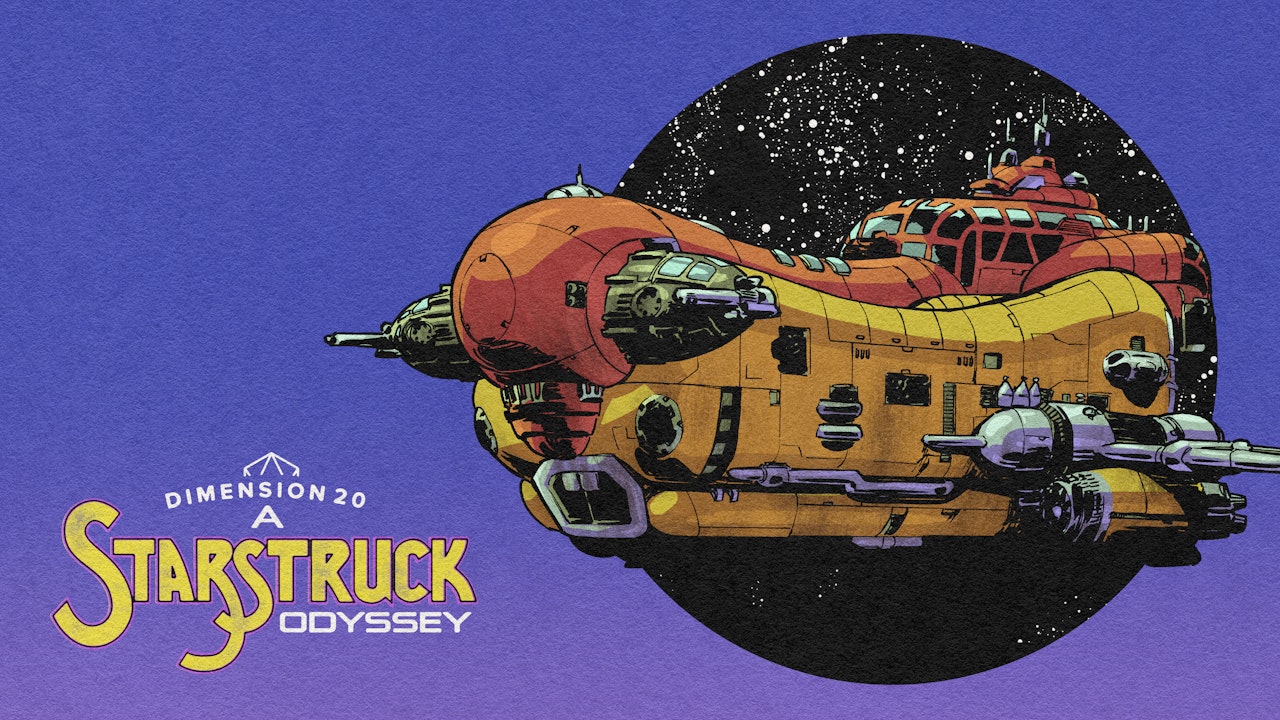
Welcome to Ben Recommends. Today, I want to talk about Dimension 20’s A Starstruck Odyssey.
What is it?
I’ve mentioned Dimension 20 and other “actual play” RPG shows on my D&D blog posts before. These days, Dimension 20 is my favorite of the bunch (more on that later). For the uninitiated, these “actual play” shows are a bunch of people playing a table-top role-playing game (TTRPG) on camera.
Naturally, this isn’t something everyone will be interested in. You might love TTRPGs but watching someone else play will do nothing for you. You might have no experience in D&D or its contemporaries, and that lack of knowledge might cause the inherent limitations of the content to fall flat. However, there are tons of people who are fans of these shows despite never dabbling in RPGs themselves, so it might be worth a try regardless.
Dimension 20 began after long-running Internet content creation company CollegeHumor picked up Brennan Lee Mulligan, featuring a mix of new and old CollegeHumor alumni as the cast (seven total, Brennan and six players). Unlike many other actual play shows, Dimension 20 has a staffed production team making their battle maps and miniatures and a set number of episodes each season (usually 17+ episodes for the core cast, and between 6-10 for “sidequest” campaigns with guests).
In this specific season of Dimension 20, they used a heavily modified version of 5th edition D&D to run a crazy, galaxy-spanning adventure full of exciting shootouts and climactic space battles. This is the core D20 cast at their absolute best (yet). It is one of the most entertaining and compelling TTRPG shows I’ve ever seen.
What do I like about it?
Dimension 20 has explored a vast selection of settings since their first season. In Fantasy High, we have teenage heroes in a strikingly modern setting; the Unsleeping City is an urban fantasy in New York City; Escape From the Bloodkeep is an adventure about Not-Sauron-For-Legal-Reasons’s death and his lieutenants and advisors trying to keep everything they’ve fought for (evil) from collapsing.
A Starstruck Odyssey is their first foray into the stars, and it couldn’t have been a more perfect setting for them to explore. It is an age of anarchy and the chaos gremlins are off the leash. The electricity of their first time at a table together since COVID-19 began fuels the game and their energy never comes down.
It’s fast paced. It’s hilarious. I’ve never had more fun watching a show.
How does it compare to similar shows?
I mentioned earlier that D20 is my favorite show of its kind, and that’s for a reason others might view as a mark against the show.
I like Dimension 20’s production. My longest-standing gripe with Critical Role (and even my own D&D games) is when the party waffles around, uncertain of what to do next. With Dimension 20’s limited seasons and driving narratives, there’s no time for that aimlessness. It is more of a “show” than Critical Role: less of a group of friends just recording their game and uploading as-is. But I’ve come to appreciate that artifice immensely.
There’s less room for a long-term character reveal or mysterious overarching plot that spans several months of games, but for the trade they gained a show that I find vastly more watchable. I can actively view D20 with no distractions. Critical Role I generally listen to when I work or build maps for my own games. Where you fall between those two comes down to personal preference.
Potential Cons
There are some facets of this show that might be a dealbreaker for you.
- Beyond the 1st episode, the show is behind a paywall on dropout.tv
I think it’s entirely fair for the company and the team behind D20 to ask for compensation for their show, of course. But Dropout isn’t likely a service you’re using if you haven’t already seen A Starstruck Odyssey. I personally think the service is a great deal, and there’s other fun shows on there, but that barrier to entry might prove too high for some. (But! Those three other seasons I mentioned before? All of them are entirely available for free on Youtube!)
- These are long episodes
And the length is really variable. I didn’t have trouble keeping up week-to-week (or catching up on older seasons while I was unemployed), but there is a lot of content here. It might be unfeasible, even, depending on your schedule. But if I didn’t think it was worth the commitment, I wouldn’t have written this post.
That seems to be the most critical and compelling talking points I could conjure. I’d love to hear from you if this post convinced you to give the show a try. As always, thank you for reading! It’s a tough galaxy out there, but someone’s got to live in it. It might as well be you!


 Ben Stovall Blog