Author: Ben Stovall

  • RPGs: Creating an Adventurer

    RPGs: Creating an Adventurer

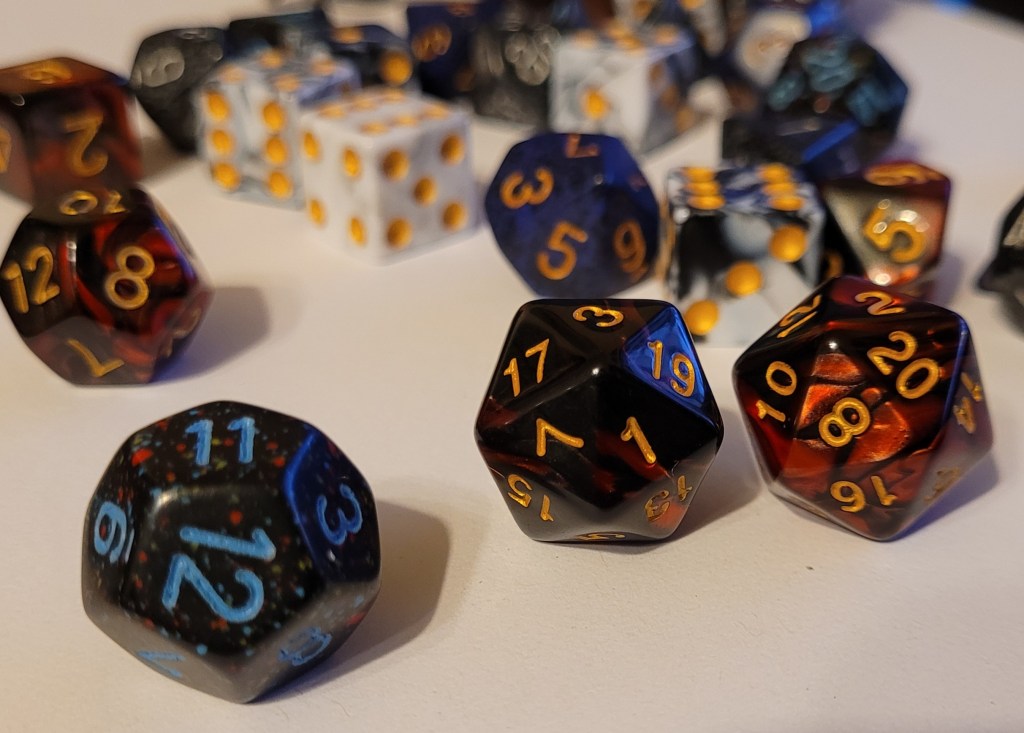
    Recently, I found a topic on Reddit that got me thinking about the trend of players making characters without input from either their fellow players or even the Dungeon Master running the adventure. I’ve experienced this in my own time running this game, leaving me stuck between a character that feels disconnected from the world or adventure, or telling a player that the character they spent time making won’t fit.

    It’s a difficult situation with no clear answers*.

    Do you as the DM accept whatever the players put forth, despite how it might chip away at the cohesion of the setting you’ve made? Do you as a player accept that you might need to adjust your character of choice to fit the DM’s world, even if it goes so far as to remove what you hoped to explore?

    I’m hoping to provide some tips that can help you keep your characters off the cutting room floor and on the tabletop, from both sides of the screen.

    Be an Adventurer

    First and foremost, make sure you have a character that actually wants to participate in the adventure. Everyone who’s had any experience with the hobby has heard the stories of the lone wolf rogue who has no interest in being part of the game. There is a time and a place for saying “It’s what my character would do,” and explaining why your character doesn’t want to be part of the team or go on an adventure isn’t it.

    The simple fact of the matter is: it isn’t only up to the DM to give you a reason to go on the adventure. We’ve all agreed to spend our time together playing this game, part of that means you have to decide why and how your character would do something you think they normally wouldn’t. Because if that’s all you give the DM, they might just agree with you, and ask you to try again. That’s what I’d do.

    Another facet of being an adventurer – at lower levels, at the very least – is being someone without resources. Delving into dungeons and fighting aberrations, monstrosities, and undead is an insane thing to decide to do. For most, there’s got to be something to prove, or a lack of alternative options. Don’t try to give your character the means to solve the party’s problems with their connections back home. You shouldn’t have such standing that you can muster an army before you’ve ever seen a battle.

    Also, remember this is a collaborative game. Don’t fall into tropes that would make your character vastly more important than the other player’s creations. The world might come to revolve around the party’s actions, but it shouldn’t ever be focused on one of you alone, always – everyone should get their time in the spotlight. Build out someone who has strengths that makes them valuable, but not someone who will be able to solve any issue by themselves.

    Anchoring Yourself to the World

    As mentioned in the post referenced, there is something to be said for the minigame of building characters in 5th Edition D&D. It’s a fun little pass time to tinker with when you’ve got the game on your brain but you’re between sessions. Maybe you were in the mood when the game got canceled last minute. Whatever the reason, there’s value in the process.

    Unfortunately, the cool characters you design in a vacuum do not always translate well to a table.

    When I was setting up my current game, I warned my players ahead of time that several of the races that had received official releases were not going to be available, but I hadn’t gone through the entire list. I had good reasons for each: some didn’t fit the setting because they would lend themselves too easily to a character that is a punchline more than a hero and while levity is welcome, I didn’t want to pull away from the more grim tone of the world. The race’s origin didn’t fit with the way I’d structured the planes for the setting. Or I just didn’t have them in mind since they didn’t all exist when I built the world, and there wasn’t a good way for me to retroactively add the entire race into my world’s history.

    And, unfortunately, my lack of preparation led to me having to reject one of my player’s first characters. He wanted to play a Loxodon hero, and I rejected him. He settled onto a Goliath instead, and while he’s assured me he loves what his character is now, I still feel a slight twinge of remorse that I didn’t allow him his want.

    I actually had an entire game collapse because of this. It was at our session zero (a pre-game meeting of all the players that I absolutely recommend every table engage with), and my players all wanted to play characters whose lineages I didn’t originally have plans to include in the world (I was hoping to run a game in my setting for the Red Watch books to help me flesh out a lot of the world). It ended well, though – I just ran a different game a couple weeks later in a setting with less restrictions.

    I think the best way to engage with the world is to come to a session zero of your game with no preconceptions – well, maybe you can pick a class. Maybe. Magic might not work the way you assume, after all … And never stop thinking about the life your character might’ve had before they became an adventurer. Talk with your DM and work out where you would have been born, where you were raised and how, what kind of people you might know. Create connections for your character, people that they will want to help and protect – or people they will stop at nothing to find their violent satisfaction against.

    The Clear Answer

    Before, when I said there was no clear answer, that was misleading.

    These issues, like all issues in a tabletop RPG, have an answer, a process, that will always help everyone come to a satisfying conclusion: discussion and compromise. Talk to each other. It seems so reductive to say that every piece of RPG drama can be solved by talking, but I have yet to encounter an issue that isn’t addressed after an earnest conversation. At the very least, it’s worth a shot.

    Thank you for reading. Good luck out there, heroes.

  • D&D: Running Dragons

    D&D: Running Dragons

    When I first started running D&D, I managed to learn how to construct a dungeon with success fairly quickly. My players were quick to engage with these delves and I had no trouble discerning what was working and what wasn’t. But, there in the name lies something I felt was equally essential to the experience: dragons.

    It took me much longer to parse out a successful dragon encounter, given their relative rarity to the near ubiquitous dungeon. My first attempts were beasts that did not display the intelligence present by the stat arrays, going toe-to-toe with the warrior clad in plate armor instead of taking to the skies and raining fire or acid or lightning down upon them. My encounters were in barren, mostly circular caves not shaped in the least by the dragon’s whims or needs.

    I hope to save you some time and failures. Learn from my mistakes. Become the dragon your players will fear to engage.

    Fight and Flight

    Dragons have a natural tactical advantage over most playable character lineages in D&D – their natural ability to fly. There is no greater disservice you can do to your dragons and your players than to have their foe linger thereupon the ground, its wings forgotten. A calculating dragon might only ever choose to land when it believes its claws and teeth can prove the end of its target. Instead allow the dragon to focus on finding a position for its breath attack to cause the most damage, and landing only afterward to tear apart the foe most damaged by the discharge.

    In 5th edition, dragons were given the option of using their wings at the end of a foe’s turn, potentially knocking their assailants prone and taking to the skies once more. I prefer to allow the movement granted by this legendary action to supersede any movement speed reductions, like those from the sentinel feat. This allows the dragon to escape from a tight spot when needed, without entirely stripping the feature of sentinel should the dragon be choosing to shift away from such foes without using this action.

    Stay out of reach of the heaviest hitters, pick your targets to put them on the ground, and don’t linger beyond what’s necessary for the dragon to accomplish its goals. If the dragon is amused by the party, allow them the chance to recover. If its beginning to feel threatened, show the party no mercy.

    Minions

    The true threat any boss encounter in D&D fears is something outside of the scope of dice and decisions: the action economy. The number of creatures on either side of a battle influences the outcome like a finger on the scale. A dragon fighting alone, unless its of a much higher difficulty than the party can handle, has already accepted its death.

    To preserve the difficulty of such an encounter, grant your dragon minions and allies to help keep the fight in its favor – at least until those creatures have been slain. In my setting, dragons are supported by armies of soldiers – kobolds, lizardfolk, and dragonborn. A powerful martial fighter sworn to the dragon’s personal safety could be included in the fight. There are also the abishai, presented as fiendish creations of Tiamat in the hells that are sent to support her servants. Additionally, in my setting, many of the eggs in a dragon’s clutch hatch into offspring that are not full dragons. This is where guard drakes and other reptile-adjacent creatures come from. Your dragon could call to its young in such battles.

    Lairs and Arenas

    One of the most important pieces of any dragon encounter is the arena. Has the dragon flown out from the heart of its domain to a place it believes it can weaken the intruders challenging its claim? Does it lie in wait at the heart of its lair, resting upon a hoard that would make the richest kings blush?

    Each type of dragon is different, and would prefer different lairs to operate in. A black dragon with its amphibious nature would want a locale it can puts its enemies at a disadvantage by submerging itself in the murky depths of the waters. A white dragon would wish for a forbidding mountaintop cavern with icy stretches of floor that put any who would assail it at odds with unsure footing. A green dragon may wish to battle in an enclosed space that slowly fills with the poisonous gas it exhales with its breath attacks.

    A font of inspiration I’ve visited time and again for dragon arenas is the game Dragon Age: Inquisition. Every zone with a dragon battle managed to create a unique locale to encounter the creatures, with an excellent AI that uses the terrain around it to allow for a incredible and dynamic fight. Each of those lairs were immensely helpful when it came to designing my own encounter spaces for D&D.

    Expectations can be at an all-time high when it comes to a battle with a dragon in your D&D game. With these tips, I hope you’ll be able to create encounters that will be the talk of your table for years. Thank you for reading.

  • Adaptation and the Witcher

    Adaptation and the Witcher

    Spoiler Warning: this post contains major spoilers for Sapkowski’s The Last Wish, The Sword of Destiny, and Blood of Elves, with potentially minor spoilers for the rest of the series, and major spoilers for Netflix’s The Witcher seasons 1 and 2.

    Here at the beginning, I want to make it clear that I am in no way an authority on this subject. I am not a professional critic, I am an independent author with three works. I have, however, spent my entire life absorbing stories. From early on in my childhood, my favorite types of videos games were RPGs. I spent more time on the Elder Scrolls IV: Oblivion and Dragon Age: Origins than anyone else I knew in my teenage years. To this day, I find most of my enjoyment in media in the stories that are being told. As much as I love a game like Deep Rock Galactic, it’ll never satiate my need for experiencing a narrative as something like Divinity: Original Sin 2, which I’ve played through about two and a half times since I picked it up last year (and it’s a long game).

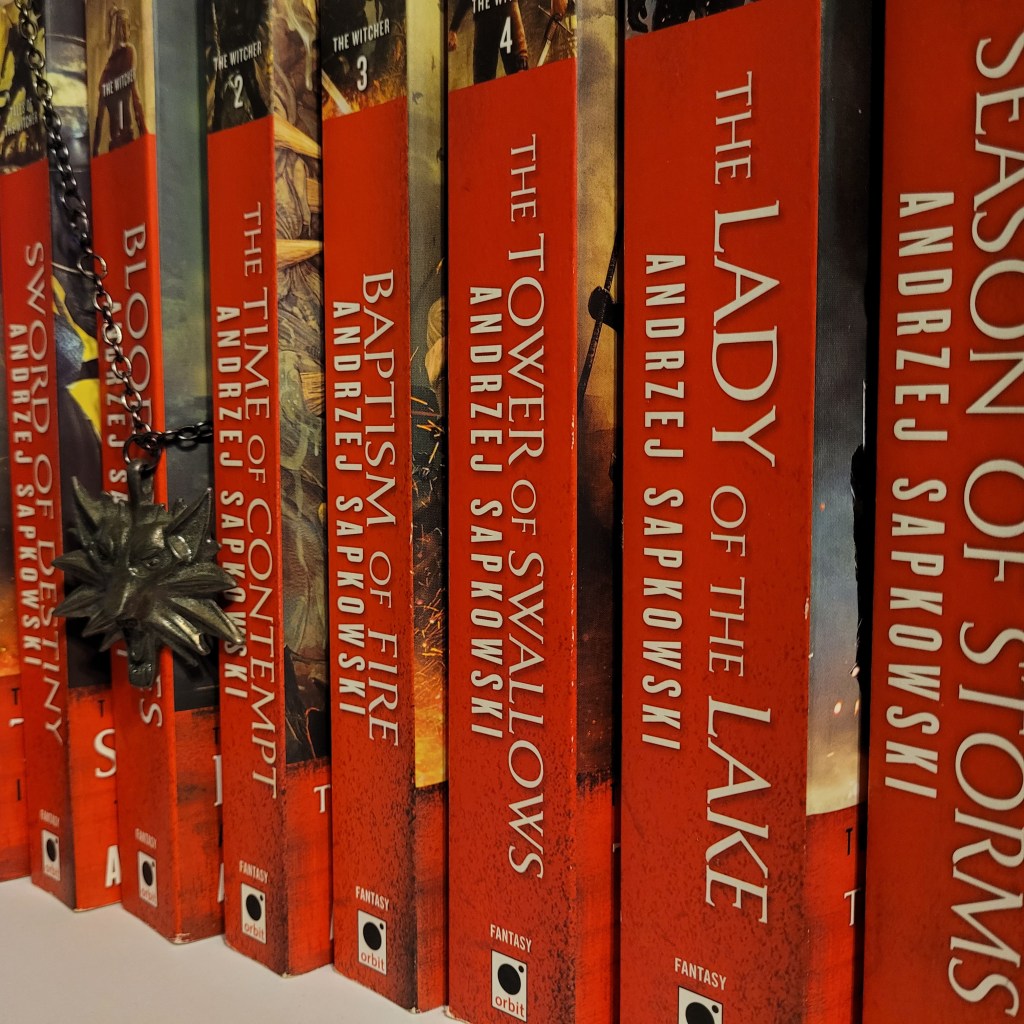
    It was through video games I first encountered the world of the witcher. I’d seen praise for the second witcher game online and picked it up to play it myself. I slammed through it twice to see both sides of the major branching storyline and immediately told my brother he should give it a try. I received the third witcher game as a gift one year and it coincided with a week of vacation time I’d taken from work around the holidays. I played it every day for an obscene amount of hours, so entirely did it capture me (and so empty was my schedule at the time). I enjoyed it so much, I ordered the written works and devoured them. At the time, the series’ conclusion The Lady of the Lake wasn’t officially translated, so I waited for its release with excitement.

    When I heard news of Netlfix adapting the books, I had some cautious excitement. When Henry Cavill was announced as Geralt and it became apparent how much of a fan he was of the series, I was elated. And, for me, that first season didn’t disappoint. I was excited to see what they’d do going forward.

    Well. We have a second season now, and it’s … polarizing. That seems like the kindest word. Let’s talk about why.

    Adaptation: Changes Necessary

    When taking a piece of media and translating it to another medium, there has to be some changes. Things that are interesting to read aren’t as grabbing when watched. Tension that exists in a visual medium can be lost when read without expansion or alteration. It’s simple fact.

    But while change can enhance the experience, it can also be destructive.

    In season 1 of the show, there are many minor and major changes to the source material, some of which I find make the stories stronger. For example, the Question of Price short story and its corresponding episode Of Banquets, Bastards, and Burials. In Sapkowski’s short story, Geralt is at the ball at the behest of Queen Calanthe, who wants to procure his services for a task she will provide almost no details of. Geralt is reluctant, to say the least, as he has his own scruples about what he will and won’t do for coin. In the show, Jaskier invites Geralt to the ball, and when his reputation as a witcher becomes known, that’s when Calanthe tries to purchase his services.

    I like this change for a number of reasons. In the short story, it’s clear that Geralt has a reputation, but Calanthe thinks that with enough coin she can buy Geralt out of his morals. In the short story, she’s invited someone to the banquet she cannot be sure of, on a night that will determine the future of her kingdom and her daughter’s life. Geralt being present by coincidence and her attempt to gain his allegiance before Duny arrives, to me, seems like a smarter move for a queen as shrewd and calculating as Calanthe.

    And the end of the episode even has stronger characterization for Geralt. In the show, they maintain the consistency that Geralt has in the short story collections as to his disregard for the concept of destiny. He off-handedly asks for payment in the Law of Surprise at Duny’s insistence and immediately doesn’t want anything to do with it. In the short story, Geralt says that Child-Surprises are required to make witchers and he’s hopeful he’ll get one. I think this moment is monumentally better in the show than the short story.

    Other changes exist in the show I can at least make sense of. There’s a reason behind them I can understand after some thought. Another example from the first season, the timeline shenanigans. The short stories have no clue as to their chronology either, but there is a present-day framing device behind them all. In the show, I can understand their mixed timelines as a vehicle for having the series’ principal actors in nearly every episode. Yen’s backstory is just hints and speculation in the books, and expanding that for the show certainly is a sensible decision, as she’s going to be one of the most important characters. However, I do think the show didn’t need to be so secretive about the timelines. Having the background knowledge I did going into the show I knew immediately what was happening, but I think the confusion for unfamiliar audiences was unnecessary. But, again, I can at least understand why the show made that decision.

    Then there was the changes in the second season.

    Destructive Deviation

    While there are still changes in season two I can fit under the umbrella of “necessary for television,” there are plenty of others I cannot fathom. Most of my complaints stem from a complete departure from a character’s established personality into something entirely different, something so extreme I can’t imagine how they’ll reconcile the changes with the story going forward.

    The biggest offender is, obviously, Yennefer. Yen from the books would never begin to consider the idea of trading Ciri for her magic. Within days of training her at the Temple of Melitele she straight up starts calling her “my daughter.” She loves her unconditionally. In season 1, the show even set this up. Yen regrets trading her ability to have children for magic. She wants to enslave a djinn to undo that loss. Even consistent to the show, Yen considering sacrificing Ciri for magic doesn’t follow, at least not for me.

    This problem extends to someone like Vesemir. In the books, our old grandpa witcher has no desire whatsoever to put any children through the Trial of Grasses to make another witcher. Him considering in the show, however, isn’t entirely without reason. The show’s set up a new kind of monster entering the world through their monoliths, and needing more witchers to fight these new monsters, I could see Vesemir reluctantly trying to make more. But I don’t think he’d do it with Ciri. And, even worse, if Ciri’s blood is the key to making more, why would he let her be the first attempt when it’s very unlikely she will survive because of how deadly the Trial of Grasses is.

    How on earth can Ciri reasonably reconcile with these two? Yen in the books becomes a surrogate mother to her, but how can anyone trust someone who was trying to sacrifice them to an ancient evil for their own gain? I don’t think helping reverse the situation she caused is enough. And once she truly appreciates the danger of the Trial of Grasses, will she accept that Vesemir was so easily swayed by a child’s argument to let her try it?

    Even characters as minor as Eskel or Lambert weren’t spared the brunt of these changes. Eskel’s not a large presence in the books – he helps train Ciri in Blood of Elves, and I don’t think he shows up again. He’s in the games and he’s well-liked. They killed him in the show to elicit a reaction, but they did nothing to actually cultivate any attachment to this character. By all intents and purposes, he’s just another guy with the same name as the character the fans of the games know. He has an entirely different personality. It could’ve been a witcher with no name or a name invented for the show, and nothing would’ve changed. Lambert, in the books and games, is more of a playful prick. In the show, he’s just been a bully to Ciri.

    I feel the need to clarify that I do not fault any of the actors for these occurrences at all. I think they’ve done the best they could with what they’ve received. I don’t like that Yennefer is cursing every seventh word in the second season and using such inspired epithets as “Fire-fucker,” but that’s not the fault of the actors.

    I could go on and on about other changes to characters and plots (just ask my brothers and friends), but it’s more of the same as above. I just want to briefly mention a worry I have for the show going forward.

    Mistaking the Stars Reflected in a Pond for those in the Heavens

    These characters, after this season, are simply not the same as the ones in the books. That’s the full stop. They’ve been changed. It’s not impossible there’s a road to get them back to their book characterization, but that’s not who they are right now.

    The problem I am worried will plague this show’s future is an inability to accept this.

    The future seasons of this show will suffer horrendously if all the resolution for Yennefer’s actions with Voleth Meir and Ciri is a single meaningful conversation and some emotional music. And then they’re as thick as they are in the books? It will feel unearned. It will add negative value to the audience investment. Actions have to have consequences.

    The creators of the show have deviated from the blueprint. If they try to bludgeon their way back on track ignoring what they’ve done, no one will be able to trust the storytelling of this show.

    To borrow a line from Vilgefortz (from the books, as he’s yet to say so in the show), the show’s creative team is mistaking the stars reflected in a pond at night for those in the heavens. I hope only they’ll have the wherewithal to look skyward before the potential of this adaption is rotted out from underneath it.

    Thank you for reading. At the very least, it’s helped me to write this all out. I hope you’ve all had wonderful holidays and a Happy New Year to you.

  • Ebonskar and What’s Next

    Ebonskar and What’s Next

    So! There it is. Ebonskar will be out on November 18th. I’m excited for it to get into your hands and I hope you enjoy it. I believe it’s my best work so far, and I can’t wait to see how everyone else feels about it.

    That just leaves one question, doesn’t it?

    What’s next?

    Well. There’s at least a half dozen people hungry for Red Watch’s third installment. If that’s you, thank you for being patient while I went and did this second thing. Let me say you’ve waited long enough, and to apologize in advance that the wait is going to be a little longer. Red Watch 3 will absolutely be commanding my attention until it’s finished, but it’s not done yet. There’s going to be a bit more time to wait, and I’m going to do what I can to mitigate it as much as I can.

    Following that, I’m not certain yet. My current plan finds Red Watch reaching its end in the fourth book, but I think I’ll want to land on something between the third and fourth. I have two sequels in early stages to follow Ebonskar to make a trilogy. If people are dying to see the follow up there, I could see Tyrant’s Mask 2 as the book following. Otherwise, one of those little ideas I played with earlier this year. It’d be nice to have a standalone available for others to ease in, see if they’re interested in my writing style.

    The blog will proceed as is. I’ll post when I’ve got something I want to say, or an event to inform you about. As with my last post, I’m not going to call out each one on social media, so if you want to get updates for each of the blog entries emailed to you, use the option on the right to subscribe. Emails will only come through when a blog post goes up.

    Thanks for reading; I hope you enjoy Ebonskar!

  • D&D: Level One Characters Are Still Heroes

    D&D: Level One Characters Are Still Heroes

    In the past, I’ve seen the sentiment that in 5th edition D&D, a level one adventurer can’t accomplish much. I recall even having a sympathetic read of this idea. I know of many whose games begin after skipping level one, or structure the game in such a way that a single encounter or session might give additional experience to bump them beyond to level two. I’ve run games like this.

    I have entirely and utterly been shown the error of this idea.

    I started running my current game via Discord (and Talespire once it released) back in November of 2020. My group is mostly people I’ve known via online video games for a few years, with the single exception of my cousin. Two of them had never played a tabletop RPG before.

    It’s one of those two, so grateful for the fun he was having in the game I ran, who decided to begin running his own game, and invited me to play. There’s another two people in our little community he invites, as well as the other player who is green-as-grass to D&D from my game.

    Our brand new GM decides to run a published adventure to ease him into everything – he reads online a bit and chooses Rime of the Frost Maiden, which is pretty new and it’s been well received. (So far for me? It’s been a blast.)

    I’m playing a rogue named Cole. I’m joined by another rogue, Aero; a wizard, Lady Hemlock; and a cleric, Ajani (who is indeed named for the MTG character). And this team shattered any preconceived notion I had about level one being unmeaningful. Long D&D story following below.

    We arrived in Brynshander on the eve of a New Moon. In the module, these are auspicious nights, with the towns each offering a sacrifice to their angry goddess who has plunged them into an unending winter. But, it’s lucky for our characters, because the innkeeper we speak to is kind enough to offer travelers free rooms for the night to keep them off the streets.

    Over time, we each arrive at the Northlook. Our GM has me enter first, and after the party is each introduced and given a few moments to interact with one another and the innkeeper, and a dwarven woman we learn to be named Hilm scatters the regulars out of the bar with her own entry leaving only us.

    She’s looking for someone to find and apprehend one “Sephek Kaltro.” She claims to have witnessed him killing someone – a murderer, with at least three victims attributed to him by her. She tells us there’s information that these killings are linked by these village lotteries – intended sacrifices that were not made, for one reason or another. This is the first time our characters learn of the New Moon sacrifices.

    “So, you want us to track down one murderer when this town is full of them, committing one this very night?” Cole asked.

    Hilm was stumped by that. Whether she condoned the lotteries, we never found out. We debated long, but uselessly, as Hilm was not actually anyone with authority in Brynshander and couldn’t have stopped the lottery regardless. The town’s mood in general wouldn’t prove much different. These people had been battered by two years of winter. No one had been able to break it. They believed the Frost Maiden implacable, her power absolute. Ultimately, we agreed to find Sephek, but none of us were happy with the town’s decision to sacrifice and murder their own. In time, we all found our way to our rooms. Our GM described the procession of people marching down the road toward the gates very near the inn. Cole watched them from the window. I didn’t think he’d be able to stop it alone. He was only level one, after all.

    But I knew he’d try.

    Ajani was the first to leave his room and return to the inn downstairs. I followed, then Aero and Hemlock. Our innkeeper sat at the bar, weeping. The choice for the lottery had been one of his workers – Maleena, who’d served our food and drinks.

    We stepped out into the crowd. Aero and I edged around and into the alleyways branching from the overrun road. Ajani and Hemlock navigated through the crowd to the opening, where they walked Maleena toward the gate. Cole and Aero found the wall, scaled it quick and quiet. Ajani and Hemlock stopped the procession and spoke with Maleena. She tried to reassure them that it would be okay, that they didn’t need to do anything on her account. She says she’s sick, that she doesn’t have much time left anyway.

    Ajani asked the people who’d led her to the gate if he could go with them, and they agreed. They withdrew, leaving Ajani, Hemlock, and Maleena as the gates began to open.

    I reached the top of the wall, and discovered a blizzard just beyond its stones. It encircled the town entirely, a pure wall of whirling white and ice. (The GM was playing some ambient music, and a Bloodborne track hit just then. It was incredible.) I looked at it with wide eyes, stunned for a moment, then set to work. I knotted a rope around the crenellations and tied my crowbar into the loose end to weigh the rope down. GM has me roll survival, and I get a middling result, around 12-15. The crowbar is torn from the rope as I toss it over the side, and the end is dancing restlessly in the wind, but the loop around the crenellation is secure.

    Aero, who is an aarakocra, noticed that the two guards on our side of the gate looked over toward us, but one of them grabbed the back of the other’s head and twisted it back down. He sees the rope below, grabs it from the top, and begins to fly down.

    The wind of the blizzard throws him to the ground and nearly kills him then and there (it took about 7 or so of his eleven hitpoints).

    The gates close behind Ajani, Hemlock, and Maleena, leaving them in the blizzard. The cold is shear and unrelenting, and Ajani holds Maleena close, though his own warmth is fading. Out of the corner of his eye, he sees the end of the rope flailing in the air. He begins marching them toward it. He snags hold of it and keeps it still so that Maleena and Hemlock may climb. He finds Aero and gets him up, before climbing himself.

    As Maleena is brought to the top, I throw my own cloak onto her, pick her up, and run to the nearest tower where I deduced a fire would be kept burning through the night for the guards to use. It didn’t matter if anyone saw us – we needed to get her warm. The others filtered in quickly.

    Then the guards came.

    They were her brothers.

    We finessed a story, the younger of the two having gone out after his sister in the night to die beside her, the older as the witness. We took them back to the Northlook, and the innkeeper used his own contacts to get them on a carriage southward and away before the next day’s over, closing the Northlook to customers the following day “in grief” so they have a place to stay.

    It had all gone so perfectly, I honestly thought it was part of the module.

    Our new GM revealed that it wasn’t. He’d decided in the last hours leading to the game to make the night a New Moon, just so that one of our players whose character’s chosen background didn’t come with gold could stay at the inn that night. That everything we’d done, he’d not had anything to go off of.

    His first game as a GM.

    Experience isn’t the only thing valuable in this hobby. Level one characters can be just as heroic as they are at level ten, or twenty; the only real difference is the scale. And a first-time GM can create one of the most incredible scenarios in a game I’ve ever had the privilege to join in entirely by accident. If you’ve wanted to start running a game but been hesitant, I recommend you take the plunge.

    Damn I love D&D.

  • September 2021 Irregular Update

    September 2021 Irregular Update

    A year and three months, nearly to the day. Woof. Alright, let’s get down to it.

    Where the hell have you been?

    Well, home. I’ve been reading, writing, playing video games. I didn’t go out much before coronavirus, so in a practical sense I didn’t see my life change much. Got the vaccine this summer, still don’t go out often. Did see Shang Chi, liked that movie.

    I’ve been home even more than usual, though. The day job I’d held in 2020 went back to working full-time at the office late that same year, but I left that job a few months ago. Spent some solid hours writing since, got some query letters sent out for my unannounced project, put some more time into Red Watch 3, flitted around outlining some other project ideas as they came. Have a couple I might play with in the future.

    My reading tapered off at the start of summer but I picked it back up in force toward the end. Just finished Abercrombie’s The Wisdom of Crowds last week, scarcely set it down. Huge fan of his work, and I wasn’t disappointed with the last installment of the Age of Madness. I caught up on the Gentlemen Bastards from Scott Lynch, having only just picked up the Lies of Locke Lamora last year. Excellent series, looking forward to the Thorn of Emberlain when it comes.

    This is all going somewhere, I promise. Between the two above and a few other authors, I found myself checking blogs and websites, looking for information on further works, engaging beyond them; I enjoyed learning about the people behind them. That wasn’t something I’d done growing up – I never read acknowledgements, didn’t read the meet the author sections. My lack of interest informed a lot of my own resistance to blogging or putting information on myself out there, but, doing it myself now …

    Well, I think I’ll try a different approach, going forward. I won’t guarantee any regular updates. I won’t even guarantee they’ll all be about books or writing. Might just talk D&D or video games – my own interests. A blog for me to just bullshit I guess. Ben Stovall’s BS Blog. That’s a pretty unhelpfully repetitive abbreviation, isn’t it?

    Consider this entry 1.

    What’s the latest on your writing?

    As my now ancient last update mentioned, I looked at pursuing traditional publishing for a bit, the strongest push during spring this year. Had some encouraging potential agents very politely turn me down. I’d expected it, prepared for it, but I’ve always been bad with rejection – it was the main reason I never looked at traditional publishing for A Tide of Bones.

    Between that and a recent video from Lindsay Ellis, I managed to come out of it with something, though. Pursuing traditional publishing was a way for me to seek validation, ultimately. I wanted to feel like I was good enough for it, that my work was worth it. And that would make me a real author!

    But that’s a bunch of garbage, ain’t it? I’m already an author. That even a handful of people – one person – found something meaningful in my work, that’s enough for me. Always would be. When a couple of my friends volunteered as beta readers for my unannounced project, and one found himself so hooked he read it overnight in one sitting? Yeah, alright, I’m doing something right, and even if the market at large wouldn’t be receptive to my work, if a handful of people are, isn’t that what self-publishing is for?

    Not to mention the control. I like a certain kind of cover, I like being the final arbiter on that decision. I like being the one who makes the call on what should or shouldn’t be cut. I enjoy the independence of it.

    All this to say that I’m going to be going forward with my unannounced project and self-publishing again. So, allow me to announce Ebonskar, which is going to be a bit different from Red Watch from the first page. Different world, no recurring characters. Something else entirely. It’s in first-person and my protagonist isn’t human. It’s not in line with the vastly human-centric fantasy market, but I am proud of how it’s turned out and I think it deserves to be available to the people it might inspire or resonate with.

    The caveat – no release date yet. When I was shopping around for agents, I halted work on a smaller scale project set immediately after the book’s events. Now that I’m going to self-publish again, I think the best place for that smaller project is right alongside Ebonskar, in the same binding. I’ve been tapping away at my keys to get that done, then I’ll be pestering my friends again to get some eyes on it. I’m hopeful for this winter. Think of it as a bonus novella included in the back of the Ebonskar book.

    That’s the plan for the immediate future.

    Is that all I wanted to say here? I think so.

    Thank you for reading this inaugural entry to my blog. Further updates will be here on my website, along with whatever else I decide to click my keys to say. I very much appreciate your continued support, and I hope you’ll find a story to love in Ebonskar.

    See you soon.